

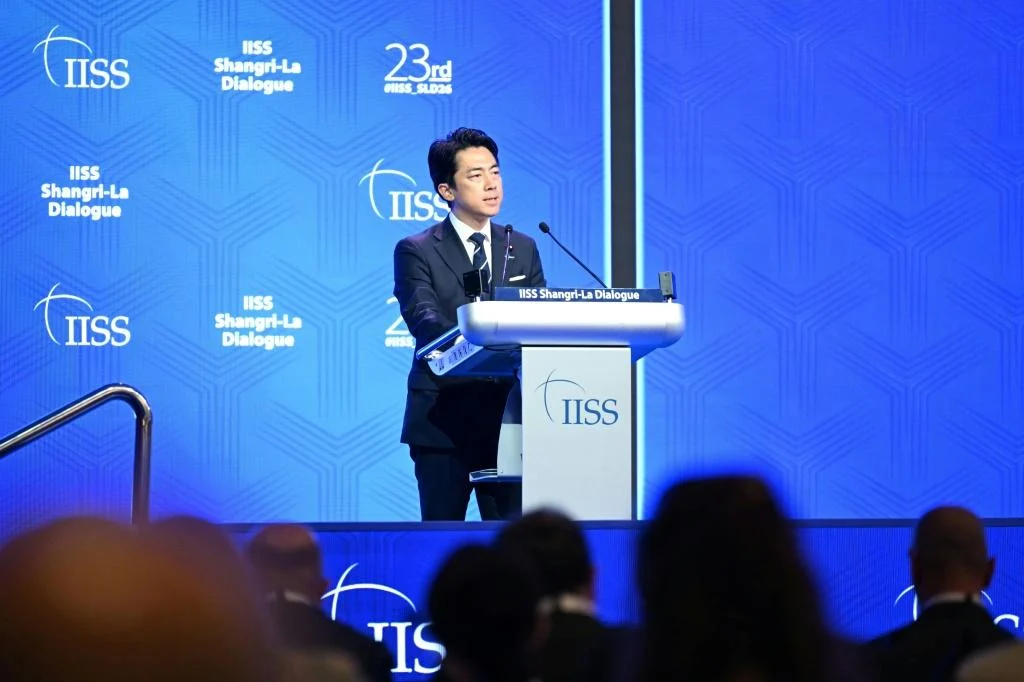
SINGAPORE — The annual Shangri-La Dialogue, Asia’s premier security summit, became the stage for a sharp diplomatic confrontation this week as Japan and China traded barbs over the shifting balance of power in the Indo-Pacific.
Japanese Defense Minister Shinjiro Koizumi, speaking before an audience of global security experts and military officials, launched a pointed critique of Beijing’s regional ambitions. His remarks underscored a transformative era for Tokyo: under the leadership of Prime Minister Sanae Takaichi, Japan is systematically dismantling the constraints of its post-World War II pacifist constitution, adopting a more proactive security posture that has set the two Asian giants on a collision course.
The Core Conflict: A Clash of Narratives
The central tension revolves around the definition of regional stability. Beijing, which has frequently rebuked Tokyo’s recent policy changes as a descent into "new militarism," argues that Japan’s growing defense budget and increased cooperation with the United States threaten the fragile peace of the region.
Minister Koizumi, in an address that avoided naming China directly but left little room for ambiguity, dismissed these accusations as fundamentally hypocritical.
"Think about it," Koizumi stated. "There is a country that has a huge arsenal of nuclear weapons and strategic bombers. Japan has neither of such weapons. And yet, Japan is labelled as ‘new militarism.’ Isn’t it strange?"
Koizumi’s retort struck at the heart of the ongoing diplomatic spat. While China continues to modernize its military at a rapid pace—investing heavily in hypersonic missiles, aircraft carriers, and nuclear capabilities—Japan maintains that its own military buildup is strictly defensive. Tokyo asserts that its pivot is a necessary response to a lack of transparency from its neighbor, specifically regarding China’s rapid expansion of military capabilities in the East and South China Seas.
Chronology: The Road to Current Tensions
To understand the current state of animosity between Tokyo and Beijing, one must look at the timeline of events that have defined the relationship over the past eighteen months:
- November 2025: Prime Minister Sanae Takaichi shifts the diplomatic landscape by suggesting that Japan might consider military intervention should China attempt to seize Taiwan. This statement marked a significant departure from Japan’s traditional "strategic ambiguity."
- January 2026: Japan officially announces a 15% increase in its defense budget, focusing on high-tech capabilities, including AI-driven surveillance and space-based defense.
- March 2026: Japan and the Philippines initiate high-level talks regarding maritime security, signaling a new regional alignment against China’s expansive territorial claims.
- May 2026: Reports emerge that Japan is preparing to transfer retired Abukuma-class destroyers to the Philippine Navy by fiscal year 2027.
- June 2026 (The Shangri-La Dialogue): Minister Koizumi publicly defends Japan’s military modernization, while China opts to send a lower-level delegation, conspicuously excluding Defense Minister Dong Jun for the second consecutive year.
Supporting Data: Modernization and Strategic Shifts
The "muscular" policy shift under Prime Minister Takaichi is not merely rhetorical; it is backed by concrete investments and structural changes to the Japan Self-Defense Forces (JSDF).
The Technological Edge
Japan’s defense strategy is increasingly reliant on "force multipliers." Recognizing that it cannot compete with China in raw manpower, Tokyo is pivoting toward:
- Cyber and Space Defense: Establishing specialized units to protect critical infrastructure from non-kinetic warfare.
- Unmanned Systems: Developing a fleet of autonomous underwater vehicles (AUVs) and aerial drones to monitor contested waters around the Senkaku Islands.
- Artificial Intelligence: Implementing AI for real-time threat detection and predictive maritime domain awareness.
Regional Partnerships
The transfer of naval assets to Manila is a crucial data point in Japan’s new security architecture. By providing the Philippines with Abukuma-class destroyers and TC-90 aircraft, Japan is effectively extending its "security umbrella" into Southeast Asia. This move directly counters Beijing’s "nine-dash line" claims, which remain a primary source of conflict with several ASEAN nations.
Official Responses and Diplomatic Fallout
The reaction from Beijing has been predictably stern. Chinese state media and diplomatic spokespersons have characterized Tokyo’s actions as an attempt to "destabilize the region at the behest of Washington."
In contrast, Tokyo’s stance remains firm. During a bilateral meeting on the sidelines of the Shangri-La Dialogue, Minister Koizumi and his Philippine counterpart, Gilberto Teodoro, reaffirmed their commitment to deepening defense ties. The meeting resulted in an agreement to pursue intelligence sharing and maritime border negotiations—steps that Beijing has already condemned as an "illegal" violation of its territorial integrity.
Despite the escalating rhetoric, Koizumi expressed a degree of professional disappointment regarding the lack of direct dialogue with his Chinese counterparts. "I am feeling sad that we were unable to have the opportunity to have a meeting this time," he noted. The absence of China’s top defense official from the forum, while not unprecedented, is viewed by many analysts as a signal that Beijing is currently uninterested in de-escalating tensions through traditional diplomatic channels.
Implications: A New Cold War in the Pacific?
The implications of this standoff are profound, extending far beyond the borders of Japan and China.
1. The End of Pacifism
Japan’s pivot effectively marks the end of the "pacifist outlook" that has defined the nation since 1945. While Tokyo frames this as a maturation of its democracy and a commitment to regional stability, critics argue that a re-militarized Japan could trigger a regional arms race.
2. The U.S.-Japan-Philippines Nexus
The deepening cooperation between Tokyo and Manila suggests the formation of a secondary security bloc aimed at containing Chinese maritime expansion. This network, supported by the United States, complicates Beijing’s long-term military calculations regarding Taiwan and the South China Sea.
3. The Transparency Gap
The primary obstacle to a peaceful resolution remains the "transparency gap." Koizumi’s insistence that Japan will proceed with "a high degree of transparency" is a direct challenge to Beijing’s opaque military growth. Until both sides agree on a framework for information exchange or crisis management, the risk of miscalculation—or a localized skirmish—remains at an all-time high.
4. Global Economic Repercussions
The Pacific trade lanes are the lifeblood of the global economy. Any shift toward active militarization in these waters threatens to increase shipping insurance costs, disrupt supply chains, and introduce a "geopolitical premium" on regional commerce.
Conclusion: A Delicate Balance
As the 2026 Shangri-La Dialogue concludes, the message from Tokyo is clear: Japan will no longer play the role of the passive observer in the Indo-Pacific. By strengthening its own military capabilities and forging deeper ties with neighbors like the Philippines, Tokyo is signaling that it intends to act as a primary guarantor of its own security.
However, this transition is fraught with danger. As Japan redefines its identity, it must navigate the thin line between necessary deterrence and provocative escalation. Whether this new, muscular Japan can foster a stable regional order or inadvertently accelerate a descent into open conflict remains the most pressing question for the coming decade.
For now, the diplomatic silence from Beijing remains a chilling reminder that, despite the high-level forums and strategic dialogues, the path to regional reconciliation remains blocked by fundamental disagreements over history, sovereignty, and the future of the Indo-Pacific.












No comments yet. Be the first to join the conversation!