

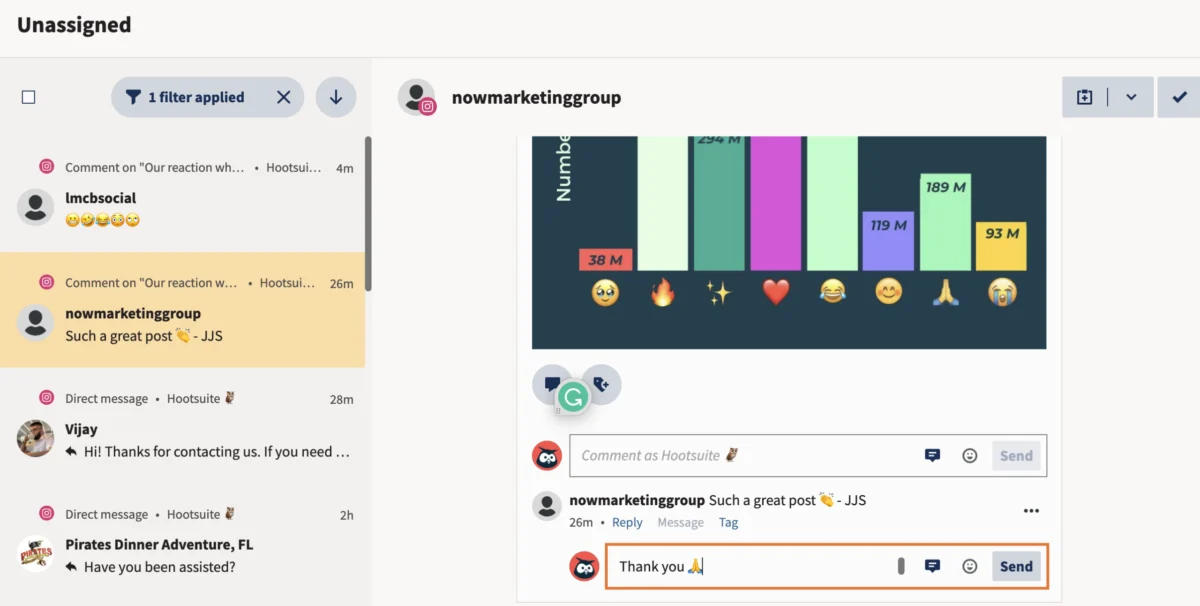
In the digital age, social media has evolved from a simple marketing channel into a complex, multi-faceted public square. For government agencies, financial institutions, healthcare providers, and educational entities, these platforms represent the primary vehicle for constituent engagement and public discourse. However, this shift has brought a significant legal burden: the mandate to archive social media content. As the line between casual communication and official business records blurs, organizations face a stark reality—the failure to implement a robust, legally defensible archiving strategy is no longer just a technical oversight; it is a profound compliance failure.
The Foundation of Compliance: Why Archiving is Mandatory
At its core, social media archiving is the systematic process of capturing, preserving, and storing all social media content—including posts, comments, direct messages, multimedia, edits, and deletions—in a secure, tamper-proof format.

For government agencies, this is a matter of public record law. Because social media platforms are private entities, they are not beholden to the Freedom of Information Act (FOIA) or state open records mandates. If a citizen requests a record of a government interaction that occurred on Facebook or X (formerly Twitter), the agency cannot rely on the platform to produce it. API changes, account suspensions, or simple platform updates can render historical data inaccessible in an instant. Consequently, a purpose-built, third-party archiving solution is the only mechanism that guarantees the longevity and integrity of these digital records.
Chronology of Regulatory Evolution
The necessity for comprehensive archiving has grown in tandem with the regulatory landscape:

- The Early Web Era (2000s): Social media was largely viewed as a secondary communication tool. Record-keeping focused on emails and internal documents.
- The Regulatory Pivot (2010s): As institutions began using social channels to interact with customers and citizens, regulatory bodies like the SEC and FINRA in finance, and the Office for Civil Rights in healthcare, began issuing guidance on electronic communications.
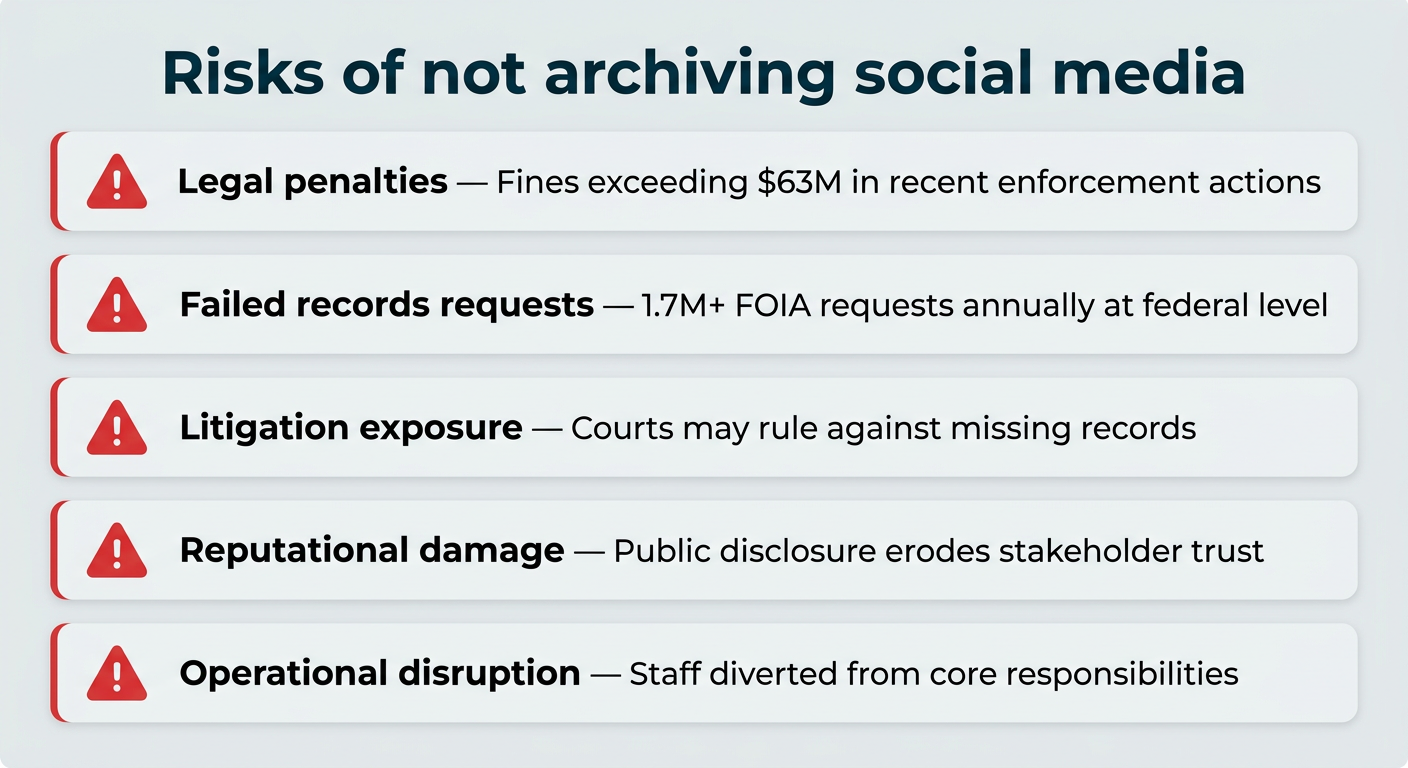
- The Modern Enforcement Phase (2020–Present): Regulators have shifted from "guidance" to "enforcement." With the rise of off-channel communications (such as WhatsApp or DMs) and the increasing complexity of First Amendment challenges on government pages, organizations are now facing multi-million dollar fines for failing to capture and produce digital records during audits and litigation.
Supporting Data: The Cost of Non-Compliance
The financial and operational risks of failing to archive are substantial. In the healthcare sector, for instance, a single violation of the HIPAA Privacy Rule—such as the accidental disclosure of Protected Health Information (PHI) via a social media comment—can result in fines exceeding $2 million per incident.
In the financial sector, the SEC and FINRA have prioritized "off-channel communication" compliance. Recent industry settlements have seen financial firms collectively paying billions in fines for failing to maintain records of business-related messages. For government agencies, the risk is not always monetary but legal and reputational; failing to produce records during a FOIA request or being unable to defend a First Amendment challenge regarding deleted comments can lead to costly court battles and a total breakdown of public trust.
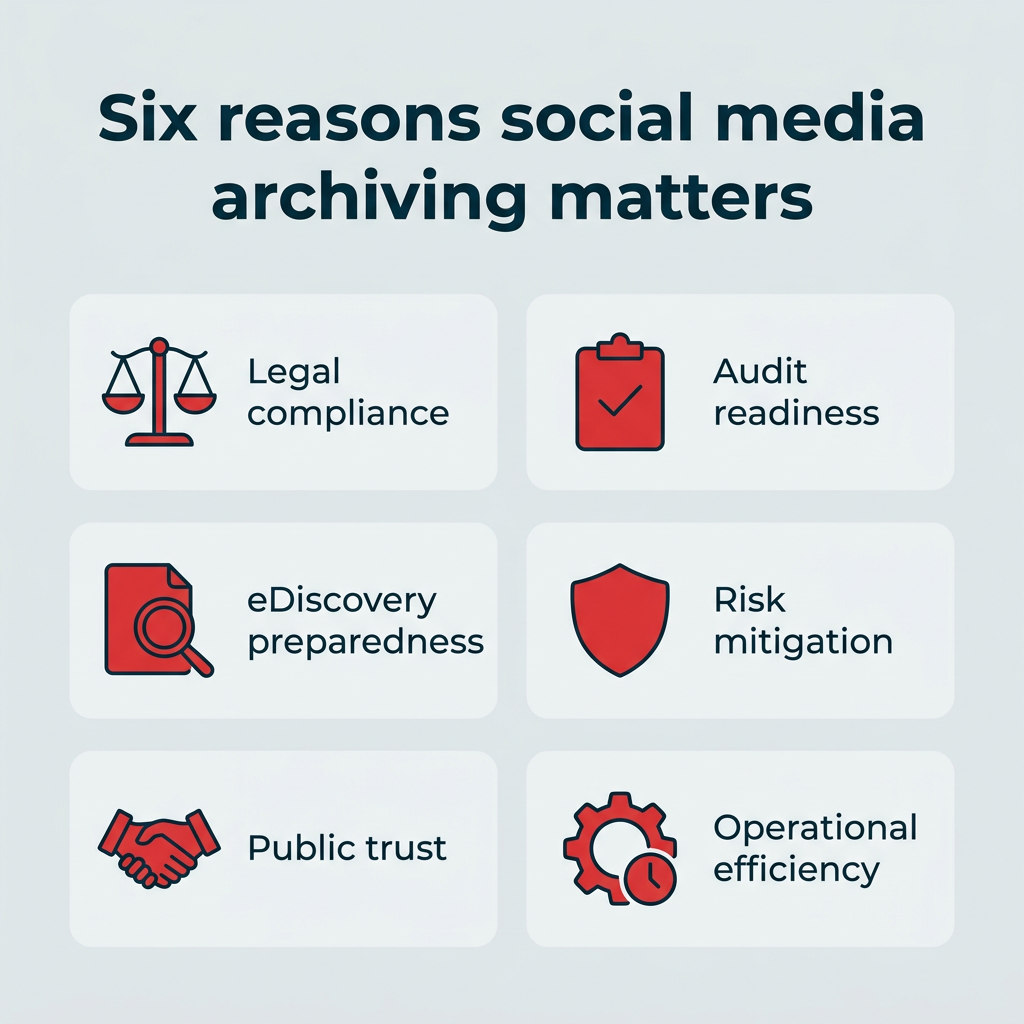
Industry-Specific Archiving Requirements
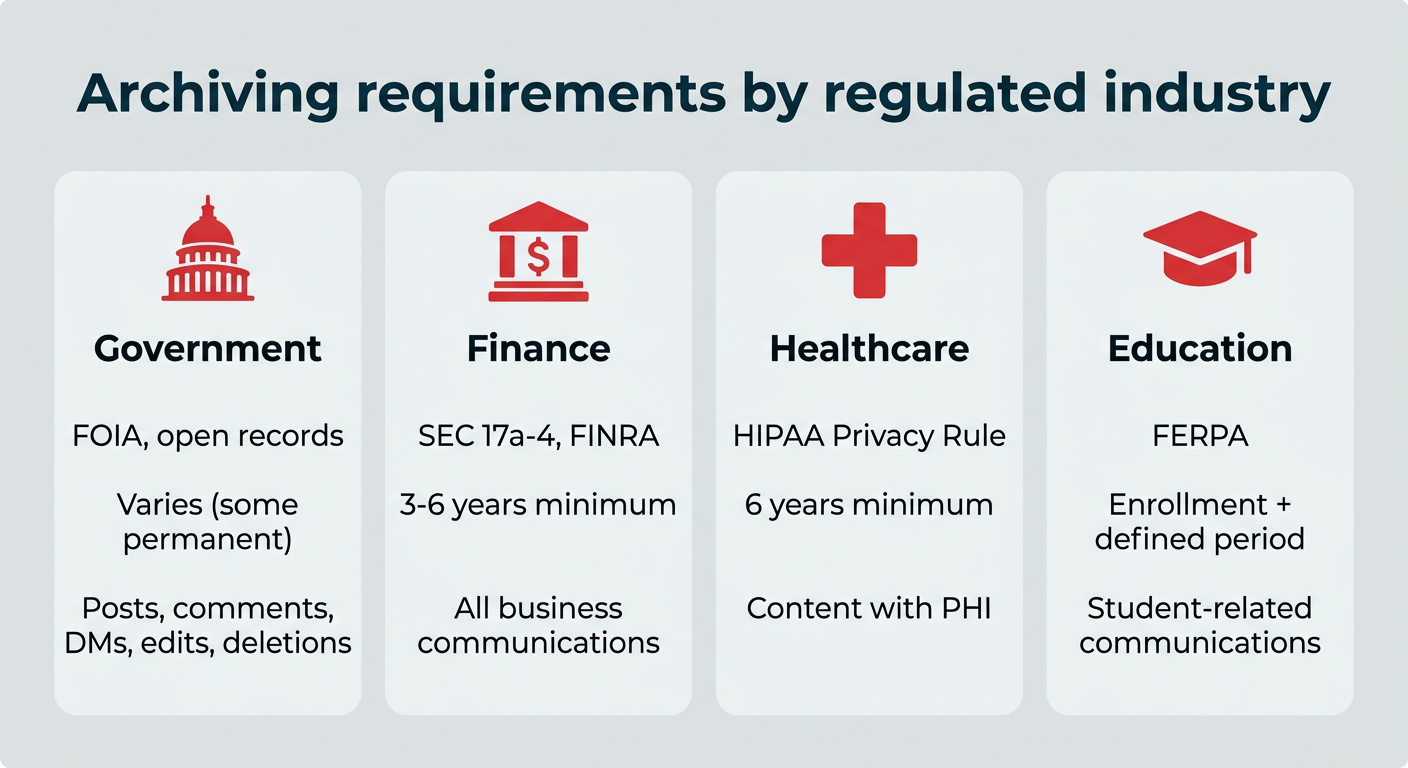
The regulatory framework varies significantly by sector, yet the common requirement remains: if it is a business record, it must be archived.
1. Government Agencies and FOIA
Public records laws dictate that any content produced by a government entity is public property. This includes hidden or deleted comments. If an agency deletes a user’s comment due to a violation of their social media policy, they must be able to prove why that comment was removed. Without an archive that includes metadata, the agency is left defenseless against claims of censorship.
2. Financial Institutions (SEC/FINRA)
Financial firms are bound by SEC Rule 17a-4 and FINRA Rules 3110 and 2210. These rules require that all communications that could be considered business records be stored in a "write-once, read-many" (WORM) format. This ensures that the records cannot be altered or deleted after the fact.
3. Healthcare (HIPAA)
Healthcare providers must navigate the intersection of patient engagement and strict privacy rules. Any social media interaction that touches on patient health information is subject to the HIPAA Privacy Rule. Archiving ensures that if a patient shares sensitive data in a public thread, the organization has a secure record of the interaction to manage the privacy incident effectively.
4. Education (FERPA)
For educational institutions, social media posts that identify students or discuss their academic progress become part of their "educational record." FERPA mandates that these records be protected and accessible, necessitating an archiving strategy that treats social content with the same security as a student’s transcript.
Official Responses and Strategic Governance
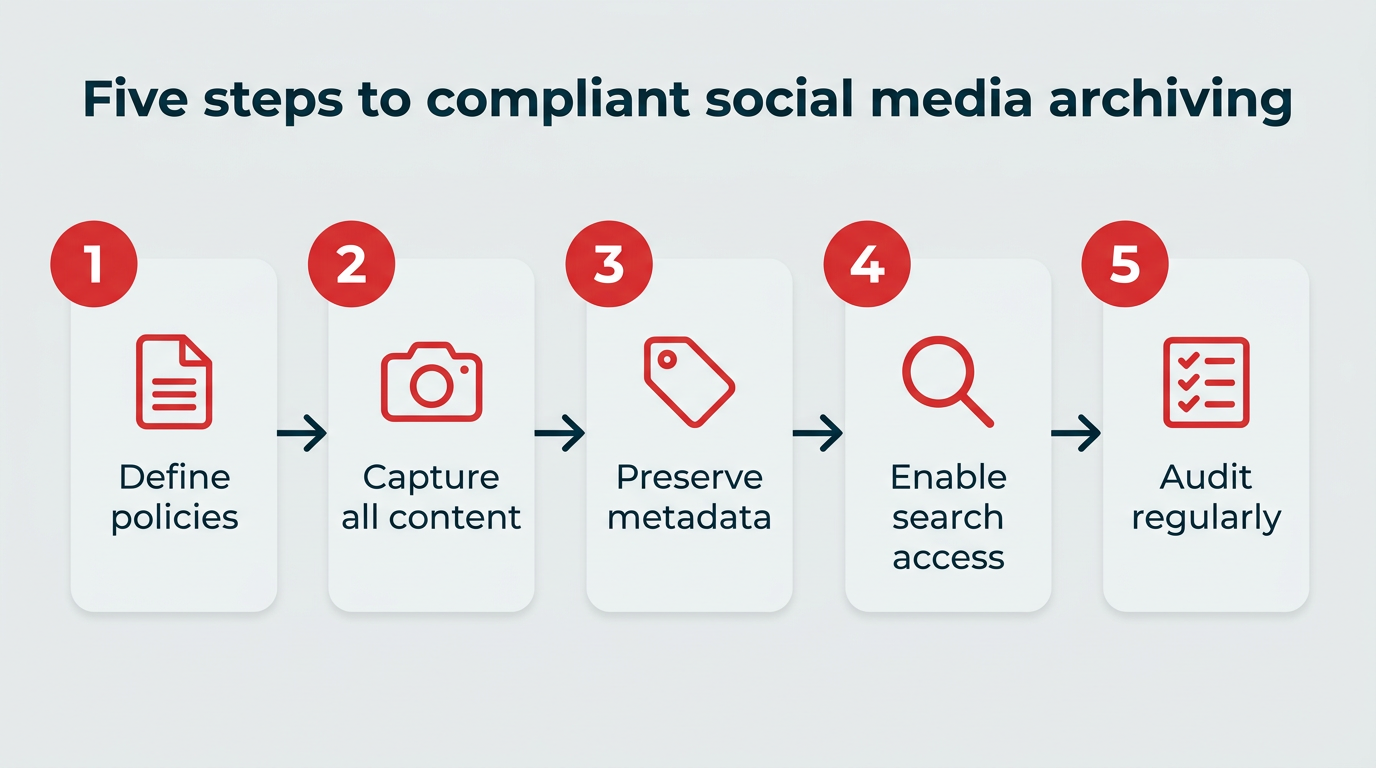
Organizations that successfully navigate these requirements do so by implementing a "Governance-First" strategy. This involves five critical steps:
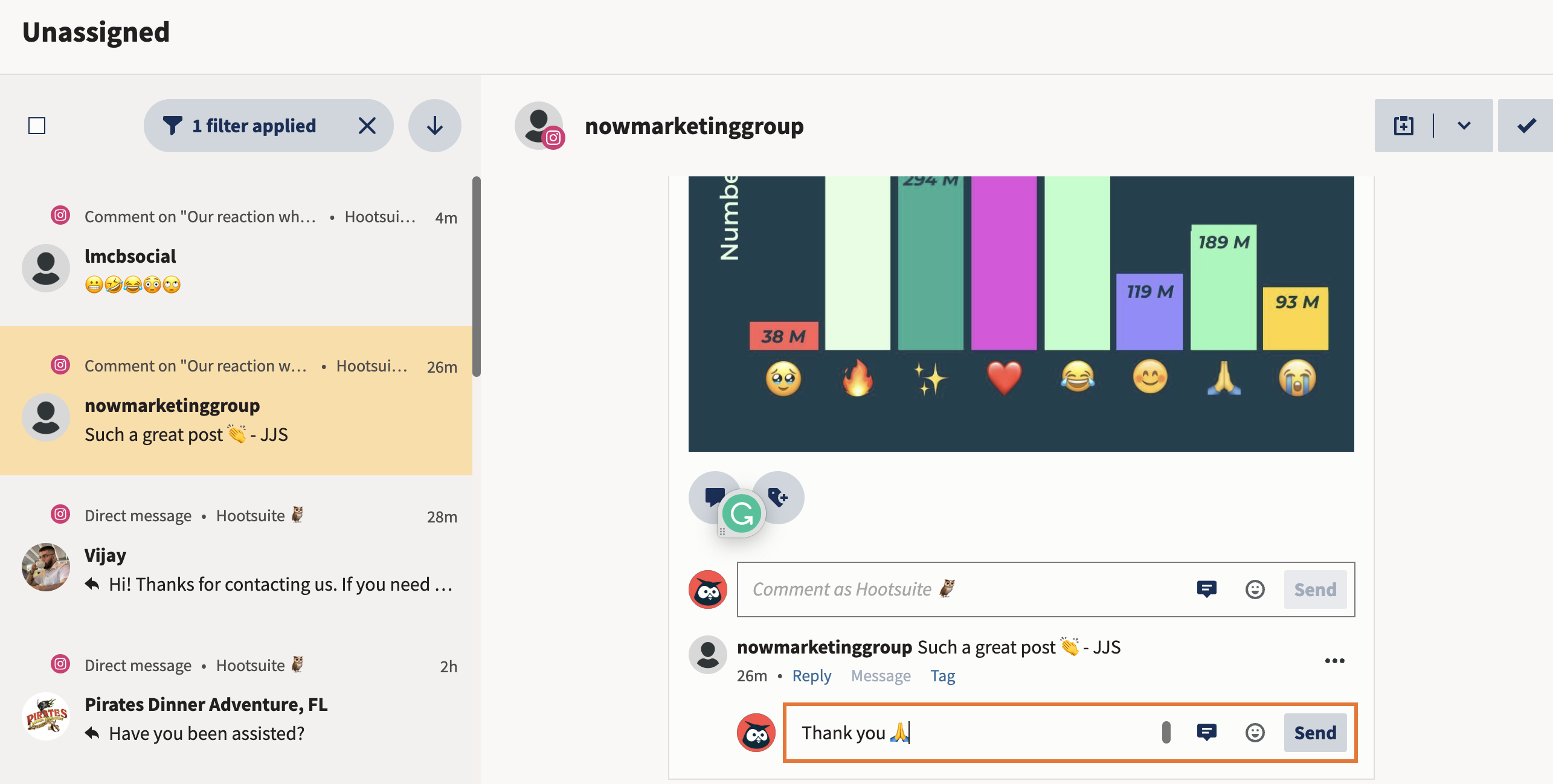
- Define Clear Policies: Your social media policy must dictate not only what can be posted but how it is managed. This includes a clear definition of what constitutes a "business record."
- Automated Capture: Manual screenshots are insufficient. Organizations must use API-based archiving tools that capture the full thread, including metadata (timestamps, IP addresses, and user IDs).
- Preserve Context: An archive without context is a liability. It is essential to capture the "state" of a conversation at the time it occurred, showing edits and deletions alongside the original content.
- Accessibility and Searchability: An archive is only as good as its search function. During eDiscovery, legal teams must be able to pull specific records within minutes, not days.
- Regular Audits: Because social platforms change their APIs frequently, organizations must conduct quarterly audits of their archiving process to ensure no "blind spots" have emerged.
Implications: The Role of Technology Partners
The complexity of modern digital compliance makes it nearly impossible to manage manually. This is why leading organizations are turning to enterprise-grade solutions.
For instance, platforms like Hootsuite have become indispensable for government and regulated sectors. By achieving FedRAMP authorization—the U.S. government’s highest standard for cloud security—Hootsuite provides the necessary assurance that data is being handled according to federal requirements. Through integrations with specialized archiving vendors like Brolly or Proofpoint, these platforms enable real-time, automated capture.
When an organization integrates these tools into their workflow, they achieve two goals: they reduce the administrative burden on their social media managers, and they provide their legal and compliance departments with a "single source of truth."
The Future of Digital Records
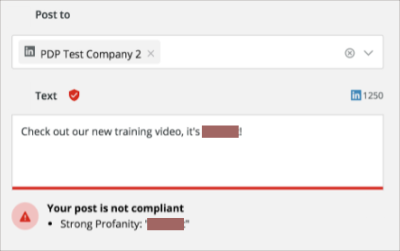
As we look toward the future, the integration of Artificial Intelligence into social media monitoring and archiving will likely become the next standard. AI-driven tools can help identify potential compliance risks in real-time—such as flagging a post that contains prohibited financial advice or sensitive healthcare data—before it is even published.
However, technology is merely an enabler. The true foundation of compliance remains a culture of accountability. Organizations must recognize that every post, every reply, and every "like" is a piece of their corporate or public history.
In conclusion, the era of treating social media as a "wild west" of communication is over. Whether you are a local municipal office, a global bank, or a university, your digital footprint is subject to the same laws as your paper files. By investing in robust archiving strategies today, organizations not only protect themselves from the catastrophic costs of non-compliance but also demonstrate a commitment to transparency, integrity, and public service. The cost of a proper archiving solution is, in every measurable instance, far lower than the cost of a failed audit or a lost legal battle.











No comments yet. Be the first to join the conversation!