

For decades, the relationship between the Cannes Film Festival and the medium of animation was defined by a curious, often strained, ambivalence. While the Croisette has always been the global epicenter for auteur-driven live-action cinema, the animated form was frequently relegated to the fringes—a curiosity rather than a cornerstone. There were, of course, exceptions that broke the mold: the 2004 inclusion of DreamWorks’ Shrek 2 in the competition for the Palme d’Or remains a historical outlier that proved, if only for a moment, that the festival’s curators were capable of embracing the populist appeal of high-end animation.
Yet, for many years, the presence of animated films at Cannes remained sparse. That narrative has shifted dramatically in the last half-decade. In an industry increasingly hungry for original IP and elevated storytelling, Cannes has inadvertently transformed into the premier global launchpad for animated features seeking to convert critical acclaim into Academy Award gold.
The Cannes-to-Oscar Pipeline: A New Strategic Playbook
The recent success of independent animation on the Croisette is not a coincidence; it is a calculated evolution of the festival’s programming strategy. By providing a platform for smaller, non-studio projects to garner international reviews, Cannes acts as a prestigious validator.
Take the 2024 trajectory of Flow. As a modest, independent Latvian feature tucked away in the Un Certain Regard section, it arrived with little fanfare. However, the critical consensus—led by outlets like IndieWire—was immediate and overwhelming. That momentum did not dissipate; instead, it built steadily throughout the year, serving as a powerful marketing engine that carried the film all the way to a surprising, yet deeply satisfying, victory for Best Animated Feature at the Academy Awards.
This pattern is becoming a blueprint. The previous year saw a similar, if distinct, success story. While the cultural conversation was largely dominated by the monolithic presence of KPOP Demon Hunters, two smaller Cannes premieres—Arco and Little Amélie or the Character of Rain—managed to leverage their festival debuts into sustained awards-season visibility, ultimately securing coveted Academy Award nominations. For animation studios and independent directors, a premiere at Cannes now offers a level of prestige that domestic festival circuits simply cannot replicate.

The 2026 Slate: A Diverse Array of Animated Voices
As the 2026 festival prepares to run from May 12 through May 23, the selection of animated features is once again remarkably eclectic. While the volume remains curated, the breadth of the medium is on full display, ranging from traditional sketchbook aesthetics to bold, avant-garde experiments.
The Frontrunner: Fallen
The most significant awards-season hopeful this year is undoubtedly Fallen. Directed by Pixar alum Louis Clichy—whose pedigree includes significant contributions to modern classics like WALL-E and Up, followed by his successful Asterix features in France—the film represents a return to a more intimate form of storytelling.
Fallen utilizes a 2D, sketchbook-inspired aesthetic that feels both nostalgic and refreshingly raw. The narrative follows a young boy struggling with the physical constraints of an iron corset, who defies the stifling expectations of his rural upbringing to pursue a passion for music. It is a classic, uplifting character study that fits perfectly into the Academy’s preference for emotionally resonant, humanistic storytelling. If the critical reception holds, Fallen is well-positioned to mirror the trajectory of Flow.
The Annecy Connection: Tangles and Lucy Lost
Following the success of Arco and Little Amélie, two films this year are following the established "Cannes-to-Annecy" pipeline, premiering in May before heading to the Annecy International Film Festival in June.
- Tangles: The debut feature from Canadian director Leah Nelson is an adaptation of Sarah Leavitt’s acclaimed graphic memoir. The film explores the harrowing, tender reality of a daughter returning home to care for her mother as she succumbs to Alzheimer’s. Its focus on mature, grounded subject matter is a testament to how far animation has come in tackling complex, adult themes.
- Lucy Lost: Directed by Oliver Clert, this film offers a more traditional, family-oriented adventure. Set in 1915 Sicily, the story follows a young orphan whose journey to uncover the truth behind her cryptic, mysterious visions provides a canvas for high-concept visual storytelling.
The Wildcard: A Midnight Provocation
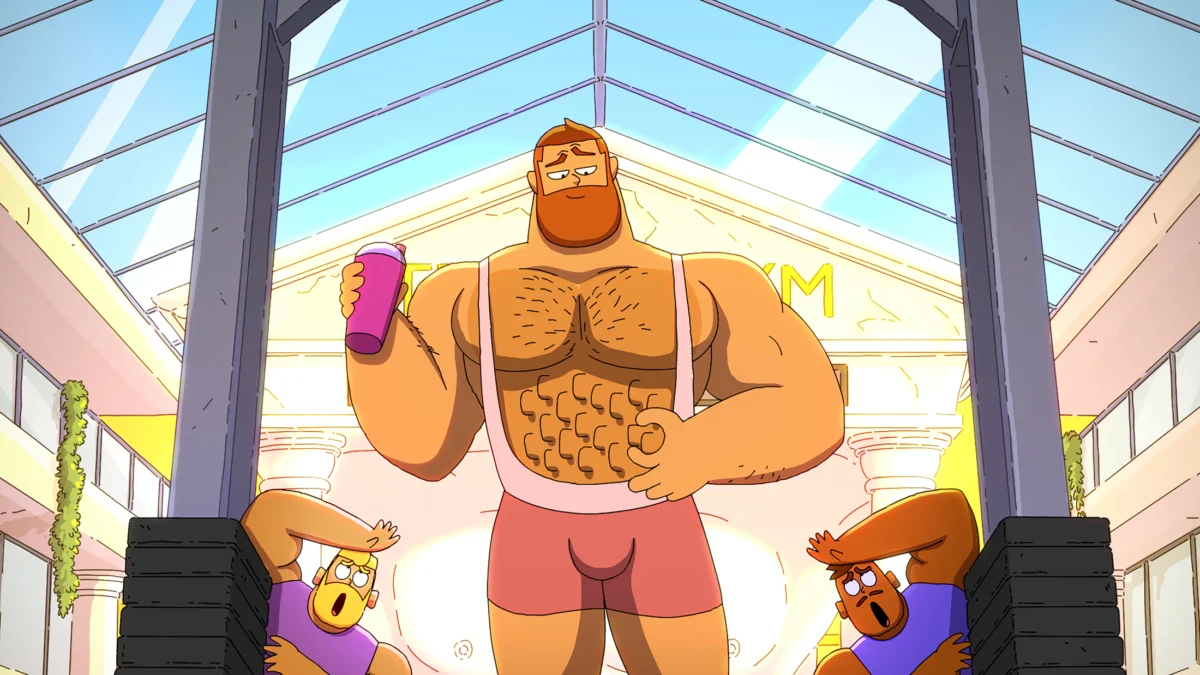
Perhaps the most discussed project—and certainly the one most likely to upend the typical awards-season politesse—is the Midnight Screening entry, Jim Queen and the Quest for Chloroqueer.

Directed by newcomers Marco Nguyen and Nicolas Athané, the film is an unabashedly camp, hyper-queer, 2D-animated odyssey. The premise—a hunky influencer and a twink trekking across a surreal landscape to find a cure for a disease that forces gay men into heterosexuality—is as bold as it is irreverent. While it is unlikely to secure a nomination in the traditional Best Animated Feature categories, the film represents the "exciting oddities" that Cannes is uniquely positioned to platform. It is a reminder that animation is as much a medium for subversion as it is for sentimentality.
Beyond the Palais: Expanding the Boundaries of Animation
The influence of Cannes is no longer contained solely within the walls of the Grand Théâtre Lumière. The festival’s peripheral sections are increasingly utilizing animation to anchor their own prestige.
The Directors’ Fortnight has made a historic move by selecting the French animated feature In Waves, directed by Phuong Mai Nguyen, to open the program. A poignant exploration of the romance between a surfer and a skateboarder, its dual-language release (English and French) underscores the international ambition of the project.
Simultaneously, the festival is set to close with Le vertige, directed by the prolific French provocateur Quentin Dupieux. Known for his surreal, often comedic sensibilities, Dupieux’s foray into animation is highly anticipated. The film centers on a man who discovers his reality is merely a simulation—rendered intentionally to look like a low-fidelity PS2 game. This aesthetic choice highlights a growing trend of "lo-fi" animation being used to interrogate the nature of digital existence.
Furthermore, the inclusion of the Japanese rotoscope film We Are Aliens and Viva Carmen!—the latest from Chicken for Linda! director Sébastien Laudenbach—demonstrates that the festival is committed to showcasing a global range of techniques, from classical rotoscoping to operatic adaptations.

Implications for the Industry
The shift in the festival’s programming carries significant implications for the global animation industry.
- Validation of Independent Models: The success of films like Flow proves that major studios no longer have a monopoly on the "Best Animated Feature" conversation. By prioritizing independent, director-led projects, Cannes provides these films with the international press coverage necessary to compete with the multi-million dollar marketing campaigns of the Hollywood majors.
- Cultural Diplomacy: The increased focus on diverse subjects—Alzheimer’s, queer identity, and simulations—elevates the medium of animation, moving it further away from the stigma of being "just for children."
- The Distribution Gamble: Despite the prestige, the primary challenge remains: distribution. Many of the films featured at Cannes this year face an uncertain path to U.S. markets. Festivals provide the visibility, but the "Cannes effect" is only as strong as the distribution deals that follow.
As we look toward the 2026 festival, it is clear that Cannes has stopped treating animation as a secondary citizen. It is now a vibrant, central part of the festival’s identity. Whether these films will find mainstream success is secondary to the fact that they are being given the platform to exist. As the saying goes in festival circles, the true thrill lies in the discovery: finding that hidden gem on the ground floor, and knowing that, for a brief moment in the dark of a theater on the Croisette, you were the first to witness the next great evolution of the medium.
The question for the industry now is not whether animation belongs at Cannes, but how much further the festival will push the boundaries of what this medium can achieve.











No comments yet. Be the first to join the conversation!