

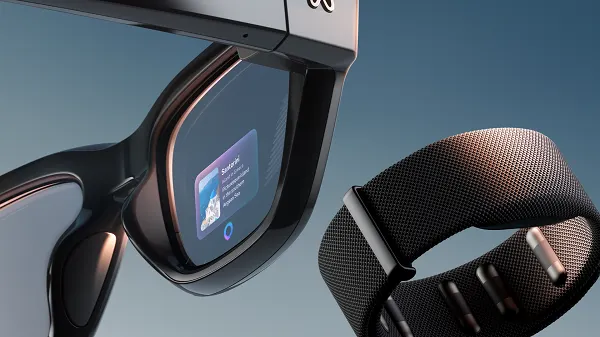
As the consumer technology industry pivots from screens held in hand to displays worn on the face, Snap Inc. is doubling down on its AR Spectacles project. Last month, the company convened a diverse group of 45 elite developers at its Santa Monica headquarters for a first-of-its-kind AR developer bootcamp. This gathering serves as a critical milestone for Snap as it attempts to transition from a social media powerhouse into a hardware-first player in the burgeoning augmented reality (AR) market.
However, as the company prepares for a high-profile consumer launch, the road ahead is paved with both immense creative potential and daunting competitive challenges.
The Main Facts: Bridging the Gap Between Online Community and Physical Reality
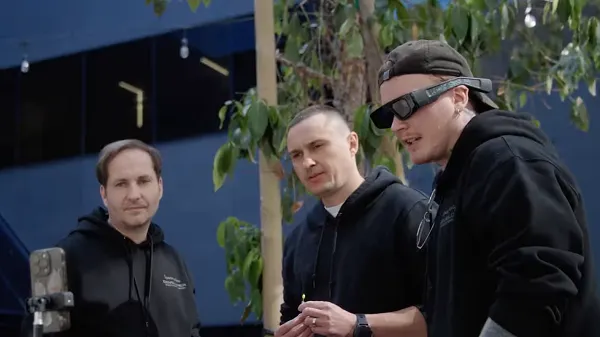
The recent bootcamp at Snap’s headquarters was designed to unify the scattered community of creators who have spent the last year pushing the boundaries of the Spectacles platform. These developers, who have previously interacted only through digital channels like Discord and Reddit, were given direct access to the engineers responsible for building the Spectacles ecosystem.
For Snap, the event was not merely a networking opportunity; it was a strategic mobilization. By fostering deeper relationships with the developers who create the "killer apps" for their hardware, Snap aims to cultivate a robust library of software that will prove indispensable when the glasses finally hit the mass market. The attendees, representing a global contingent from the United States, Zambia, Sweden, and Belgium, spent the day stress-testing new features, swapping technical insights, and aligning their development roadmaps with the company’s vision for the future of "Specs."
Chronology of Innovation: From In-App Lenses to Hardware Dominance
Snap’s journey toward wearable hardware is the result of years of meticulous iteration. The company’s trajectory can be mapped across several distinct phases:
- The Mobile Foundation (2015–2018): Snap established itself as an AR pioneer through the massive success of its in-app Lenses. By democratizing AR, the company turned mundane selfies into viral sensations, proving that mass-market users were hungry for digital overlays.
- The Early Hardware Experiments (2016–2021): Snap launched several iterations of Spectacles, initially focused on content creation (capturing photos and videos from a first-person perspective) rather than true AR. These devices served as the "sandbox" phase, allowing Snap to learn about form factors and consumer comfort.
- The AR Leap (2022–2024): The company shifted its focus toward true optical AR. During this period, the developer community began receiving early access to AR-capable Spectacles, facilitating the creation of immersive, room-scale experiences.
- The Bootcamp Catalyst (2025): The recent Santa Monica summit marks the transition from "internal research" to "pre-launch ecosystem building." Snap is now preparing the ground for a wider consumer rollout expected later this year.
Supporting Data and the Ecosystem Advantage
The strength of the Snap ecosystem lies in its "community-first" approach. Unlike competitors who often rely on centralized, top-down development, Snap has nurtured a bottom-up culture. The company noted that the developers attending the bootcamp were responsible for the most ambitious experiences seen to date, including interactive game mechanics and persistent spatial overlays that react to the physical environment.
By leveraging existing platforms like Reddit and Discord to maintain a constant feedback loop, Snap has successfully gamified the development process. "Community Challenges" have pushed developers to solve complex technical problems, such as spatial anchoring and low-latency rendering, which are critical for the hardware to feel "real" to the end user. The success of this strategy is evident in the depth of the current software library, which far exceeds what one would expect from a closed-beta program.
Official Responses: The Philosophy of Connection
Snap’s leadership views the bootcamp as more than just a training session; it is a catalyst for cultural change. In a statement reflecting on the event, a company spokesperson remarked:
"For many of the developers in the room, the bootcamp was the first time meeting peers they’d known online for years. Watching them swap projects and trade ideas about what’s possible on Spectacles, and soon Specs, was a reminder of how far this community has come and how much further we can go when we bring it together in person."
This sentiment underscores Snap’s core belief: that AR is inherently social. By facilitating these human connections, Snap hopes to foster an ecosystem where the hardware becomes a tool for communal, shared experiences rather than isolated, solitary tech-consumption.
Competitive Implications: The Shadows of Meta and Apple
While Snap’s internal momentum is palpable, the external market landscape is increasingly hostile. The company faces a "war of form factors" against established titans.
The Meta Threat
Meta’s AI-powered glasses have become the unexpected "darling" of the industry. While Meta’s current offerings lack the sophisticated AR overlays found in Snap’s prototypes, they have succeeded by focusing on the "everyday wearability" factor. With a slim, stylish design and an integrated AI assistant, Meta has proven that consumers are willing to adopt "smart" eyewear if it doesn’t make them look like they are wearing a bulky peripheral.
The Apple Factor
Apple, ever the shadow over the XR (Extended Reality) space, continues to refine its headset technology. While the Vision Pro is a high-end, stationary device, industry analysts expect Apple to eventually release a more portable, glass-based iteration. Snap’s challenge is to prove that its "goggle-like" Spectacles provide enough value to justify the social awkwardness of wearing them in public—a hurdle Meta has arguably cleared with more success to date.
The Uphill Battle: Aesthetics vs. Utility
A recurring criticism of Snap’s Spectacles is their aesthetic design. Compared to the sleek, Ray-Ban-style frames offered by Meta, Snap’s current hardware remains significantly bulkier. The question for potential consumers is: Will this be a lifestyle product or a niche tool?
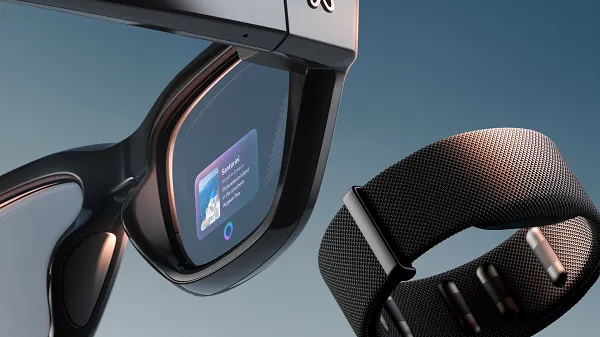
The technical capacity of these devices remains the primary battleground. While Snap focuses on complex AR, Meta is capturing the market with "AI utility"—features like real-time translation, visual recognition, and voice-activated information. If Snap cannot demonstrate that its AR overlays offer a "magical" experience that exceeds the utility of an AI chatbot, it risks being relegated to a niche for hobbyists.
Conclusion: A Pivot Point for the Future
As the calendar approaches the planned release date for the next generation of AR Specs, the pressure on Snap is mounting. The company has a unique opportunity to define the "Spatial Web" through its community-driven, creative-first approach.
The developer bootcamp was a vital step in ensuring that when the hardware arrives, it won’t arrive as a blank slate. By arming a global army of developers with the tools to build meaningful, interactive, and shareable experiences, Snap is betting that the quality of the software will ultimately override the skepticism regarding the device’s physical profile.
However, history is littered with brilliant technologies that failed to achieve mass-market adoption due to timing, form factor, or a lack of clear utility. Snap stands at a crossroads. The company has the vision, the community, and the pedigree to lead in AR—but in a world where Meta is already winning the style war, "good enough" will not be enough. The success of the forthcoming launch will depend entirely on whether those 45 developers, and the thousands they represent, can create that one "must-have" experience that makes the world want to look through a pair of Snap glasses.
Until the device hits the shelves, the skepticism will remain, but the energy in Santa Monica suggests that Snap is far from throwing in the towel. They are building, refining, and preparing for the moment where digital overlays become a standard part of our daily reality. Whether that reality is built on Snap’s hardware, or someone else’s, remains the most compelling question in tech for 2025.












No comments yet. Be the first to join the conversation!