
 Nana Muazin
By [Your Name/Staff Writer]
July 10, 2026
In the pantheon of Western literature, few texts command the reverence of Homer’s The Odyssey. For nearly three millennia, the epic has served as the bedrock of storytelling, defining the archetypes of duty, hospitality, and the cunning hero. From the investigative prowess of Sherlock Holmes to the moral fortitude of Superman, the DNA of Odysseus is woven into the fabric of modern fiction.
Yet, as director Christopher Nolan prepares to unveil his ambitious cinematic adaptation of the epic on July 17, 2026, he is finding that even the most sacred of ancient texts are not immune to the modern phenomenon of "fandom" toxicity. While scholars and classicists have long debated the nuances of Homeric translation, the online discourse surrounding Nolan’s film has taken a decidedly different—and more vitriolic—turn. For Nolan, however, the noise is merely a familiar tune, one he first learned to ignore during his decade-long stewardship of the Dark Knight trilogy.
The Weight of the Canon: A Lesson in Fandom
When speaking with The Telegraph this week, Nolan offered a perspective on the current online backlash that was as pragmatic as it was seasoned. When asked how he handles the pre-release scrutiny of his take on Homer’s hero, Nolan was quick to provide context.
"I spent 10 years of my life dealing with Batman," Nolan noted. "When I came on to Batman Begins, writers and artists had been working on this beloved character for almost 65 years, and a lot of freighted thoughts were out there about what he represents."
For those who have followed Nolan’s career, the irony is palpable. In 2005, the announcement that the man behind the cerebral Memento would be taking on a comic book character was met with intense skepticism. Today, the Dark Knight trilogy is widely considered the gold standard for the genre, but its journey to that status was paved with the same "unhinged" criticism currently being directed at The Odyssey.
Chronology of a Controversy: From Costume Tweaks to Identity Politics
The cycle of outrage surrounding The Odyssey began with a whisper and quickly devolved into a roar. The film, which features a powerhouse cast including Matt Damon, Elliot Page, Travis Scott, and Lupita Nyong’o, has become a lightning rod for social media pundits long before a single frame has hit the local multiplex.
The Initial Skepticism
The critique started in the realm of "accuracy." When early promotional imagery surfaced, a vocal segment of the internet took to X (formerly Twitter) to dissect the aesthetics of the film. One user gained traction by pointing out that the helmet worn by Matt Damon’s character did not perfectly mirror the historical descriptions found in the text. While seemingly innocuous, this marked the beginning of a pattern: a focus on granular, often pedantic details rather than the thematic substance of the adaptation.
The Escalation
As the release date approached, the nature of the criticism shifted from historical accuracy to identity-based grievances. The casting choices, which Nolan clearly curated for their emotional resonance and acting pedigree, became the primary target for bad-faith arguments:
- The Casting of Elliot Page: Despite Page’s critical acclaim in Inception, a segment of the online community targeted the actor specifically due to his identity as a trans man.
- The Musical Bard: The decision to cast Travis Scott as a bard drew ire from those who felt a rapper was an unconventional choice for a classical setting, ignoring Scott’s established proficiency in rhythmic storytelling—a skill that arguably aligns perfectly with the oral tradition of Homeric verse.
- Helen of Troy: Perhaps the most egregious backlash was directed at Academy Award-winner Lupita Nyong’o. The discourse surrounding her casting as Helen—"the face that launched a thousand ships"—veered into territory that ignored her status as an international model and polyglot, focusing instead on narrow-minded definitions of casting in historical fiction.
The Shadow of Gotham: Lessons from the Past
To understand why Nolan remains unmoved by the current outcry, one must look at the "reasonable" critiques he faced during his time in Gotham. It is a historical fact that fans were once horrified by the prospect of Heath Ledger, the "pretty-boy teen idol" from 10 Things I Hate About You, playing the Joker.
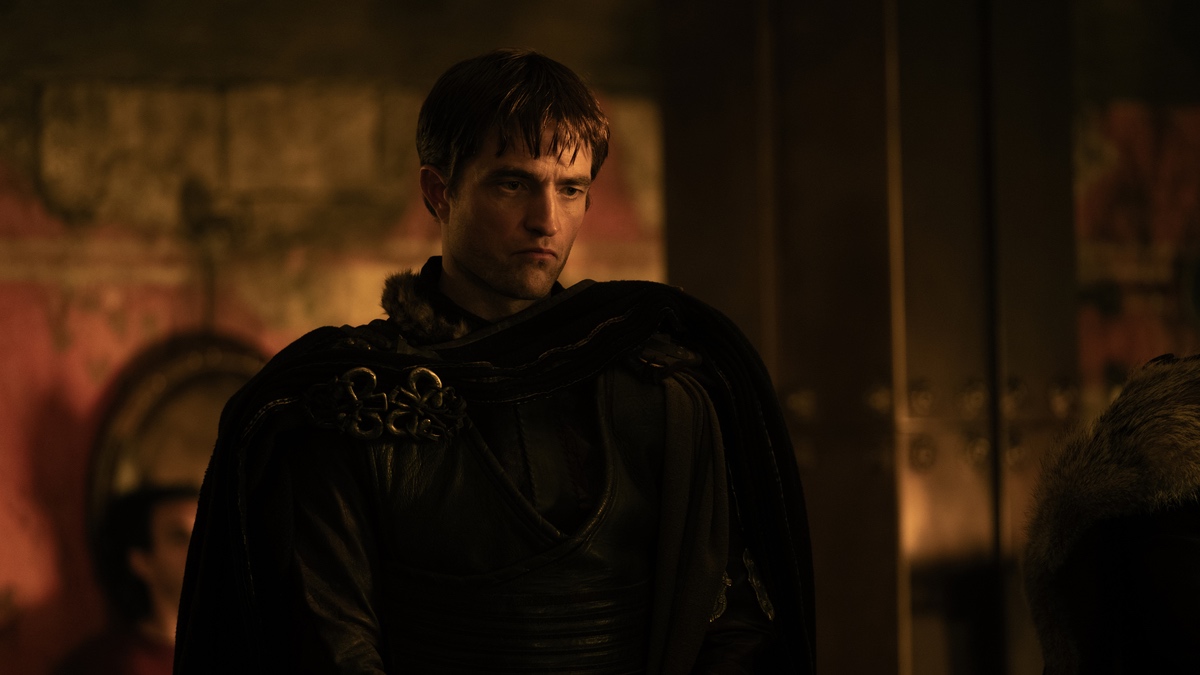
"It’s hard to believe today," Nolan remarked, "but that decision infuriated people."
The history of the Dark Knight trilogy is, in many ways, a list of subversions that later became industry standards:
- The Bane Reimagining: Nolan’s decision to move away from the "South American mastermind" trope of the comics to a more grounded, enigmatic villain drew significant fire at the time.
- The Ra’s al Ghul Succession: By replacing the supernatural Lazarus Pit with a legacy-based leadership structure, Nolan prioritized narrative groundedness over comic-book accuracy—a choice that initially alienated purists.
- The Third Act of The Dark Knight Rises: Even within the fan base, critiques regarding the final twenty minutes of his final Batman film are still debated, proving that no choice, however visionary, escapes the scrutiny of the audience.
Intellectual Implications: What is Adaptation?
At the heart of the current debate is a fundamental misunderstanding of what adaptation means in the context of history and myth. Nolan argues that the Odyssey itself was, in its own time, a work of imaginative historical fiction.
"[Homer] and his audience were looking back centuries at what they viewed as a superior civilisation, this long-past Age of Heroes, and there had been this social and cultural collapse in between," Nolan explains.
The implication here is profound: Homer was not a documentary filmmaker; he was an artist synthesizing a lost past for a contemporary audience. Nolan’s approach to The Odyssey follows this same trajectory. He suggests that the "Age of Heroes" is not a stagnant museum piece, but a fluid landscape that must be reinterpreted for every generation.
Official Responses and Industry Outlook
While studio executives at Universal Pictures have remained tight-lipped regarding the specific backlash, the marketing strategy has pivoted toward emphasizing the film’s grand scale and thematic weight. Industry analysts suggest that the "controversy" is largely manufactured by a small, loud minority that does not reflect the broader audience’s excitement for a Nolan-helmed epic.
Nolan’s own response to the "noise" is perhaps the most telling indicator of his artistic philosophy. "What I learnt over my time on [the Dark Knight] trilogy is you can’t worry about any of that at all," he states. "What you have to do is honour the original text by interpreting it in the strongest way you personally can."
The Final Word
As July 17 approaches, the cinematic world waits to see if Nolan’s The Odyssey will reach the same heights as his previous masterworks. History suggests that the most vocal critics are often the ones who find themselves silenced by the quality of the final product.
Nolan’s advice to those still clinging to their rigid, pre-conceived notions of how the story should look is as blunt as it is humorous: "If people don’t like it, well, they’ll get over it the next time someone lights the bat-signal wrong and they can complain about that instead."
Ultimately, the film will be judged not by the intensity of the Twitter threads that preceded it, but by its ability to capture the same universal truths that have kept the Odyssey alive for thousands of years. In the end, the fans—and the stories themselves—are never "one thing." They are living, breathing entities, subject to the vision of those brave enough to step into the fray and reshape them for a new era. Whether the audience is ready for this iteration of Odysseus remains to be seen, but one thing is certain: Christopher Nolan has been here before, and he knows exactly how the story ends.


 Pevita Pearce
 Asep Darmawan




