The literary landscape of the self-published fantasy community has reached a pivotal juncture. After weeks of rigorous evaluation, the judges for the 11th Annual Self-Published Fantasy Blog-Off (SPFBO 11) have officially concluded their “Seventh and Final Fall,” marking the end of the initial elimination phase. This rigorous process has whittled down the competitive pool, leaving behind two final titles that, while not advancing to the semi-finals, have sparked significant debate and critical analysis among the panel.
As the competition transitions into its next stage—the dedicated review of the four chosen semi-finalists—it is time to reflect on the books that defined this final round of cuts. This year’s SPFBO has proven once again that the self-publishing arena is a hotbed of experimental narratives, bold world-building, and divisive creative choices.
The SPFBO Selection Process: A Methodology of Subjectivity
To understand the significance of these final cuts, one must first understand the fluid nature of the SPFBO judging process. Unlike a static academic competition, the SPFBO does not operate on a linear progression from “worst to best.” Judges move through the entries in batches, assessing each work based on a combination of narrative voice, structural integrity, character depth, and thematic resonance.
The organizers have consistently maintained that reading is a deeply subjective endeavor. A manuscript that feels disconnected to one reader may strike a profound chord with another. This year’s panel, consisting of 14 diverse literary voices—including Adawia Asad, Eva Geraghty, and E.G. Stone—emphasized that a “cut” does not equate to a failure of talent. Rather, it represents the end of a specific book’s journey within this particular competitive framework.
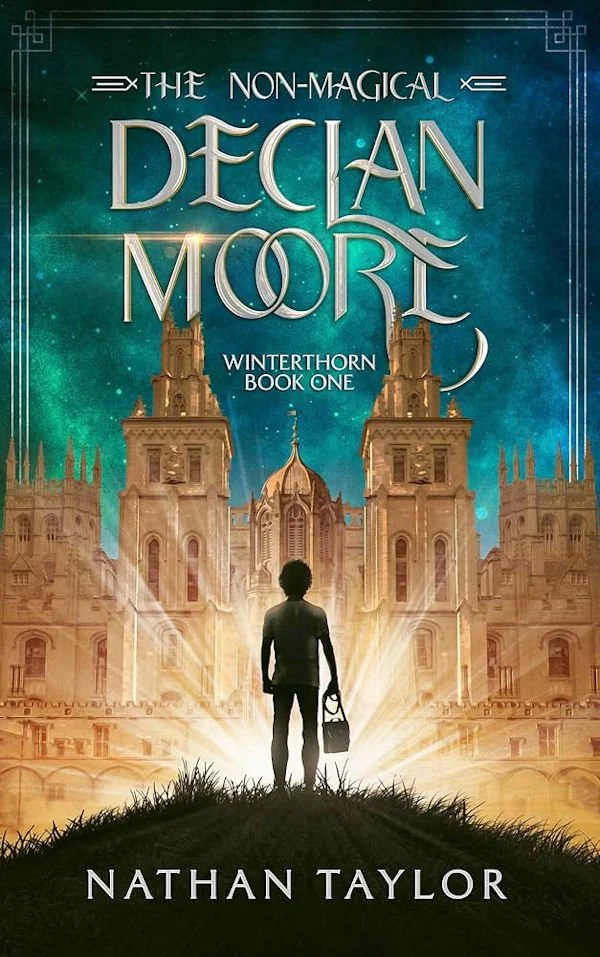
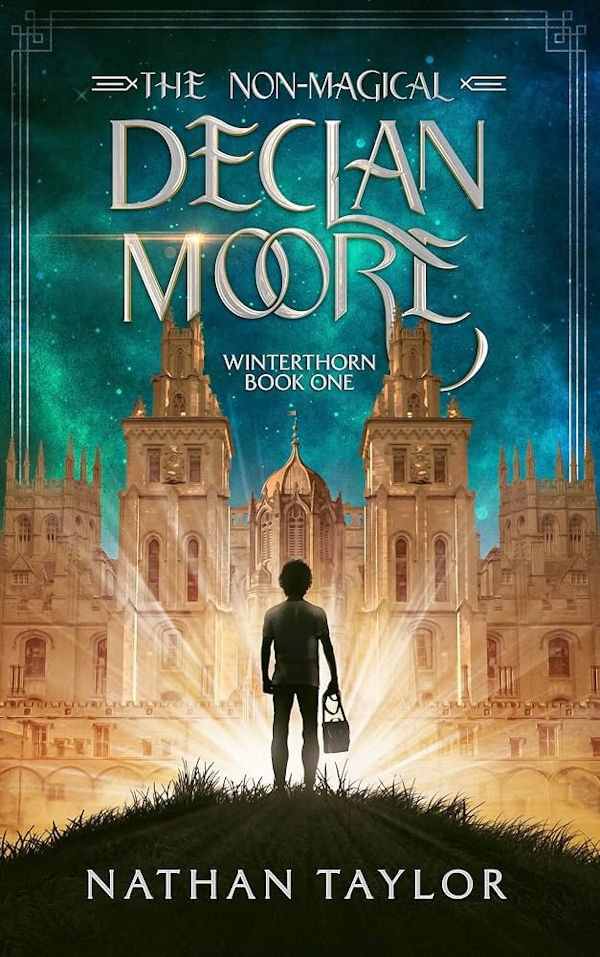
Feature Analysis: The Non-Magical Declan Moore by Nathan Taylor
The first of the two final titles to be discussed is Nathan Taylor’s The Non-Magical Declan Moore. Set in the modern nation of Euryma, the novel posits a society where magic is as ubiquitous as tap water. In this world, the protagonist, 17-year-old Declan, is a "LAMP"—an individual Lacking All Magical Potential.
The Polarizing Narrative
The Non-Magical Declan Moore emerged as the most divisive title of the current cycle. The judges’ reactions were sharply bifurcated, leading to what some staff members described as a “marmite” reception—readers either found the book impossible to put down or struggled to connect with its fundamental premise.
On the positive side, judges like Stacey praised the narrative for its brisk pacing and the high stakes of Declan’s secret struggle. “Declan is a relatable teen in a world that shuns him,” she noted, highlighting the tension created by his need to protect his parents and his secret identity. Sarah, another judge, was similarly enthralled, pointing to the “thrilling” subplot involving a mole within the magical governing body, the Directive.

Critical Dissonance
Conversely, the negative critiques focused on character consistency. Some judges felt that Declan’s emotional responses were jarringly inconsistent, noting that he would frequently shrug off significant trauma in a way that defied psychological realism. There was also a critique regarding the supporting cast, with many characters feeling more like plot devices than fully realized individuals. While Ace was praised as a standout, grounded character, the overarching sentiment from the skeptical faction was that the book’s tonal shifts—moving between lighthearted YA tropes and intense, often violent, sequences—made for a fragmented reading experience.
Feature Analysis: Hunter’s Apprentice by Simon Shugar
The second book to face the final cut was Hunter’s Apprentice by Simon Shugar, a grim, atmospheric tale following a boy named Tomi growing up in a village caught in the crossfire of warring kingdoms.
World-Building and Atmospheric Depth
The strength of Hunter’s Apprentice lies in its visceral depiction of survival. Judges were quick to commend the book’s focus on the minutiae of wilderness life—foraging, shelter building, and the quiet, lean reality of surviving a harsh winter. Julia, one of the primary judges for this title, lauded the book for its “strong narrative pull,” noting that the contrast between the brutal, unforgiving world and the genuine, unconditional love of Tomi’s family provided a compelling emotional backbone.
The Challenge of Voice
Despite the praise for its environmental setting, the novel faced significant hurdles regarding narrative voice. The primary contention was the discrepancy between the protagonist’s age and the maturity of the prose. Because the story follows Tomi from age four onward, the narration often felt too sophisticated and adult to be believable as the internal monologue of a child.
This issue was compounded by what some judges identified as editorial inconsistencies, including repetitive phrasing and structural lapses that suggested a need for further polishing. As E.G. noted, while the story was well-plotted and emotionally resonant, the disconnect between the child’s actions and the adult-sounding narration created a persistent barrier to total immersion.
Chronology of the 11th Annual SPFBO
The 11th edition of the competition has been a marathon of reading and discourse. The following timeline outlines the major phases of the event:
- Announcement and Introduction: The launch of the 11th annual cycle, featuring a diverse list of self-published titles.
- Phase One Evaluations: Judges began the process of reading, debating, and scoring the initial entry list.
- The Rolling Cuts: Throughout the fall, batches of books were reviewed and eliminated, with feedback provided to authors to encourage growth.
- The Seventh and Final Fall: The concluding phase of initial cuts, where the final two books (Taylor and Shugar) were processed.
- The Semi-Finalist Transition: The current stage, where the focus shifts entirely to the four semi-finalists.
Implications for the Self-Publishing Industry
The conclusion of these final cuts offers a broader look at the health and trajectory of the self-publishing industry. The recurring themes in this year’s feedback—specifically the importance of consistent narrative voice and the need for rigorous self-editing—serve as a masterclass for independent authors.
The SPFBO has, over the last eleven years, transformed from a niche experiment into a primary engine for talent discovery. By providing detailed, public-facing feedback, the judges are not merely selecting a winner; they are providing a developmental service to the indie community. The fact that The Non-Magical Declan Moore and Hunter’s Apprentice received such nuanced, split critiques highlights that even when a book does not advance to the finals, it can still provide immense value to the right niche reader.
Official Responses and Next Steps
As the dust settles, the organizers have expressed profound gratitude toward all participants. In a formal statement, the editorial team noted, “Putting your work forward for a competition takes real courage, and we appreciate each and every one of you for it.”
For those who wish to follow the remainder of the competition, the official SPFBO website continues to track the progress of the four semi-finalists. These remaining titles will receive deep-dive reviews, detailed critiques, and the full focus of the 14-member judging panel.
The transition to the semi-finals marks a shift from broad discovery to intense scrutiny. For the authors who were cut, the experience serves as a data point in their writing careers—a collection of professional insights that can be leveraged for future projects. For the remaining four, the road ahead is narrow, demanding, and prestigious.
As we look toward the final announcement of the winner of SPFBO 11, the industry remains focused on the core goal of the competition: elevating high-quality self-published fantasy and proving that independent authors can, and do, produce literature that rivals the best of the traditional publishing world.
For further inquiries:
- Official Website: SPFBO 11 Phase 1
- Media Contact: Jennie Ivins via Bluesky or Threads
- Contest Information: Fantasy Faction SPFBO Introduction