Ammar Sabilarrohman
For generations, the "group date"—known in Japan as gokon—has been a staple of social life, typically involving a handful of friends meeting at a neighborhood izakaya or a quiet café to navigate the awkward waters of courtship. However, on a crisp evening in May 2026, the scale of such encounters shifted from intimate gatherings to a sprawling, high-octane spectacle.
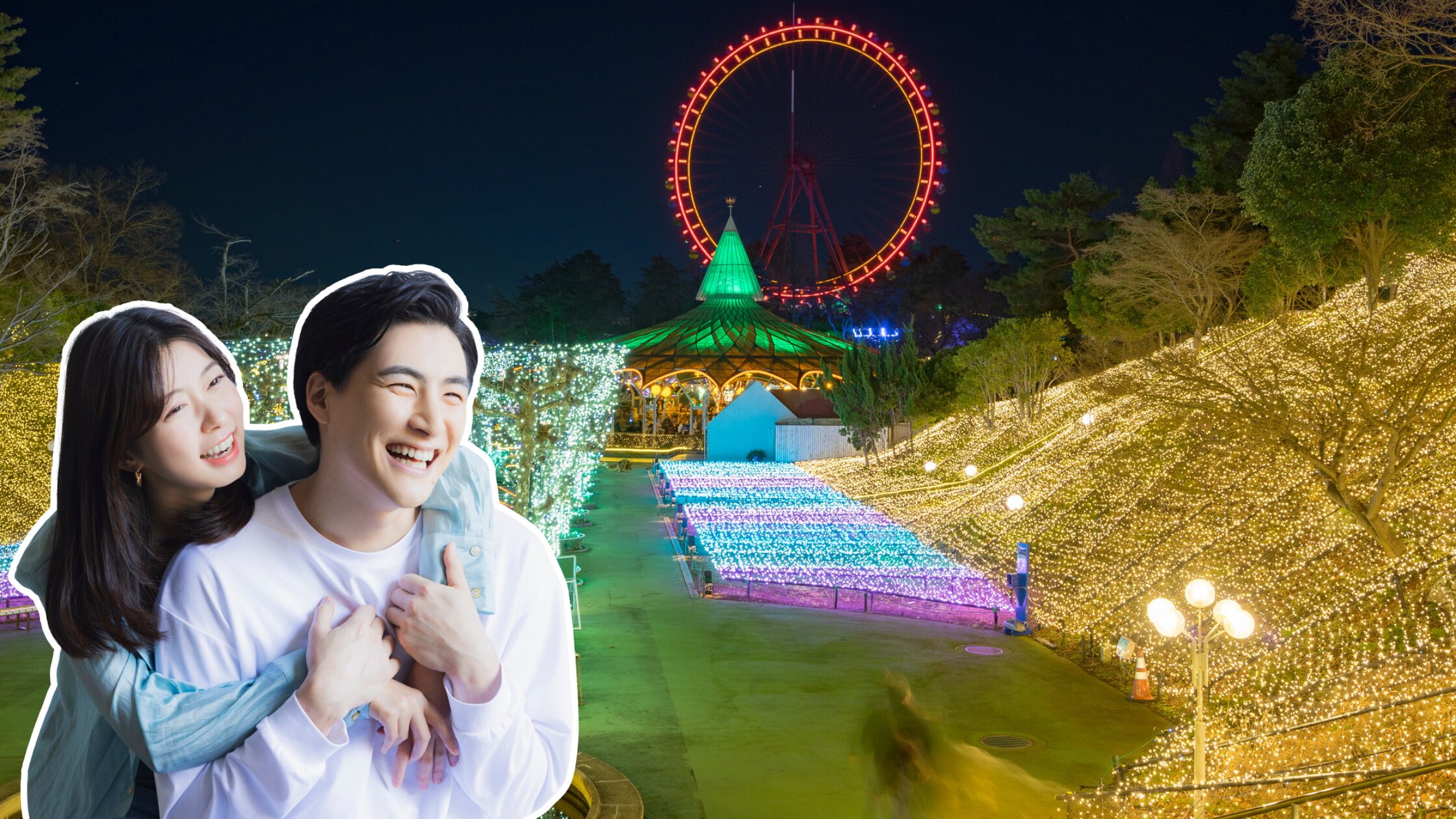
At the Seibuen Amusement Park in Saitama Prefecture, approximately 4,000 single men and women converged for an event that has redefined the modern "marriage hunt" (konkatsu). Against a backdrop of neon-lit Ferris wheels and the mechanical hum of roller coasters, Japan is testing whether the thrill of a theme park can break the paralyzing social fatigue currently gripping its youth.
The Mechanics of "Seibuen Night"
The event, dubbed "Seibuen Night," was not a typical mixer. It was a high-stakes, gamified social experiment designed to bypass the burnout associated with traditional matchmaking. Participants, all aged 20 or older, were greeted with an open bar—serving both alcoholic and non-alcoholic refreshments—before being set loose in the park.
The brilliance of the event lay in its central mandate: you could not ride an attraction alone. To experience any of the park’s thrill rides, attendees were required to pair up with a member of the opposite sex. This rule acted as a social catalyst, effectively stripping away the "wallflower" syndrome that often plagues large-scale networking events. By forcing an immediate, shared experience—a sudden drop on a roller coaster or a slow rotation on a Ferris wheel—the event "greased the wheels" of conversation, replacing awkward, rehearsed introductions with genuine adrenaline.
To further encourage mingling, organizers introduced the "Miracle Trump Game." Upon arrival, each attendee was handed one half of a playing card. The objective was simple: navigate the park to find the person holding the corresponding half. The first 30 pairs to successfully reunite their cards were awarded prizes, providing a low-pressure, high-fun excuse for participants to approach strangers without the fear of immediate rejection.
Chronology of a Modern Matchmaking Phenomenon
The rise of the "amusement park group date" did not happen overnight. The organization behind the Seibuen event, Baumkuchen, has been quietly refining the model since 2012.
- 2012–2020: Baumkuchen began with modest, small-scale events in its home prefecture of Toyama. These initial gatherings focused on creating relaxed, low-stakes environments, proving that people were hungry for alternatives to the rigid, high-pressure matchmaking sessions common in urban centers.
- 2021–2025: As the pandemic forced a shift toward digital isolation, the subsequent "re-opening" of society saw a massive surge in demand for in-person experiences. Recognizing this, Baumkuchen expanded its operations, taking over amusement parks across various regions.
- May 2026: The Seibuen Night event marked a pinnacle of this evolution. By scaling up to 4,000 attendees, the organizers demonstrated that the "amusement park gokon" was no longer a niche hobby but a viable, large-scale solution for mass socialization.
This expansion has not occurred in a vacuum. Other industry players, such as Linkbal—the operator of the "machicon JAPAN" platform—have mirrored this strategy. Linkbal has successfully hosted similar events across 17 locations, including the iconic Tokyo Joypolis and Osaka’s Hirakata Park, typically drawing crowds of around 1,500 people per event.
Supporting Data: The Singles Landscape in 2026
The appetite for these events is driven by a stark reality: the digital dating market is booming, yet satisfaction remains historically low. According to the "Matching App White Paper 2026" published by TWENTYTWO, the Japanese dating app market has reached a valuation of ¥109 billion (approximately USD $680 million). Despite this, the experience of using these apps is frequently described by users as a "conveyor belt" of endless, exhausting swiping.
According to research from the Mobile Marketing Data Labo (MMD Labo), while dating apps are the second most common way for those in their 20s to meet partners, traditional avenues—namely the workplace and school—remain the primary source of romantic connections for 44.5% of the population. However, for many young professionals, these traditional avenues are shrinking due to remote work trends and smaller corporate team sizes.
Furthermore, a recurring theme in contemporary Japanese social research is "time-performance" fatigue. Young people are increasingly wary of investing hours into digital messaging only for a meeting to result in "ghosting" or, worse, a scam. With 80% of young singles expressing that the "marriage hunt" is an exhausting, demoralizing experience, the physical, time-contained nature of an amusement park event provides a tangible "refresh" button.
The Price of Admission: A Gendered Debate
The logistical success of Seibuen Night was accompanied by significant public discourse regarding its pricing model. Men were charged ¥7,000 (USD $44), while women paid ¥4,000 (USD $25).
On social media platforms like X, the reactions were polarized. Critics, such as user @wdragons, argued that this price disparity imposes an unfair financial burden on men, potentially discouraging those with lower disposable incomes from participating—thereby further depressing the marriage rate the event is intended to boost.
Conversely, supporters pointed to the value proposition. For the price of admission, participants received unlimited access to rides and an open bar. Many argued that this was significantly more cost-effective than a series of unsuccessful, expensive, and time-consuming individual dates at upscale restaurants. Others highlighted the "safety in numbers" aspect; as user @yoko_yoko17 noted, the structured environment of a large event allows men and women to interact without the social stigma or anxiety that often accompanies a one-on-one approach in a public setting.
Implications: The Future of "Konkatsu"
The success of Seibuen Night suggests that the future of Japanese matchmaking may lie in "Experience-Based Socialization." As digital fatigue grows, the demand for "low-stakes, high-engagement" environments is likely to increase.
The Shift from Digital to Physical
The fundamental flaw of the current dating app model, according to its critics, is the lack of "shared reality." When two people meet through an app, they are strangers with nothing in common but a profile photo. When two people meet in the line for a roller coaster, they are already bonded by the environment, the shared wait, and the mutual anticipation of the ride.
Economic and Social Impact
If these amusement park events continue to scale, they could provide a much-needed boost to local economies and park revenues while serving a social purpose. However, the reliance on such events highlights a deeper societal issue: the erosion of organic social structures. The fact that thousands of people need a corporate-sponsored event just to talk to one another in an amusement park is a sobering reflection of modern Japanese social isolation.
The Verdict
Is the amusement park gokon a panacea for Japan’s declining birth rate? Certainly not. But it represents a pragmatic adaptation to the constraints of modern life. By gamifying the pursuit of a partner and removing the paralyzing pressure of a "date," companies like Baumkuchen and Linkbal are providing a necessary "breath of fresh air."
As we look toward the remainder of 2026 and beyond, these events serve as a barometer for the health of Japanese social life. They prove that while the methods of meeting may change, the fundamental human desire for connection remains as vibrant as ever—even if that connection starts with a scream on a roller coaster. Whether these events will foster long-term commitments remains to be seen, but for thousands of singles, they have at least turned the "marriage hunt" into a day at the park.


 Neng Nana
 Asro
Asro