Asep Darmawan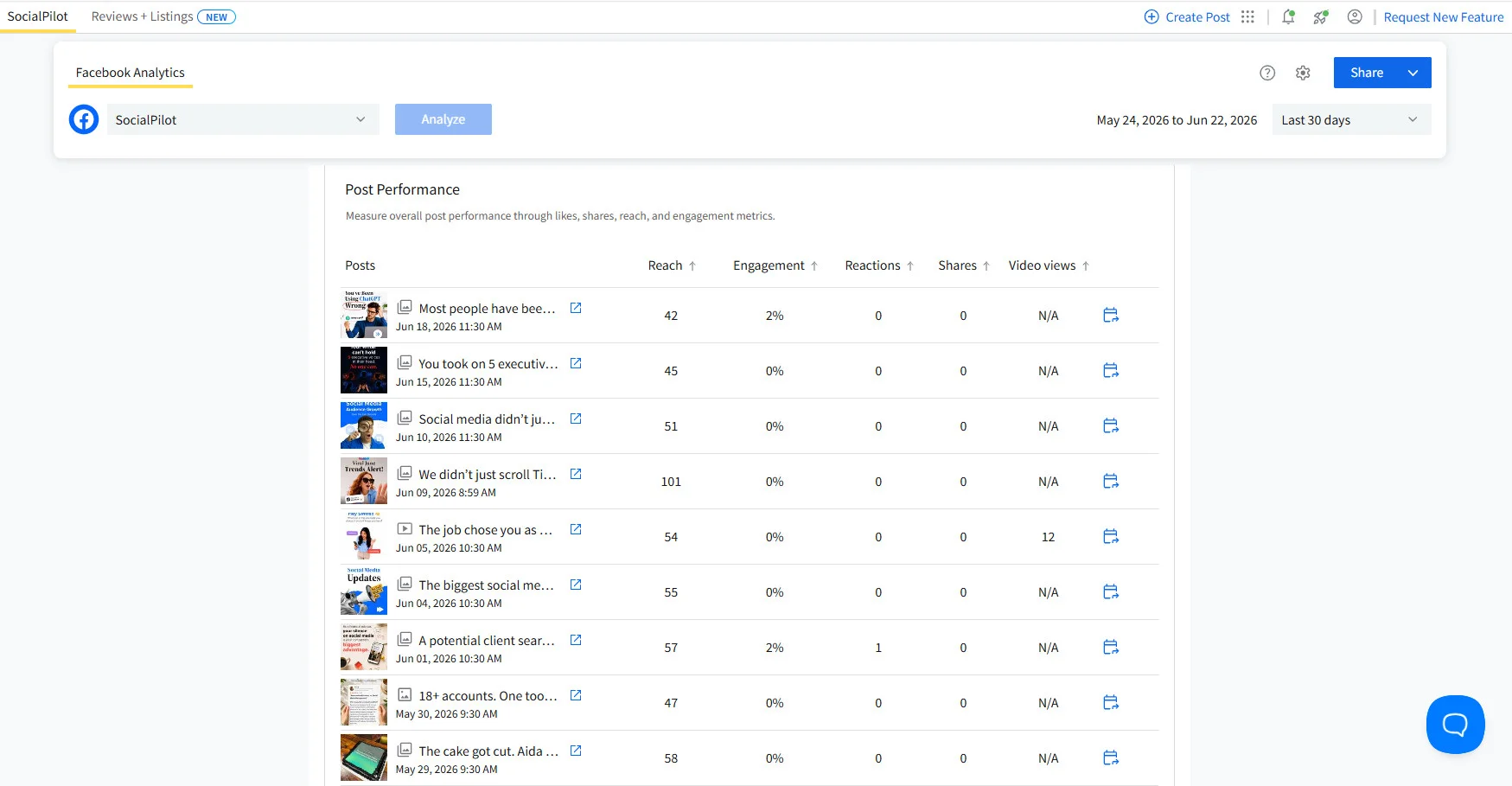
Your analytics dashboard is a mirror, not a map. It shows you exactly what happened last month, but it rarely tells you what to do next. For most social media agencies and freelance managers, the translation step—converting raw performance data into a structured, forward-looking content calendar—is a bottleneck. It is where hours are lost to "educated guessing," or worse, where teams fall into the trap of putting content pillars on autopilot, recycling tired formats that no longer resonate with an evolving audience.
The modern agency needs a faster, more reliable bridge between data and execution. This article outlines a nine-step workflow using Claude, the AI assistant, to transform your raw performance data from SocialPilot into a data-backed, 30-day content calendar. By integrating these tools, you can turn a tedious two-hour manual process into a 20-minute, high-precision strategic operation.
The Core Challenge: Moving Beyond "Vanity Metrics"
The struggle for most social media managers isn’t a lack of data; it is an abundance of noise. Without a rigorous, repeatable process, human account managers often fall prey to cognitive biases. They may over-index on their favorite post types or overlook the "silent killers"—those underperforming content categories that quietly erode overall engagement rates.

The workflow presented here is designed for teams that already utilize the robust performance tracking within SocialPilot. By leveraging Claude’s ability to process large, structured datasets, you can ensure that every post scheduled for the upcoming month is justified by the performance of the last 30 days.
Why Data Structuring is the Foundation
Before engaging with any AI, you must understand that the quality of your output is entirely dependent on the quality of your input. Claude does not need six months of historical data or a bloated audience breakdown. It needs clean, categorized, and relevant data points. If you feed it unfiltered, disorganized spreadsheets, you will receive generic, "middle-of-the-road" strategy suggestions that could apply to any brand.
To succeed, you must focus on four specific data points from the past 30 days:
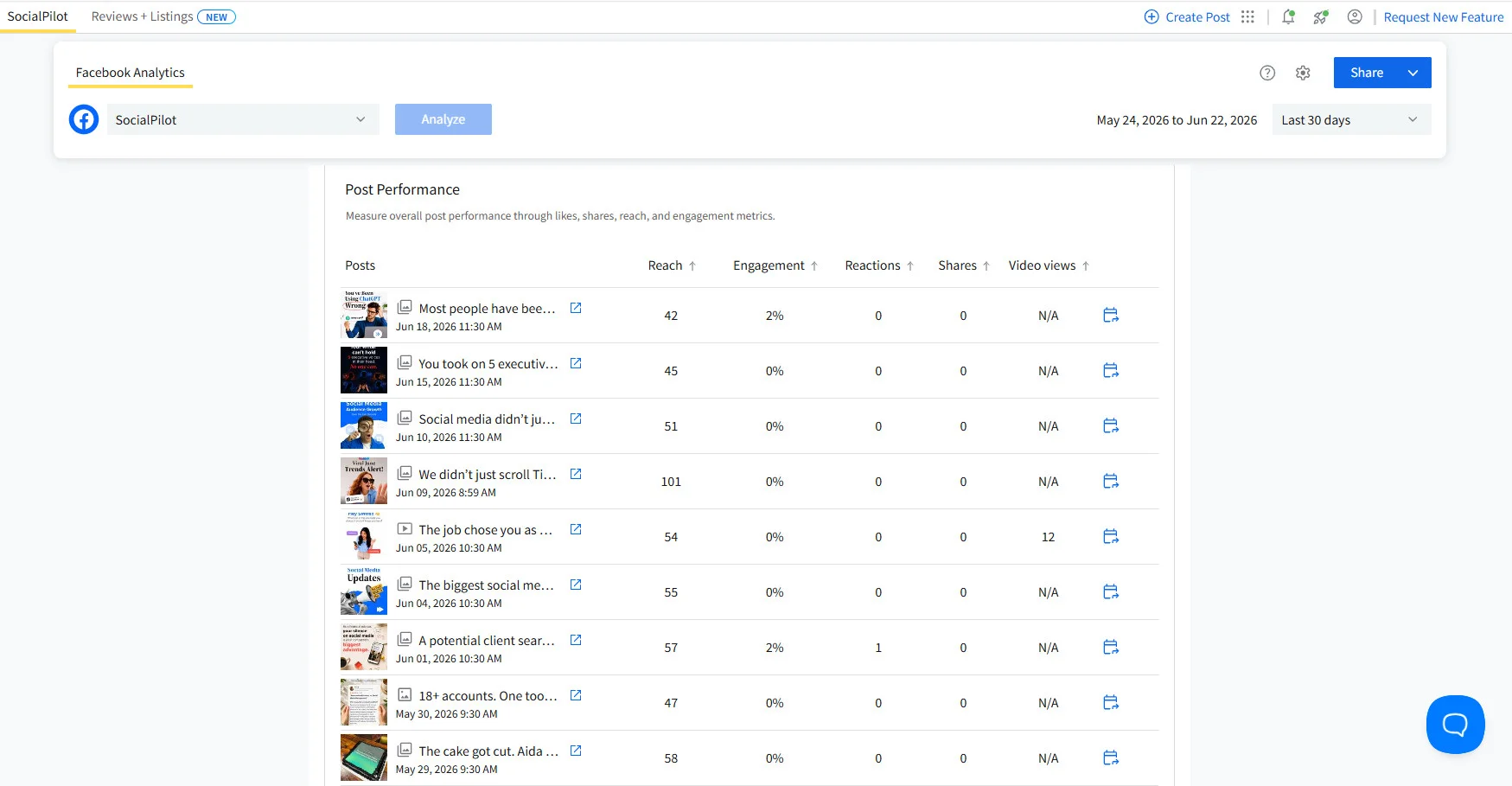
- Top-performing posts (by engagement rate).
- Bottom-performing posts (to identify what to kill).
- Posting frequency by format (videos vs. carousels vs. single images).
- Platform-specific engagement metrics (saves, shares, and reach).
Chronology of the 9-Step Workflow
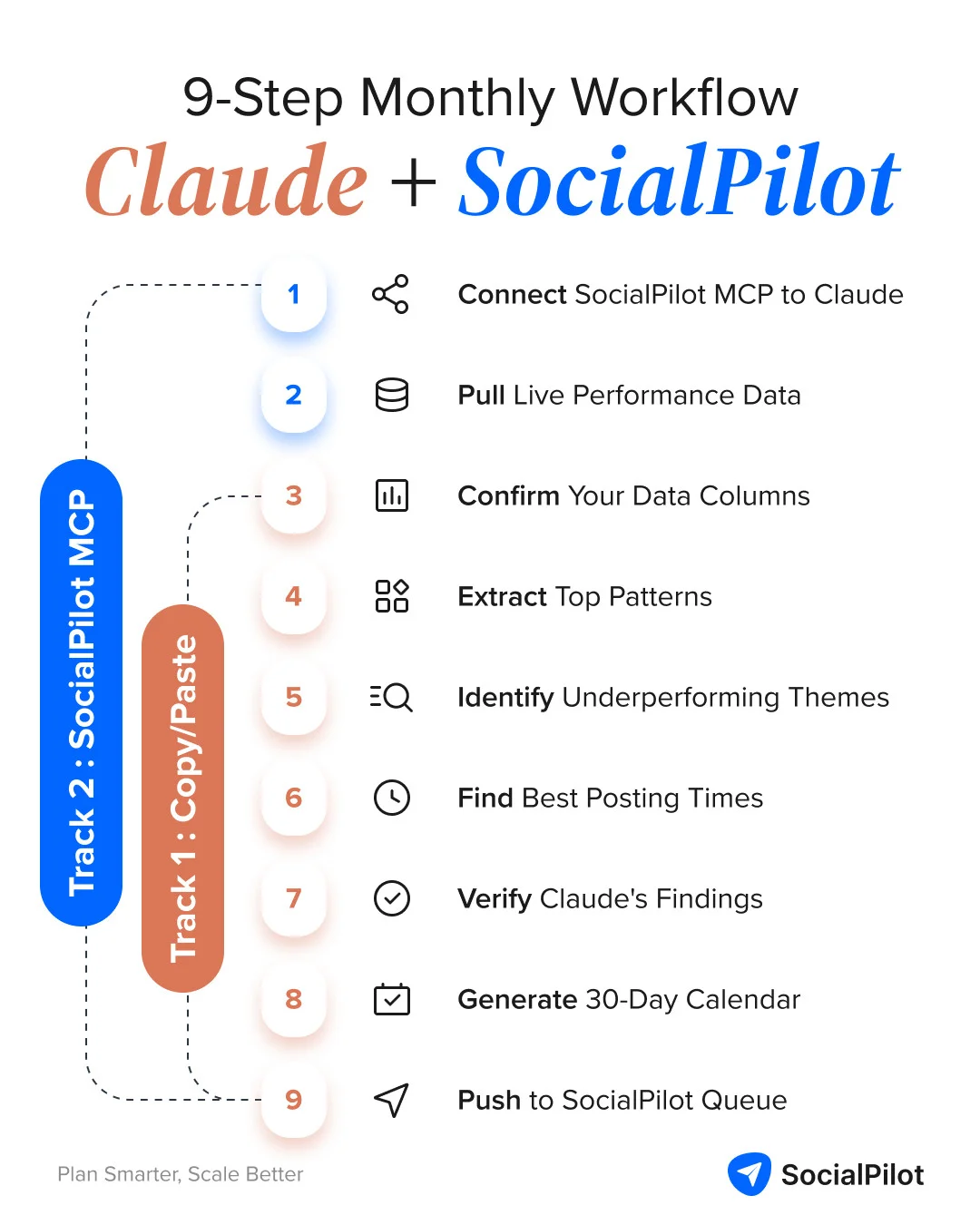
This workflow is divided into preparation, analysis, validation, and execution. Whether you are using a manual "copy-paste" method or an automated integration, the logic remains the same.
Phase 1: Setup and Data Acquisition
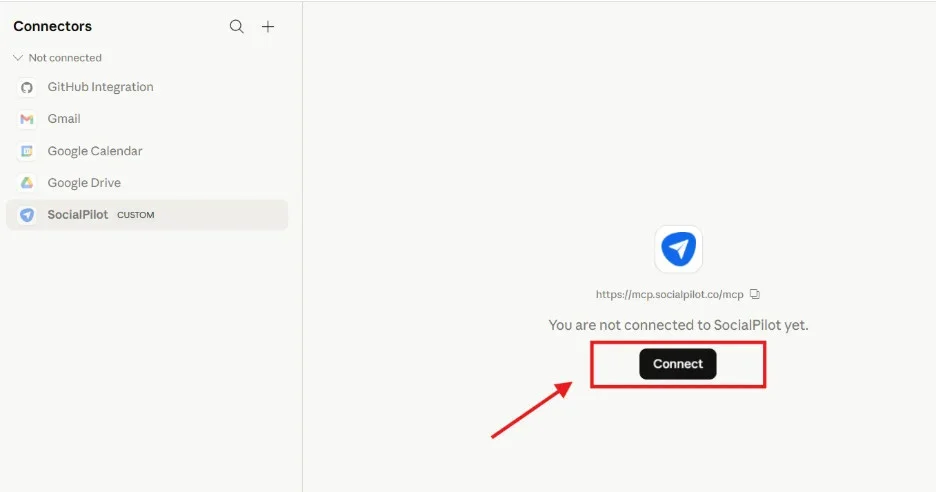
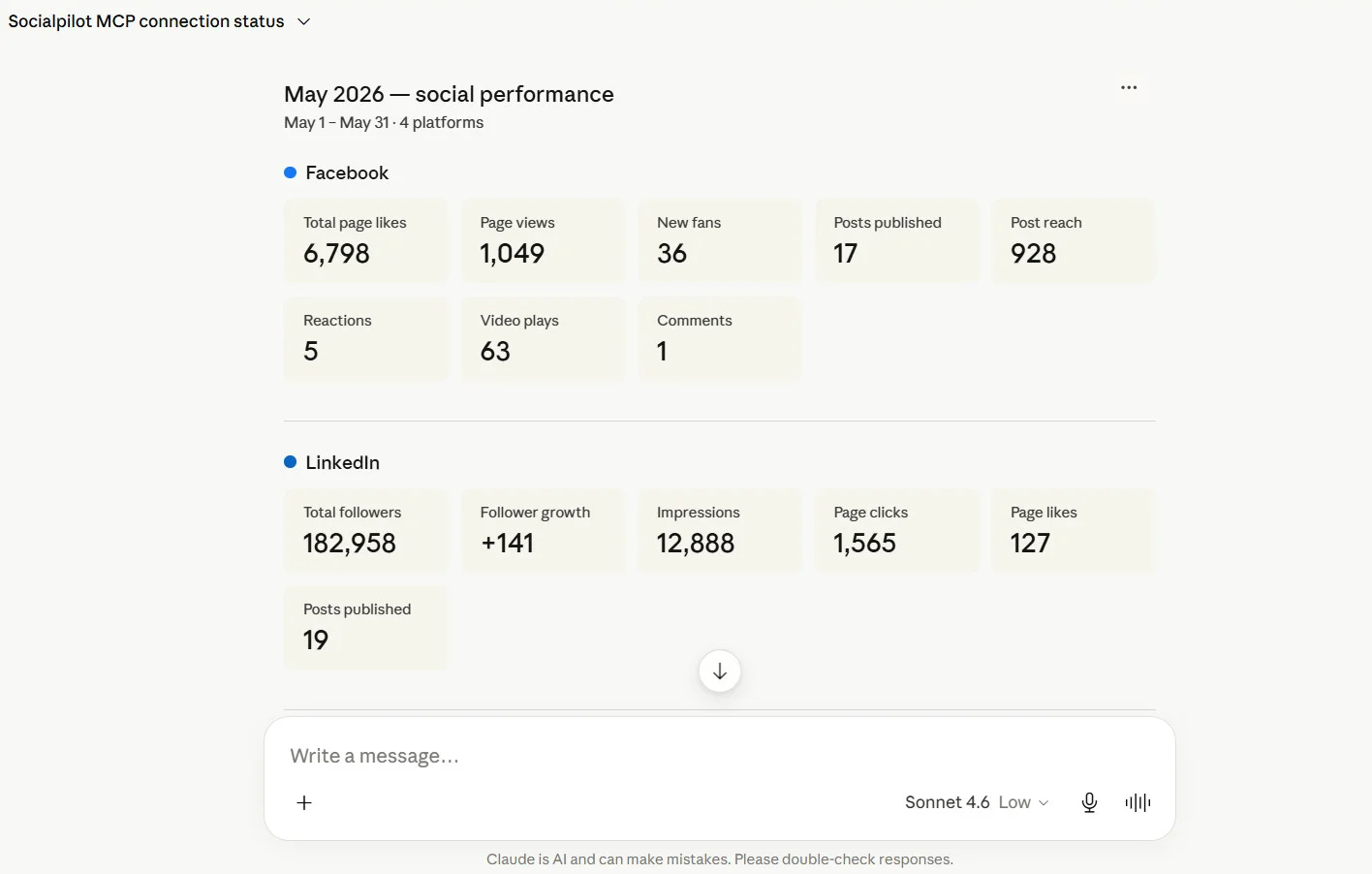
Step 1: Configure the Connection. For agencies managing multiple accounts, the SocialPilot MCP (Model Context Protocol) connector is a game-changer. By adding https://mcp.socialpilot.co/mcp to your Claude Project settings, you allow the AI to read your live analytics directly. This removes the need for manual CSV exports and ensures your data is always current.
Step 2: Pull Live Performance Data. Once the connection is active, Claude can fetch your delivered posts and engagement stats instantly. Before you ask for strategy, ensure you have a clear snapshot of the period you intend to analyze.
Phase 2: The Analytical Deep-Dive
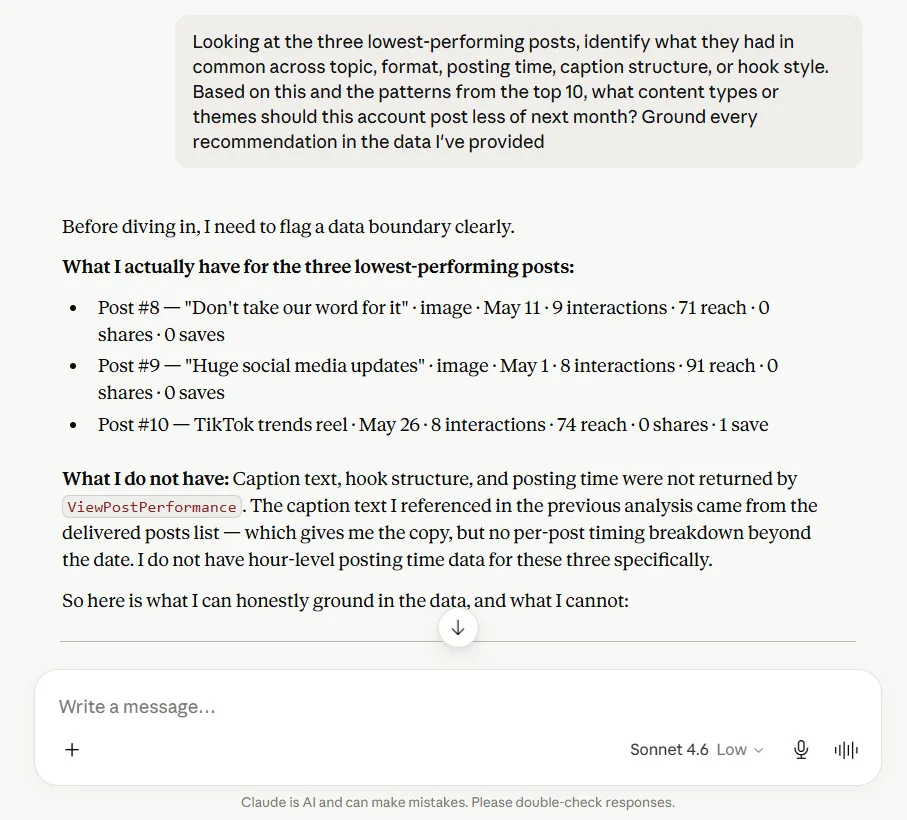
Step 3: Column Verification. This is the most critical step for accuracy. You must prompt Claude: "Confirm you can see the following columns: post date, platform, format, topic, engagement rate, reach, saves, and shares. Do not draw on any data not present in this set." This prevents the AI from "hallucinating" metrics or filling gaps with plausible-sounding but false data.
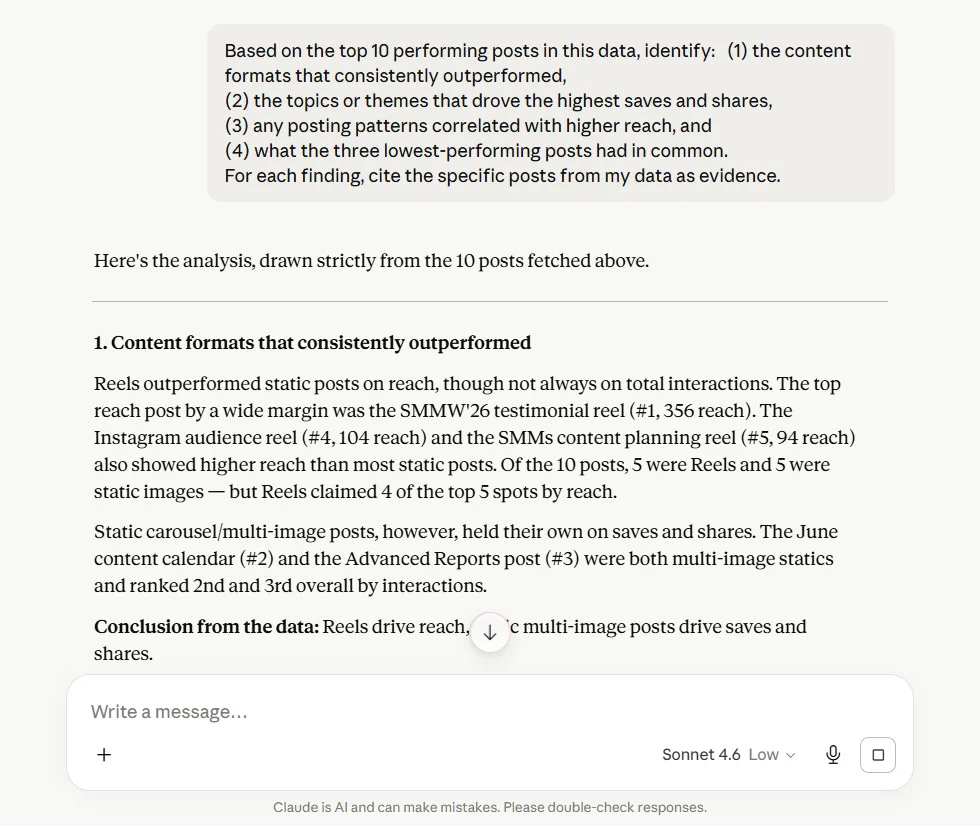
Step 4: Pattern Extraction. Now, ask Claude to identify the "winners." Request an analysis of:
- Content formats that consistently outperformed.
- Topics driving high "saves" (which indicate high value).
- Posting times correlated with maximum reach.
- Common threads among the three lowest-performing posts.
Step 5: The "Stop Doing" List. In strategy, knowing what to stop is just as valuable as knowing what to start. Use a prompt that forces the AI to cross-reference the underperformers with your top performers to determine what to excise from the next month’s calendar.
Phase 3: Validation and Strategy Generation
Step 6: Optimizing Timing. Based on the data, identify the specific windows where your audience is most active. Instruct Claude to flag any instances where the sample size is too small to be statistically significant, ensuring your posting schedule is based on robust evidence rather than a single fluke success.
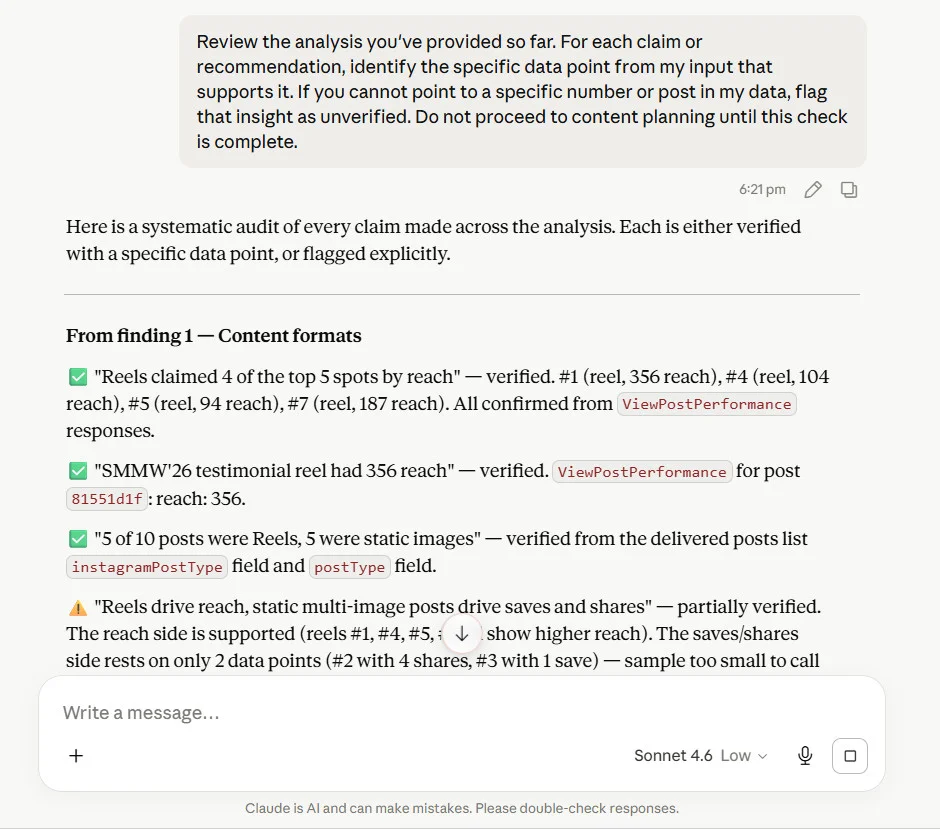
Step 7: The Verification Pass. Before building the calendar, run a "sanity check" prompt. Ask Claude to cite specific data points for every recommendation it has made. If it cannot find a specific number to back a claim, the insight is discarded. This adds roughly five minutes to the process but eliminates the risks of LLM hallucination.
Step 8: Generating the 30-Day Plan. With validated patterns, instruct the AI to suggest five distinct content pillars. Each pillar must include a rationale, three specific post ideas, and the recommended format. Finally, task it with creating a 30-day table format calendar.
Step 9: Final Review and Execution. Claude’s calendar is your first draft. Human oversight is required to ensure brand voice alignment and to layer in time-sensitive, manual content (like product launches). Once approved, use SocialPilot’s scheduling features to push the content live.
Supporting Data: Why This Matters for Agency ROI
The implications of this workflow are twofold: economic efficiency and strategic superiority.
According to internal agency benchmarks, the average account manager spends approximately two to three hours per client on monthly strategic planning. By moving to this AI-assisted workflow, that time is compressed to roughly 20 minutes. For an agency managing 15 clients, this saves approximately 35 to 40 hours of labor per month—nearly a full week of work that can be redirected toward high-value client relationship management or business development.
Furthermore, this process solves the "agency consistency" problem. When strategy is manual, the quality of the output varies depending on the account manager’s personal intuition or how busy they are that week. By "packaging" these prompts into a Claude Skill (a saved project instruction set), every member of your team operates at the same high level of analytical rigor.
Official Responses and Ethical Considerations
While AI-assisted planning is becoming a standard in the industry, experts emphasize that this is a "Co-Pilot" model, not "Autopilot." The role of the Social Media Manager has shifted from creator to curator and editor.
"The danger in AI is not that it’s incapable, but that it’s overly confident," says a lead analyst at a top-tier digital agency. "When an LLM hallucinates a metric, it does so with the authority of a professional researcher. That is why the verification step—forcing the AI to cite its data source—is the most important part of the entire workflow."
Agencies must also maintain strict data hygiene. Ensure that client-specific brand voice documents and "banned phrases" are uploaded to the Claude Project context. This prevents the "generic AI tone" and ensures that the resulting content calendar feels native to the brand.
Implications for the Future of Agency Scaling
The shift toward data-integrated AI isn’t just about speed; it’s about scalability. Agencies that fail to adopt these workflows will find themselves unable to compete with the margins of those that do.
Key Implications:
- Capacity Without Headcount: Agencies can increase their client roster without needing to hire additional strategists, as the "time-per-client" cost drops significantly.
- Justifiable Strategy: Clients are increasingly demanding proof of ROI. Being able to show a client exactly how last month’s performance data dictated the next month’s content strategy builds deep trust.
- Standardization of Quality: By storing workflows as "Skills" or custom prompts within Claude Projects, agencies ensure that their intellectual property remains in-house, rather than leaving with the employee who happens to be managing the account.
Final Thoughts
Every month of data is a goldmine of strategic insight that most agencies leave sitting untouched in a dashboard. By treating your SocialPilot analytics as a dataset to be queried—rather than a report to be glanced at—you turn the act of content planning from a chore into a competitive advantage.
The future of social media management belongs to the agencies that stop guessing and start calculating. Start with one client account, run the verification prompt, and see the difference that data-backed precision makes in your next 30-day calendar.


 Nila Kartika Wati
 Iffa Jayyana