
 Ammar Sabilarrohman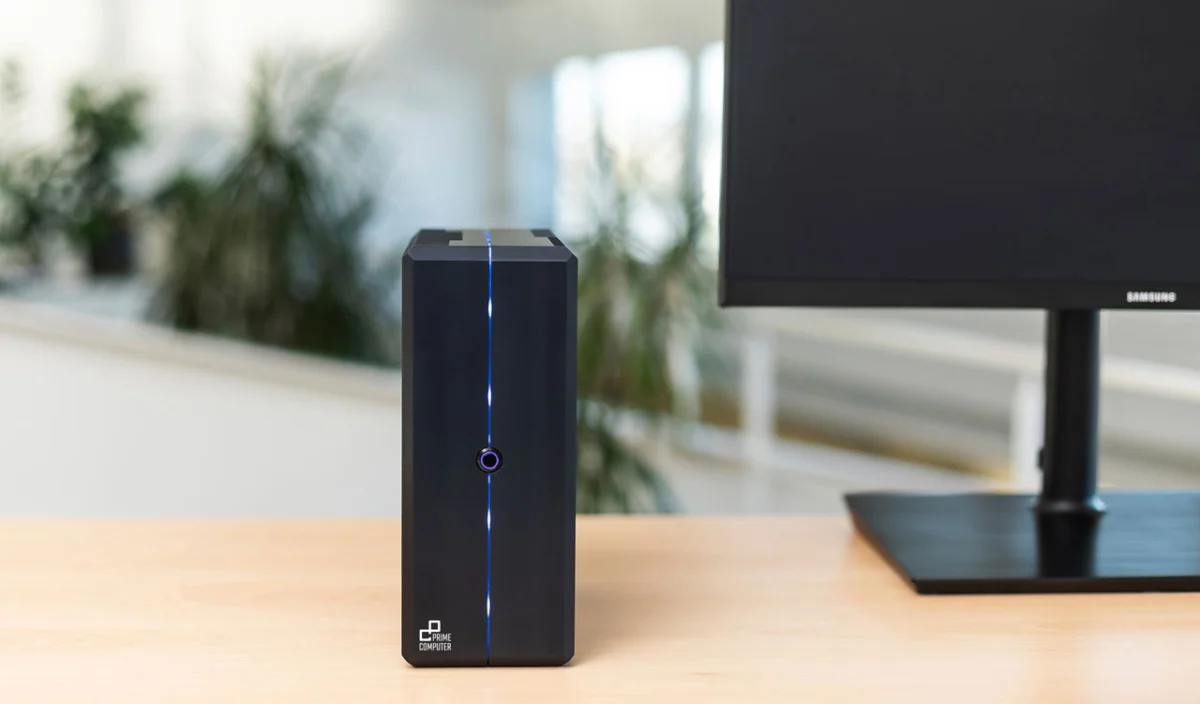
In an era where desktop computing is increasingly dominated by liquid cooling loops, high-RPM fans, and massive RGB-lit chassis, Swiss manufacturer Prime Computer has taken a decidedly different path. The company has officially launched the PrimeStation Pulsar, a mini-PC that challenges the conventional wisdom that high performance requires high-decibel cooling. By marrying the thermal efficiency of a passive aluminium heatsink with the raw power of AMD’s Ryzen 7 Pro series, Prime Computer is targeting the intersection of high-end professional workflows and sustainable, carbon-neutral manufacturing.
Main Facts: The Intersection of Performance and Silence
The PrimeStation Pulsar is not merely another "mini-PC" destined for light web browsing or basic office tasks. Positioned by the manufacturer as a true "workstation," it is designed to operate in environments where silence is paramount—such as audio engineering studios, surgical suites, or quiet professional offices—without sacrificing the computational throughput required for demanding tasks.
At the heart of the Pulsar lies the AMD Ryzen 7 Pro 5750G, a formidable 65W APU that delivers 8 cores and 16 threads. This chip, fabricated on TSMC’s 7nm FinFET process, offers a base clock speed of 3.8GHz with a boost capability of up to 4.6GHz. Crucially, it includes 16MB of L3 cache and integrated Radeon Vega graphics cores clocked at 2.0GHz.
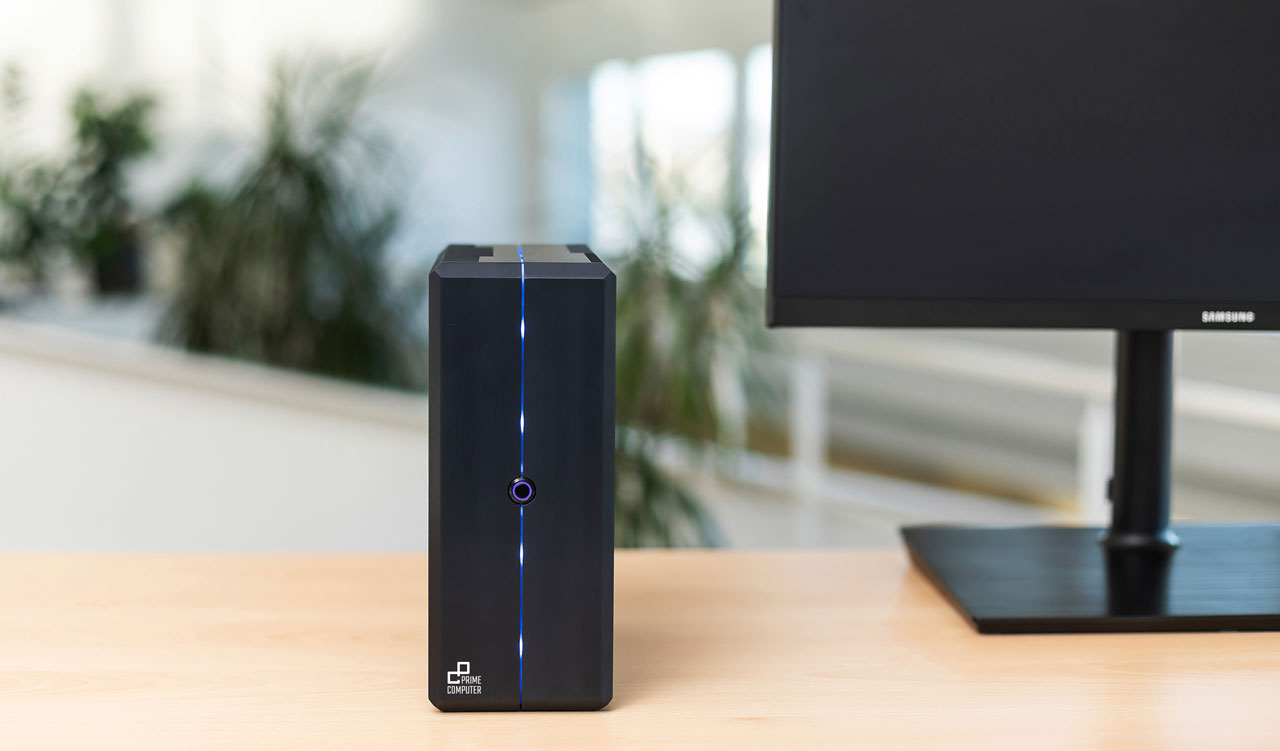
The system’s standout feature is its chassis: a solid, finned aluminium block that doubles as a massive passive heatsink. This design eliminates the need for mechanical fans entirely, removing the most common point of hardware failure—the cooling fan—while ensuring the system remains completely silent. The result is a compact, dense workstation measuring 9.1cm x 22.5cm x 20.3cm, weighing in at a substantial 4.3kg due to the high-density metal construction.
Chronology of the Fanless Evolution
To understand the significance of the Pulsar, one must look at the historical trajectory of fanless computing. For years, "fanless" was synonymous with "low-power." Early iterations were limited to Intel Celeron or Atom processors, which were sufficient for point-of-sale systems or digital signage but woefully inadequate for professional content creation or data analysis.
- The Early Era (2010–2015): Fanless designs were restricted to low-TDP chips, usually passive-cooled embedded systems with minimal RAM and limited I/O.
- The Mid-Transition (2016–2019): Manufacturers began experimenting with heat-pipe technology connected to outer aluminium shells. While these systems became more capable, they often throttled under sustained loads, as the thermal mass of the chassis couldn’t keep up with modern TDPs.
- The Modern Paradigm (2020–Present): With the introduction of highly efficient 7nm architectures from AMD and improved thermal interface materials, the "gap" between fanless and high-performance has closed. The PrimeStation Pulsar represents the culmination of this evolution, proving that a 65W TDP processor can be cooled effectively without a single moving part.
Supporting Data: Technical Specifications and Performance
The technical prowess of the Pulsar is reflected in its internal hardware flexibility, which allows users to scale the machine to their specific professional needs.
Core Processing and Memory
The Ryzen 7 Pro 5750G is the engine, but the supporting infrastructure ensures it doesn’t bottleneck. Users can configure the system with 8GB, 16GB, 32GB, or 64GB of DDR4-3200 memory, distributed across two DIMM slots. This capacity is critical for professionals working with large datasets, virtual machines, or multi-track audio production.
Connectivity and Expansion
Despite its small footprint, Prime Computer has packed the Pulsar with extensive I/O options:
- Storage: 1 x NVMe slot for high-speed storage and 1 x 2.5-inch SATA III port for additional capacity.
- Networking: Integrated Intel Wireless AX200 (Wi-Fi 6) with Bluetooth 5.2, paired with a robust 2.5Gbps Ethernet port.
- Visuals: HDMI 2.1 and DisplayPort 1.4 output capabilities, facilitating multi-monitor setups.
- Peripheral Connectivity: 3 x USB 3.2 Type-A, 1 x USB 3.2 Type-C, 1 x USB 2.0 Type-A, a dedicated Audio USB Type-C port, and three standard audio jacks.
Official Responses and Sustainability Initiatives
Prime Computer has leaned heavily into the "climate-neutral" marketing angle, which has become a significant pillar of their brand identity. In their official documentation, the company emphasizes that every PrimeStation Pulsar is manufactured with a commitment to zero-carbon output. This includes carbon offsetting for the entire lifecycle of the product, from raw material extraction to assembly and eventual disposal.
"We believe that the future of computing is not just about raw power, but about the responsibility of the technology we create," a representative noted during the launch event. By choosing to build a fanless system, Prime Computer is also addressing the "wear-and-tear" aspect of sustainability; because there are no fans to collect dust or fail, the operational lifespan of the Pulsar is significantly longer than a traditional workstation, reducing electronic waste (e-waste).
Implications: Where the Pulsar Fits in the Market
The $2,179 price point positions the Pulsar as a premium product. For the average consumer, this price is difficult to justify when compared to traditional desktops that offer similar performance at half the cost. However, for the professional niche, the "Pulsar Premium" is a calculated investment.
The Professional Use-Case
In audio recording environments, even the quietest fans create noise floors that can ruin delicate recordings. A silent PC is not a luxury here; it is a requirement. Similarly, in dusty industrial environments where fan intakes would quickly clog, the sealed aluminium chassis of the Pulsar provides a "fit-and-forget" reliability that saves on maintenance costs.
The Competition
The Pulsar does not exist in a vacuum. It faces competition from both sides of the spectrum. On one hand, there are "niche-enthusiast" solutions like The Beast from MonsterLabo, which provides superior cooling capacity and the ability to house full-sized discrete graphics cards. However, The Beast is a massive, bespoke case that lacks the refined, professional, and "climate-neutral" certification that Prime Computer offers.
The Pulsar occupies a unique middle ground: it is more powerful than an Intel NUC or a standard mini-PC, but far more elegant and sustainable than a DIY passive-cooled tower.
Final Thoughts: A Blueprint for the Future?
As the industry moves toward greener manufacturing and more efficient power usage, the PrimeStation Pulsar stands as a proof-of-concept for the future of workstation design. While it may not replace the liquid-cooled gaming rig or the massive multi-GPU workstation for VFX rendering, it serves a growing sector of professionals who demand silence, sustainability, and reliability.
By choosing to prioritize the thermal conductivity of an aluminium chassis over the ease of cheap fans, Prime Computer has signaled that the "mini-PC" category has finally matured. Whether the market is willing to pay the premium for this climate-neutral, silent performance remains to be seen, but the Pulsar has set a high bar for what a fanless workstation should be in the 2020s. For the discerning professional, the silence of the Pulsar might just be the most powerful feature of all.


 Pevita Pearce
 Reynand Wu




