Nana Muazin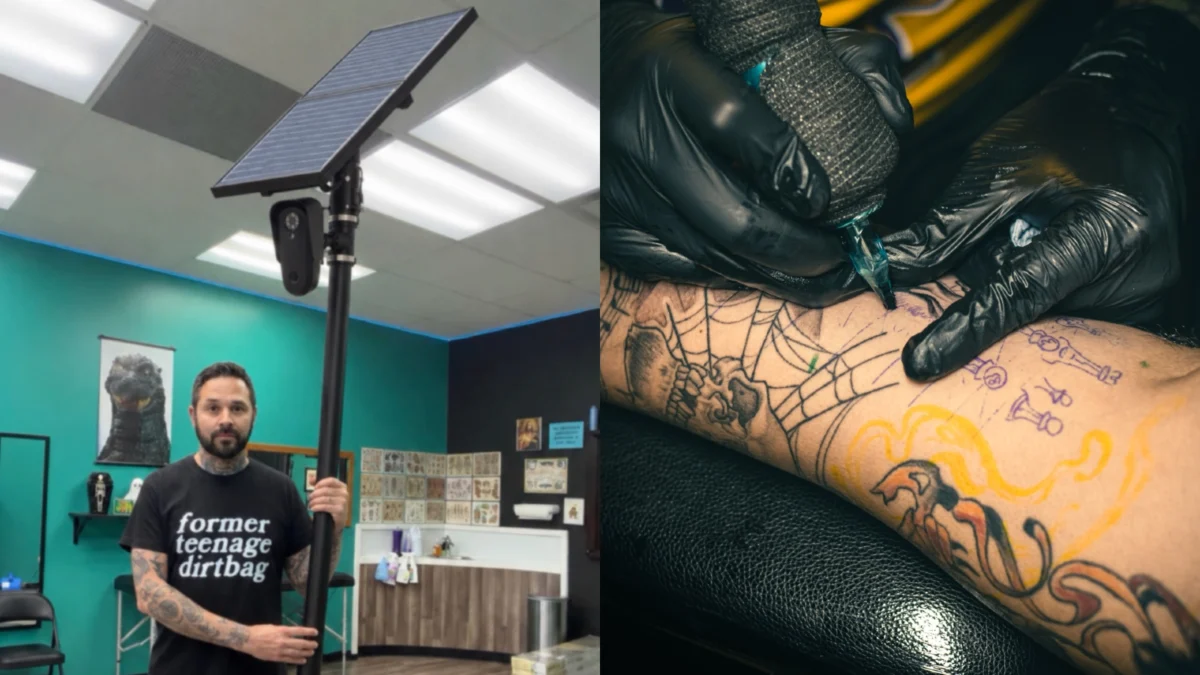
In the quiet suburb of New Baltimore, Michigan, a local tattoo artist has inadvertently become the center of a national conversation regarding privacy, surveillance, and the limits of digital satire. Steven Jean, the proprietor of The Alien Body Shop, recently found himself at the helm of a viral social media storm after posting a provocative image on Instagram. The image, which depicted Jean brandishing a decommissioned Flock safety camera with the caption "Free tattoo with every Flock camera," was intended as a lighthearted critique of the pervasive surveillance technology now lining American streets. However, what began as a tongue-in-cheek artistic statement has rapidly devolved into a series of real-world legal complications and a stark reflection of the growing public resentment toward automated surveillance.
The Technology at the Center of the Storm
To understand why a tattoo shop owner’s post garnered over two million views, one must first understand the technology it targets. Flock Safety is a private, for-profit technology company that has become ubiquitous in municipalities across the United States. Their primary product is the Automated License Plate Reader (ALPR)—a high-definition camera system that utilizes artificial intelligence to capture and log license plates, vehicle makes, models, and even unique identifiers like bumper stickers or roof racks.
Unlike traditional CCTV, which might be monitored by a human or used for retrospective evidence, Flock cameras create a real-time, searchable database of vehicular movement. This technology has been praised by law enforcement agencies for its ability to track stolen vehicles or identify suspects in violent crimes. However, privacy advocates and civil liberties groups have long sounded the alarm. The primary contention is that these cameras track the movements of ordinary, law-abiding citizens regardless of their involvement in criminal activity. This mass surveillance, they argue, erodes the reasonable expectation of privacy and places a permanent, searchable record of a person’s daily routine into the hands of a private corporation.
A Chronology of a Viral Protest
The sequence of events leading to the current controversy began with a simple post on The Alien Body Shop’s Instagram account. Steven Jean, clearly frustrated by the proliferation of these devices, intended for the post to serve as a satirical commentary on the "de-flock" movement—a loose coalition of activists who have been advocating for the removal of surveillance hardware.
Late 2024: As Flock cameras began to appear with increasing density in New Baltimore and surrounding Michigan towns, local discourse regarding digital privacy intensified.
The Viral Moment: Jean posted the photo of himself with the device, accompanied by the "Free tattoo" offer. Within days, the post reached over two million users, transcending local interest and entering the national zeitgeist.
The Misinterpretation: While the tone of the post was clearly satirical, the internet’s response was immediate and literal. Jean began receiving messages from individuals who had taken his offer at face value.
The Escalation: The situation took a dark turn when followers began sending Jean photographic and video evidence of them vandalizing and disabling Flock cameras in their own neighborhoods. One individual even reached out to the artist to disclose that they had been arrested by local law enforcement for the destruction of a Flock unit.
The Retraction: Realizing that his artistic expression had crossed a threshold into potential criminal solicitation, Jean issued a public clarification. He urged his followers to cease the destruction of public or private property and clarified that the offer was, and had always been, a joke.
Supporting Data: The Rising Tide of Surveillance Anxiety
The public’s visceral reaction to the "De-Flock" campaign is not an isolated incident. Recent data suggests a significant shift in public sentiment toward the use of AI-driven surveillance in public spaces. A 2023 study by the Pew Research Center indicated that over 60% of Americans are "very or somewhat concerned" about the use of AI-powered tracking tools by private companies in conjunction with government agencies.
The success of the "De-Flock" campaign—which has seen individuals using everything from spray paint to physical obstruction to disable cameras—highlights a "surveillance fatigue" that has taken hold in suburban America. This frustration is compounded by the fact that Flock Safety operates as a private entity, meaning the data they collect is not always subject to the same rigorous oversight as government-collected surveillance.
Furthermore, the rise of independent initiatives, such as websites that allow drivers to check if their license plates have been pinged by a Flock database, has empowered citizens to take their digital footprint into their own hands. These tools have provided empirical evidence to citizens that they are being tracked more frequently than they realized, fueling the fire behind posts like the one made by Steven Jean.
Official Responses and the Legal Gray Area
The legal implications for those who act upon such viral posts are severe. Law enforcement agencies in Michigan and across the country have issued warnings regarding the destruction of surveillance infrastructure. Tampering with an ALPR system is generally classified as the destruction of property, but depending on the jurisdiction and the value of the camera, it can escalate to a felony charge.
In response to the viral post, local authorities in New Baltimore have been clear: the law is not a subject for satire. While they have not officially charged Jean with any crime—acknowledging the nature of his post as speech—they have expressed deep concern regarding the "incitement" effect such posts have on the public.
Flock Safety, for its part, has maintained that their technology is a force multiplier for law enforcement and a necessary component of modern public safety. In statements following the incident, the company emphasized that their data is used solely to assist in solving objective crimes and that they adhere to strict data retention policies. However, they have declined to comment specifically on the New Baltimore incident, citing the ongoing nature of local investigations into vandalism.
Broader Implications: Privacy in the Digital Age
The ordeal of The Alien Body Shop offers a window into the broader friction between technological advancement and personal liberty. We are currently living through a transition period where the technological capability to track individuals in real-time has outpaced our legal and ethical frameworks.
1. The Erosion of Anonymity
The primary societal implication is the death of anonymity in public life. When one can no longer drive to a grocery store, a place of worship, or a medical clinic without their movements being logged into a searchable database, the fundamental nature of freedom of movement changes. The "De-Flock" movement is, at its core, a plea for the restoration of that anonymity.
2. The Role of Private-Public Partnerships
The reliance of police departments on private technology firms like Flock Safety creates a problematic accountability loop. When citizens have a grievance against a camera, they cannot vote out the corporation, nor can they easily navigate the privacy policies of a profit-driven entity. This creates a sense of powerlessness that often manifests in the destructive behavior seen in the wake of Jean’s post.
3. The Power and Peril of Satire
Finally, this story highlights the changing role of social media in civic discourse. A single post by a small business owner can reach millions, effectively mobilizing a demographic that feels ignored by traditional legislative channels. However, the lack of nuance in digital communication means that satirical intent is often lost, leading to unintended and potentially criminal consequences.
Conclusion: Lessons from New Baltimore
Steven Jean’s experience serves as a cautionary tale for both the public and the tech industry. For the public, it underscores the need for organized, legal advocacy rather than individual acts of sabotage, which only serve to undermine the legitimate privacy concerns being raised. For the technology industry, the incident should be seen as a "canary in the coal mine." If a significant portion of the population is so alienated by your product that they are willing to risk arrest to destroy it, the issue is not merely one of public relations—it is a fundamental failure of social license.
As the debate over AI surveillance continues, the incident at The Alien Body Shop will likely be remembered as a key moment in the "De-Flock" phenomenon. It brought the abstract concepts of data privacy and algorithmic tracking down to the level of the individual, proving that when people feel their privacy is being encroached upon, the response will be as unpredictable and viral as the technology itself. Whether or not legislators will take heed of this public anxiety remains to be seen, but one thing is certain: the era of silent, passive surveillance is coming to an end.


 Muslim