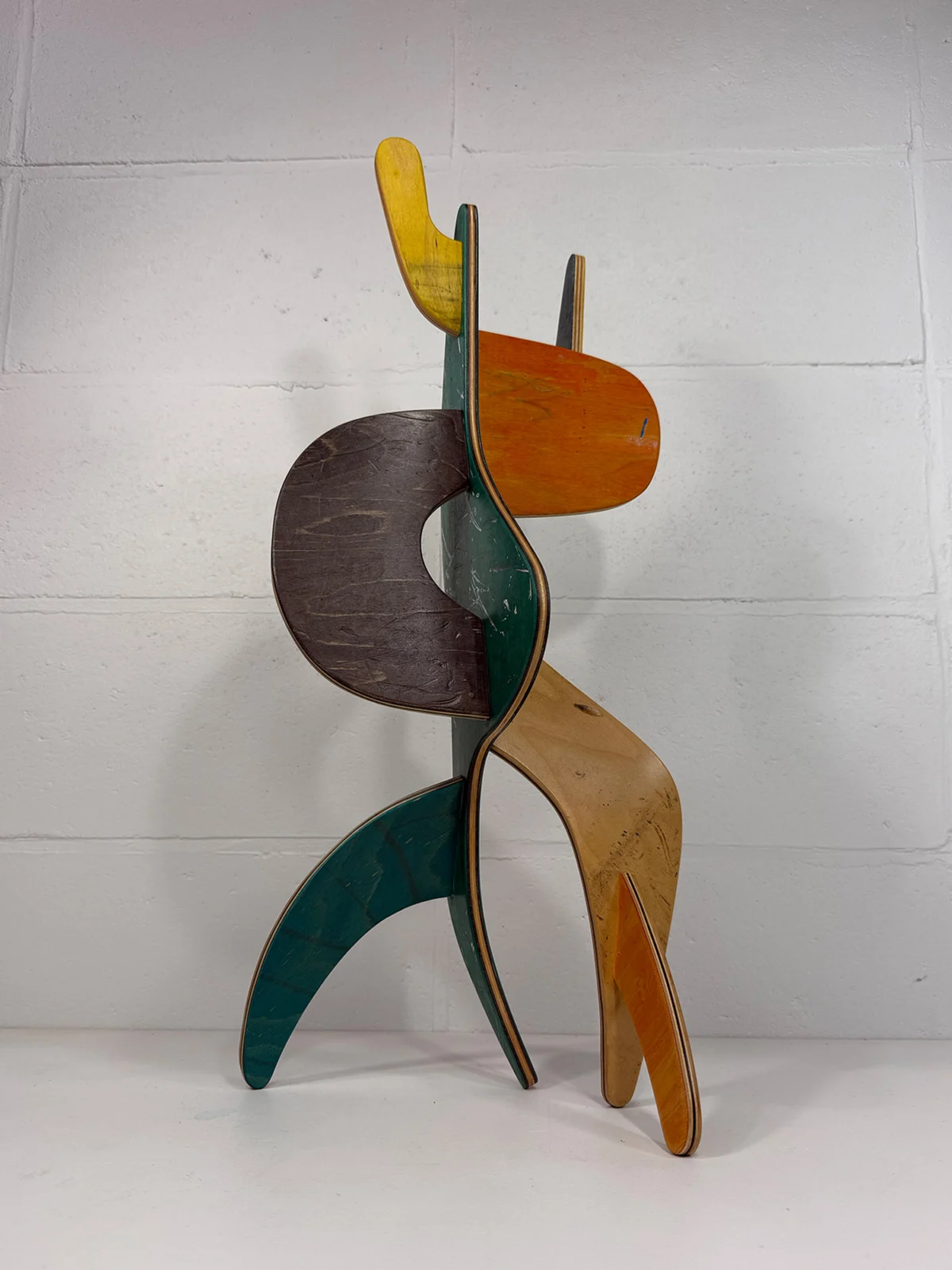
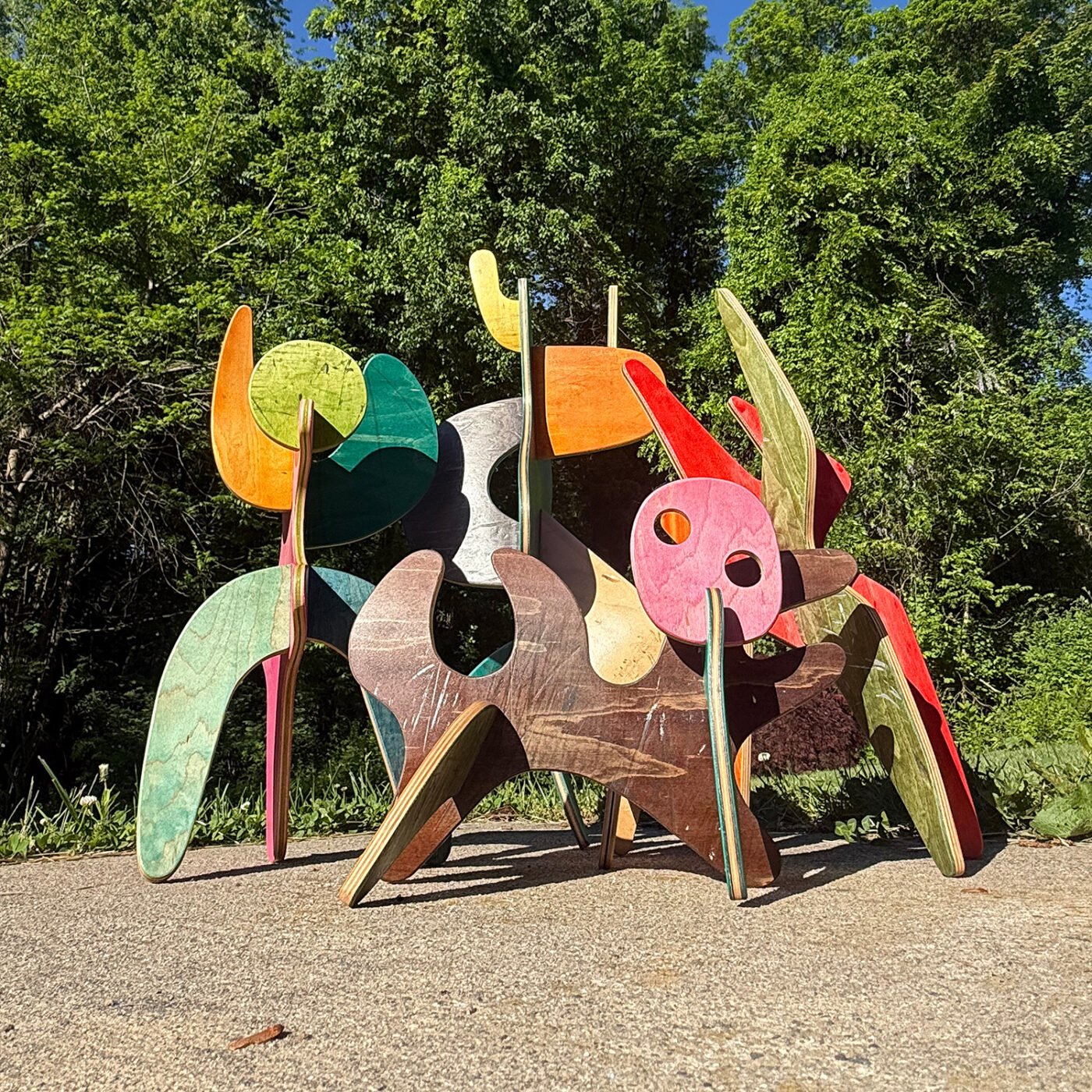
In the quiet hum of a woodshop in New Hampshire, Connecticut-born artist Damion Silver has been quietly redefining the boundaries between industrial waste and high-art sculpture. Known for a multidisciplinary practice that flows seamlessly between printmaking, assemblage, and traditional woodworking, Silver has garnered international acclaim, with his work exhibited across the United States, Europe, and Japan. However, his most recent body of work—a collection of playful, complex, and deeply textured sculptures—represents a pivotal shift in his creative process, marking a transition from the rigid pursuit of perfection to a more intuitive, material-led aesthetic.
The Genesis of a Breakthrough
The trajectory of this new series was not born from a sudden epiphany in a vacuum, but rather from a period of creative frustration. Silver, an artist who has long balanced technical discipline with artistic vision, found himself hitting a wall while attempting to push the limits of his traditional materials.
For months, he had been deep in the development of a new exhibition, focusing his efforts on the intricacies of steam-bending plywood and rattan. While these methods are time-honored and visually rewarding, Silver found that the physical limitations of the materials were stifling the complexity of the forms he envisioned. He sought to create something that felt both organic and structural, yet the wood refused to bend into the specific, fluid geometries that lived in his sketches.
It was a moment of artistic stasis, where the gap between his intent and the physical reality of his work had become a chasm.
Chronology of a Material Discovery
The breakthrough occurred in a manner common to many great artistic shifts: through the lens of accidental discovery.
- Phase 1: The Frustration: Silver spends several months experimenting with steam-bending, feeling limited by the structural integrity and resistance of his chosen materials.
- Phase 2: The Catalyst: While clearing his workshop, Silver notices a stack of discarded, shattered skateboards—leftovers from years of personal practice and a lifelong affinity for the sport.
- Phase 3: The Pivot: Drawing on a notebook filled with rough, long-abandoned ideas, Silver decides to bypass his original exhibition plan. He takes a bandsaw to the first deck, immediately finding that the layered plywood of the skateboard offers a resistance and a vibrant, multicolored edge that standard lumber cannot replicate.
- Phase 4: The Synthesis: Over the following weeks, the studio dynamic changes. Instead of forcing his will onto the material, Silver begins to follow the material’s history. Each cut reveals the hidden layers of color—the factory-applied stains and the scars of past use—which become the primary design language of the new work.
Supporting Data: The Materiality of the Skateboard
To understand the weight of Silver’s new work, one must understand the anatomy of a professional-grade skateboard. These boards are composed of seven plys of Canadian hard rock maple, bonded together with high-strength resins.
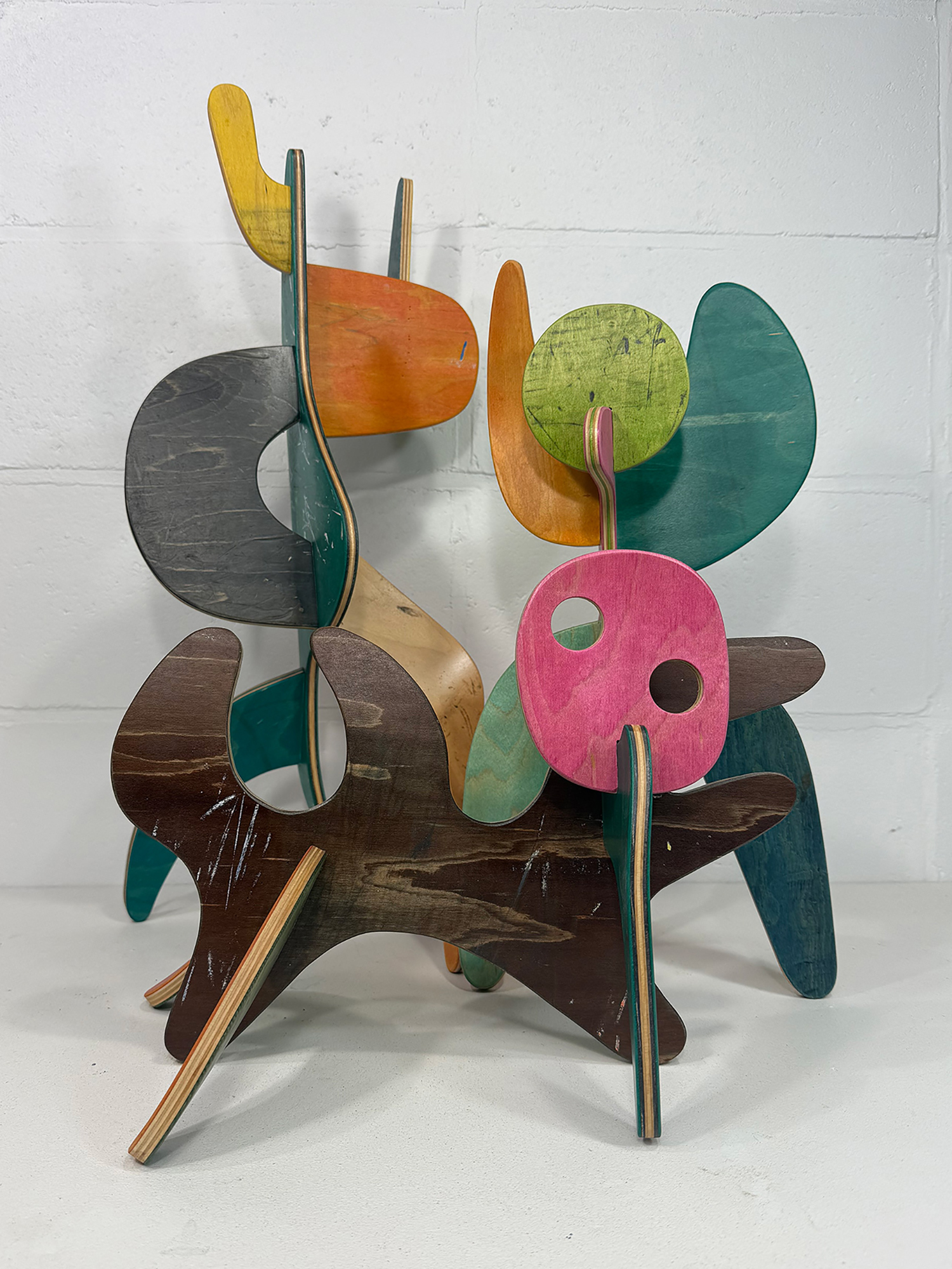
When a skateboarder grinds a rail or lands a trick, the wood experiences immense structural stress. Over time, the layers develop unique fractures and wear patterns. When Silver cuts into these decks, he is not just working with wood; he is working with a topographical map of a skater’s history. The vibrant "color palette" cited in his exhibition notes is not paint; it is the original dyed veneer used by manufacturers to distinguish the layers of the deck. By utilizing these existing finishes, Silver allows the "DNA" of the object—its past life as a tool of rebellion and recreation—to dictate the aesthetic outcome of his sculpture.
This process, known in the design world as "material honesty," allows the sculpture to retain a sense of playfulness. It is a dialogue between the artist’s hand and the object’s history.
Perspectives on the Practice: The Artist’s Philosophy
While Silver has kept his formal commentary concise, the implications of his shift are profound. In an era where 3D printing and digital fabrication are becoming the standard for modern sculpture, Silver’s return to the bandsaw and the reclaimed object feels like a radical act of slowing down.
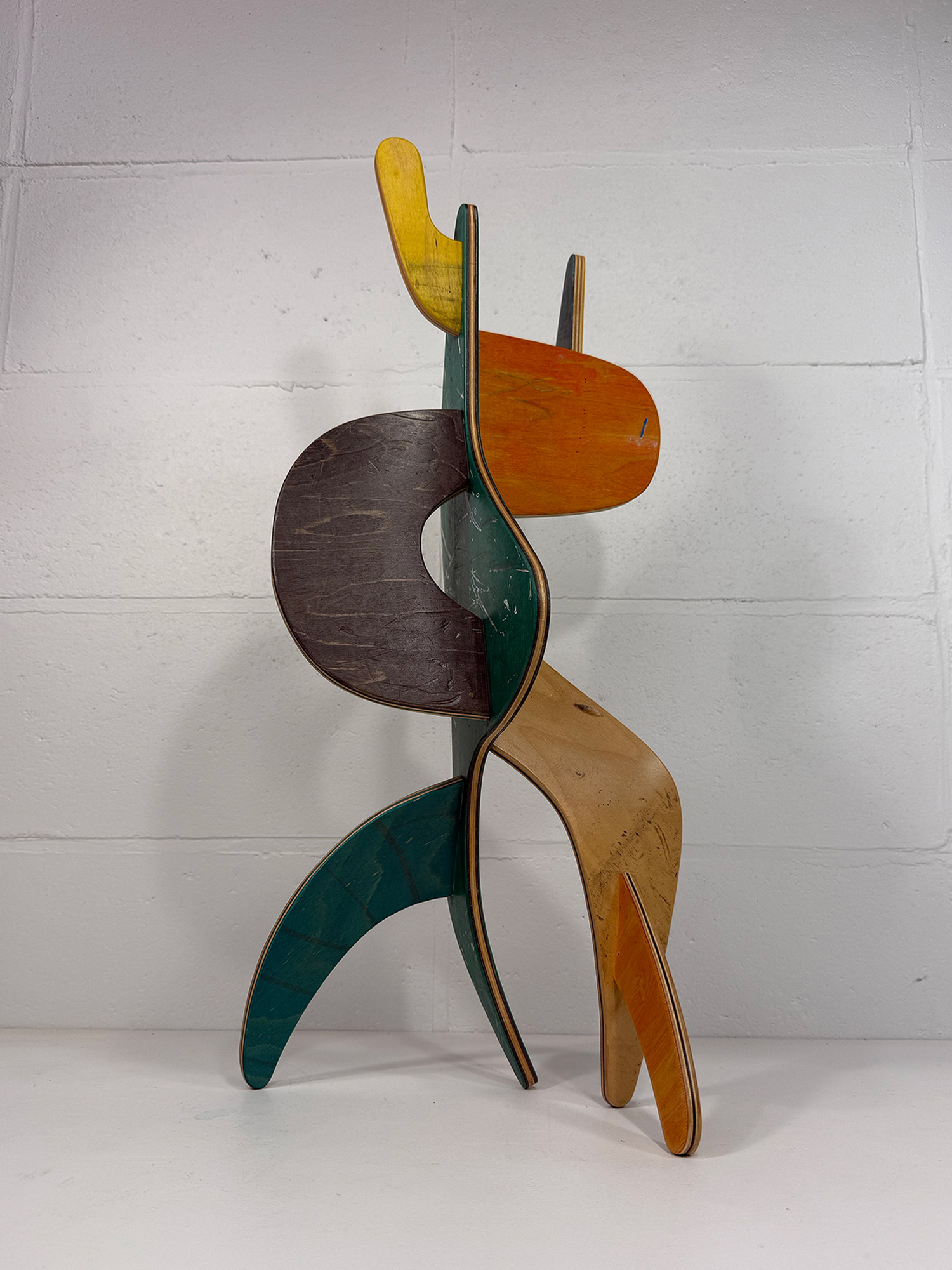
"The skateboards themselves dictated the color palette," Silver noted in a recent conversation regarding the series. This statement speaks to a broader movement within the contemporary art world: the "re-enchantment" of the discarded. By allowing the material to dictate the visual outcome, Silver avoids the pretension of forced abstraction. The result is a series of sculptures that feel both sophisticated and accessible—a reflection of the kinetic, rough-and-tumble energy of the skateboarding culture that fostered his early development.
Critics have noted that the work sits comfortably at the intersection of "Lowbrow" art (skateboarding culture) and "High-end" craft (fine woodworking). This synthesis is perhaps the strongest indicator of Silver’s maturity as an artist; he is no longer trying to force a medium to be something it is not, but rather revealing what it has always been.
Implications for Future Exhibitions
This shift in practice has significant implications for Silver’s upcoming gallery appearances. His move away from the traditional, pristine finish of steam-bent furniture toward the raw, jagged, and vibrant textures of the skateboard series signals a move toward a more "expressionistic" style.
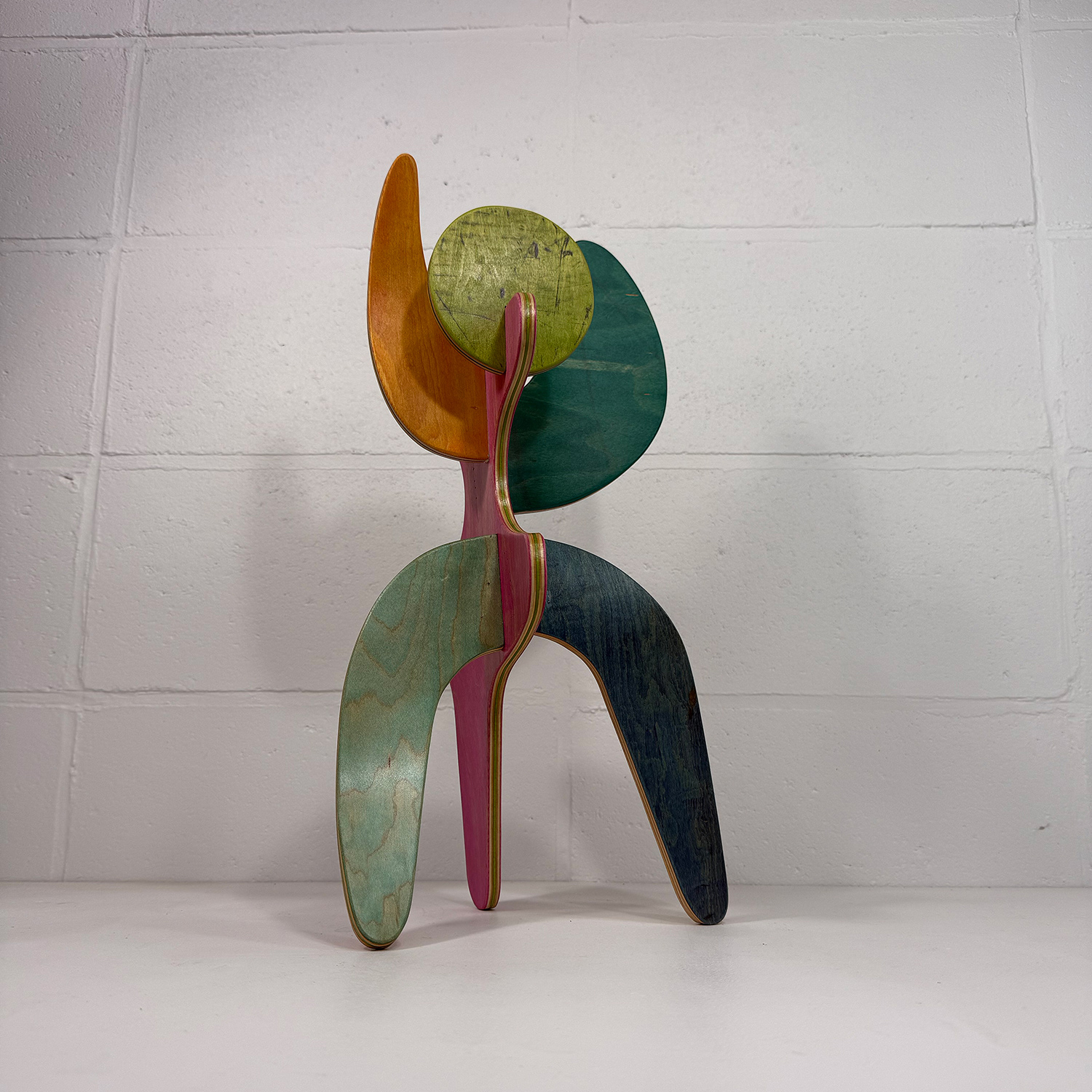
The art market, particularly in Europe and Japan, has shown an increasing appetite for works that carry a narrative—objects that have a "previous life." By repurposing the debris of a subculture that is often maligned or misunderstood, Silver is effectively elevating the skateboard from a disposable consumer product to a sculptural element with historical weight.
Furthermore, this series invites a discussion on sustainability in the arts. As artists are increasingly scrutinized for their carbon footprint and the sourcing of their materials, Silver’s reliance on salvaged wood provides a model for how high-quality, professional art can be created with minimal impact on new natural resources.
The Road Ahead
As Damion Silver prepares for the next phase of his career, the success of these skate-inspired sculptures serves as a reminder that the most compelling work often comes from the things we leave in the corner of the room. By revisiting his past—both in his sketchbook and on the concrete of the skatepark—he has managed to create a future that feels entirely new.

The work is not just a collection of sculptures; it is a testament to the idea that artistic vision is not something that is imposed upon the world, but something that is found within it. Whether through the lens of a printmaker or the hands of a woodworker, Silver continues to challenge the viewer to look closer, to see the history in the grain, and to appreciate the beauty in the broken.
For those interested in the evolution of this series, the artist’s recent Instagram activity suggests that this is only the beginning. The "playful" nature of the sculptures is a thin veil for a deep, technical mastery that promises to influence both the design and fine art sectors for years to come. In the intersection of the bandsaw and the skateboard, Damion Silver has found his most honest voice yet.