Main Facts: A Masterpiece of Cinematic Espionage
In the annals of cinema history, few props have achieved the legendary status of Dennis Nedry’s "Cryo-Can." As the catalyst for the catastrophic failure of Jurassic Park’s security systems, this unassuming, heavily modified Barbasol shaving cream canister represents the ultimate intersection of corporate espionage and scientific hubris. To commemorate the 30th anniversary of Steven Spielberg’s 1993 masterpiece, Jurassic Park, Paragon FX Group—the industry leader in high-end prop recreation—has announced the release of a screen-accurate, metal-constructed replica of this iconic device.
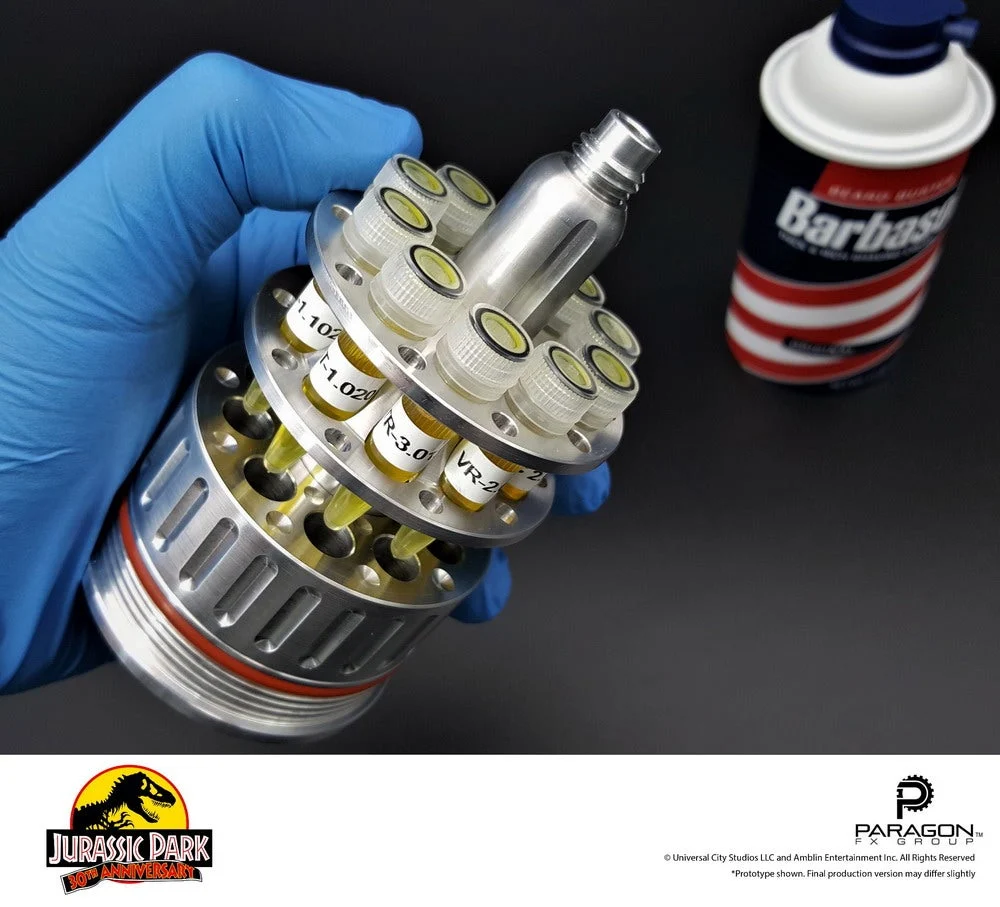
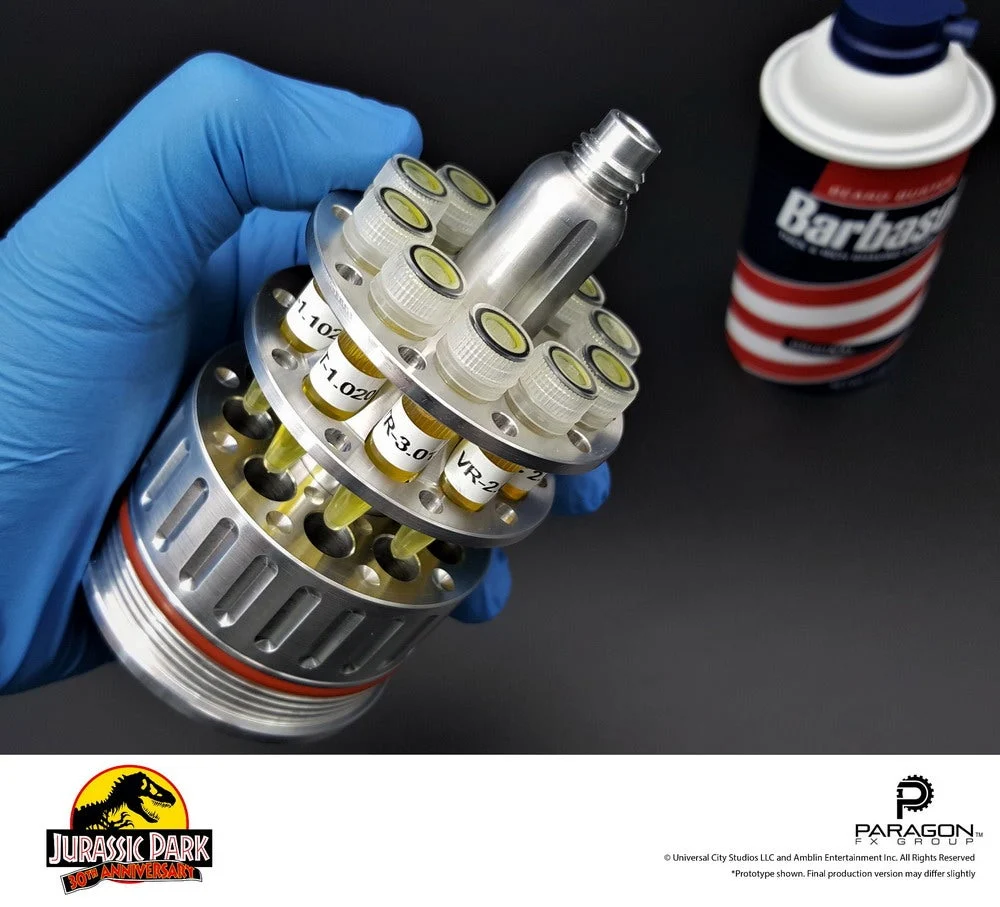
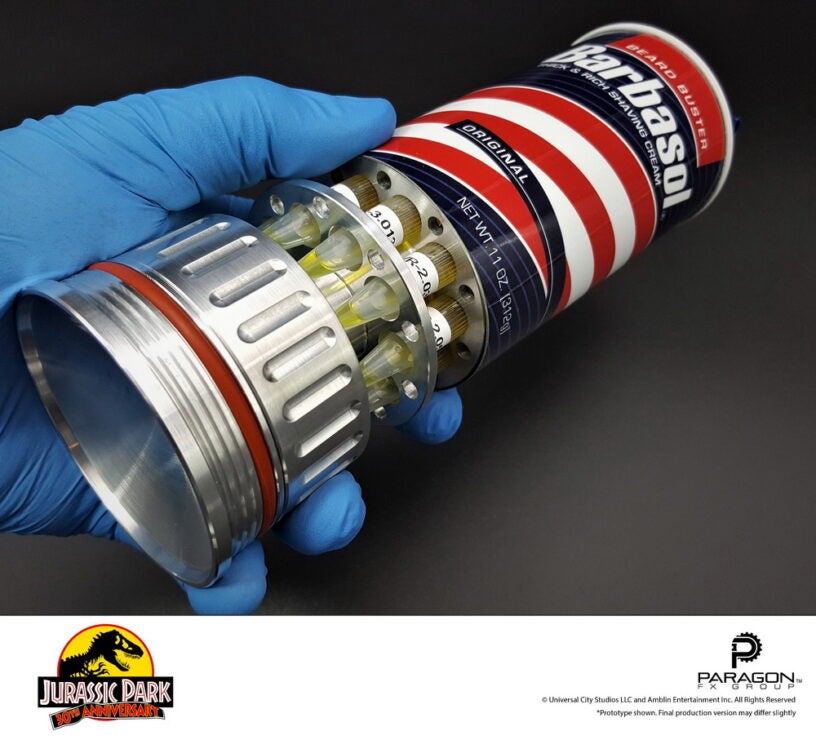
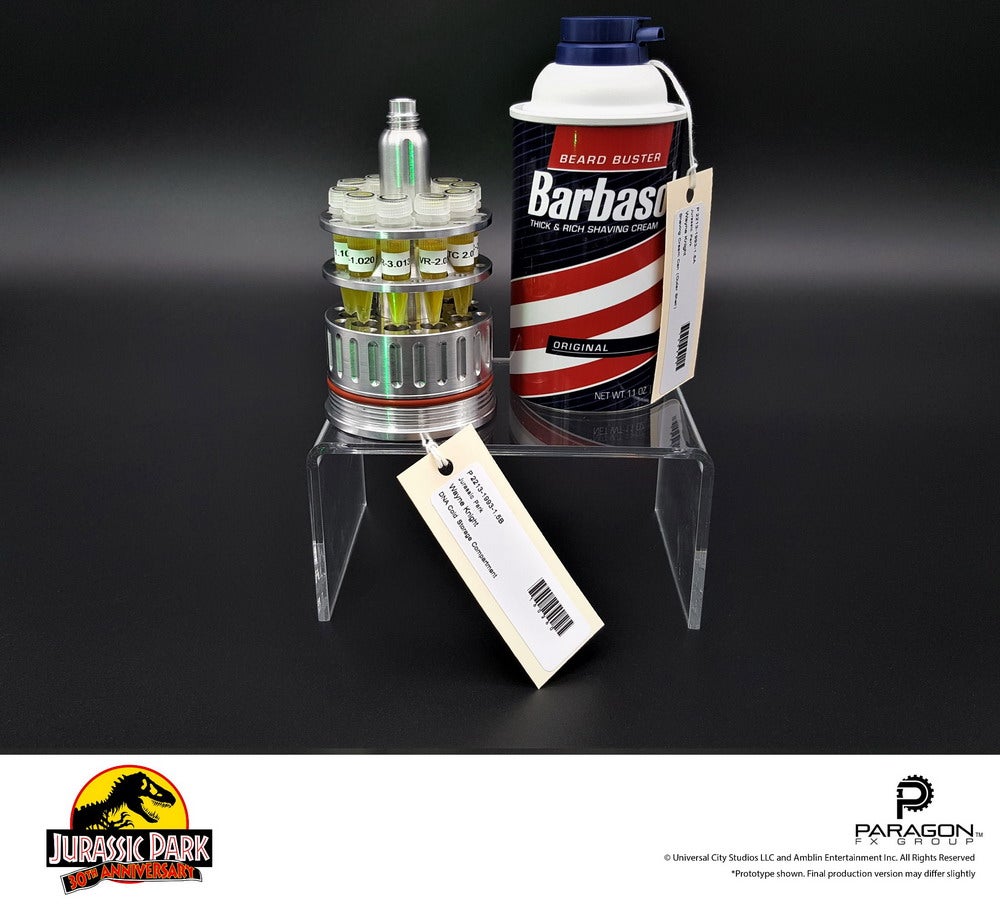
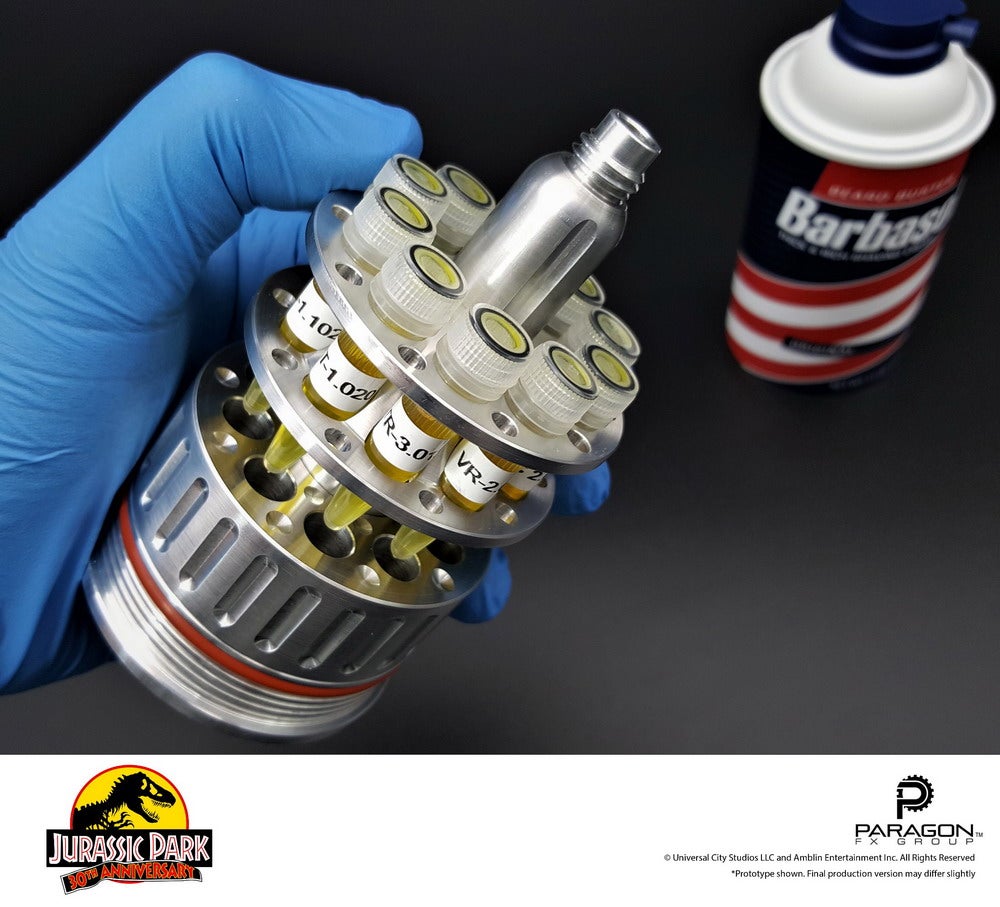
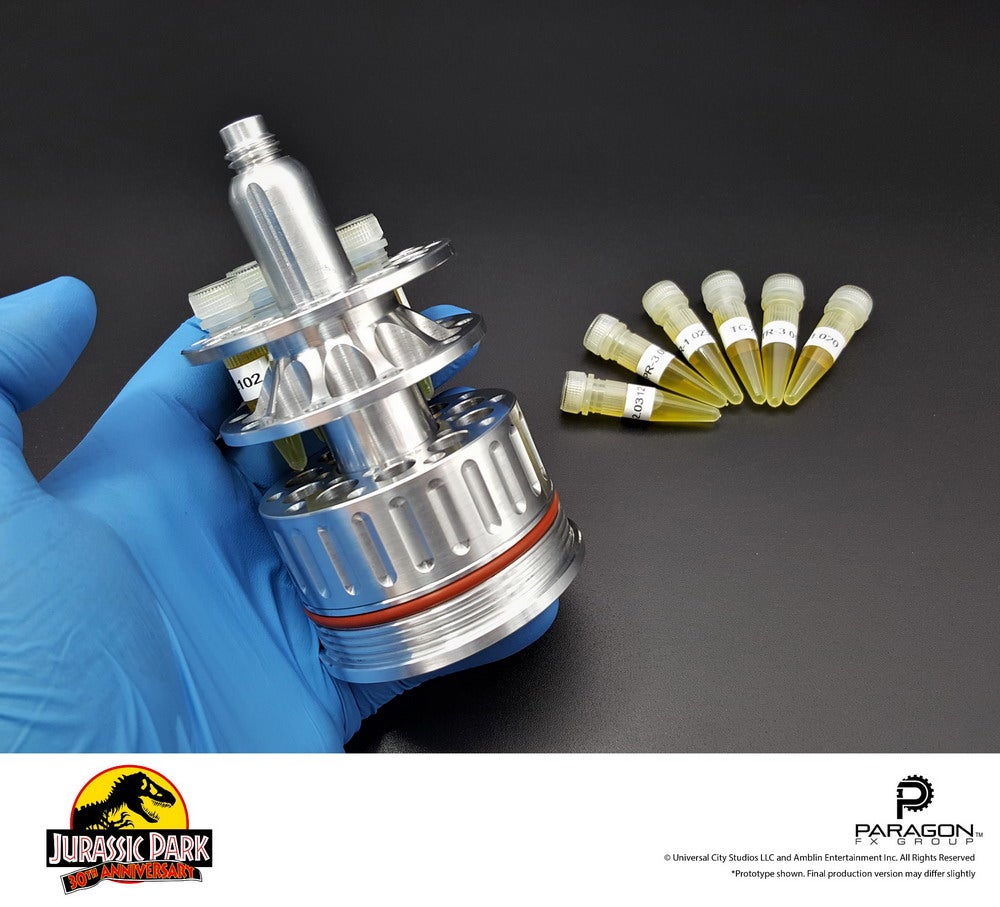
Developed through a rigorous collaboration with Universal Pictures and Amblin Entertainment, the Paragon FX Cryo-Can is not merely a toy; it is an artifact. Designed to replicate the prop that Dennis Nedry (played by Wayne Knight) used to smuggle dinosaur embryos off Isla Nublar, this limited-edition release allows collectors to own the very object that signaled the downfall of John Hammond’s dream. The replica features a functional, two-tiered "pop-up" centrifuge rack, 10 labeled microcentrifuge tubes, and the authentic exterior aesthetic of a vintage shaving cream can, all machined from high-quality metal.
Chronology: The Journey from Script to Archive
The story of the Cryo-Can begins in the early 1990s, when Jurassic Park production designers needed a vessel that could plausibly hide stolen biological assets. The prop team chose the ubiquitous Barbasol can as a camouflage for a Biosyn-developed cooling unit. In the film, this device was the centerpiece of the betrayal that led to the island’s power failure and the subsequent dinosaur breakout.
From Film Set to Museum Piece
After the cameras stopped rolling, the original "hero" prop was carefully archived by the studio. Over the last three decades, it has remained a holy grail for prop collectors. Unlike mass-market merchandise, the Paragon FX project required a deep dive into the archives. By gaining direct access to the original film-used prop, Paragon’s team was able to map every detail, from the specific inventory tags attached to the unit during production to the precise font and placement of the labels on the internal embryos.
This level of scrutiny ensures that the replica is not just a visual approximation, but a tangible link to the production of one of the most influential films in history.
Supporting Data: Engineering the Impossible
The complexity of the Cryo-Can lies in its hidden mechanics. Within the fiction of the film, the canister was designed to preserve ten viable dinosaur embryos for 36 hours. The physical prop had to be functional enough to demonstrate this to the audience.
Technical Specifications of the Replica
Paragon FX Group has utilized CNC machining to replicate the complex internal assembly of the original. The technical highlights include:
- Material Construction: The entire unit is manufactured in high-grade metal, providing the weight and cold, industrial feel of a true scientific instrument.
- The Pop-Up Mechanism: A precision-engineered spring-loaded rack that allows the internal centrifuge to elevate when the cap is rotated, mirroring the iconic sequence where Nedry prepares the embryos for transport.
- Authenticity Markers: The replica includes 10 microcentrifuge tubes, each featuring screen-accurate labeling that identifies the various dinosaur species stolen from the park’s laboratory.
- Packaging and Provenance: Each unit is accompanied by studio-style inventory tags, grounding the replica in the reality of professional film production archives.
- The Exterior Shell: The canister itself is designed to be indistinguishable from the vintage Barbasol packaging seen in the 1993 film, maintaining the "hiding in plain sight" aesthetic that made the prop so memorable.
Official Responses and Creative Vision
The partnership between Paragon FX Group and the studio rights holders, Universal and Amblin, underscores a growing trend in the collectibles market: the demand for "museum-grade" fidelity.
"When we approached this project, the goal was never to create a plastic imitation," noted a representative from Paragon FX Group during the unveiling. "The Cryo-Can is a character in its own right. It represents the greed and the ingenuity of the human element in the Jurassic saga. By utilizing the original prop as our primary reference, we have ensured that fans can finally hold the item that changed the course of the film’s narrative."
Universal Pictures, in supporting the 30th-anniversary initiative, has emphasized that such replicas serve as a bridge between generations. For those who saw the film in theaters in 1993, the Cryo-Can is a nostalgic centerpiece. For younger fans who discovered the franchise through subsequent sequels, it represents the foundational lore of the Jurassic universe.
Implications: The Future of Prop Collecting
The release of the Paragon FX Cryo-Can signals a maturation in the collectibles sector. Fans are no longer satisfied with generic, mass-produced merchandise; there is a distinct shift toward high-fidelity, limited-run items that carry the weight of cinematic history.
The Cultural Impact of the Cryo-Can
Why does this specific prop continue to fascinate audiences three decades later? The answer lies in its narrative utility. The Cryo-Can is the physical embodiment of the film’s central conflict: the tension between corporate interest and the wild, uncontrollable power of nature. When Nedry loses the canister in the mud, the audience feels the weight of that loss—the loss of the embryos and the loss of any chance for the characters to escape the island with their mission intact.
Owning a replica of this item allows fans to engage with the film on a deeper, tactile level. It is a conversation piece that invites questions about the film’s production design, the history of practical effects, and the enduring legacy of the Jurassic Park franchise.
The Collector’s Market
As the market for high-end replicas expands, companies like Paragon FX Group are setting a new standard for quality. By prioritizing CNC-machined parts over 3D-printed resins or injection-molded plastics, they are creating items that are built to last for decades, much like the original props they mimic. The inclusion of studio-style documentation and authentic-grade materials ensures that these items retain their value as both entertainment collectibles and historical artifacts of the film industry.
Conclusion: A Must-Have for the Jurassic Archivist
For those looking to commemorate the 30th anniversary of Jurassic Park, the Paragon FX Group Cryo-Can stands as the definitive tribute. It is a masterclass in replication, capturing the spirit, the mystery, and the precise mechanical details of one of cinema’s most famous "MacGuffins."
As we look back at thirty years of dinosaur terror, wonder, and scientific obsession, it is fitting that the device that started the chaos is now available to be displayed with the reverence it deserves. Whether housed in a glass display case or featured as the centerpiece of a home theater, this replica is more than a piece of metal—it is a reminder of the day the park opened, the day the systems went down, and the day the world changed forever.
For collectors and enthusiasts, the time to act is now. While Nedry never made it off the island with his cargo, this piece offers the modern fan a chance to secure a piece of cinematic history that will last long after the dinosaurs have returned to the fossil record.
For more information on pricing, availability, and detailed technical specifications, enthusiasts are encouraged to visit the official Paragon FX Group product page.