

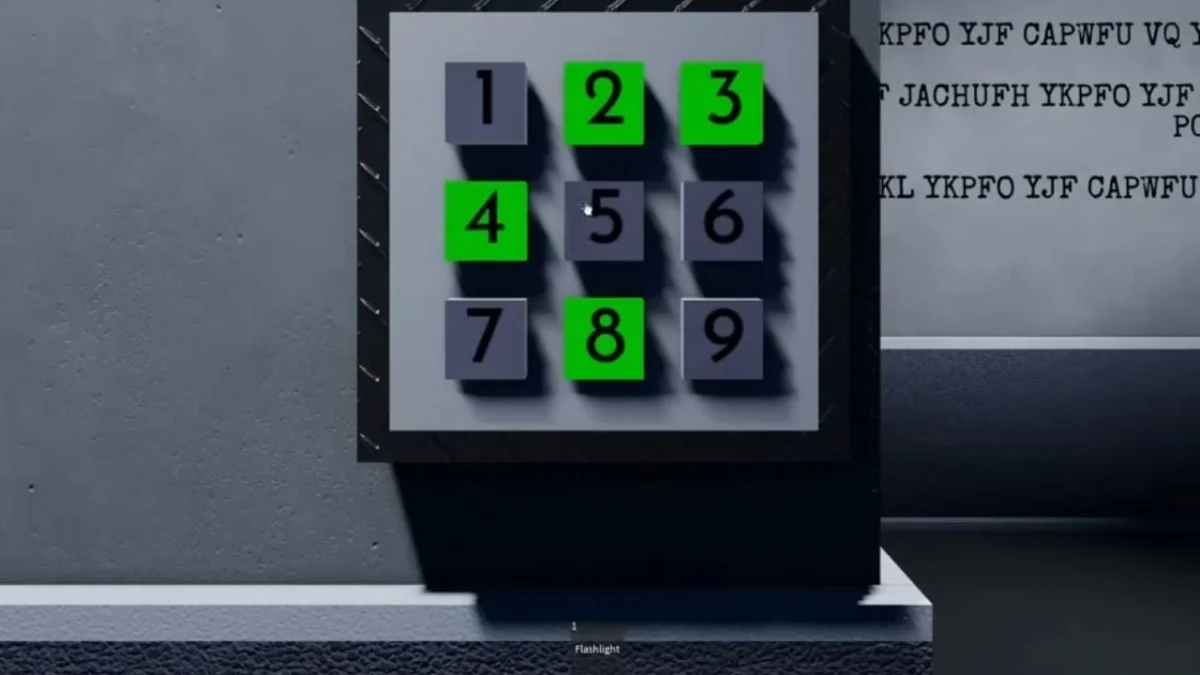
The digital landscape of gaming has undergone a seismic shift over the last decade, transitioning from static, developer-led narratives to dynamic, user-generated ecosystems. At the forefront of this revolution is Roblox, a platform that has transcended its origins as a children’s game to become a sophisticated engine for complex simulations. Among its most popular genres is the "Escape Room," a digital adaptation of the physical puzzle-solving phenomenon. Recently, one specific title has captured the attention of millions: Project Escape Room: Prison.
This article provides a comprehensive analysis of the game’s mechanics, a chronological guide to its most challenging map, and an exploration of the broader implications for the future of interactive entertainment.
1. Main Facts: The Rise of Project Escape Room
Project Escape Room is a premier title within the Roblox ecosystem, designed to test the cognitive limits, spatial awareness, and deductive reasoning of its players. Unlike traditional "Obbies" (obstacle courses) that rely on platforming skills and reflexes, Project Escape Room prioritizes logic-based progression.
The Prison Map Core Mechanics
The "Prison" map represents a significant difficulty spike for the community. It places players within a high-security correctional facility, tasking them with navigating a series of interconnected puzzles to achieve freedom. Key features include:
- Thematic Immersion: High-fidelity environmental design that mimics the claustrophobia of a modern penitentiary.
- Non-Linear Thinking: Clues found in one room often correspond to mechanisms located several chambers away.
- Time Constraints: A ticking clock adds a layer of psychological pressure, mimicking the high-stakes environment of a real-world escape room.
Popularity and Accessibility
Roblox Corporation reports that the platform hosts over 70 million daily active users. Titles like Project Escape Room thrive because they are accessible across Windows, Xbox, Android, and iOS, allowing for cross-platform collaboration. This accessibility has turned a niche puzzle game into a global social event, where players share strategies and walkthroughs across social media platforms like TikTok and Discord.
2. Chronology: A Step-by-Step Walkthrough of the Great Escape
To understand the complexity of Project Escape Room: Prison, one must examine the specific sequence of events required to complete the map. The following is a detailed chronological breakdown of the escape process, as documented by top-tier players and specialists.
Step 1: The Initial Breach – Escaping the Cell
The journey begins in the most restrictive environment: the prison cell. Players are presented with minimal tools and must rely on environmental observation.
- The Search: Players must interact with every object, including the cot, the sink, and the toilet.
- The Hidden Tool: Typically, a small tool or a loose brick serves as the first catalyst. In the Prison map, the player must identify a structural weakness in the cell bars or find a hidden "lockpick" analogue hidden within a mundane object. This phase teaches the player that no detail is too small to ignore.
Step 2: Deciphering the Walls – Counting the Tally Marks
Once out of the immediate cell, players enter a corridor or a shared space where the walls are covered in what appears to be "prison graffiti."
- The Logic: These are not mere aesthetic choices. Tally marks scratched into the concrete are often a numerical code.
- The Execution: Players must count specific clusters of marks—often divided by color or location—to derive a four-to-six-digit code for an electronic keypad. This step introduces the concept of "hidden in plain sight" data visualization.
Step 3: Technical Intervention – Cutting the Wires
Moving into the security sector, players encounter a circuit box. This is a high-stakes puzzle where a single mistake can reset the progress of that specific task.
- The Clue: Somewhere in the vicinity (perhaps on a discarded clipboard or a wall-mounted schematic), there is a color-coded guide.
- The Action: Using a pair of wire cutters found in a previous room, the player must snip the wires in a specific order (e.g., Blue, Red, Yellow, Green). This requires the player to retain information across different game zones.
Step 4: Sensory Logic – The Shower Pattern
The prison shower area serves as a unique puzzle hub. This stage moves away from numbers and toward pattern recognition.
- The Mechanism: Steam, tiles, or dripping water heads provide a sequence.
- The Solution: Players must observe the order in which showerheads activate or follow a specific path across the floor tiles that do not trigger an alarm. It is a test of memory and rhythmic timing.
Step 5: Physicality and Weight – Examining the Dumbbells
In the prison yard or gym area, the puzzles take a physical turn.
- The Riddle: A set of dumbbells of varying weights is presented.
- The Puzzle: Players must arrange the weights on a pressure-sensitive scale or rack to match a specific total weight mentioned in a cryptic note found earlier. This requires basic arithmetic and the ability to link physical objects to abstract clues.
Step 6: The Final Hurdle – Finding the “Gate Padlock” Key
The climax of the experience involves the Gate Padlock. This is the final barrier between the player and the "Victory" screen.
- The Search: The key is rarely just lying on a table. It is usually hidden inside a final container that requires all previous steps to have been completed.
- The Exit: Once the key is obtained, the player must navigate back through the security systems—now potentially on high alert—to reach the main gate. Unlocking the padlock triggers the escape sequence, marking the successful completion of the map.
3. Supporting Data: The Economics of Digital Puzzles
The success of Project Escape Room: Prison is not merely an anecdote; it is supported by the massive growth metrics of the Roblox platform and the broader "Logic Game" category.
| Metric | Detail |
|---|---|
| Total Roblox Users | 71.5 Million Daily Active Users (Q4 2023) |
| Developer Payouts | Over $740 Million paid to creators in 2023 |
| Genre Popularity | "Escape" games rank in the top 10 most searched terms on the platform |
| Average Session Time | 2.5 hours for high-complexity puzzle maps |
The "Obby" vs. "Escape Room" Divide
Data suggests a demographic shift in Roblox. While younger players (ages 5–9) gravitate toward simple obstacle courses, the "Escape Room" genre sees a higher engagement rate from the 13–17 and 17–24 demographics. These maps require a higher level of cognitive load, suggesting that Roblox is successfully maturing alongside its user base.
4. Official Responses and Developer Context
Roblox Corporation has consistently championed the "democratization of game development." Through the use of Roblox Studio, the proprietary engine used to create Project Escape Room, individual developers or small teams can build experiences that rival mid-tier indie studios.
Developer Insights
While the specific developers of Project Escape Room maintain a degree of anonymity common in the Roblox community, their updates indicate a focus on "emergent gameplay." In recent patch notes, the developers emphasized:
"Our goal with the Prison map was to move away from ‘click-and-win’ mechanics. We wanted to create a sense of genuine frustration that leads to an immense sense of satisfaction upon completion. Every clue is intentional; every red herring is a lesson."
Roblox Corporation’s Stance
A spokesperson for Roblox recently highlighted the educational potential of these experiences: "We see creators building logic puzzles that teach players about sequence, mathematics, and physics without the players even realizing they are learning. ‘Project Escape Room’ is a testament to the sophisticated creative talent on our platform."
5. Implications: The Future of Interactive Logic
The popularity of Project Escape Room: Prison carries significant implications for the future of both education and entertainment.
1. The Gamification of Education
As digital escape rooms become more complex, they are being eyed by educators as tools for "stealth learning." The Prison map, for instance, requires deductive reasoning and teamwork—skills that are essential in the 21st-century workforce. We can expect to see more "educational" versions of these maps used in remote learning environments.
2. The Evolution of the Metaverse
Project Escape Room is a microcosm of the "Metaverse" concept. It is a persistent, social, and interactive space where the value is created by the community. As graphics engines like Luau (Roblox’s coding language) become more powerful, the line between a "Roblox game" and a "AAA title" will continue to blur.
3. Psychological Resilience
Psychologists have noted that escape room games provide a safe environment for individuals to practice "stress-under-pressure" scenarios. The Prison map, with its claustrophobic setting and timed puzzles, acts as a form of cognitive behavioral exercise, rewarding persistence and calm analysis over impulsive action.
Conclusion
Project Escape Room: Prison is more than just a digital diversion. It is a sophisticated logic engine that challenges the intellect of its players while showcasing the immense creative power of the Roblox community. Whether you are a "specialist" or a novice, the journey through the tally marks, wire-cutting, and pattern-matching of the prison provides a masterclass in modern game design. As the platform continues to evolve, the "Great Escape" will likely remain a cornerstone of the Roblox experience, proving that sometimes, the best way to find ourselves is to figure out how to get out.











No comments yet. Be the first to join the conversation!