Rifan Muazin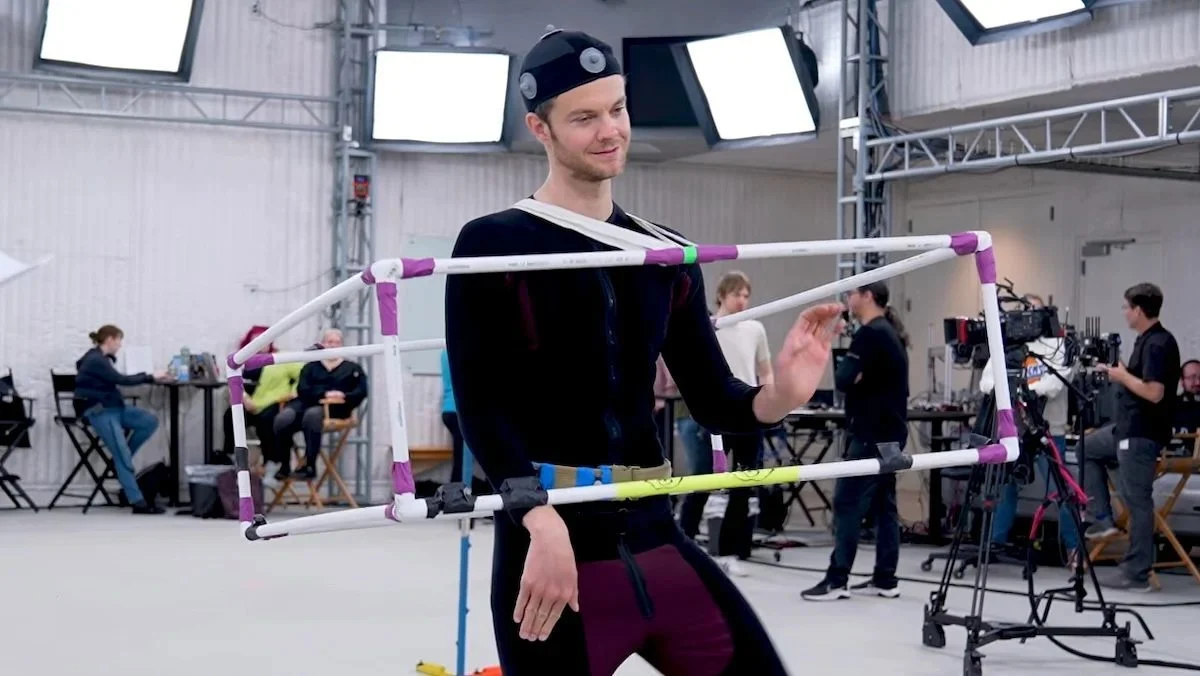
After years of navigating the high-stakes, blood-soaked corridors of Vought International and fighting to topple a sociopathic, god-like tyrant, Jack Quaid is trading the stress of The Boys for something arguably more complex: life as a gelatinous, sentient geometric shape. In an unexpected turn that has left the gaming community both baffled and delighted, Sony Interactive Entertainment has officially unveiled the cast for their upcoming title, God of War: Laufey. Among the high-profile talent attached to the project, it is Quaid’s performance—captured while wearing a literal cage of plastic tubing—that has stolen the spotlight.
The Shift: From Hughie Campbell to Phranque the Cosmic Cube
For audiences accustomed to seeing Jack Quaid as the relatable, often beleaguered Hughie Campbell, the transition to motion-capture performance art represents a significant departure. Quaid, known for his ability to ground fantastical scenarios in genuine human emotion, has been cast as "Phranque," a cosmic entity hailing from a dimension known as "The Everywhen."
The character description provided by PlayStation paints a portrait of a noble, if unconventional, guardian. "Phranque is a cosmic cube that you meet in this world called the Everywhen," Quaid explained in the recent behind-the-scenes featurette. "When you start playing this game, you get the feeling that the Everywhen is in trouble, and Phranque will stop at nothing to protect all the living creatures that inhabit this world."
The physical requirements for this role are as demanding as they are comical. Behind-the-scenes footage reveals Quaid draped in a cumbersome motion-capture suit, framed by a bulky, rigid cube of plastic tubing that forces him to navigate the studio space with stiff, calculated movements. It is a testament to Quaid’s commitment as a performer that he manages to convey deep-seated concern and heroic resolve while looking like a man trapped in a high-tech playpen.
Chronology of the Announcement
The journey toward this casting reveal began with months of speculation following whispers of a new God of War spin-off. The industry first took notice when GameSpot reported on the peculiar nature of Quaid’s involvement, sparking a flurry of memes and fan theories regarding the scope of the game.
- Initial Rumors (Early 2026): Reports surfaced suggesting that Sony Santa Monica was looking to expand the God of War mythos beyond Kratos’s immediate bloodline, focusing on the character of Laufey (Faye).
- The "Meet the Cast" Reveal: On June 3, 2026, PlayStation released a short documentary-style featurette titled "The Voices of the Everywhen," which officially confirmed the lead cast and provided the first glimpse of the motion-capture process.
- The Viral Moment: Within hours of the video’s release, clips of Quaid’s "cube choreography" began trending on social media platforms, cementing the game’s status as one of the most anticipated—and unconventional—releases of the fiscal year.
Supporting Data: A New Frontier for the Franchise
God of War: Laufey marks a tonal pivot for the legendary franchise. While the series has always balanced brutal combat with deeply emotional character arcs, Laufey appears to be leaning into high-concept fantasy and metaphysical world-building.

The Supporting Cast
The weight of the game does not rest on Quaid’s shoulders alone. The production has secured a diverse and seasoned cast:
- Deborah Ann Woll: A veteran of the franchise and a fan-favorite, Woll returns to reprise and expand upon the role of Faye. In this iteration, the narrative focus shifts to her legendary status as a warrior, promising a more combat-heavy, kinetic experience than players have seen in recent entries.
- Perlina Lau: Making her video game industry debut, Lau voices "Rue." Her character is perhaps the most unique in the game’s roster: a conscious, sentient set of ribbons attached to Faye’s blade. Rue functions as both a tactical advisor—warning Faye of incoming threats—and a weapon of war that flutters, whips, and swings in tandem with the player’s combat style.
The Everywhen Mechanics
The introduction of "The Everywhen" as a setting suggests that God of War is moving toward a multiverse-style narrative architecture. By incorporating characters like Phranque, who exist as abstract entities, the developers are signaling that they intend to challenge the boundaries of what a "God of War" game can be, potentially moving away from strict Norse or Greek mythologies into something more cosmic and experimental.
Official Responses and Creative Vision
The creative team at Sony has been quick to defend the casting of Quaid, arguing that the absurd nature of the character requires an actor capable of immense sincerity. "You cannot play a sentient box with irony," a source close to the production noted. "If you play it for laughs, the audience disconnects. You need someone who can sell the stakes, someone who can make you believe that the fate of the universe truly rests on the actions of a geometric shape."
Quaid himself has embraced the absurdity with characteristic humility. In interviews, he has noted that while the motion-capture suit is far from comfortable, the opportunity to experiment with such a "non-human" performance has been the highlight of his career. "It’s about movement," Quaid remarked. "How does a cube express empathy? How does a box look when it’s afraid? It’s a challenge that you don’t get when you’re just reading lines in a booth."
Implications for the Industry
The success of God of War: Laufey will likely serve as a litmus test for the industry’s willingness to blend AAA spectacle with experimental character design.
1. The Normalization of High-Concept Performance
As motion-capture technology becomes more sophisticated, studios are moving beyond simple human-to-human performance. The trend of casting high-profile actors in roles that require them to embody non-human, abstract, or bizarre entities is growing. This shift allows developers to lean into weirder, more artistic narratives while maintaining the "star power" needed to market the product to a mass audience.

2. Diversifying Gameplay Mechanics
The inclusion of characters like Rue (the sentient ribbon) and Phranque (the cosmic cube) indicates that Sony is looking to innovate in gameplay mechanics. If the player interacts with the world through these characters, the mechanics will inherently move away from the "hack-and-slash" tradition of Kratos. We may see a new emphasis on environmental puzzle-solving, spatial navigation, and perspective-shifting mechanics.
3. The Future of the God of War IP
With Laufey, Sony is proving that the God of War brand is not synonymous with one specific protagonist. By stripping away the familiar faces and replacing them with high-concept, avant-garde characters, the studio is ensuring the longevity of the franchise. It transforms God of War from a specific hero’s journey into a broader, more flexible storytelling universe.
Conclusion
Jack Quaid’s turn as Phranque is more than just a viral moment or a funny image of a man in a plastic box. It is a window into the evolving ambition of modern game design. By pairing a grounded, talented performer like Quaid with the high-fantasy madness of "The Everywhen," PlayStation is signaling that they are no longer content to merely iterate on past successes. They are looking to push the medium into strange, new, and undeniably square-shaped territory.
Whether God of War: Laufey will redefine the action-adventure genre remains to be seen, but one thing is certain: Jack Quaid has proven that he can survive the most toxic Supes in the world, and now, he’s ready to face the apocalypse as a cosmic cube. If the behind-the-scenes footage is any indication, the performance will be as memorable as it is utterly, magnificently absurd.


 Siti Muinah
 Azzam Bilal Chamdy