Jia Lissa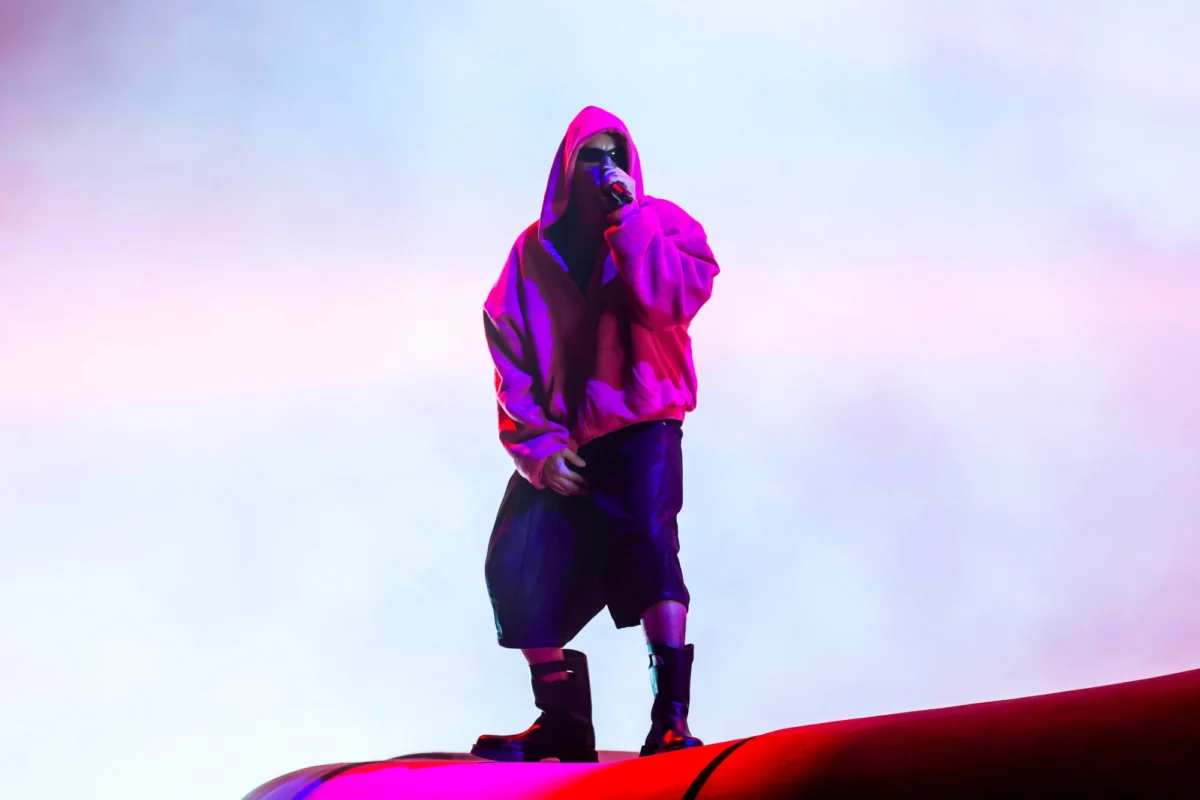
By Crystal Bell
April 13, 2026
Justin Bieber did not approach his 2026 Coachella headlining set as a standard victory lap. In an era where pop stars are expected to deliver high-octane, choreographed spectacles—complete with elaborate stage designs, pyrotechnics, and seamless cinematic transitions—Bieber chose a path of radical, meta-textual vulnerability.
Instead of hiding his past behind a wall of polished, current-era production, the 32-year-old superstar opened his laptop, projected his YouTube watch history onto the massive Coachella stage screens, and began a conversation with his own digital ghost. The result was not merely a concert; it was an intimate, occasionally chaotic, and deeply resonant exploration of what it means to be the first generation of true "internet-native" celebrities.
The Architecture of the Set: A Chronology of Growth
Midway through his 90-minute Saturday night performance, the tenor of the show shifted. Moving away from the high-production hits that defined his mid-career, Bieber signaled a transition that felt less like a curated setlist and more like a late-night scroll through a personal archive.
He began by pulling up grainy, low-resolution clips of his early YouTube career. The crowd watched as 12-year-old Justin performed snippets of "Baby," "Favorite Girl," "Never Say Never," and "Beauty and a Beat." The most poignant moment occurred when the screen filled with the flickering, pixelated footage of a young Bieber covering Ne-Yo’s "So Sick"—a video uploaded nearly two decades ago.

As the footage played, the adult Bieber sang in perfect harmony with his younger self. It was a jarring, hypnotic visual: the man who had conquered the world stood in a simple hoodie, effectively duetting with the kid who had been discovered in a local competition in Stratford, Ontario. He leaned into the microphone, asking the crowd, "How far back do you guys go? Do you guys really go back, though? Like for real, for real?"
The Digital Archeology of Stardom
To understand the significance of this set, one must acknowledge the shift in how the internet functions. The YouTube of 2007 was a digital frontier—a place where discovery felt organic, raw, and unoptimized. It was the era that birthed the "bedroom pop star" phenomenon.
Today, the creator economy is fundamentally different. It is driven by algorithmic silos, hyper-niche content, and short-form loops. As Bieber navigated his own history, the contrast between the past and present was palpable. He wasn’t just performing; he was documenting his own transition from an internet curiosity to a global titan, all while live-streaming to millions on the very platform that launched him.
The set functioned as a living, breathing browser window. He would pause to address the home audience with the casual demeanor of a FaceTime call, effectively dissolving the "fourth wall" that typically separates a headliner from his audience.
Contrasting Expectations: The "Spectacle" Debate
The decision to eschew traditional stadium-level pyrotechnics for a "bedroom aesthetic" sparked immediate debate among festival-goers and critics. While Day One headliner Sabrina Carpenter utilized five distinct costume changes and complex, Hollywood-inspired set designs, Bieber’s set was notably sparse.

Some attendees found the lack of physical props underwhelming, particularly given the high bar set for Coachella headliners. However, this criticism ignores the specific intent of the performance. By choosing to prioritize the "living archive" of his digital life over expensive stagecraft, Bieber invited the audience into a space of emotional, rather than visual, excess.
This minimalist approach raises a broader question regarding industry standards. Would a female artist, opting for a similarly inward-looking, stripped-back performance, have faced harsher criticism for failing to provide "spectacle"? The fact that Bieber was able to command the stage with nothing more than his voice and his history suggests that for a performer of his caliber, the "spectacle" was the reveal of the man behind the machine.
Meme Culture and the "Too Many Tabs" Aesthetic
The performance was not entirely somber. Bieber embraced the absurdity of his own internet footprint, at one point reciting his own viral "standing on business" paparazzi rant and playing random, unrelated internet clips like "Deez Nuts."
It felt like a digital "mixtape night"—a chaotic, cathartic assemblage of pop hits, deep cuts, and formative internet memes. For those watching, it felt less like a traditional stadium concert and more like a shared, communal experience of growing up alongside the internet. By turning the stage into a screen with "too many tabs open," Bieber successfully mirrored the modern human condition: we are all collections of our digital pasts, our memes, our missteps, and our triumphs, all existing simultaneously in the cloud.
Implications: The Living Archive of Celebrity
The ultimate takeaway from the 2026 Coachella performance is the evolution of celebrity identity. In the past, stars could reinvent themselves by moving to a new city or changing their sound. Today, every version of a star is permanently archived in digital amber.

Bieber’s performance was an acknowledgment that he can no longer "escape" his past versions because they exist in the same space as his current self. By reclaiming that history—by smiling at the screen and singing along with his younger self—he signaled a profound sense of peace. He was not looking back in regret; he was looking back at a kid he had finally made friends with.
Conclusion: A New Era of Vulnerability
Justin Bieber’s headlining set was a masterclass in honesty. It stripped away the artifice that often accompanies the "pop star" label and replaced it with a raw, digital diary. While the festival industry will continue to demand pyrotechnics and choreography, Bieber proved that the most powerful thing a performer can do is to show the audience exactly who they were, who they are, and how much the internet has shaped the journey in between.
As the final notes of his set faded over the Indio desert, one thing was clear: the era of the untouchable celebrity is over. In its place is an era of the "archival" star—someone who isn’t afraid to open the browser tabs, look at the past, and sing directly into the camera.

 Laily UPN
 Ammar Sabilarrohman