

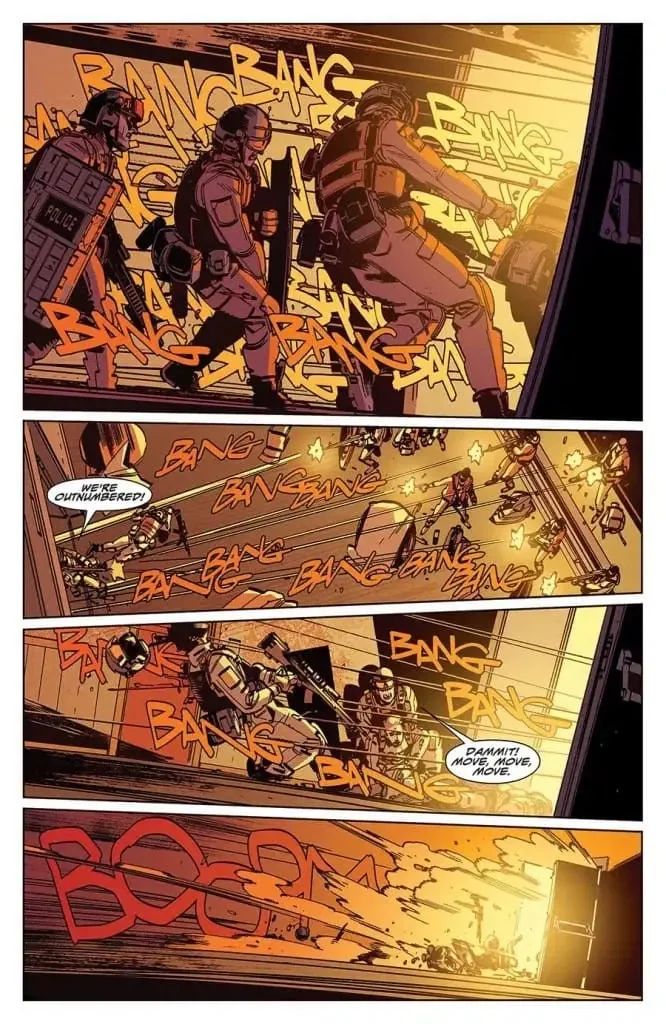
The G.I. Joe comic series, published by Skybound/Image Comics, has long been a masterclass in tonal flexibility. From the post-apocalyptic, Mad Max-inspired chaos of the "Dreadnok War" arc to the high-stakes military sci-fi implications brought on by the integration of the Autobots and the volatile Energon resource, the series has consistently challenged the boundaries of the classic toy-tie-in genre. However, with the release of G.I. Joe #22, writer Joshua Williamson and artist Andrea Milana have executed a daring pivot, steering the long-running franchise into the heart of psychological and supernatural horror.
This issue marks the beginning of a three-part narrative arc that trades tactical warfare for existential dread, proving that the Energon Universe is capable of much more than just explosions and battlefield heroics.
The Core Conflict: When Energon Meets the Supernatural
The premise of G.I. Joe #22 is deceptively simple: both the G.I. Joe team and the forces of Cobra have descended upon the fictional nation of Badhikistan to secure a massive, untapped deposit of Energon. Under normal circumstances, this would serve as the catalyst for an intense, high-octane military skirmish. Instead, both factions find themselves trapped in a nightmare.
The antagonist driving this shift is the mysterious "Crystal Ball." Utilizing D.I.R.E. technology infused with raw, unstable Energon, Crystal Ball has manifested a legion of spectral figures that blur the line between technological illusion and genuine paranormal terror. These are not merely holograms; they are rot-filled, decomposing entities that feed on the trauma of those they hunt.

For the Joes and Cobra operatives alike, the mission has shifted from securing a resource to mere survival. The landscape of Badhikistan—characterized by decaying rubble, abandoned architecture, and an oppressive atmosphere—serves as the perfect stage for this genre subversion.
A Chronology of Escalation: From Soldiers to Survivors
To understand the weight of this narrative shift, one must look at the progression of the current run.
- The Lead-up: Over the past several issues, the Energon Universe has been building toward a breaking point. The tension between Destro and Cobra Commander has reached a boiling point following the former’s decision to leave the Commander at the mercy of the Dreadnoks.
- The Incursion: As the teams arrive in Badhikistan, the initial tactical posturing is quickly eclipsed by the environment. The ground itself, potentially reacting to the corrupted Energon, begins to exhibit predatory characteristics, pulling unsuspecting soldiers into the shadows.
- The Psychological Turning Point: The introduction of Crystal Ball’s spectral entities marks the transition into full-blown horror. The ghosts are specifically designed to weaponize the past, focusing their malice on the operative known as "Risk."
- The Current Stand-off: As the issue concludes, the lines between hero and villain are increasingly blurred by shared terror. The immediate objective is no longer the Energon, but escaping the psychological and physical manifestations of their own collective history.
Supporting Data: The Craft Behind the Horror
The success of G.I. Joe #22 relies heavily on the synergy between the script and the visual execution. Williamson’s script provides the framework, but the artistry of Andrea Milana and the atmospheric color palette of Lee Loughridge define the horror.
The Visual Language of Decay
Milana’s character work is particularly effective in the close-up panels. By focusing on the faces of characters moments before they are snatched by the specters, the reader is forced to confront the vulnerability of these elite operatives. The "rotting" aesthetic of the D.I.R.E.-tech ghosts is rendered with a level of detail rarely seen in the franchise, leaning into the grotesque to ensure the threat feels visceral and dangerous.

The Atmospheric Palette
Lee Loughridge’s contribution cannot be overstated. By drenching the pages in deep, encroaching shadows, Loughridge creates a sense of spatial disorientation. In horror, what the reader cannot see is often more terrifying than what is revealed, and the creative team utilizes this principle to keep the tension at a sustained, high-frequency level. The use of light—or the lack thereof—acts as a secondary character, dictating the pacing of the horror sequences.
Character Analysis: Peeling Back the Mask of Risk
One of the most significant narrative implications of this issue is the long-overdue focus on Risk. Prior to this arc, Risk was largely a "cipher" within the roster—a skilled combatant defined by his bespoke suits, his arrogance, and his contentious relationship with Duke.
Williamson uses the supernatural manifestations of Badhikistan to break down these walls. As Risk is forced to relive a past tragedy, the audience gains crucial insight into the trauma that drives his stoicism. By forcing a character who prides himself on control to confront the uncontrollable, the narrative elevates him from a background operative to a multi-dimensional protagonist. This is a critical development for the Energon Universe, which relies on these character dynamics to ground its increasingly large-scale sci-fi stakes.
Internal Fractures: Cobra’s Crumbling Hierarchy
While the horror elements dominate the foreground, the geopolitical and organizational tensions within Cobra continue to simmer in the background. The interaction between Destro and Cobra Commander remains a masterclass in workplace hostility.

The Commander’s insistence that Destro lead the mission into the heart of the horror is a thinly veiled power play. Both parties are fully aware of the recent betrayals—specifically Destro’s abandonment of the Commander—and this mission is, for all intents and purposes, a crucible. The tension between them serves as a dark parallel to the G.I. Joe team, which itself is on a collision course with the machinations of "General Hawk," actually the impostor Zartan. These parallel power struggles suggest that even if the protagonists survive the supernatural threats of Badhikistan, their own organizations may be on the verge of implosion.
Implications: The Future of the Energon Universe
The bold transition into horror begs the question: What is the endgame for the Energon Universe? By demonstrating that the G.I. Joe brand can successfully inhabit a horror space, Skybound has significantly broadened the potential scope of the franchise.
1. Genre Fluidity
If the Energon Universe can shift from military sci-fi to horror, it suggests that future arcs could explore anything from political thrillers to hard-boiled noir. This keeps the reader engaged and ensures that the franchise does not become stagnant.
2. High Stakes for Future Conflicts
The fact that technology (D.I.R.E.) can be weaponized in such a terrifying, psychological manner changes the rules of engagement. If Cobra can manufacture fear, the G.I. Joes must adapt their tactics, potentially leading to more desperate, unconventional, and darker storylines in future issues.

3. The Human Element
Ultimately, the success of this issue rests on the human element. By choosing to focus on the psychological impact of war, the writers have ensured that the G.I. Joe series remains relevant. The audience is not just watching machines and soldiers fight; they are watching people struggle to maintain their humanity in a world that is increasingly hostile and unpredictable.
Conclusion: A New Standard for Licensed Comics
G.I. Joe #22 is a triumph of creative direction. By resisting the urge to simply deliver another standard military engagement, the creative team has elevated the franchise into a space where true character growth and genuine tension can flourish.
Whether this horror arc is a singular deviation or a sign of the darker, more psychological direction the Energon Universe is headed, one thing is certain: the stakes have never been higher, and the danger has never been more personal. As we await the next two parts of this three-part story, readers are left with the lingering question of what other genre boundaries this team intends to break. If this level of quality is the new standard, the future of the G.I. Joe franchise is as bright—and as terrifying—as the Energon itself.









No comments yet. Be the first to join the conversation!