Laily UPN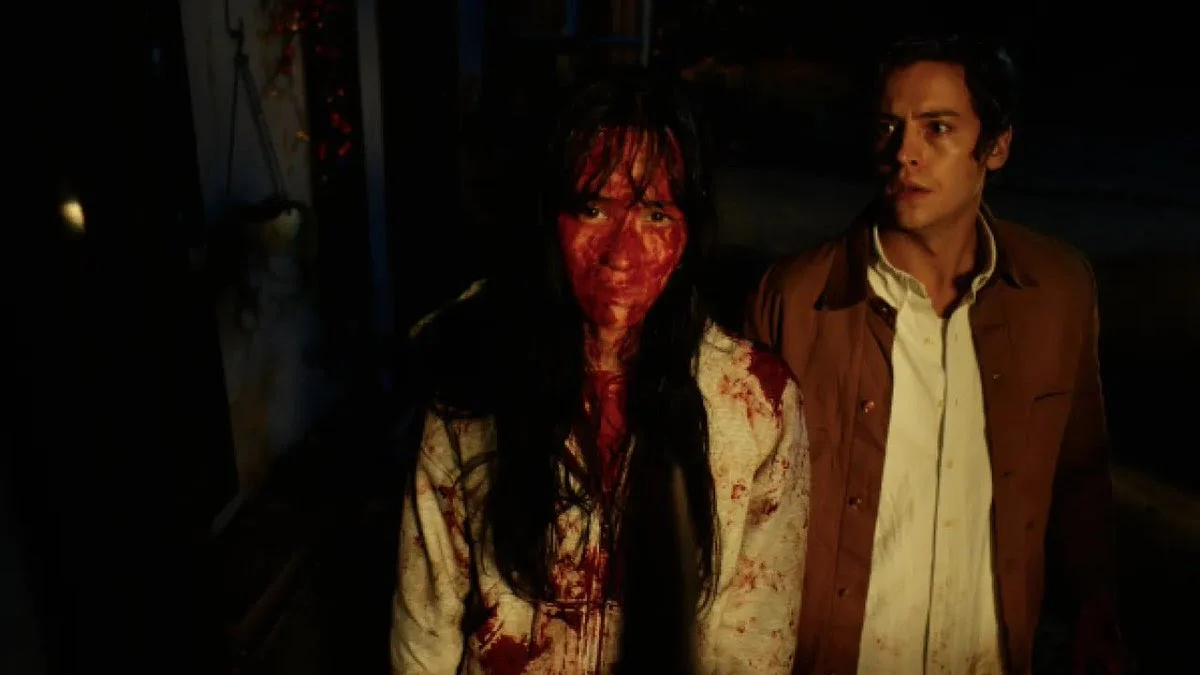
In an era where the average viewer is as likely to be checking a notification as they are to be watching a frame of film, director Eugene Kotlyarenko is not fighting the distraction—he is weaponizing it. His latest kinetic action-adventure, Vintage Violence, set for its world premiere on September 12 at the Toronto International Film Festival (TIFF), serves as a frenetic, kaleidoscopic mirror held up to America’s phone-obsessed psyche. Starring Cole Sprouse as the desperate, clout-chasing livestreamer Carter Tipe, the film acts as both a high-stakes thriller and a formal experiment in how we consume, process, and perform our lives in the digital age.
The Premise: From Cave to Chaos
The narrative catalyst for Vintage Violence is as absurd as it is modern. Carter Tipe, a struggling livestreamer hungry for relevance, stumbles upon a literal buried treasure: a cache of rare, vintage denim hidden deep within a cave. The discovery, seemingly innocuous, becomes the catalyst for a global odyssey. Prompted by an enigmatic Japanese fan, Izumi (played by Kiko Mizuhara), to transport the haul to Japan for a potentially life-changing payday, Carter finds himself thrust into a high-octane nightmare.
Once on Japanese soil, the film shifts gears from a treasure hunt to a breathless survival thriller. Carter finds himself on the run, pursued by a phalanx of police, opportunistic criminals, street hustlers, and the ruthless Yakuza. However, the physical danger is only half the story. The true conflict takes place on the screen, as the film’s visual language bifurcates, showing both Carter’s desperate livestream—clogged with the toxic sludge of fan comments, emoji spam, and real-time feedback—and the disparate, fragmented reactions of those watching him from afar.
The Visual Grammar of the ‘Second-Screen’ Generation
Vintage Violence is not merely a film about technology; it is a film built from its components. Kotlyarenko, who previously explored the dark underbelly of the internet in his 2020 thriller Spree, continues his investigation into the "rewiring" of the human brain. The cinematography, helmed by the acclaimed Sean Price Williams, is intentionally overwhelming. Lights, split screens, rapid-fire color palettes, and a constant, disorienting motion serve to replicate the "scattered, schizophrenic" nature of modern media consumption.
This aesthetic is a calculated response to what Kotlyarenko identifies as the "second-screen culture." He argues that today’s audiences—particularly those who grew up in the shadow of social media and competitive gaming—are accustomed to active immersion. "My thesis at that point is that we’re so connected and deeply involved with screens that it rewires our brains to process information differently," Kotlyarenko explains. "Over the last two decades, I’ve seen how it’s changed not just our attention, but our expectation for what storytelling is and our participation."
By integrating these disparate digital elements directly into the cinema language, Kotlyarenko is attempting to guide the viewer through a landscape that feels like a permanent state of information overload. "The challenge and the joy is figuring out how to guide and direct people on where to look, how to look, when to look," he adds.
Bridging the Gap: From Masters to Modernity
While the film’s surface is undeniably contemporary, Kotlyarenko roots his approach in the history of cinema. He views his work not as a rejection of traditional filmmaking, but as an evolution of it, drawing inspiration from masters who pushed the boundaries of technology and visual style.
"One of the great adventures and joys of trying to innovate something is using those cinematic techniques and finding inspiration in other filmmakers," says the director. He cites the technological fluidity of Brian De Palma and the perpetually contemporary stylistic choices of Pedro Almodóvar as North Stars for his own process. By taking the "cool" aspects of how these masters processed their own eras, Kotlyarenko applies a modern, digital-native spin, effectively translating the techniques of the past for an audience whose attention spans have been fractured by the algorithm.
Honoring Japanese Cinema: A Collaborative Spirit
The production of Vintage Violence was deeply influenced by the location of its shoot. By filming in Japan with a local crew, Kotlyarenko was able to engage with a cinematic tradition defined by its kinetic energy and willingness to experiment. He speaks with palpable excitement about the process, comparing himself to "a kid in a candy store."
The director credits the legacy of Japanese legends—Shohei Imamura, Nagisa Ōshima, and Nobuhiko Obayashi—as a primary influence on the film’s visual dynamism. "The language of the Japanese filmmakers I love is very dynamic," Kotlyarenko notes. "They’re constantly experimenting with different techniques within the same picture. I definitely wanted to capture that spirit as well." Utilizing dolly shots and Steadicam rigs daily, the production team sought to inject that same restless, adventurous energy into every frame, ensuring that the visual experience remained as volatile as the plot itself.
Technical Verisimilitude: Authenticity in Real-Time
One of the most impressive aspects of Vintage Violence is its commitment to "tech-based verisimilitude." Eschewing the common practice of adding digital interfaces and phone screens in post-production, Kotlyarenko insisted on capturing the interactions on set.
"Before our production really started principal, we had to shoot Carter in the cave because I needed to have an edit of that and the livestream," he reveals. This meticulous pre-production strategy ensured that when characters like Izumi interacted with their phones on screen, the content they were watching was actually playing in real-time. By avoiding green screens for phone interfaces, the director achieved a level of authenticity that grounds the film’s frantic, digital aesthetic. The timing of reactions, the flow of comments, and the visual feedback are all "real," creating a cohesive, tangible world that feels lived-in rather than composited.
Implications: The Voyeurism of the Digital Age
At its core, Vintage Violence posits that the history of cinema is, in essence, the history of voyeurism. By framing the film through the lens of a livestream, Kotlyarenko explores a new, largely untapped dimension of that voyeurism: the act of peeking at someone else’s digital life.
"If you’ve ever had an opportunity in a public space to just errantly see someone else’s phone, maybe by accident, maybe you’re peeking, that’s a really thrilling form of voyeurism," Kotlyarenko reflects. "With phones, you have this awesome opportunity to engage in a type of voyeurism that has barely been explored in cinema, but it’s so real."
This perspective shifts the film from a simple thriller to a profound commentary on the erosion of privacy and the obsession with public performance. As Carter Tipe runs for his life, the audience is not just watching a movie; they are, in a sense, acting as the very viewers who are enabling his chaos.
Conclusion: A New Grammar for a New World
Vintage Violence represents a daring, if divisive, step forward in the evolution of digital-era filmmaking. By forcing the audience to engage with the film as if it were a chaotic, multi-layered social media feed, Eugene Kotlyarenko is challenging the very nature of passive cinematic consumption. Whether the audience is ready to embrace this "schizophrenic" style remains to be seen, but the film stands as a significant marker in the ongoing conversation about how technology is not just changing the world, but changing the very way we tell stories about it. As it makes its bow at TIFF, Vintage Violence invites us to look, scroll, and watch—but above all, to recognize ourselves in the frantic light of the screen.


 Siti Muinah
 Sagoh
Sagoh