
In the modern digital ecosystem, the sensation of being "watched" by your smartphone is a common phenomenon. You search for a pair of running shoes on a niche retail website, and within minutes, the exact product—or a remarkably similar alternative—appears in your Instagram feed. While many users instinctively suspect that Meta, the parent company of Instagram, is listening to their private conversations via the device’s microphone, the reality is far more clinical and, in many ways, more sophisticated. Meta maintains that it does not eavesdrop on audio; instead, it relies on a complex web of data harvesting that tracks your digital footprint across the web.
As Meta continues to integrate advanced Artificial Intelligence (AI) into its advertising and recommendation engines, the mechanisms for data collection have become increasingly opaque. For users concerned about their digital privacy, the ability to "opt-out" is not a single toggle switch, but a multi-layered process requiring a granular understanding of how Meta’s systems interact with external businesses, your device’s permissions, and your own interactions with their AI.
The Mechanics of Tracking: How Meta Builds Your Profile
The accuracy of Instagram’s ad targeting is not accidental. It is the result of a massive data-processing operation that aggregates information from three primary sources: internal platform behavior, cross-platform tracking, and direct partnerships with advertisers.

Meta’s algorithms learn from your every action inside the app—what you search for, the accounts you follow, the specific Reels you linger on, and the posts you like. However, the "telepathic" nature of the ads stems from what happens outside the app. Through tools like the Meta Pixel and the Conversions API, external websites share information with Meta about your visits, purchases, and interactions. This data is then synced with your profile, allowing Meta to construct a highly specific behavioral profile that follows you across the internet.
Furthermore, Meta has moved to integrate your activity with its AI models. Your interactions with Meta AI are now being leveraged to tailor the content and ads you see, turning your conversational data into a signal for commercial targeting.
Chronology of Control: Meta’s Evolving Privacy Landscape
The conversation surrounding user privacy has shifted significantly over the past two years, marked by regulatory pressure and public demand for transparency.

- Pre-2025: Users relied on basic ad preference settings, which allowed for limited control over interest-based advertising. However, these settings were often buried deep within the menus and did not cover the breadth of data Meta collected from third-party partners.
- December 2025: A pivotal shift occurred when Meta began using interactions with its AI features as explicit signals for ad targeting and content recommendation. This move sparked a wave of privacy concerns, as users realized that conversational data was no longer siloed from commercial advertising.
- July 2026: In response to increasing regulatory scrutiny—particularly from the European Union—Meta introduced a unified "Activity from other businesses" control. This feature replaced the legacy "Your activity off Meta technologies" setting, providing a more centralized, albeit still complex, way for users to restrict how external companies feed data into their Meta profiles.
Supporting Data: The Scope of Information Gathering
Meta’s privacy policies are expansive, and the data they collect is multifaceted. It is essential for users to understand that Meta is not just tracking what you click; it is tracking who you are connected to and where you are physically located.
The Breadth of Collected Signals:
- Device and Network Metadata: Meta logs your IP address, device type, battery level, signal strength, and even Wi-Fi network details to determine your approximate location and hardware capabilities.
- Contact Syncing: By uploading your address book, Meta can map your social graph, suggesting connections and tailoring ads based on the demographics of your social circle.
- Cross-Account Linking: When multiple accounts (e.g., Facebook, Instagram, and Threads) are managed within the same Accounts Center, Meta uses this data as a unified pool for targeting, meaning your behavior on one platform directly influences the ads you see on the others.
Official Responses and Regulatory Implications
Meta has consistently defended its data practices as a means to provide a "personalized and relevant" user experience. The company argues that advertisements are a necessary component of the free services it provides. In official statements, Meta emphasizes that its "Activity from other businesses" tool gives users more agency over their experience, allowing them to sever the link between external browsing habits and internal ad targeting.
However, privacy advocates and regulators—most notably in the EU—have challenged this. Under the Digital Markets Act (DMA) and the General Data Protection Regulation (GDPR), regulators have pushed for "less-personalized" ad models. In response, Meta has had to provide European users with a choice: pay for an ad-free experience or accept a model that uses fewer signals. These regulatory victories have slowly forced the company to become more transparent, though they have not fundamentally changed the business model that relies on the monetization of user behavior.
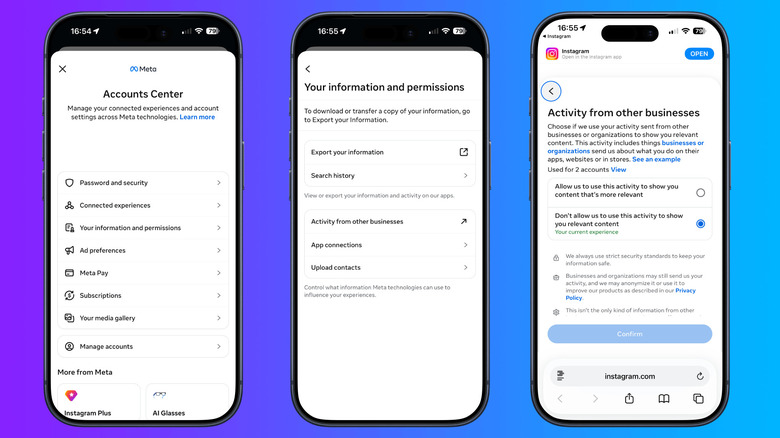
Step-by-Step: How to Limit Your Data Exposure
Because there is no "master switch," users must take a systematic approach to reclaiming their privacy.
1. Disabling Personalization from Other Businesses
This is the most critical step for stopping off-platform tracking from influencing your feed.
- Navigate to your Instagram Profile.
- Tap the three-line menu icon and select Accounts Center.
- Locate Activity from other businesses.
- Disable the personalization setting. If you do not see this specific menu, look for Ad preferences > Ad settings > Activity information from ad partners.
2. Restricting Device-Level Permissions
Your phone’s operating system holds the keys to much of your private data.
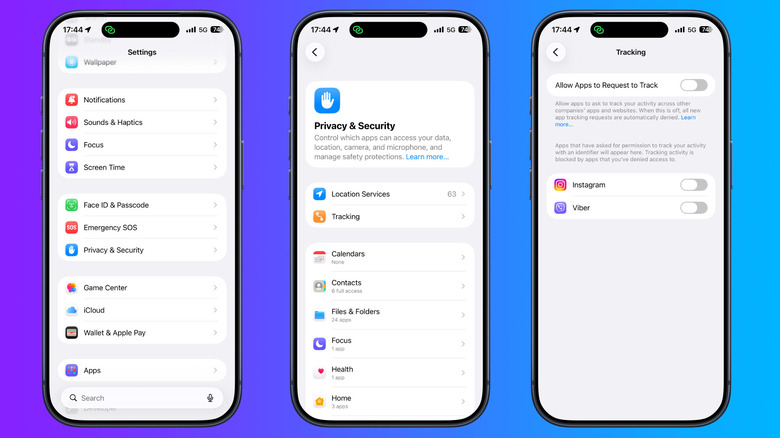
- On iPhone: Go to Settings > Privacy & Security > Tracking and toggle off the switch for Instagram. This prevents the app from tracking your activity across other companies’ apps and websites.
- On Android: Navigate to Settings > Apps > Instagram > Permissions. Deny access to Location, Contacts, and Microphone. Note that while this limits the data Meta collects, the company may still estimate your location via your IP address.
3. Managing Contact Syncing
- Go to Accounts Center > Your information and permissions > Upload contacts.
- Select your Instagram account and toggle off Connect contacts.
- To scrub previously uploaded data, select Manage contacts and delete the information. Note that Meta claims this process can take up to 90 days to fully propagate through their systems.
4. Cleaning Up AI Chat History
Meta AI stores the context of your conversations to improve its recommendations.
- Within your Meta AI chats, use the command /reset-ai to clear the specific conversation history.
- Use /reset-all-ais to clear all saved context across all AI interactions.
- Warning: These commands do not delete your chat from your own history view; they only clear the data saved by the AI model for personalization purposes.
Implications: The Future of Digital Privacy
The reality is that these settings provide a "buffer" rather than a "shield." While disabling third-party tracking will significantly reduce the accuracy of the ads you see, it will not stop Meta from tracking your behavior within its own ecosystem. As AI continues to evolve, the distinction between a "personal recommendation" and an "ad" will likely continue to blur.
For the average user, the takeaway is clear: privacy in the age of Meta is a proactive, maintenance-heavy task. It requires periodic check-ins, a healthy skepticism of "personalized" features, and a commitment to not sharing sensitive information—names, addresses, or medical history—within AI chat interfaces. As we move toward a future where generative AI is embedded into every social interaction, the responsibility to safeguard personal data rests increasingly on the user’s ability to navigate the labyrinthine settings of the platforms they inhabit.