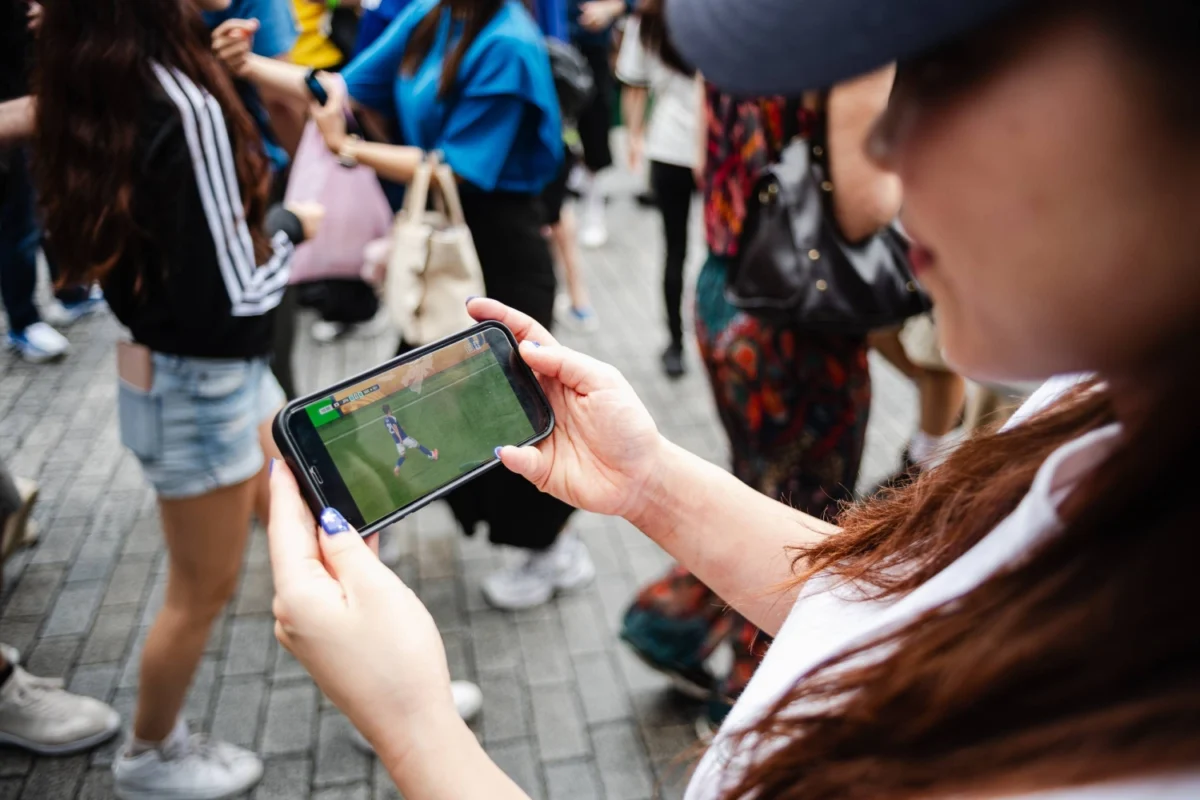
TOKYO — The traditional image of the FIFA World Cup—crowds huddled around a singular television set in a darkened living room or a boisterous, beer-soaked sports bar—is rapidly becoming a relic of the past. As the 2026 FIFA World Cup progresses, the streets of Tokyo offer a different spectacle: commuters on the Yamanote line, office workers in breakrooms, and pedestrians on street corners are all tethered to the action via the glowing screens of smartphones and tablets.
Following Japan’s tense, hard-fought draw against Sweden on Friday—a result that secured the Samurai Blue a coveted spot in the knockout stages—it became clear that the nature of sports fandom in Japan has undergone a seismic shift. The "Digital Stadium" has arrived, and it is decentralized, portable, and persistent.
The New Frontier of Sports Consumption
The convenience of modern streaming technology has fundamentally altered the relationship between fans and live sporting events. For the 2026 tournament, the rise of mobile-first broadcasting platforms has transformed virtually any location with a stable Wi-Fi connection into a potential watch party.
This shift is particularly significant in Japan, where the global time difference often places critical matches during the work week. Friday’s group stage finale was a case in point, broadcast during the height of the morning commute and the start of the business day. Rather than forcing fans to choose between their professional obligations and their national team, mobile streaming allowed for a seamless integration of the two.
"While viewing used to be tied to a specific place, like being at home, now people can watch anywhere and anytime, which has made the experience much more convenient," explains Yoshihiro Oi, an associate professor at Waseda University’s sports department. "We are witnessing the democratization of the viewing experience. The barrier to entry—needing a television set or a scheduled block of time—has been effectively dismantled."
A Chronology of the Digital Shift
The evolution of how Japan consumes the World Cup did not happen overnight. To understand the current landscape, one must look at the progression of digital broadcasting over the last decade:
- 2014-2018 (The Transitional Era): Streaming was an auxiliary service. Mobile apps were often plagued by latency issues, and data costs were prohibitively high for long-form video consumption. Most fans still relied on traditional terrestrial broadcasting.
- 2022 (The Inflection Point): The Qatar World Cup served as a test case for widespread digital adoption. Improved 5G infrastructure and more robust content delivery networks allowed for a significantly higher volume of concurrent streams.
- 2026 (The Mainstream Arrival): The current tournament marks the first time that streaming services are viewed not as a backup, but as a primary delivery mechanism for the majority of the Japanese population. The infrastructure is now mature enough to handle millions of simultaneous users without significant buffering, creating a synchronized "second-screen" culture.
Supporting Data: The Metrics of Mobile Fandom
The transition to mobile viewing is backed by a clear surge in digital traffic metrics across the archipelago. Network providers have reported record-breaking data spikes during Japan’s match hours, with a noticeable shift in usage patterns from stationary residential Wi-Fi to mobile data networks during the morning hours.
Industry analysts note that streaming platforms have seen a 40% increase in active users compared to the 2022 tournament, with mobile traffic accounting for nearly 70% of total viewership. This data reflects a broader societal trend in Japan: a workforce that is increasingly mobile and tech-integrated, demanding entertainment that moves at the speed of their lifestyle.
Furthermore, the "social component" of sports, which once relied on proximity, has migrated to digital spaces. Fans are now watching matches while simultaneously participating in real-time commentary threads on X (formerly Twitter) and dedicated sports Discord servers. This creates a multi-layered viewing experience: one screen for the match, one for the communal emotional response.
Official Responses and Industry Sentiment
Broadcasters and telecommunications companies have been quick to adapt to this new reality. "We recognized early on that the 2026 tournament would require a mobile-first strategy," said a spokesperson for one of Japan’s leading digital sports platforms. "Our focus has been on reducing latency to near-zero, ensuring that the person on the train sees the goal at the exact same moment as the person in their living room."

The Japan Football Association (JFA) has also embraced this change, leveraging digital platforms to reach younger demographics who may not own a traditional television. By partnering with mobile-native platforms, the JFA has expanded its reach, turning the World Cup into an omnipresent cultural touchstone rather than a scheduled broadcast event.
However, the shift has not been without its critics. Traditionalists argue that the "communal vibration" of a crowded stadium or a packed pub cannot be replicated through a smartphone screen. There is a lingering concern that the isolation of mobile viewing—even when supplemented by social media—diminishes the collective ecstasy that defines the World Cup experience.
Societal and Economic Implications
The implications of this shift are far-reaching, touching upon urban planning, workplace culture, and the economy of sports marketing.
Workplace Dynamics
The "morning match" phenomenon has created a unique workplace culture in Japan. Managers are increasingly finding their teams distracted, with many offices adopting a "semi-flexible" stance during Japan’s group stage matches. The ability to keep a small window open on a monitor or a phone on a desk has turned the World Cup into a background rhythm for the Japanese workforce, fostering a unique, if unconventional, sense of national camaraderie in the office.
Urban Infrastructure
The reliance on mobile streaming places a new burden on urban infrastructure. Public Wi-Fi access points in train stations and convenience stores are becoming critical nodes for digital consumption. This has prompted local governments to consider expanding public digital infrastructure, recognizing that high-speed connectivity is no longer just a luxury, but a necessity for the modern, mobile citizen.
Marketing and Advertising
The advertising model has shifted accordingly. Traditional 30-second television spots are being augmented by dynamic, mid-roll mobile advertisements and branded digital overlays. Brands are paying a premium to be present in the "second-screen" environment, where engagement is higher and more measurable than ever before.
The Future of Global Sports
As Japan moves into the knockout rounds, the digital-first nature of their fandom will likely intensify. The success of this model in Japan provides a blueprint for other nations. As high-speed connectivity continues to expand globally, the concept of a "fixed" location for sports consumption is destined to vanish.
The World Cup, once an event that required one to stop their life to watch, has now become a seamless component of daily existence. Whether on a crowded commuter train in Shinjuku or a quiet park bench in Kyoto, the "Digital Stadium" ensures that as long as the match is on, the fans are never truly alone.
The 2026 FIFA World Cup is more than a tournament; it is a laboratory for the future of human connection in a digital age. And if Friday’s match was any indication, the experiment is a resounding success. The game is everywhere, and for the fans in Japan, that is exactly how it should be.
As the world navigates a landscape filled with both misinformation and an overwhelming deluge of data, the role of reliable, in-depth journalism has never been more vital. If you value this reporting and wish to support our commitment to accurate, insightful coverage of the events shaping our world, please consider subscribing to The Japan Times. Your support helps us tell the stories that matter, with the rigor and integrity you deserve.