Iffa Jayyana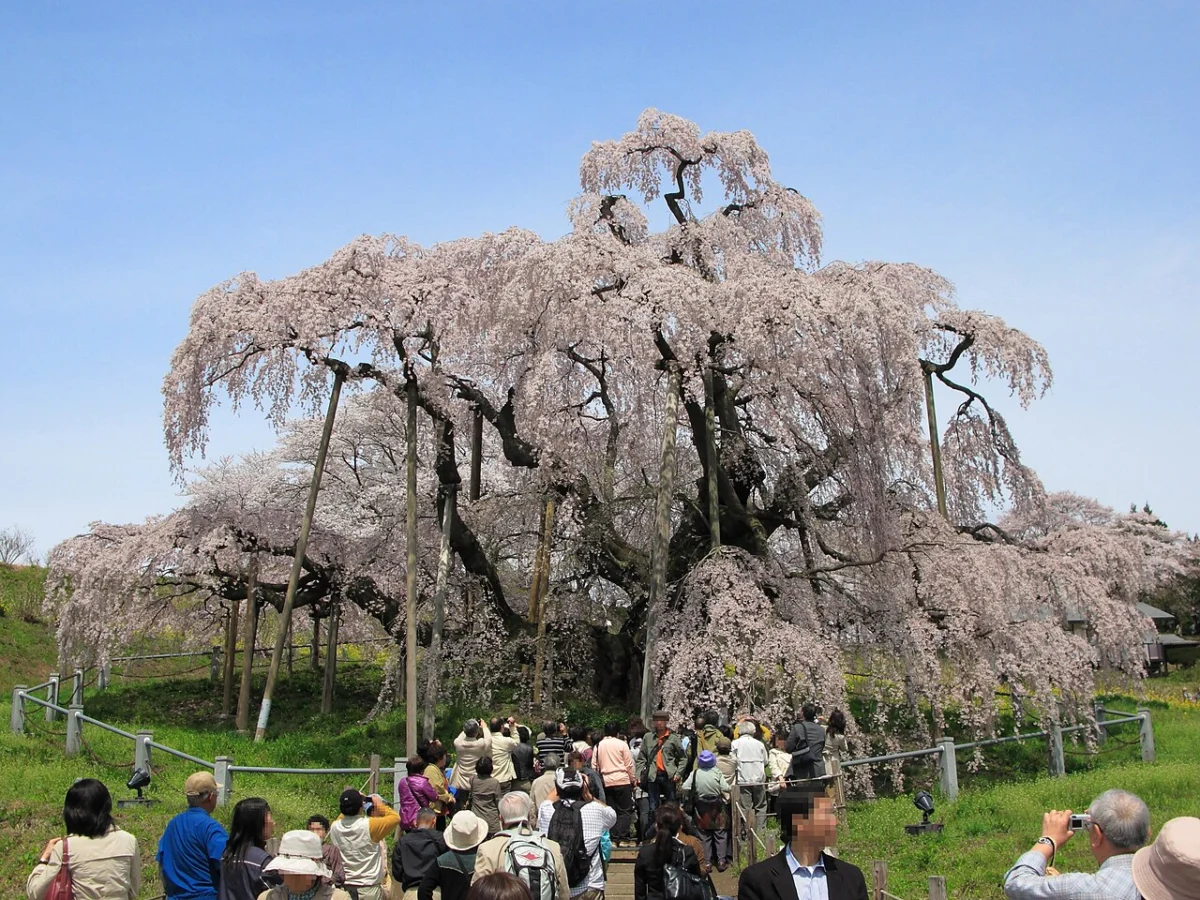
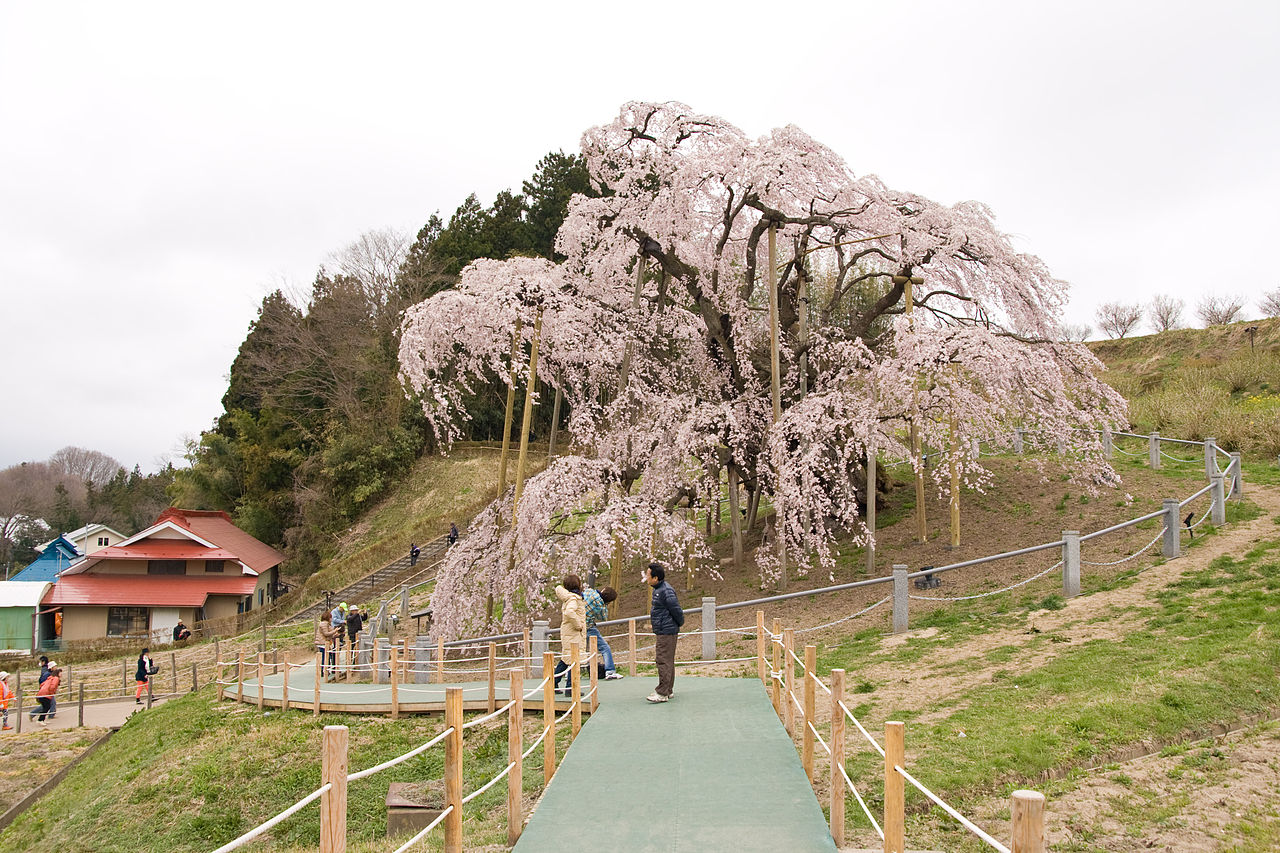
Standing at the base of the Miharu Takizakura on a crisp April morning is an experience that defies the typical expectations of tourism. As you walk the final five minutes up the gentle, rural slope, you find yourself amidst a hushed crowd of nearly two thousand people. No one speaks; the silence is a communal recognition of scale. When you finally round the bend and the Miharu Takizakura—the "Waterfall Cherry Tree"—comes into view, the impact is visceral. Towering over thirteen meters high, its branches cascade outward in a curtain of delicate pink blossoms that spreads wider than a tennis court. It is a moment of profound natural awe, one that invariably elicits a breathless “yabai” (you’re kidding) from those who see it for the first time.
Main Facts: The Anatomy of a Legend
The Miharu Takizakura is not merely a tree; it is a national icon. Alongside the Usuzumi-zakura in Gifu and the Yamataka Jindai-zakura in Yamanashi, it holds the prestigious title of one of the "Three Great Cherry Trees of Japan."
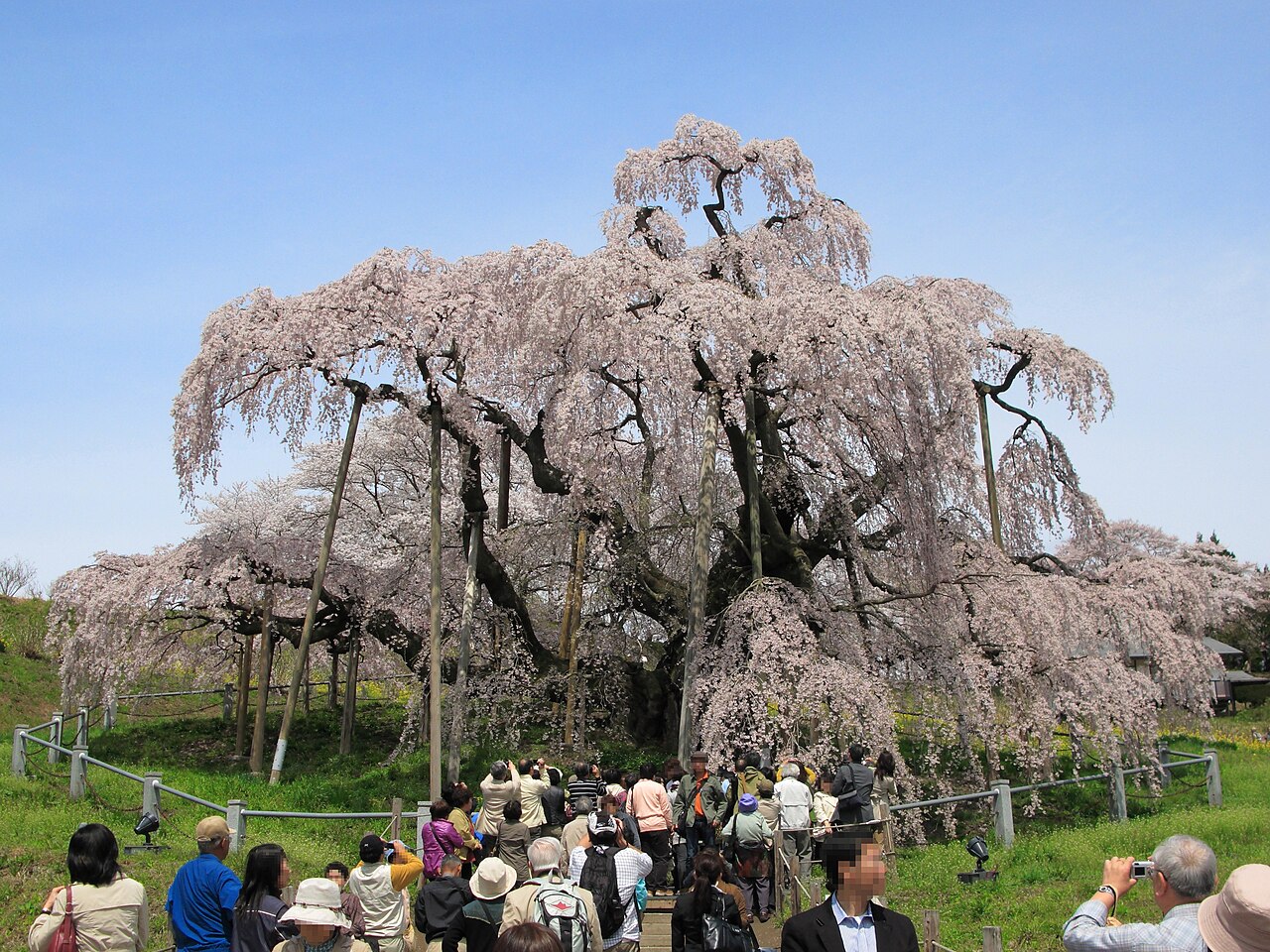
Botanically, it is a Prunus pendula cultivar known as beni-shidare, or "red weeping" cherry. While the common Somei-yoshino cherry trees that line Tokyo’s parks are genetically identical clones with a relatively short lifespan of roughly eighty years, the beni-shidare is a rugged survivor. Grown from seed and allowed to develop naturally, these trees can endure for a millennium.
Vital Statistics:
- Age: Estimated at over 1,000 years.
- Height: 13.5 meters.
- Trunk Circumference: 8.1 meters (at chest height).
- Branch Spread: 14.5 meters (South), 14.0 meters (West), 11.0 meters (East), 5.5 meters (North).
This striking north-south-east-west asymmetry serves as a silent history of the tree’s survival. For forty human generations, it has leaned into the sunlight and braced against the harsh mountain winds, creating a silhouette that is entirely unique.
A Chronology of Protection and Renown
The history of the Takizakura is inseparable from the history of the Fukushima region. Long before it was a tourist destination, it was a local treasure. During the late Edo period, the Miharu feudal domain designated it an oya-boku (official tree), granting it state protection.
The tree’s stature in the national imagination was cemented in the 1830s by the poet Kamo no Suetaka, whose verses described the blossoms "reaching to every corner of Oshu." This cultural elevation preceded its formal recognition on October 12, 1922, when it became the first cherry tree in Japan to be designated a National Natural Monument.
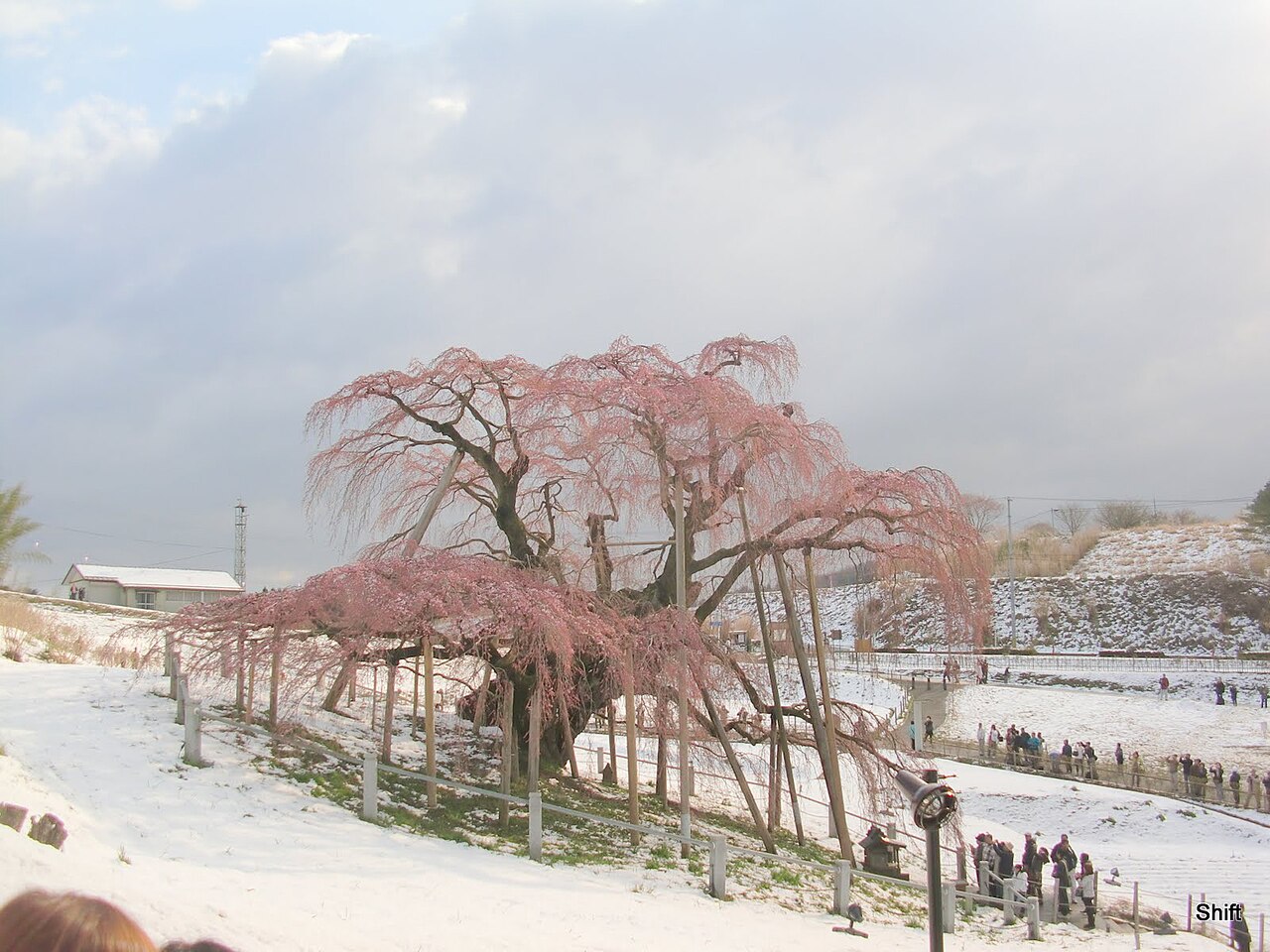
In the modern era, the tree has become a symbol of resilience. Despite the 2011 Tohoku earthquake and the subsequent nuclear crisis at Fukushima Daiichi, the Takizakura remained a beacon of stability. Located 60 kilometers inland, the town of Miharu never entered an evacuation zone, and radiation levels have remained well within safe, natural background limits for over a decade.
Supporting Data: Understanding the Bloom
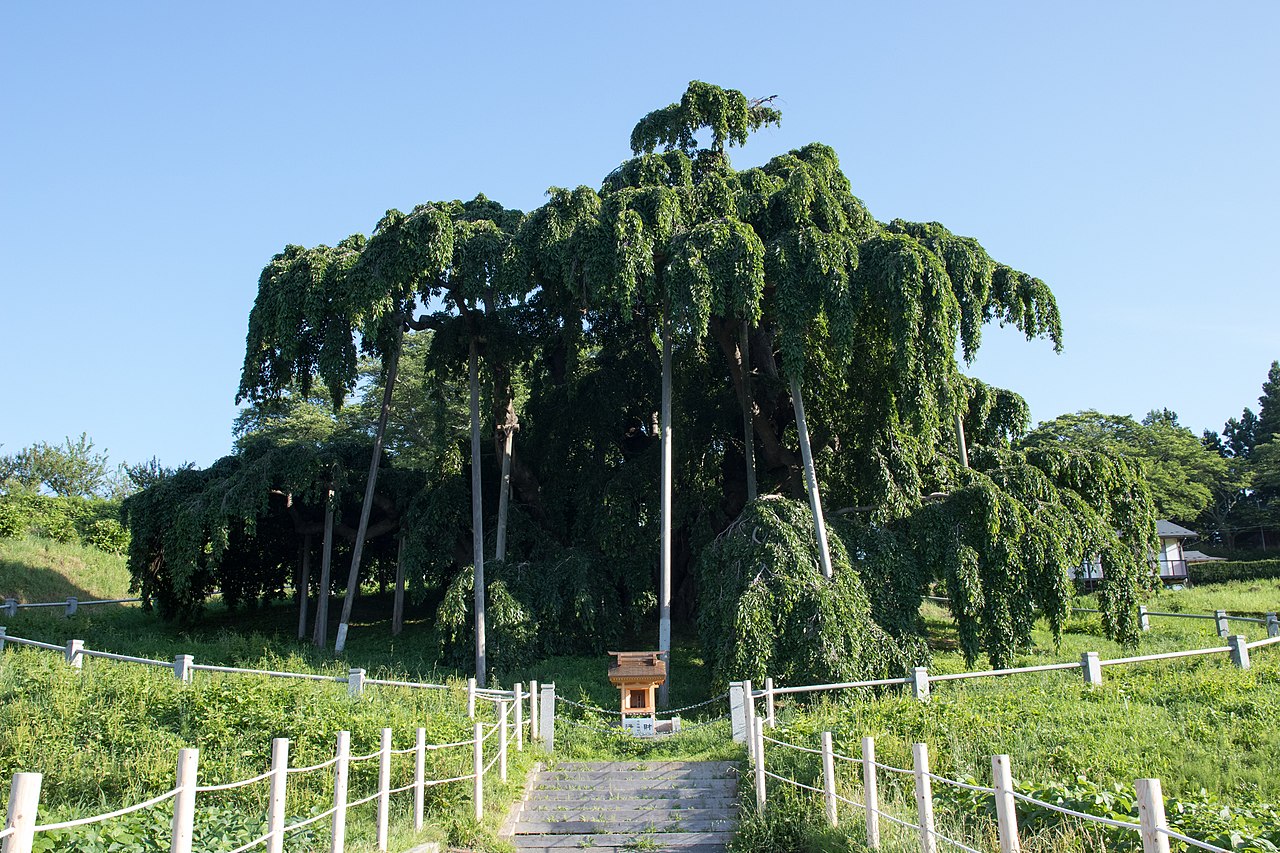
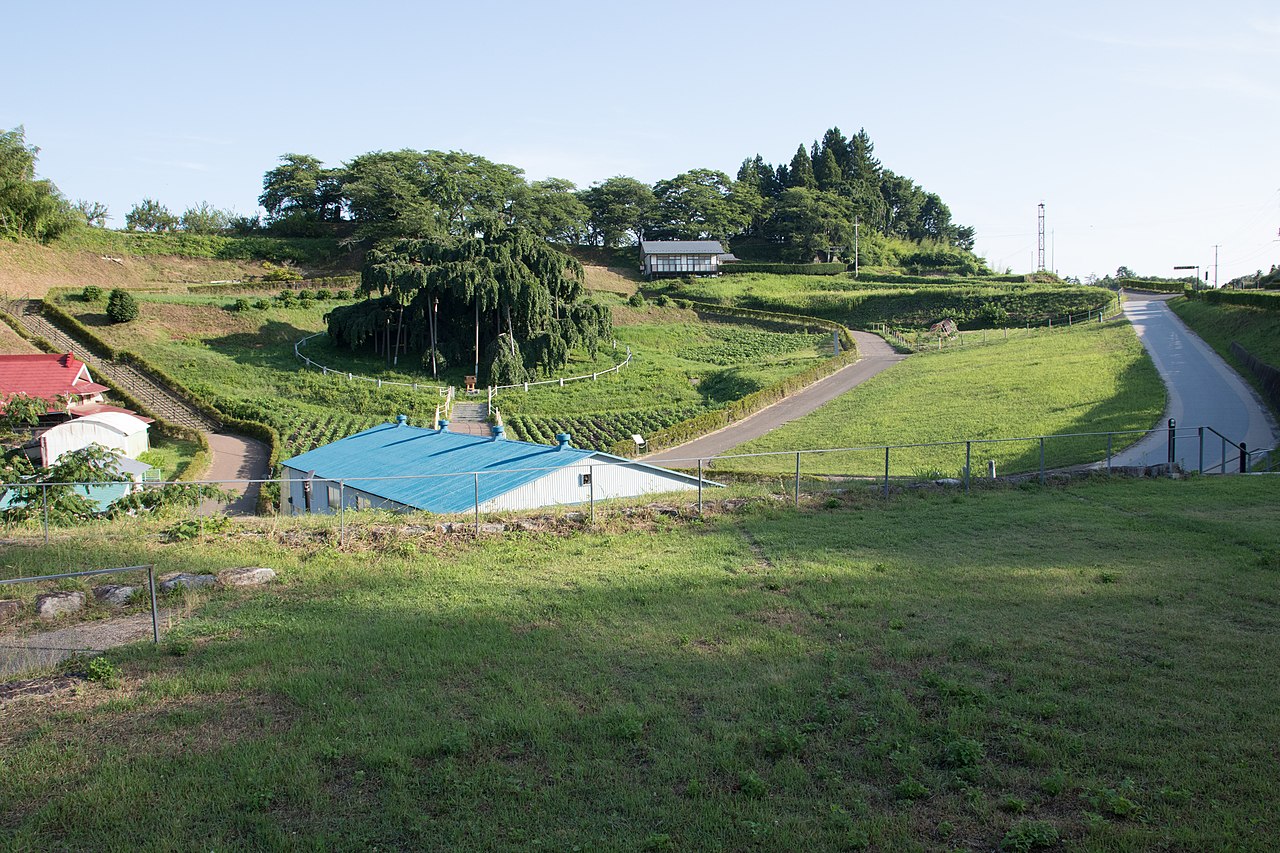
The "timing problem" is the greatest challenge for any visitor. The tree’s peak bloom—the mankai stage—is a fleeting window of roughly ten days. In a typical year, this occurs in the third week of April, though unseasonably warm springs can push the bloom forward to April 10, while cold snaps can delay it past April 25.
Planning Strategy:
- Monitor the Source: Rely solely on the Miharu Tourism Association’s Japanese-language website, which provides daily updates categorized by growth stage: tsubomi (bud), saki-hajime (starting to bloom), mankai (full bloom), and chiri-hajime (starting to fall).
- Build a Buffer: If traveling from abroad, allow for a 48-hour window in your itinerary. If you cannot hit the peak bloom, the tree is essentially a large, bare silhouette on a hillside—an impressive sight for dendrologists, perhaps, but a disappointment for those expecting the "waterfall" of pink.
- Flexible Logistics: Rather than locking in rigid dates months in advance, consider booking flexible accommodation in Koriyama, a mere twelve-minute train ride away.
Official Responses and Conservation Efforts
The preservation of a thousand-year-old organism requires constant, heavy-duty support. Since the 1970s, a network of wooden and metal poles has been a permanent fixture beneath the outer branches. These supports are not an aesthetic choice but a structural necessity; the weight of the cascading blossoms and the length of the limbs would otherwise lead to limb failure.
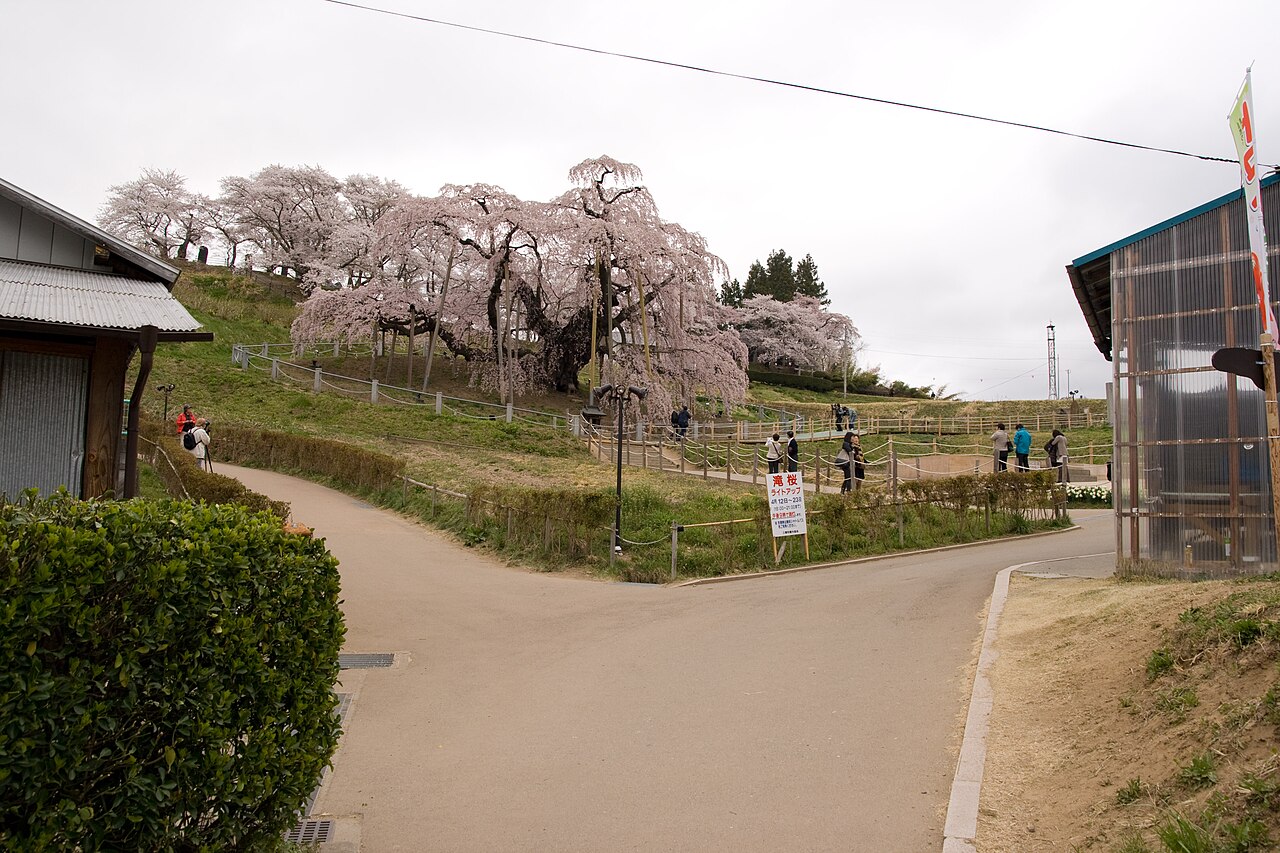
The Miharu Tourism Association manages the site with precision. During the peak bloom, they oversee an influx of 150,000 to 200,000 visitors. To handle this, they have established a one-way path that flows from the south, loops clockwise, and exits to the north. This ensures that even on the busiest days, the human tide remains manageable. The ¥300 admission fee collected during this season directly funds the maintenance of the tree and the volunteer staff who guide the foot traffic.
The Night Light-Up: A Separate Experience
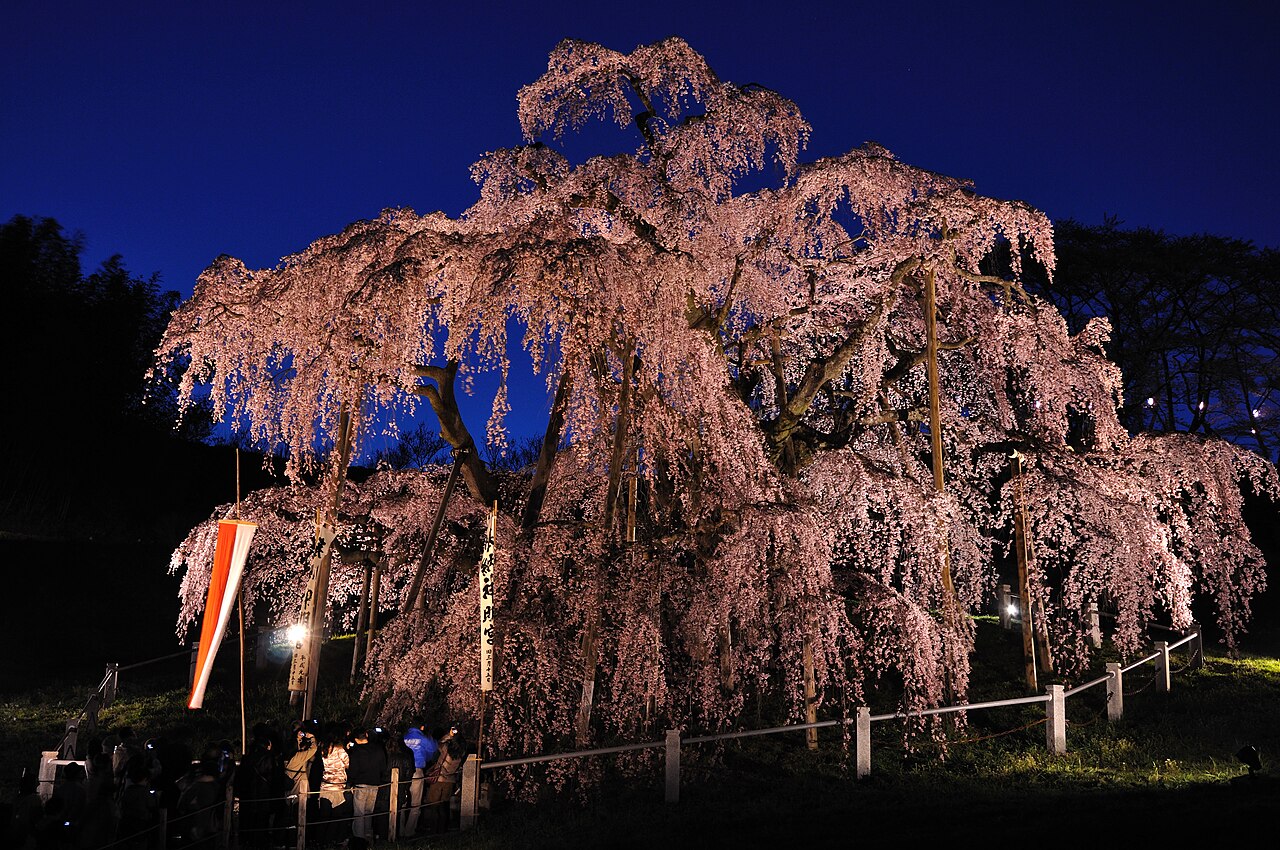
While the daytime view is iconic, the night illumination is where the "waterfall" effect truly comes to life. Between 18:00 and 21:00, ground-level lights positioned behind the tree cast the blossoms in a warm, ethereal glow. This illumination transforms the pink petals into something resembling molten gold at the edges, contrasting sharply with the deep, dark pink of the tree’s center.
For the serious photographer or the contemplative traveler, the night session is superior. The massive tour buses depart by 17:00, and the air becomes significantly colder, often dropping into single-digit temperatures. This chill serves as a natural filter, keeping the crowds thinner and the atmosphere more intimate. The best window for viewing is during civil twilight, when the last remnants of deep blue sky provide a stunning backdrop for the illuminated branches.
Implications for the Traveler
Visiting the Miharu Takizakura is not merely about ticking a box on a travel itinerary; it is about understanding the Japanese philosophy of mono no aware—the pathos of things and the beauty of impermanence.
Strategic Recommendations:
- Arrive Early or Late: If driving, aim for 07:00 or after 16:00. The 850-vehicle capacity of the parking lots is often exhausted by 09:30 on sunny weekends.
- The "Slow" Approach: Do not settle for the 25-minute tour bus experience. Give yourself at least an hour. Walk the perimeter twice—once to absorb the scale, and once to observe the shifting geometry of the branches.
- Diversify Your Experience: Miharu is a town of "three springs"—plum, peach, and cherry. The local tourism board produces a sakura-meguri (cherry-tour) map marking nearly forty other notable trees. If you have two days, dedicate one to the Takizakura and the second to exploring the lesser-known, equally beautiful trees in the surrounding countryside.
Beyond the Blossoms
To make the most of a Miharu trip, consider integrating these local landmarks:
- Takashiba Dekoyashiki: A historic hamlet known for the Miharu-goma (wooden horse), one of Japan’s three great folk toys.
- Miharu Dam and Lake Sakura: A reservoir that offers one of the most serene foliage-and-blossom drives in the Tohoku region.
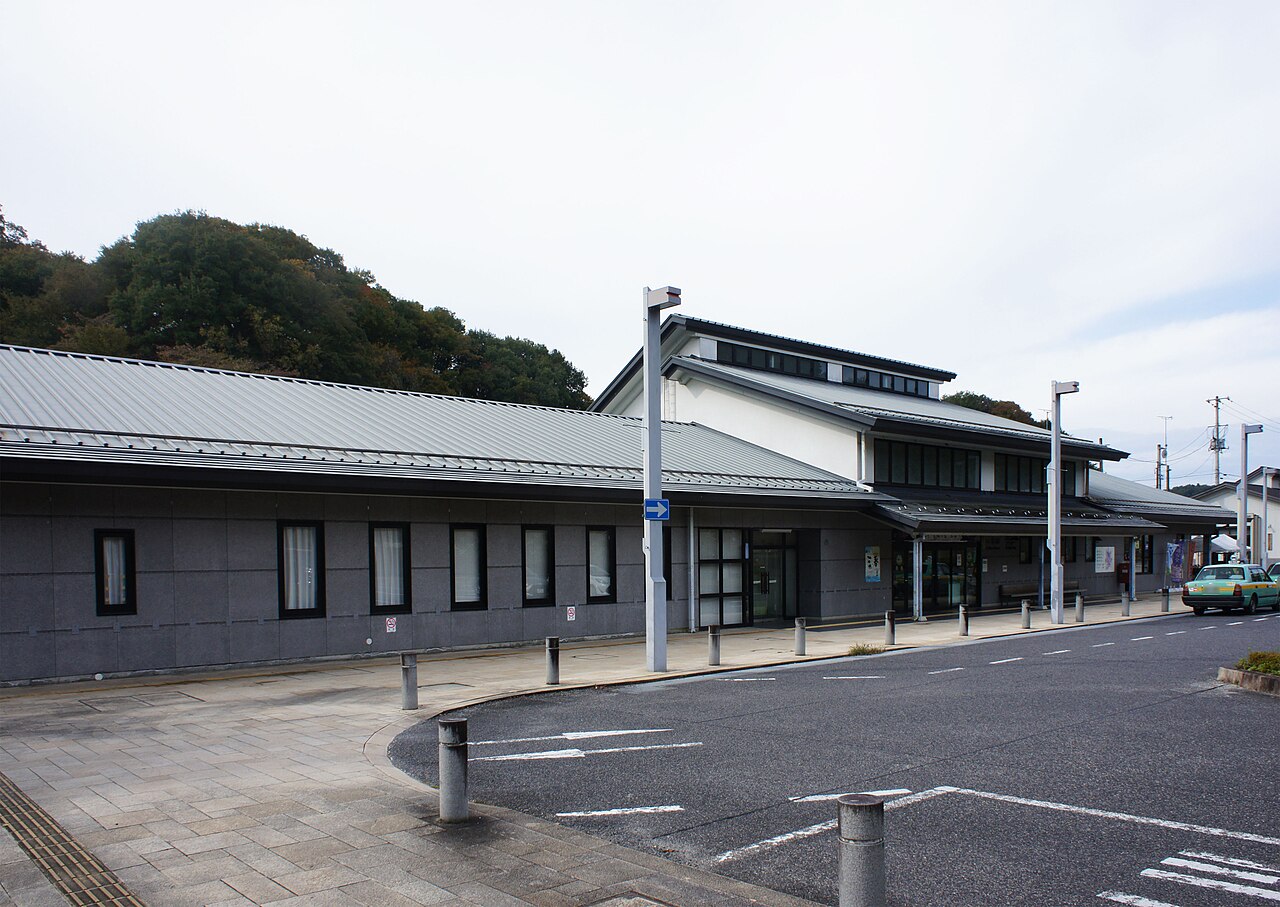
- Commutan Fukushima: A sobering but essential educational center that provides context regarding the 2011 earthquake and the subsequent recovery of the region.
Conclusion
Is the Miharu Takizakura worth the effort? If you are a casual traveler on a tight schedule, perhaps not. There are closer, more accessible cherry spots near Tokyo. However, if you are a pilgrim of nature, someone who values the intersection of history, botany, and cultural ritual, then the Takizakura is the undisputed apex of Japanese spring. It is a testament to what can be preserved when a community decides that a single living thing is worth protecting for a millennium.
As you leave the hill, having seen the cascading blossoms against the backdrop of the Fukushima mountains, you will understand why the local poets did not just write about a tree; they wrote about a life force that, for ten days every year, turns the world a different shade of pink.


 Neng Nana
 Asro
Asro