

In the landscape of contemporary European cinema, few filmmakers possess the unflinching gaze of Austrian director Marie Kreutzer. Following the acclaim of Corsage, which dismantled the mythos of Empress Elisabeth of Austria, Kreutzer returns with Gentle Monster, a chilling, claustrophobic exploration of domestic complicity and the shattering of a marital facade. Premiering at the 2026 Cannes Film Festival, the film serves as a harrowing meditation on how the most heinous of human impulses can hide in plain sight, camouflaged by the mundane rituals of middle-class life.
The Anatomy of an Unraveling
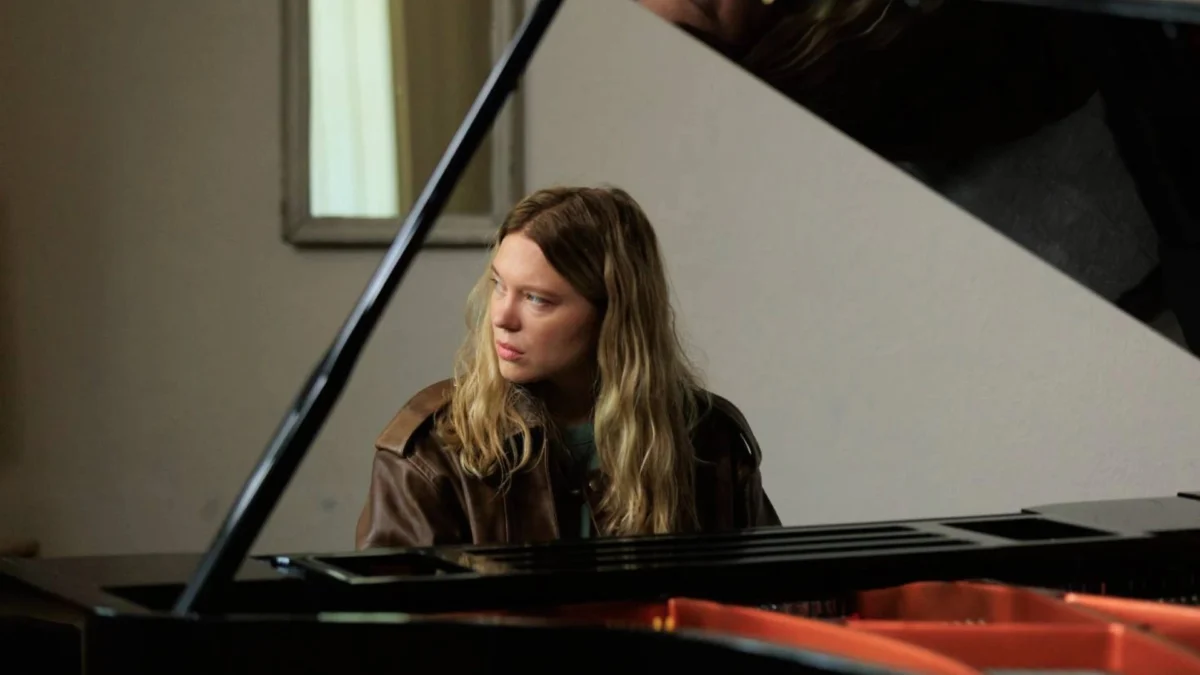
The film opens in a Munich apartment, where we meet Lucy Weiss (played with devastating restraint by Léa Seydoux), a virtuoso musician known for her cerebral, deconstructive covers of pop anthems. As she plunks out a stilted, haunting version of Charles & Eddie’s "Would I Lie to You?" on her piano, the atmosphere is heavy with a sense of impending dread.
This domestic tranquility is abruptly punctured when her husband, Philip (Laurence Rupp)—a documentary producer struggling with the professional burnout of a fading career—returns home in a state of frantic agitation. The couple’s subsequent decision to retreat to a secluded cottage in the German countryside is framed not as a romantic getaway, but as a flight from a reality they are both desperate to suppress.
The narrative tension escalates from existential anxiety to a legal nightmare when authorities arrive at their door with a warrant for Philip’s arrest. Lucy’s journey into the heart of her husband’s depravity is punctuated by a literal and metaphorical ascent: she must ride the elevator to the police station’s designated “child pornography” unit to confront the evidence against him. It is here that the film transitions from a character study into a visceral thriller of psychological horror, as Lucy is forced to reconcile the man she loves with the monster documented in the police files.
Chronology of a Crisis
The structural brilliance of Gentle Monster lies in its pacing. Kreutzer refuses to provide easy catharsis or immediate revelations. Instead, the film operates as a slow-drip of horror:
- The Pre-Collapse: The film establishes the couple’s dynamic, highlighting Philip’s artistic pretenses and his insecurity regarding his wife’s superior success.
- The Relocation: The shift to the countryside serves as a crucible for their failing relationship, emphasizing the isolation that allows secrets to fester.
- The Arrest: The catalyst. The moment the “social” mask is ripped away, revealing the illicit digital footprint Philip has left behind.
- The Investigation: As Lucy navigates the legal fallout, she is forced to confront the chilling, disquieting flashbacks of their past life, where signs of Philip’s pathology were hidden in the shadows of "artistic" photography.
- The Reckoning: The final act, which eschews traditional resolution in favor of a profound, lingering existential unease.
The Performance of Complicity: Léa Seydoux’s Masterclass
Léa Seydoux delivers a career-defining performance as Lucy Weiss. Her portrayal of a woman caught between maternal protection and the crushing weight of objective truth is nothing short of extraordinary. Seydoux’s Lucy is not a victim who screams at the sky; she is a woman who implodes.

She navigates the "rationalizations" provided by her husband with a heartbreakingly human vulnerability. When Philip tries to explain away his possession of illegal files—claiming they were for his documentaries or that he was merely a "fence" to gain trust within a dark community—Seydoux captures the agonizing split-second where a wife chooses to believe a lie rather than face the annihilation of her family unit.
The supporting cast, including a notable, albeit brief, appearance by Catherine Deneuve as Lucy’s mother, rounds out a portrait of a social circle defined by its blindness. Deneuve’s quip—"For a female artist, there’s only one thing worse than having children: moving to the countryside"—adds a layer of cynical, generational wisdom that underscores the film’s grim tone.
Supporting Data and Thematic Implications
The film’s thematic weight is reinforced by its intellectual engagement with the nature of "truth." Lucy’s profession as a musician who deconstructs the pop songs of men—questioning their sincerity and the meanings hidden beneath the lyrics—serves as a metaphor for her own life. She has spent her career questioning the honesty of others, only to find herself completely unable to decipher the man sleeping beside her.
A critical subplot involves Elsa Kühn (Jella Haase), a special investigator who has spent her career cataloging the depravity of men like Philip. Her presence acts as a foil to Lucy’s desperation. While Lucy is unmoored, Elsa is rigidly defined by her work and her own parallel struggle: caring for a senile father whose behavior mimics the rot she investigates professionally. This narrative choice highlights the "rot" that permeates society at large, suggesting that the abuse of power and boundaries is not an anomaly, but a pervasive, systemic issue.
Addressing the Shadow of ‘Corsage’
The film also carries the baggage of its director’s personal history. During the production of Kreutzer’s previous film, Corsage, the male lead, Florian Teichtmeister, was embroiled in a scandal involving the possession of over 76,000 files of child sexual abuse. The shadow of this event hangs over Gentle Monster. While the film’s origins trace back to an article Kreutzer read long before Corsage, it is impossible not to view the film through the lens of that betrayal.
However, the film is neither a plea for sympathy nor a performative apology. It is an unflinching look at how even the most intelligent and observant among us can be blinded by love and domestic normalcy. By denying us a "demon" to hate—instead portraying Philip as a complex, insecure, and ultimately deeply flawed individual—Kreutzer forces the audience to confront the unsettling possibility that evil does not always wear a terrifying mask. It wears the face of a husband, a father, and a friend.

Cinematic Language: The Gilded Cage
The cinematography by Judith Kaufmann is a vital component of the film’s impact. The widescreen framing of the Austrian Alps creates a stark contrast between the natural beauty of the world and the "discordant hell" Lucy inhabits. The camera often traps Lucy in corners of the frame, emphasizing her isolation. The "gilded cage" of their lifestyle becomes a physical manifestation of her entrapment, suggesting that even in the most picturesque settings, the truth remains inescapable.
Conclusion: A Film of Unresolved Despair
Gentle Monster is a difficult, rigorous, and profoundly disturbing piece of cinema. It does not offer the comfort of justice, nor does it provide a clear path to healing for its protagonist. Instead, it invites the audience to sit in the uncomfortable space of realization.
As the credits roll, the lingering question is not whether Philip will be punished, but how one continues to live after the song of their life has been revealed to be a lie. Marie Kreutzer has crafted a work that demands to be seen, not for its entertainment value, but for its rare, courageous refusal to look away from the darkness that lives behind the closed doors of our neighbors.
Film Details:
- Director: Marie Kreutzer
- Starring: Léa Seydoux, Laurence Rupp, Jella Haase, Catherine Deneuve
- Genre: Social Drama / Psychological Thriller
- Status: Currently seeking U.S. distribution following its 2026 Cannes premiere.
- Critical Grade: B










No comments yet. Be the first to join the conversation!