

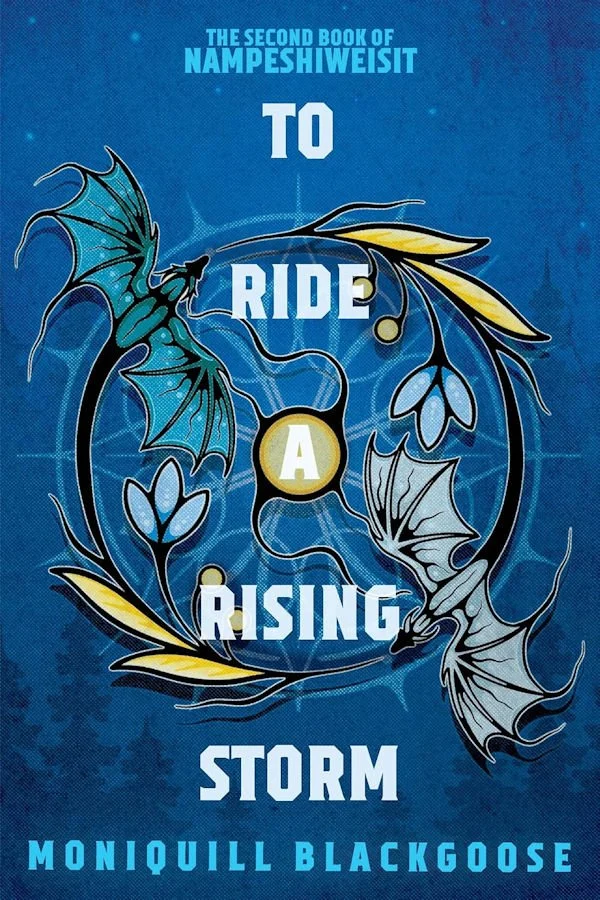
In the rapidly evolving landscape of contemporary fantasy, few series have captured the imagination of readers quite like the Nampeshiweisit saga. Following the breakout success of To Shape a Dragon’s Breath, author Moniquill Blackgoose returns with the highly anticipated second installment, To Ride a Rising Storm. As the narrative shifts from the academic halls of Kuiper’s Academy to the volatile shores of the protagonist’s homeland, the series cements its reputation as a sophisticated exploration of colonialism, cultural autonomy, and the complexities of indigenous resistance.
Main Facts: The Evolution of Anequs and Kasaqua
At the heart of the Nampeshiweisit series remains Anequs, a young woman whose journey has been defined by her refusal to conform to the rigid, colonial standards of the Anglish empire. Having successfully navigated her first year at Kuiper’s Academy—surpassing the dismissive expectations of her professors with honors—Anequs returns home to Masquapaug for the summer.
Accompanied by her dragon, Kasaqua, and her fellow student, Theod, Anequs expects a reprieve from the stifling atmosphere of the Academy. Instead, she finds her homeland under the shadow of a newfound Anglish presence, a direct consequence of her own rising notoriety. This arrival serves as the catalyst for the novel’s central conflict: Anequs’s fierce commitment to her people’s right to self-governance. As the tension between the traditional ways of Masquapaug and the encroaching imperialist bureaucracy reaches a breaking point, Anequs finds herself at the center of a brewing civil war, forced to decide how much she is willing to sacrifice to protect the sovereignty of her culture.
Chronological Progression: From Academic Halls to Political Frontlines
The narrative arc of To Ride a Rising Storm is a deliberate progression from the personal to the political.
Phase One: The Return Home
The story opens with the transition from the structured, albeit oppressive, environment of the Academy to the familiar, yet newly threatened, terrain of Masquapaug. This shift allows readers to see how the lessons learned in the classroom manifest in the real world. Anequs is no longer merely a student; she is a symbol of resistance.
Phase Two: The Escalation of Tensions
As the imperialist forces intensify their grip on local affairs, the book moves into a phase of heightened friction. The narrative effectively portrays the "Anglish" influence not just as a physical force, but as an ideological one—represented by archaic German-inspired nomenclature and social hierarchies that demand total assimilation.
Phase Three: The Catalyst for Conflict
The latter half of the book sees the shift from character-driven development to action-oriented stakes. As the pressure on the indigenous population mounts, the narrative accelerates toward a climactic confrontation. While some readers may find the final resolution arrives with breakneck speed, it serves to set the stage for the wider, systemic repercussions that will undoubtedly dominate the third installment of the series.
Supporting Data: Worldbuilding and Linguistic Nuance
A defining feature of Blackgoose’s world is the meticulous use of language to denote power dynamics. For the international reader, the "Anglish" culture utilizes German-inspired terminology (such as Frau or specific chemical references like Salzsäure and Essigsäure). This choice functions as a deliberate mirror of colonial western history.
Critics and readers alike have noted that this provides an "exotic" flavor for English-language readers, effectively distancing the reader from the imperialists while grounding them in the colonial framework of the story. For German-speaking readers, the effect is different, yet equally impressive; the usage of deliberately archaic and accurate German suggests a high level of research and world-building craft.
Furthermore, the book continues its commitment to a diverse and inclusive cast. The representation of LGBTQIA+ characters, neurodiversity, and non-verbal communication is handled with a "matter-of-fact" naturalness that avoids the pitfalls of tokenism. Notably, the treatment of polyamory—specifically how Anequs balances her romantic interests without the typical "love triangle" melodrama—stands as a masterclass in progressive character writing. It treats the adjustment to new relationship paradigms with the patience and realism that a high-fantasy setting rarely affords.
Official Responses and Literary Reception
The critical reception of To Ride a Rising Storm has been largely positive, with reviewers praising the series’ commitment to exploring the "humanity" behind the fantasy.
"Blackgoose is building something special here," notes reviewer Julia Kitvaria Sarene. "The way the world shapes the characters and the characters, in turn, shape the world, creates a layered experience that is rare in the genre."
Key praise has been directed at the following elements:
- Cultural Autonomy: The series is lauded for its uncompromising stance on indigenous rights and the refusal to offer a "white savior" narrative.
- The Dragon-Rider Dynamic: The introduction of a new dragon-rider character—one who is more culturally aligned with their heritage than Anequs—provides a compelling foil that highlights the damage caused by the Anglish "mould."
- Pacing and Structure: While the final act has been described by some as feeling "rushed," the overall consensus is that the preceding seventy-five percent of the book—dedicated to character building and societal exploration—is deeply rewarding.
Implications: The Road to Book Three
The cliffhanger ending of To Ride a Rising Storm leaves the reader with significant questions regarding the future of Masquapaug. The immediate conflict may have reached a resolution, but the structural inequalities—the "Anglish thumb" under which the indigenous people live—remain largely unaddressed.
The implications for the next book are clear:
- The Spread of Dissent: If Anequs has managed to "light a spark," the next novel will likely focus on the wildfire of rebellion and how that movement manages to organize against a technologically and militarily superior force.
- Internal Cultural Strife: The introduction of the new dragon-rider suggests that the series will explore different facets of how colonized peoples resist—whether through integration, open rebellion, or preservation of tradition.
- Moral Maturation: Anequs, while capable and morally calibrated, is poised to face more complex ethical dilemmas. Her propensity to misjudge those around her, coupled with the escalating stakes of civil war, suggests that her journey will require more than just her dragon and her wit; it will require the wisdom of a political leader.
In conclusion, To Ride a Rising Storm is more than just a sequel; it is a foundational text in the current movement of "decolonial fantasy." By centering the indigenous perspective and refusing to compromise on the internal logic of its characters, Moniquill Blackgoose has ensured that the Nampeshiweisit series will be discussed for years to come. Whether the reader is in it for the dragons, the intricate world-building, or the poignant social commentary, the series offers a compelling vision of what happens when the suppressed finally decide to rise. As we look toward the next chapter, one thing is certain: the storm is only just beginning.









No comments yet. Be the first to join the conversation!