

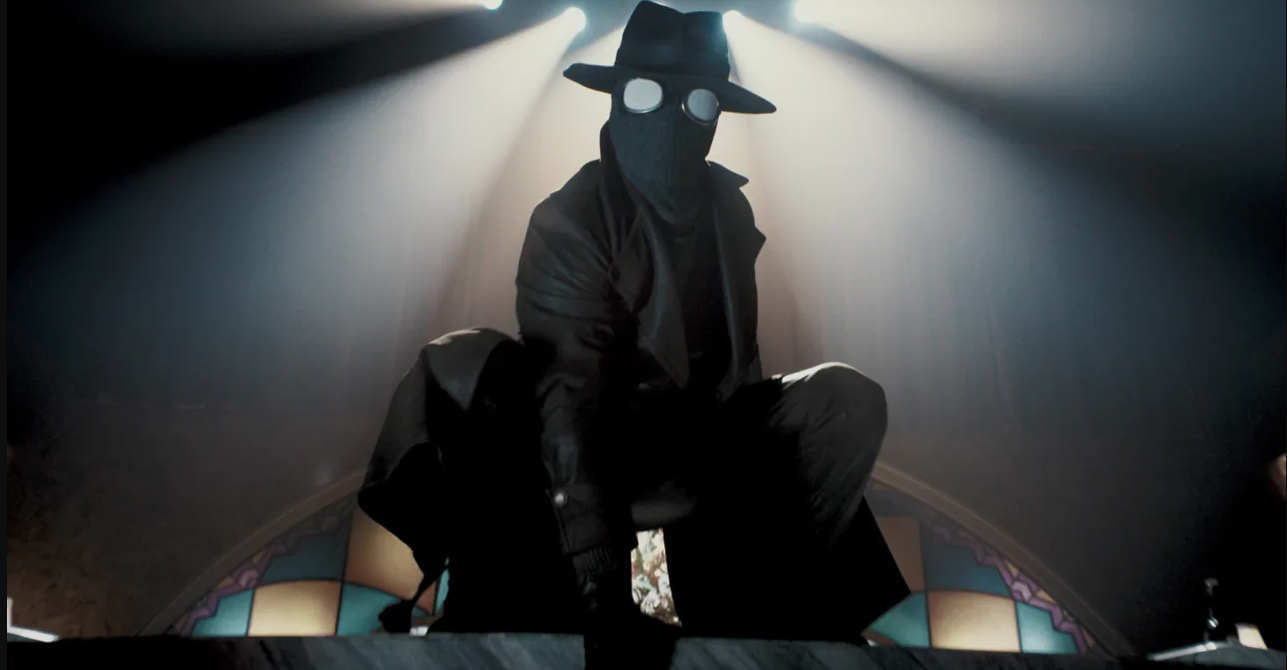
When the iconic Spider-Man Noir first swung onto the pages of Marvel Comics in 2009, he arrived not just as a masked vigilante, but as a vessel for the anxieties of a nation on the brink. Clad in a trench coat and fedora, the character served as a dark, gritty mirror to the sociopolitical turbulence of the 1930s. Today, with the release of the Prime Video live-action adaptation, Spider-Noir, the creator of those foundational comics, David Hine, is reflecting on the evolution of his creation—and expressing a pointed critique regarding the show’s departure from its radical, political roots.
The Genesis of a Political Icon
To understand Hine’s perspective, one must first look at the source material. The Spider-Man Noir comic series was never intended to be a straightforward superhero romp. Instead, Hine and his collaborators crafted a narrative that was steeped in the grim realities of the Great Depression. In this universe, the tropes of pulp fiction—mysterious villains, rainy cityscapes, and moral ambiguity—were inextricably linked to historical fact.
The comics didn’t shy away from the real-world dangers that defined the era. They explicitly tackled the rise of fascism in the United States, referencing organizations like the Friends of New Germany and the creeping shadow of Nazism. Within this framework, Peter Parker was not merely a crime-fighter; he was a revolutionary. His moral compass was forged by an Uncle Ben who was a disillusioned WWI veteran and an active political organizer, preaching the gospel of collective action and the necessity of removing corrupt power structures.
A Chronology of the Adaptation
The journey from page to screen for the character has been complex:
- 2009: David Hine and Fabrice Sapolsky launch Spider-Man Noir, setting a high bar for political commentary in the Marvel imprint.
- 2018: The character gains mainstream global popularity through the animated feature Spider-Man: Into the Spider-Verse, which largely focused on the stylistic and archetypal elements of the Noir persona.
- 2024: Amazon Prime Video announces and releases the live-action series Spider-Noir, starring Nicolas Cage.
- 2025: Following the series debut, critical discourse emerges regarding the show’s tonal shift away from the "communist" roots of the comic, sparking a dialogue between the showrunners and the original creative team.
Official Responses: Hine’s Critique of the "Soft Left"
In a recent exclusive interview with Radio Times, David Hine offered a measured, albeit critical, assessment of the Prime Video production. While Hine acknowledged his appreciation for the aesthetic achievements of the show, noting that the production team successfully built a "cohesive world" that arguably leans even harder into the noir aesthetic than his own work, he was quick to identify a critical shortcoming: the dilution of the character’s political voice.
"Our version was explicitly political. We named names," Hine stated during the interview. "We referenced the Friends of New Germany and the rise of actual Nazism in the US. Everything referenced was historical reality, except for the obvious elements of pulp weirdness."
Hine’s frustration stems from what he perceives as a watering down of the character’s core ethos. He describes the politics of the Prime Video series as a "soft left" approach, contrasting sharply with the radical, activist spirit of the comic book Peter Parker, Aunt May, and Uncle Ben. Hine noted that in his vision, the characters were committed radicals, and that his version of Aunt May would have been "scathing" in her critique of the show’s more tepid political commentary.
Distinctions in Identity and Universe
It is vital to distinguish the Prime Video version from its predecessors. The protagonist of Spider-Noir is Ben Reilly, not Peter Parker. This is a deliberate choice by the showrunners to signal that the series is not a direct adaptation of Hine’s original narrative, nor is it a sequel to the Spider-Verse films.
By utilizing Ben Reilly, the show carves out its own distinct corner of the multiverse. However, Hine argues that even within an alternate reality, the opportunity to utilize the "Noir" setting to explore the systemic struggles of the working class was squandered. While the show touches upon period-appropriate issues—most notably race relations—Hine argues that it lacks the "fervor and intent" that made the original comic series a standout piece of political literature.
Supporting Data: Why Politics Mattered to the Comics
The success of the original Spider-Man Noir wasn’t just in its brooding tone; it was in its structural commitment to the history of the 1930s. The comic utilized the "pulp" genre as a Trojan horse to discuss:
- Labor Rights: The series highlighted the exploitation of the working class during the Depression, portraying Norman Osborn not just as a mob boss, but as an unchecked industrialist.
- Anti-Fascist Mobilization: By linking the villainy of the Vulture and the Goblin to the rise of American Nazi sympathizers, the comic grounded the fantasy in the very real, terrifying political climate of the 1930s.
- The Ethics of Power: Uncle Ben’s famous line—"If those in power can’t be trusted, it’s the responsibility of the people to remove them"—served as the philosophical bedrock of the story, framing Spider-Man as a symbol of civil disobedience rather than just a vigilante.
When compared to these pillars, the "soft left" approach of the television series feels, to many fans and creators alike, like a missed opportunity to engage with modern audiences through the lens of historical parallels.
Implications: The Future of "Prestige" Superhero TV
The clash between Hine and the Spider-Noir production represents a broader trend in the adaptation of graphic novels for television. As studios seek to create "prestige" genre television, they often strip away the more radical or polarizing elements of the source material to ensure mass-market appeal.
However, the enduring legacy of the Spider-Man Noir comics suggests that audiences are often more receptive to challenging, politically charged narratives than executives might assume. By choosing to present the character as more of a "Dick Tracy" style detective than a revolutionary, the Prime Video series has prioritized the iconography of the trench coat and the rainy street over the substance of the story’s original soul.
Final Thoughts: A Legacy Undimmed
Despite his disappointment, Hine remains pragmatic. He acknowledges the necessity of "enjoying it for what it is" and holds onto the hope that the show’s visibility will inevitably draw new readers back to the original comics.
"I’d have been overjoyed if they took a more courageous political stance," Hine admitted.
Ultimately, the debate highlights a fundamental tension in modern media: the struggle between the desire to make an intellectual property accessible and the responsibility to honor the spirit in which it was created. For those who want the "Reds" version of Spider-Man—a version that understands the power of the picket line as much as the power of a web-shooter—the comics remain the definitive text. Spider-Noir may have the aesthetic of the 1930s, but the original comics possess its fire.











No comments yet. Be the first to join the conversation!