

By Oli Welsh
Published May 23, 2026, 8:01 AM EDT
Nintendo’s iconic green dinosaur, Yoshi, is a character etched into the hearts of millions of gamers worldwide. From his debut as Mario’s faithful steed to his starring roles in numerous spin-off titles, Yoshi embodies a unique blend of childlike innocence and essential platforming utility. Yet, despite his undeniable popularity and instantly recognizable charm, a critical question continues to plague his solo gaming career: why has Yoshi, in the three decades since his groundbreaking 1995 release, Super Mario World 2: Yoshi’s Island, never quite recaptured that initial spark of genius, ambition, and universal appeal?
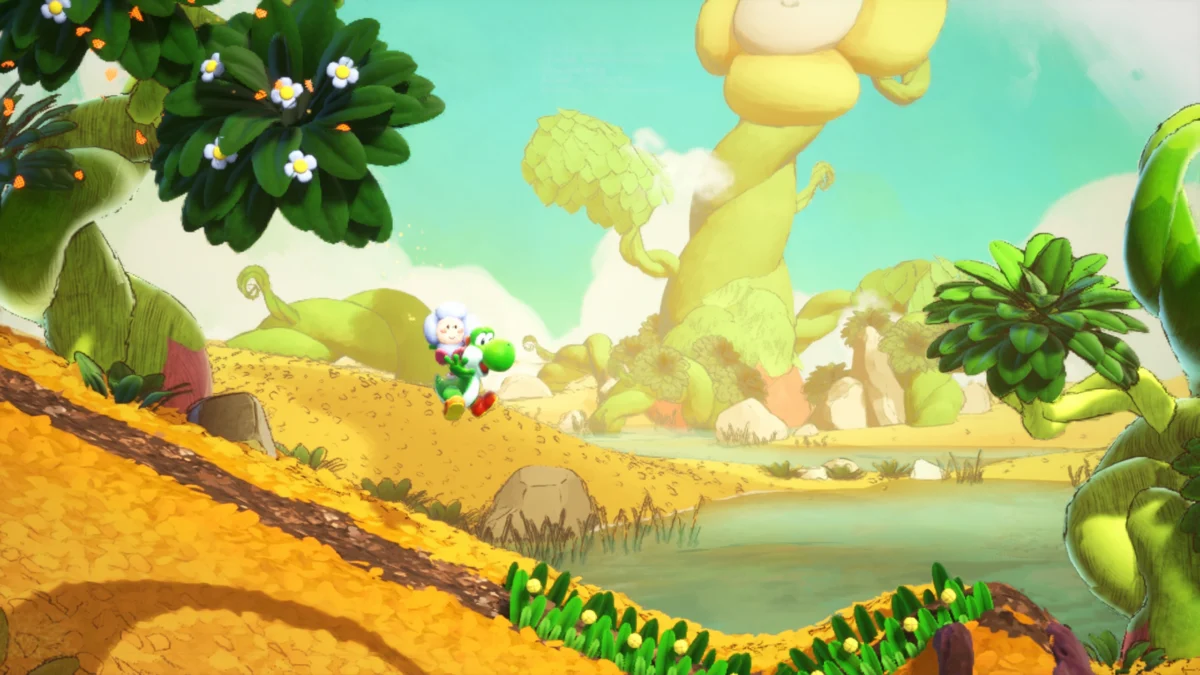
The recent launch of Yoshi and the Mysterious Book for the Nintendo Switch 2, while offering some intriguing formal experiments, unfortunately continues a long-standing pattern. Critics and fans alike have noted that the game, much like many of its predecessors, falls short of delivering the comprehensive, challenging, and endlessly creative experience that defined Yoshi’s undisputed magnum opus. This persistent trend leaves many wondering if Nintendo has pigeonholed Yoshi into a niche of "kid-friendly" titles, inadvertently stifling the potential for the character to star in another generation-defining game.
The Main Facts: A Beloved Icon’s Untapped Potential
Yoshi’s journey through Nintendo’s vast universe is a paradox of monumental proportions. Introduced as a mere mount in Super Mario World, his distinct mechanical characteristics – the stretchy tongue, the signature flutter jump, the ability to consume enemies and produce eggs – quickly elevated him beyond a simple power-up. He evolved into a character beloved enough for Donald Glover to publicly express a desire to voice him in a major cinematic production, underscoring his cultural significance.
However, this widespread affection has not consistently translated into high-caliber solo outings. While Yoshi remains a staple in multiplayer titles like Mario Kart and Super Smash Bros., his dedicated platforming adventures have struggled to achieve the same critical acclaim and innovative depth seen in other Nintendo flagship series. The consensus among many long-time fans and critics is clear: Super Mario World 2: Yoshi’s Island stands as an unblemished peak, a game crafted with the full force of Nintendo’s legendary creative talent, pushing the boundaries of its console and genre. Subsequent titles, while often charming and visually inventive, have frequently been perceived as less ambitious, simpler, and predominantly aimed at a younger demographic, failing to challenge or captivate a broader audience in the same way.
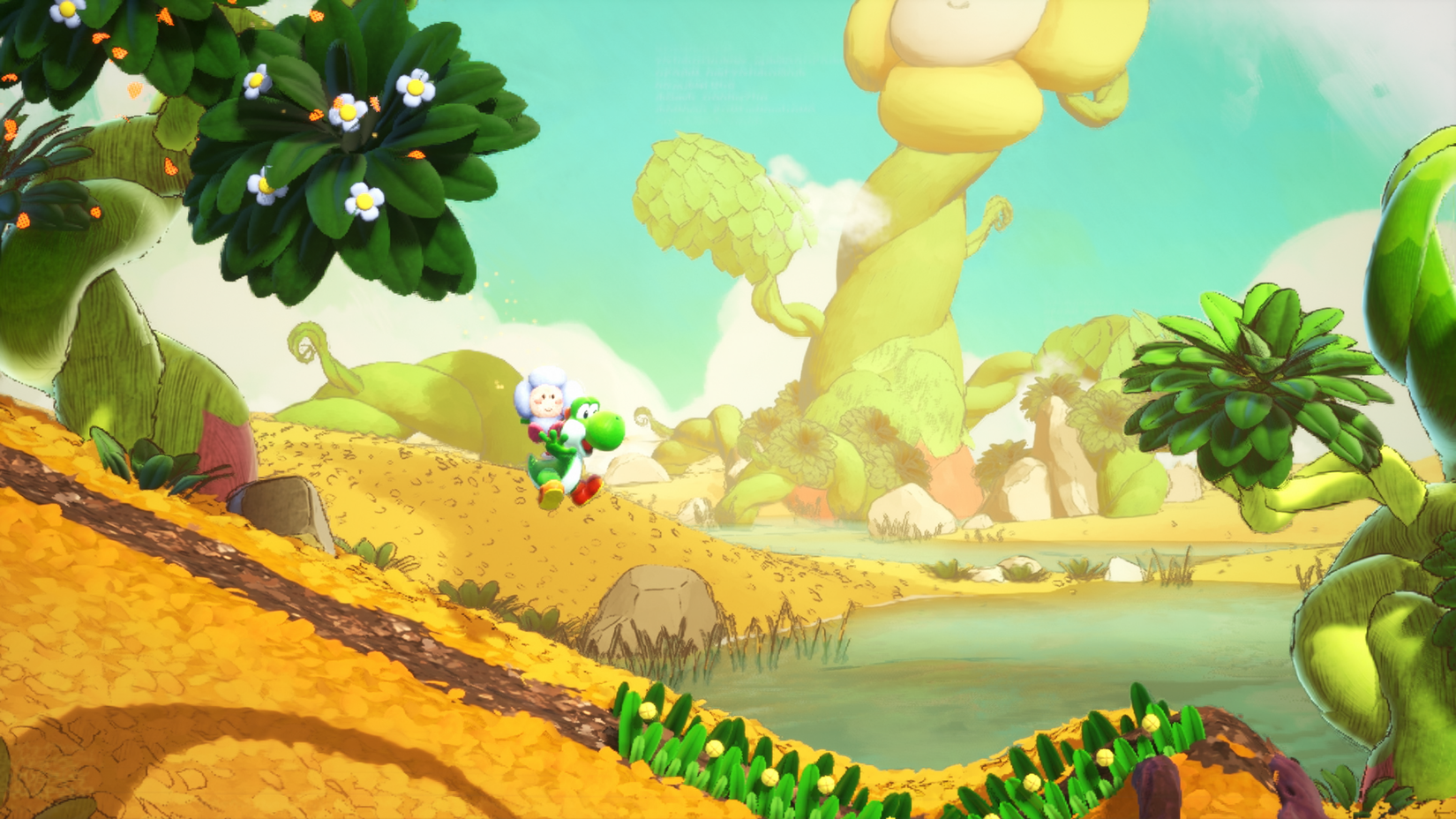
The latest entry, Yoshi and the Mysterious Book, exemplifies this ongoing struggle. While lauded for its unique aesthetic and attempts at formal experimentation, reviews suggest these innovations don’t coalesce into a truly compelling or deeply rewarding gameplay experience. The game is a testament to Yoshi’s inherent appeal but also highlights the missed opportunities to leverage his unique mechanics and whimsical world-building for a truly transcendent title. It seems Nintendo, in its admirable pursuit of accessibility for young players, has inadvertently diluted the potential for Yoshi to deliver a game that resonates with "everyone," a feat Yoshi’s Island achieved effortlessly.
A Chronology of Yoshi’s Gaming Journey: From Steed to Star, and Beyond
Yoshi’s evolution within the Nintendo pantheon is a fascinating narrative, marked by an explosive debut, a singular masterpiece, and a subsequent quest for a consistent identity.
Early Appearances and the Rise of a Sidekick (1990-1994)
Yoshi first galloped onto the scene in 1990 (Japan) / 1991 (North America) in Super Mario World for the Super Nintendo Entertainment System (SNES). Here, he was primarily a gameplay mechanic: a trusty steed for Mario, offering enhanced mobility, enemy consumption, and the ability to lay eggs as projectiles. His simple "Yoshi!" vocalization and cheerful demeanor quickly made him a fan favorite.

Nintendo, quick to capitalize on his burgeoning popularity, soon began featuring him in various spin-off genres, often in what could be described as a "mascot-slapping" phase. Titles like 1992’s Yoshi’s Cookie (a puzzle game), 1993’s Yoshi’s Safari (a light-gun shooter), and 1995’s Tetris Attack (a puzzle game featuring Yoshi characters in the Western release) showcased his versatility, but none established a definitive gameplay style for the character beyond his role in Super Mario World. These early experiments, while varied, lacked the focused vision that would soon define his first true starring role.
The Golden Age: Super Mario World 2: Yoshi’s Island (1995)
The trajectory of Yoshi’s gaming career irrevocably changed with the release of 1995’s Super Mario World 2: Yoshi’s Island. This game was a monumental achievement, not just for Yoshi, but for Nintendo as a whole, serving as a powerful swansong for the SNES. Developed by Nintendo’s A-team, a veritable dream team including Shigeru Miyamoto, Takashi Tezuka, Hideki Konno, Yoshiaki Koizumi, and Koji Kondo, Yoshi’s Island transcended its "Super Mario World 2" moniker to become a standalone masterpiece.
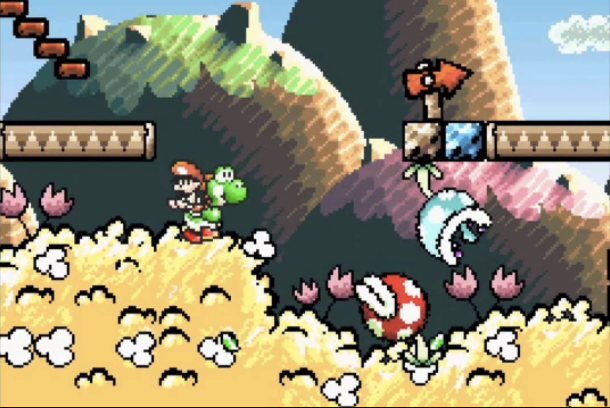
The game’s premise centered on childhood: Mario and Luigi as wailing babies, rescued and carried by various Yoshis across a fantastical island. Its visual style, famously resembling "crayons on construction paper," was revolutionary for its time, giving the game a unique, handcrafted aesthetic that felt both innocent and deeply artistic. The soundtrack, composed by the legendary Koji Kondo, with its tinkling music box melodies and vibrant orchestrations, perfectly complemented the visual charm.
Crucially, Yoshi’s Island was not merely cute; it was a deeply sophisticated platformer. It introduced the egg-throwing mechanic as a core gameplay loop, requiring precision and strategic thinking. The level design was intricate, featuring hidden collectibles, challenging enemy encounters, and inventive boss battles. Despite its childlike presentation, the game offered a substantial challenge, rewarding exploration and mastery without ever feeling unfair. It was a game "for everyone," defying the later distinction Nintendo would draw between "games for little kids" and "games for everyone." It was a critical and commercial triumph, cementing Yoshi’s status as a bona fide platforming star.
The Post-Island Era: A Search for Identity (N64 to GBA, 1997-2005)
Following the unparalleled success of Yoshi’s Island, the expectation for Yoshi’s next solo venture was astronomically high. 1997’s Yoshi’s Story for the Nintendo 64 aimed to capitalize on the character’s appeal but marked a significant departure. While visually striking with its "pop-up book" aesthetic, the game was widely criticized for its short length, low difficulty, and simplified mechanics compared to its predecessor. Many saw it as a conscious shift towards a much younger audience, sacrificing depth for accessibility. It struggled to connect with the critical acclaim or widespread affection of Yoshi’s Island, becoming one of the N64 era’s less distinguished first-party titles.
The early 2000s saw more experimental, albeit often underdeveloped, attempts. 2004’s Yoshi’s Universal Gravitation for the Game Boy Advance, developed by Artoon, was a platformer heavily reliant on tilt controls. While an interesting concept for the hardware, the execution was often seen as a "gimmick" that overshadowed solid gameplay, leading to an experience that felt constrained and lacking in substance.
Touchscreen Innovation and Craft Aesthetics (DS to Wii U, 2005-2015)
The Nintendo DS era brought a renewed focus on unique input methods, which Yoshi was once again tasked with showcasing. 2005’s Yoshi Touch & Go, also developed by Artoon, was an early DS title that leaned heavily into the console’s touchscreen capabilities. While influential in demonstrating the potential of touch controls for casual gaming and offering a novel "endless runner" style experience, it was ultimately a "slender" game, lacking the expansive levels and progression expected of a full-fledged platformer.
Later, attempts were made to directly evoke Yoshi’s Island. 2006’s Yoshi’s Island DS (developed by Artoon and Nintendo SPD) and 2014’s Yoshi’s New Island (developed by Arzest) for the 3DS were designed as spiritual successors, complete with similar art styles and mechanics. However, despite their intentions, they were often perceived as "half-hearted" or pale imitations, failing to capture the original’s precise level design, innovation, or overall charm. They felt safe, rather than groundbreaking.

A significant shift occurred with 2015’s Yoshi’s Woolly World for the Wii U (later ported to 3DS). This title marked the beginning of developer Good-Feel’s custodianship of the Yoshi series. Good-Feel embraced a "handcrafted visual treatment," rendering Yoshi and his world in charming yarn and fabric. The gameplay was forgiving, emphasizing exploration and collecting over intense platforming challenge, clearly targeting younger players. While praised for its aesthetic and gentle nature, it also maintained a "truncated ambition," prioritizing visual appeal and accessibility over the complex mechanics and difficulty curves that defined Yoshi’s Island.
The Current Generation: Yoshi’s Crafted World and Yoshi and the Mysterious Book (2019-2026)
Good-Feel continued this design philosophy with 2019’s Yoshi’s Crafted World for the Nintendo Switch. Adopting a diorama-like, cardboard craft aesthetic, the game received similar praise for its visual charm and relaxing gameplay. Yet, criticisms persisted regarding its relative simplicity and lack of difficulty, reinforcing the perception that Yoshi games were primarily for beginners.
This brings us to the latest release, 2026’s Yoshi and the Mysterious Book. The game attempts "formally experimental" elements, perhaps playing with narrative structure or meta-commentary on children’s stories, but according to critical reception, these interesting ideas "don’t pay off." The experimentation fails to elevate the core gameplay or deliver a memorable experience that truly stands alongside Nintendo’s best. Yoshi remains an "easy character to love," but his games are, regrettably, "easy to feel indifferent about."
Supporting Data: Critical Reception, Sales Trends, and Development Shifts
The evidence for Yoshi’s post-Yoshi’s Island struggle is robust, spanning critical consensus, developmental choices, and the perceived shift in target audience.
Critical Acclaim Disparity
Super Mario World 2: Yoshi’s Island holds an almost mythical status among platformer enthusiasts. While Metacritic wasn’t around in 1995, contemporary reviews consistently hailed it as a masterpiece, praising its innovative art style, sophisticated level design, and deep mechanics. It’s frequently listed among the greatest video games of all time, a testament to its enduring quality and broad appeal.
In stark contrast, subsequent Yoshi-led titles rarely achieve such universal praise. Yoshi’s Story (N64) received mixed reviews, with many critics lamenting its brevity and lack of challenge. Yoshi’s Universal Gravitation (GBA) was largely seen as a forgettable gimmick. Even the more charming Good-Feel titles, like Yoshi’s Woolly World and Yoshi’s Crafted World, while generally well-regarded for their aesthetics and gentle fun, often fall into the 70s on Metacritic, accompanied by common criticisms of being "too easy," "short," or "lacking replay value for veteran players." The recent Yoshi and the Mysterious Book sits at a similar critical juncture, praised for its unique concept but ultimately found wanting in execution. This consistent pattern highlights a perceived gap between the character’s potential and the realization of that potential in his solo games.
The Developer Divide
A key piece of supporting data lies in the development teams behind Yoshi’s games. Yoshi’s Island was a product of Nintendo’s internal EAD division, the same team responsible for Super Mario World and The Legend of Zelda: A Link to the Past. This was Nintendo’s premier talent, at the peak of their SNES prowess, given the freedom and resources to craft an ambitious title.
After Yoshi’s Island, the series was often handed off to external developers or smaller internal teams. Artoon developed Yoshi’s Story, Yoshi’s Universal Gravitation, Yoshi Touch & Go, and Yoshi’s Island DS. Arzest handled Yoshi’s New Island. While these studios are competent, they arguably lacked the institutional knowledge, the direct oversight of a Miyamoto-led team, or the sheer creative firepower that defined the original. Good-Feel, who took over with Yoshi’s Woolly World, has brought a consistent vision focused on craft aesthetics and gentle gameplay, and while their games are qualitatively better than some of the earlier post-Island titles, they still operate within a specific, arguably less ambitious, design philosophy. This shift in development leadership undoubtedly contributed to the divergent quality.
The Target Audience Shift
Nintendo’s strategic decision to market Yoshi games primarily to "very young players" is a significant factor. While Yoshi’s Island was accessible, it didn’t shy away from complex mechanics or demanding platforming segments. Later games, especially those from the Good-Feel era, explicitly prioritize "forgiving gameplay" and tactile, charming visuals over deep challenge. This is evident in features like "Mellow Mode" (in Woolly World and Crafted World), which makes the game significantly easier, or the emphasis on collecting numerous, often easily found, trinkets rather than intricate puzzle-solving.
This focus, while admirable in its goal of introducing new players to gaming, has come at the cost of challenging experienced players. It suggests a conscious decision by Nintendo to position Yoshi as an entry-point character, rather than a protagonist for a series that grows with its audience, much like Mario or Zelda. The character’s inherent "innocent and childlike" qualities have been amplified to define the gameplay experience, rather than merely influencing its aesthetic.
Official Responses: Nintendo’s Stance and Developer Philosophy
While Nintendo rarely offers explicit post-mortems on the perceived "decline" of specific game series, we can infer and, in some cases, surmise official positions based on public statements and design choices.
Nintendo’s Perspective: Accessibility and Brand Expansion
Nintendo’s corporate strategy often emphasizes broadening its audience and creating games for "everyone," which includes specific efforts to cater to younger demographics. From this perspective, the Yoshi series, particularly in its current iteration under Good-Feel, fulfills a crucial role. A (hypothetical) statement from a Nintendo representative might highlight:
- Accessibility as a Core Value: "Yoshi’s unique charm and approachable gameplay make him an ideal ambassador for introducing new players to the joys of platforming. We believe in providing diverse experiences that cater to all ages and skill levels, and Yoshi’s current trajectory ensures a welcoming entry point for our youngest fans."
- Creative Freedom in Art Direction: "The Yoshi series allows us to explore incredible artistic directions, from the crayon-drawn world of Yoshi’s Island to the yarn and craft aesthetics of more recent titles. These unique visual styles are a key part of Yoshi’s identity and resonate strongly with players."
- Character Versatility: "Yoshi remains one of our most beloved and versatile characters, appearing in Mario Kart, Super Smash Bros., and various other spin-offs. His solo games offer a distinct flavor within our broader portfolio, focusing on exploration and tactile interaction."
This stance suggests that Nintendo views the Yoshi series not as a missed opportunity for "hardcore" platforming, but as a successful venture into a specific market segment, providing charming, accessible, and aesthetically pleasing experiences.
Good-Feel’s Design Philosophy: Charm, Tactility, and Exploration
Good-Feel, the current developer for the main Yoshi platformers, has articulated a clear design philosophy. In interviews concerning Yoshi’s Woolly World and Yoshi’s Crafted World, the developers have emphasized:
- Focus on Charm and Wonder: "Our primary goal is to create a sense of wonder and delight. The craft aesthetic isn’t just a visual gimmick; it’s integrated into the gameplay, inviting players to interact with a world that feels handmade and tangible."
- Gentle Exploration over Intense Challenge: "We want players to enjoy the journey, to discover secrets at their own pace, and to feel a sense of accomplishment without constant frustration. The focus is on exploration, collecting, and appreciating the environment, rather than purely on high-difficulty platforming."
- Innovation in Presentation: "While we respect the legacy of Yoshi’s Island, we aim to bring fresh ideas to the series, particularly in how the world is presented and interacted with. The diorama-like levels of Crafted World or the formal experiments in Mysterious Book are examples of pushing boundaries in different ways."
This perspective underscores a deliberate choice to differentiate modern Yoshi games from their SNES predecessor, prioritizing a specific kind of player experience over a direct continuation of Yoshi’s Island‘s challenging design principles.
Implications: The Future of Yoshi and Nintendo’s Approach to Legacy Characters
The trajectory of the Yoshi series carries several significant implications for both the character’s legacy and Nintendo’s broader strategy for its beloved intellectual properties.
Impact on Yoshi’s Legacy
By consistently positioning Yoshi in games primarily aimed at younger audiences with forgiving gameplay, Nintendo risks typecasting the character. While his universal appeal remains strong, his solo series might increasingly be viewed as "lesser" or "juvenile" by a segment of the gaming community, especially those who fondly remember the challenging depths of Yoshi’s Island. This could inadvertently limit the perceived narrative and gameplay potential for a character capable of so much more. He might forever be the charming sidekick whose solo ventures are consistently outshone by his companions.
The Future of Yoshi Games: A Call for Renewed Ambition
For the Yoshi series to truly reclaim its former glory, a significant re-evaluation of its design philosophy might be necessary. This doesn’t necessarily mean abandoning the charming aesthetics or the accessible core mechanics. Instead, it could involve:
- Reintroducing Layered Difficulty: Games could offer a "classic" mode that provides the challenge and intricate design reminiscent of Yoshi’s Island, alongside a more forgiving "mellow" mode.
- Assigning a "Tier 1" Development Team: Entrusting Yoshi to one of Nintendo’s top internal studios, with the resources and creative freedom afforded to a mainline Mario or Zelda title, could unlock unprecedented potential.
- Expanding the Narrative and Mechanical Depth: While maintaining Yoshi’s core identity, exploring more complex world-building, diverse enemy types, and innovative mechanics that build upon his unique abilities (tongue, eggs, flutter jump) could captivate a broader audience.
- Challenging the "Kids-Only" Perception: Nintendo could actively market a Yoshi game that emphasizes its depth and innovation, appealing to nostalgic fans while still welcoming new players.
Broader Industry Trends and Nintendo’s IP Management
Yoshi’s situation also reflects a broader trend in the gaming industry where beloved characters are sometimes utilized for specific market segments or as vehicles for experimental gameplay, rather than consistently starring in flagship titles. Nintendo is exceptionally skilled at managing its vast array of IPs, but the Yoshi series highlights the challenge of maintaining quality and innovation across an entire roster of characters, particularly when some are deemed more "family-friendly" than others.
The success of The Legend of Zelda: Tears of the Kingdom or Super Mario Odyssey demonstrates Nintendo’s capacity for groundbreaking, universally acclaimed experiences. The question remains whether they are willing to invest that same level of resources and creative ambition into a Yoshi game again, to prove that his "innocent and childlike" charm can coexist with a game that demands mastery and rewards deep engagement.
Ultimately, Yoshi is a character deserving of consistently excellent games. He is a beloved icon whose singular masterpiece still resonates three decades later. While Nintendo does an admirable job catering to very young players, the lingering sentiment is that they could, and should, do better by Yoshi and, by extension, by the entire audience who cherishes this unique green dinosaur. The hope persists that one day, Yoshi will again star in a game that truly lives up to the towering legacy of his island adventure.
Weekly Nintendo Roundup: May 23, 2026
eShop Game of the Week: Sektori
This abstract twin-stick shooter from former Housemarque developer Kimmo Lahtinen is a vibrant explosion of neon and rhythm. Sektori channels the pulsating techno music, updated vector graphics, and psychedelic effects reminiscent of Geometry Wars and the pioneering work of Jeff Minter. By all accounts, it does so brilliantly; the Switch 2 version currently boasts a mighty 93 on Metacritic, making it an essential download for fans of arcade-style action.
Nintendo Music Track of the Week: "Flower Field BGM" from Yoshi’s Island
By 1995, legendary Nintendo composer Koji Kondo’s command of the SNES sound chip was absolute. In "Flower Field BGM" from Yoshi’s Island, he demonstrates this mastery, conjuring a gorgeously plaintive harmonica melody over a sunny, funky shuffle. It’s a track that perfectly encapsulates the game’s charming innocence and underlying depth, a true testament to Kondo’s genius.
Nintendo Classics Game of the Week: Super Mario World 2: Yoshi’s Island
Considered by many to be in the running for the greatest platform game ever made, Super Mario World 2: Yoshi’s Island is a riot of hectic physical comedy, joyfully tactile, and simultaneously captures the stress of parenting and the "what happens if I eat this?" curiosity of toddlerdom. Its scruffy sketchbook presentation was decades ahead of its time, and it capped Nintendo’s generational run on the SNES with one final, undeniable masterpiece.
This Week’s Most Interesting Releases
- Coffee Talk Tokyo (Nintendo Switch 2)
- King of Tokyo (Richard Garfield Edition, Nintendo Switch)
- Psyvariar 3 (Nintendo Switch)
- Tales of Arise: Beyond the Dawn Edition (Nintendo Switch 2)
- Bubsy 4D (Nintendo Switch 2)












No comments yet. Be the first to join the conversation!