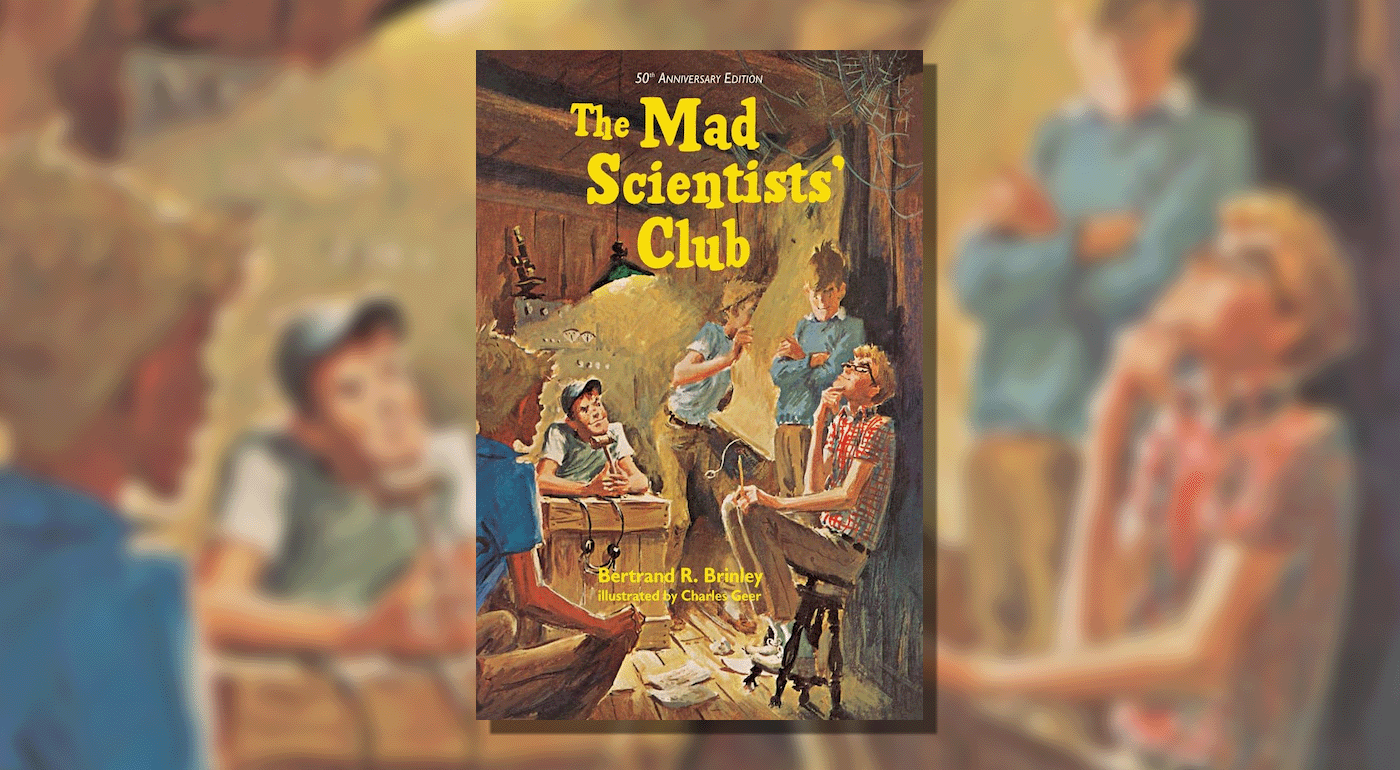
In the landscape of mid-20th-century literature, few works captured the intersection of juvenile mischief and engineering ingenuity quite like Bertrand R. Brinley’s The Mad Scientists’ Club. Originally serialized in the pages of Boys’ Life magazine, this collection of stories—later compiled into a 1965 anthology—serves as more than just a nostalgic artifact. It remains a foundational text for generations of readers who saw science not as a sterile academic pursuit, but as a dynamic tool for exploration, community engagement, and, occasionally, the perfectly executed prank.
As part of a continuing series examining the "front lines and frontiers" of science fiction and fantasy, we revisit this classic. While often categorized under the broad umbrella of children’s literature, the book offers a rigorous look at the "alarums and excursions" of life—the clashes, the discoveries, and the sheer thrill of building the impossible from scrap metal and imagination.
A chronicle of a club: From Boys’ Life to the bookshelf
The publication history of The Mad Scientists’ Club reflects the evolution of American youth culture in the post-war era. Bertrand R. Brinley (1917–1994) was a man whose own life bridged the gap between military service and civilian technological advancement. Having served in the U.S. Army during both World War II and the Korean War, Brinley brought a distinct level of tactical organization to his fictional protagonists.
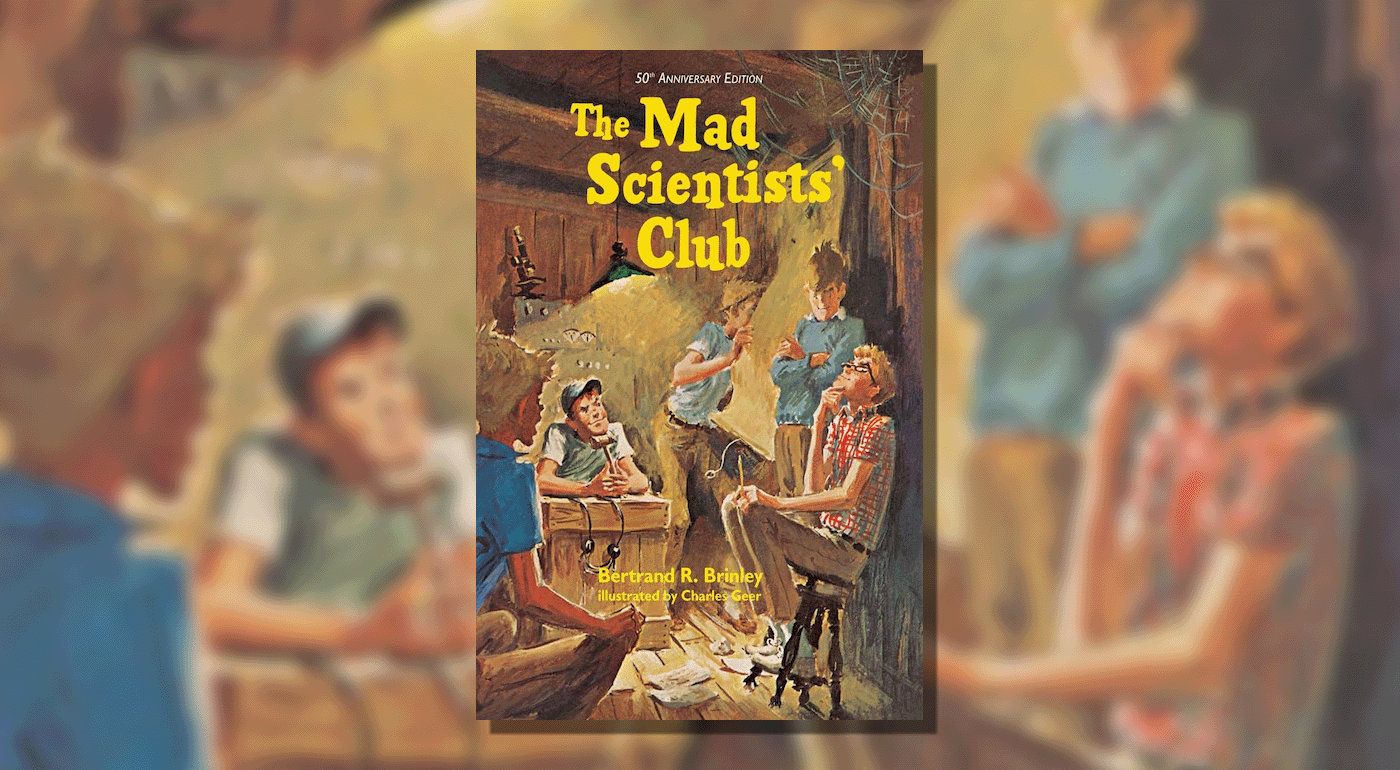
The club’s adventures were chronicled in twelve distinct short stories, most of which were featured in the monthly issues of Boys’ Life. The success of these stories led to the publication of The Mad Scientists’ Club in 1965 and its sequel, The New Adventures of the Mad Scientists’ Club, in 1968. Later efforts included two short novels, The Big Kerplop! (1974) and The Big Chunk of Ice (2005), though publishing complications meant these later works did not achieve the same widespread visibility as the original anthology.
The narrative center of the stories is a group of boys in the town of Mammoth Falls, a setting often speculated to be based on West Newbury, Massachusetts, where Brinley spent his formative years. The club itself is governed by strict, almost parliamentary procedures, utilizing Robert’s Rules of Order to conduct meetings—a testament to the author’s belief in the necessity of organization for any successful scientific endeavor.
Anatomy of an invention: The supporting cast and their machines
The power of Brinley’s writing lies in the characterization of the club members, each bringing a specific aptitude to the collective. The narrative is anchored by:
- Charlie (The Narrator): The observant, first-person voice of the group, functioning as the steady hand behind their often chaotic operations.
- Jeff Crocker: The president of the club, serving as the voice of reason and the diplomat who navigates the political minefield of the local town government.
- Henry Mulligan: The visionary. As the vice-president and chief architect, he is the engine behind the group’s most complex inventions.
- The Supporting Ensemble: Dinky Poore (agitated and small), Freddy Muldoon (gastronomically focused), Homer Snodgrass, and Mortimer Dalrymple round out the roster.
Supporting these young protagonists is an essential cast of townspeople. Mayor Scragg provides the necessary bureaucratic friction, acting as the primary target for the club’s well-intentioned chaos. Colonel March, the local Air Force commander, adds a touch of professional legitimacy to their efforts, often recognizing the boys’ potential before the rest of the town. Crucially, the local junkyard owner, Zeke Boniface, serves as the primary supply chain manager, providing the raw materials that allow the club to build their "cool stuff."
The mechanics of the narrative: A breakdown of the stories
Each story in the collection functions as a self-contained engineering problem. In "The Strange Sea Monster of Strawberry Lake," the boys construct a creature atop a canoe, utilizing a radio-controlled trolling motor. This story highlights the central irony of the series: the boys’ pranks often inadvertently boost the local economy, creating a complex relationship between the "mad scientists" and the community they live in.
In "The Big Egg," the group displays an aptitude for forensics and tracking, utilizing early radio-frequency gear to outmaneuver rival gangs. "The Secret of the Old Cannon" showcases their ability to repurpose medical technology—specifically a gastroscope—to solve historical mysteries. Perhaps most notably, "Night Rescue" provides a grounded, serious conclusion to the series. When an Air Force fighter crashes, the club pivots from pranks to search-and-rescue, using parachute flares and precise compass work to locate the pilot. This story, in particular, resonates with the author’s background in combat engineering, providing a level of tactical realism that is rarely seen in young adult fiction of the era.
Implications: The spirit of the "Maker" movement
One might ask if these stories still hold relevance in an age of digital immersion and artificial intelligence. To dismiss them as relics is to misunderstand their core appeal. The "mad scientist" label is, as noted by the author’s father—a career aerospace engineer—a bit of a misnomer. These boys were not testing hypotheses in the traditional sense; they were applied engineers, taking established principles and bending them to achieve a goal.
This is the very heart of the modern "Maker" movement. Today, we see a resurgence in robotics, home-built computing, and vocational trades. The granddaughter of this article’s author, for example, is heavily involved in high school robotics and theatrical engineering—a field that requires both advanced programming and the physical ability to make gear function under pressure.
The "mad scientists" of Brinley’s world were effectively teaching themselves how to synthesize disparate elements into a functional whole. Whether it was a crystal radio set or a backyard rocket, the lesson was the same: technology is not something that happens to you; it is something you can manipulate, build, and master.
A retrospective assessment: Challenges and growth
While the technical aspects of the books remain impressively accurate—even by modern standards—it is impossible to ignore the social context of the 1960s. The strict gender segregation within the books is a clear product of its time. While characters like Daphne Muldoon are present, they are often relegated to the sidelines, serving as objects of affection or peripheral players rather than active members of the scientific process.
However, the core theme of the series—the pursuit of knowledge through hands-on experimentation—remains universal. The risk inherent in these stories, such as the dangerous "diving bell" contraption the author attempted as a child, underscores the thin line between childhood play and actual engineering. It is this proximity to danger and discovery that makes the stories feel so visceral.
Final thoughts: The invitation to experiment
Bertrand R. Brinley’s work survives because it speaks to the fundamental human desire to build. It honors the "old man yelling at clouds" archetype only to immediately dismantle it, acknowledging that while the tools of the trade have changed—from vacuum tubes to microcontrollers—the impulse to tinker is immutable.
For those who have yet to encounter the members of the club, or for those who wish to revisit them, the series remains available through various small presses. It serves as a reminder that science is not just an academic discipline found in textbooks; it is an active, messy, and exhilarating practice. As we look toward an increasingly automated future, the spirit of the Mad Scientists’ Club—the spirit of taking the world as you find it and making it something more—is more vital than ever.
We encourage our readers to share their own experiences with early inventions or their thoughts on the portrayal of young inventors in fiction. The frontier is always moving, and there are always more things to build.