FOR IMMEDIATE RELEASE
Kojika Games has officially launched "Gorotsuki Paradise," a groundbreaking online Player-versus-Player (PvP) card game now accessible across Android, iOS, and PC platforms. This highly anticipated title promises a unique strategic experience, setting itself apart with its innovative in-match deck-building mechanic, a commitment to a free-to-play model devoid of pay-to-win elements, and seamless cross-play functionality.
The announcement heralds a new contender in the competitive digital card game arena, offering players a distinctive blend of tactical depth and dynamic gameplay. "Gorotsuki Paradise" invites players into the gritty, fictional crime city of Saitama, where they must master the art of strategic card deployment to ascend through the ranks.
Main Facts: A Bold Entry into the Digital Card Game Landscape
Kojika Games’ "Gorotsuki Paradise" emerges as a significant new release, aiming to redefine expectations for online PvP card games. At its core, the game challenges traditional deck-building conventions by requiring players to construct their strategies dynamically during each battle, rather than relying on pre-built decks. This fundamental shift introduces an unprecedented layer of adaptability and real-time decision-making, ensuring that no two matches play out the same way.
The game is entirely free-to-play, a strategic decision by Kojika Games that underscores their commitment to accessibility and fair competition. Crucially, the developers have explicitly stated their avoidance of "pay-to-win" mechanics, a common point of contention in many free-to-play titles. This approach is designed to level the playing field, ensuring that success is determined by skill and strategy alone, not by the depth of a player’s wallet.
Further enhancing its appeal, "Gorotsuki Paradise" supports full cross-play functionality across Android, iOS, and PC. This means players can compete against friends and rivals regardless of their chosen device, fostering a larger and more vibrant community. With over 150 unique "Gorotsuki" cards available at launch—a term referring to Japanese thugs, gangsters, and outlaws—and promises of continuous content updates, the game offers substantial collectible depth within its distinctive thematic framework. Players will navigate the treacherous underworld of Saitama, recruiting a diverse cast of characters to form their evolving hand and outmaneuver opponents.
Chronology: From Concept to a Dynamic Reality
The journey of "Gorotsuki Paradise" from an initial concept to a fully realized cross-platform game reflects a deliberate effort by Kojika Games to innovate within a well-established genre. While specific development timelines are often kept close to the chest, the game’s unique mechanics suggest a foundational design philosophy centered on player engagement and strategic depth.
The decision to eschew pre-built decks likely stemmed from a desire to address common criticisms leveled against traditional collectible card games (CCGs), such as the meta becoming stale or new players being overwhelmed by vast card collections. By making deck construction an integral part of each live match, Kojika Games aimed to create a more fluid, reactive, and perpetually fresh experience. This approach necessitates a robust game engine capable of handling real-time card acquisition, strategic lane management, and dynamic card interactions without compromising performance across multiple platforms.
Developing for simultaneous release on mobile (Android and iOS) and PC also indicates a strategic vision to capture a broad player base from day one. This multi-platform launch, coupled with cross-play support, signifies a significant technical undertaking, requiring meticulous optimization and a unified backend infrastructure to ensure a consistent and lag-free experience for all players. The developers likely invested considerable time in balancing the game’s economics around a purely cosmetic or content-driven monetization model, rather than relying on card pack sales that could lead to pay-to-win scenarios. This commitment to player-friendly monetization is a testament to a long-term vision for community building and sustained engagement, rather than short-term revenue generation. The journey from initial concept to launch has clearly been guided by a player-centric philosophy, striving to deliver a high-quality, accessible, and strategically rich card game experience.
Supporting Data: Delving into Mechanics and World-Building
"Gorotsuki Paradise" distinguishes itself not just through its F2P and cross-play credentials, but primarily through its innovative gameplay mechanics and immersive thematic elements.
The Dynamic Deck-Building Paradigm
The most revolutionary aspect of "Gorotsuki Paradise" is its "build your deck as every battle unfolds" system. Unlike games such as Hearthstone, Magic: The Gathering Arena, or Legends of Runeterra, where players spend considerable time constructing decks outside of matches, "Gorotsuki Paradise" integrates this process directly into the live gameplay.
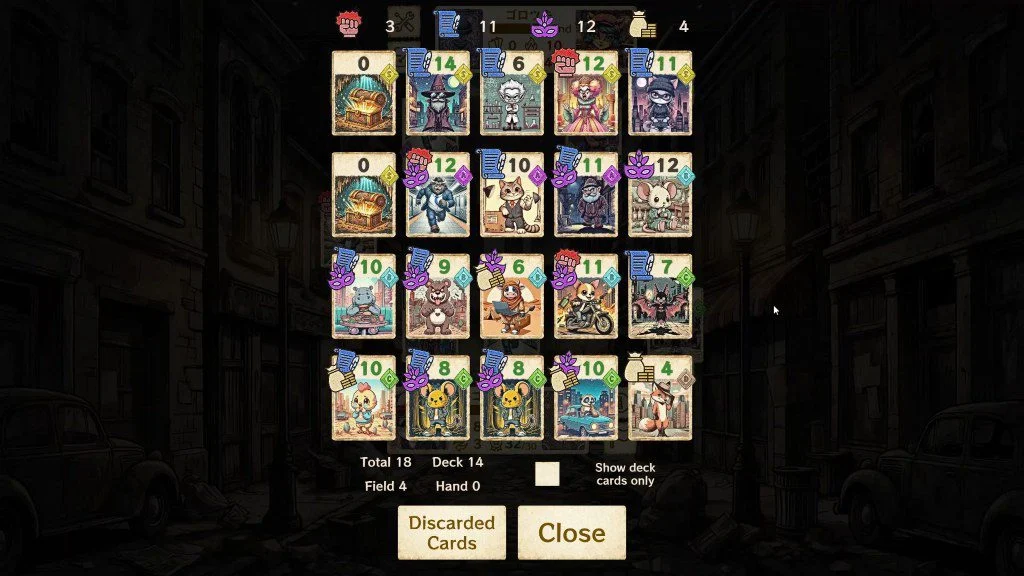
At the start of a match, players are not handed a pre-determined 30-card deck. Instead, they begin with a basic set of cards and, crucially, opportunities to acquire more cards throughout the battle. This system transforms every encounter into a unique challenge, forcing players to adapt their strategy on the fly based on the cards offered, their opponent’s moves, and the evolving state of the five-lane battlefield.
This dynamic approach mitigates several common CCG issues:
- Reduced "Netdecking": Players are less likely to simply copy top-tier decks, as the core of their deck is built in-match. This encourages creative thinking and improvisation.
- Enhanced Replayability: The variability of card acquisition means that even playing the same opponent with the same starting pool can lead to vastly different outcomes.
- Strategic Depth: Players must constantly weigh immediate tactical gains against long-term strategic goals. Do you pick a card that helps now, or one that sets up a powerful synergy later?
- Accessibility for New Players: While still strategic, the barrier to entry related to extensive card knowledge for pre-built decks is lowered, allowing new players to learn and adapt as they play.
The Five-Lane Battlefield and Reward Cards
Central to the strategic combat is the game’s five-lane structure. Both players compete for "Reward Cards" that are spread across these lanes. This mechanic introduces a fascinating layer of resource management and tactical prioritization.
Consider the following strategic dilemmas players will face:
- Lane Prioritization: Which lanes are most crucial to contest? Some lanes might offer powerful Gorotsuki cards, while others might provide crucial utility or defensive options. Players must decide which rewards are worth the investment of their limited resources (e.g., card plays, energy).
- Sacrifice and Bluffing: Players might intentionally "sacrifice" a less important lane to focus resources on securing a more valuable one, or even bluff their intentions to draw their opponent’s attention away from their true target.
- Moment of Card Swapping: The ability to "swap cards" at the right moment adds another tactical dimension. This could involve cycling out an unhelpful card for a potentially better one, or repositioning cards to counter an opponent’s play.
The decisions made in the opening rounds are particularly critical, as "cards earned in the opening rounds are added to your deck." This means early game choices have a compounding effect, shaping the available options and strategic direction for the remainder of the match. This creates a compelling risk-reward dynamic, where aggressive early plays for powerful cards can pay off significantly, but also leave a player vulnerable if not executed carefully.
Gorotsuki: Thematic Richness and Card Diversity
The game’s namesake, "Gorotsuki," refers to Japanese thugs, gangsters, and outlaws. This thematic choice provides a rich backdrop for the card art, character designs, and potential lore. In Japanese culture, "gorotsuki" often evokes images of street-level criminals, often distinct from the more organized yakuza, but equally steeped in a world of underground dealings and power struggles. This theme allows for a diverse range of character archetypes, from street brawlers and cunning con artists to enigmatic masterminds.
With over 150 unique Gorotsuki cards at launch, players can expect a wide array of abilities, stats, and visual designs. These cards are not static; the game features a crucial "card evolution" mechanic where "cards can evolve into game-changers when you pair the right combinations." This suggests a system of synergistic effects where certain Gorotsuki, when played together or under specific conditions, can transform into more powerful versions or unlock devastating abilities. This encourages players to experiment with different combinations and discover potent synergies that can turn the tide of battle. The promise of "even more planned for future updates" suggests a long-term commitment to expanding the card pool and evolving the meta, keeping the game fresh for years to come.
Saitama: A Fictional Crime Metropolis
The setting of "Saitama" as a "fictional crime city" provides an atmospheric canvas for the Gorotsuki’s struggles. While sharing a name with a real-world Japanese prefecture, the game’s Saitama is clearly a stylized, gritty urban landscape ripe for gang warfare and strategic maneuvers. This backdrop can influence card abilities (e.g., cards gaining bonuses in specific "districts" or representing different factions within the city) and contribute to the overall immersion. The visual style, hinted at by the provided gameplay images, leans into this urban criminal aesthetic, with characters that evoke a sense of street-level power and danger.

The Free-to-Play, No Pay-to-Win Ethos
Kojika Games’ firm stance against pay-to-win mechanics is a significant positive for the competitive card game community. In a market often criticized for aggressive monetization, this commitment promises a level playing field where skill is the sole determinant of victory. This model typically relies on alternative revenue streams such as:
- Cosmetics: Unique card backs, avatars, alternate art for Gorotsuki cards, or themed playmats.
- Battle Passes: Seasonal passes offering cosmetic rewards and in-game currency for dedicated play.
- Accelerated Progress: Options to speed up the acquisition of new (non-power-affecting) cards or resources through grinding, but not outright buying power.
- Expansions: Selling new sets of cards as complete collections or through gameplay, rather than random booster packs.
This approach fosters a healthier community, reduces player frustration, and ensures that the game’s competitive integrity remains paramount. It also encourages higher player retention as players feel their time and effort are truly valued.
Cross-Play: Unifying the Player Base
The implementation of cross-play across Android, iOS, and PC is a powerful feature that greatly benefits "Gorotsuki Paradise."
- Larger Player Pool: Combining players from three different ecosystems ensures faster matchmaking and a more diverse range of opponents.
- Player Convenience: Users can seamlessly switch between devices, playing on their PC at home and continuing their progress on their mobile device on the go.
- Social Connectivity: Friends can play together regardless of their preferred platform, strengthening the community aspect.
- Longevity: A unified player base contributes significantly to the long-term viability of an online multiplayer game.
The technical challenges involved in achieving smooth cross-play are substantial, requiring consistent UI/UX across different screen sizes, robust server infrastructure, and careful synchronization of game states. Kojika Games’ successful implementation of this feature speaks to their technical prowess and commitment to a seamless player experience.
Official Responses (Implied) and Design Philosophy
While specific quotes from Kojika Games are not provided in the initial announcement, the design choices embedded within "Gorotsuki Paradise" serve as a clear articulation of the developers’ philosophy and implied responses to current trends in the digital card game market.
The very existence of "Gorotsuki Paradise" with its unique mechanics can be seen as Kojika Games’ response to a perceived stagnation or over-reliance on established formulas within the genre. By introducing in-match deck building, they are implicitly stating that the traditional pre-built deck model, while successful, leaves room for innovation and a more dynamic player experience. Their approach suggests a belief that players crave adaptability and real-time strategic challenges over extensive meta-gaming outside of matches.
The explicit emphasis on being "completely free-to-play" and avoiding "pay-to-win mechanics" is a direct and powerful statement from Kojika Games. This isn’t just a marketing slogan; it’s a foundational design principle that shapes every aspect of the game’s economy and competitive balance. It implicitly communicates a deep respect for their player base, recognizing the widespread frustration with aggressive monetization strategies that often plague mobile and free-to-play titles. This stance suggests Kojika Games prioritizes long-term community health and competitive integrity over short-term revenue spikes, positioning them as a developer committed to fair play.
Furthermore, the decision to launch with cross-play support across Android, iOS, and PC signals a forward-thinking approach to player accessibility and community building. It implies that Kojika Games understands the modern player’s desire for flexibility and seamless interaction, breaking down platform barriers that can often fragment player bases. This commitment to a unified ecosystem suggests a developer that values inclusivity and aims to foster a broad, interconnected community for "Gorotsuki Paradise."
In essence, through their game’s design, Kojika Games communicates a vision for a card game that is:
- Innovative: By redefining core mechanics like deck building.
- Fair: By eliminating pay-to-win elements.
- Accessible: Through its F2P model and cross-play functionality.
- Engaging: With deep strategic layers and a compelling theme.
Their "response" is not in words, but in the deliberate and player-centric construction of "Gorotsuki Paradise" itself.
Implications: Reshaping the Genre and Future Outlook
The launch of "Gorotsuki Paradise" carries significant implications for the digital card game genre, Kojika Games, and the broader gaming community.
Impact on the Digital Card Game Landscape
"Gorotsuki Paradise" enters a crowded market dominated by established giants like Hearthstone, Magic: The Gathering Arena, Legends of Runeterra, and the more recent Marvel Snap. However, its unique selling propositions—particularly the in-match deck building—position it not as a direct competitor in the traditional sense, but as a potential innovator that could carve out its own niche.
If successful, its dynamic deck-building system could inspire other developers to experiment with similar mechanics, leading to a revitalization of the genre. It offers a fresh alternative for players who might be feeling fatigued by static metas, complex pre-match theorycrafting, or the constant pressure to acquire new cards in traditional CCGs. The game’s focus on adaptability and real-time decision-making could appeal to players who enjoy roguelike deck-builders (like Slay the Spire) but are looking for a competitive PvP experience.
The Significance of the F2P, No P2W Model
Kojika Games’ commitment to a truly free-to-play, non-pay-to-win model sets a high standard. In an era where "free-to-play" often comes with caveats and aggressive monetization, "Gorotsuki Paradise" could become a poster child for ethical game monetization. This approach builds immense goodwill within the player community, which is crucial for long-term success and sustainability. It creates a reputation for fairness that can attract and retain players who are wary of predatory business models. This could, in turn, put pressure on other developers to re-evaluate their own monetization strategies, potentially benefiting players across the industry.
Community Building and Esports Potential
The cross-play functionality is a strong foundation for building a robust and interconnected community. A larger, unified player base means more diverse competition, faster matchmaking, and a more vibrant social environment. This broad accessibility also positions "Gorotsuki Paradise" with significant esports potential. A game where skill is paramount and financial investment plays no role in competitive advantage is ideal for a healthy esports scene. Tournaments could truly showcase player skill and strategic ingenuity, attracting both competitors and viewers. Kojika Games would need to support this with dedicated features, spectator modes, and clear competitive rulesets, but the underlying mechanics are certainly conducive to competitive play.
Addressing the AI Artwork Concern
The observation regarding potentially AI-generated artwork, while not definitively confirmed, highlights a growing discussion point within the gaming industry. If true, it carries implications for indie development, artistic integrity, and player perception. On one hand, AI tools can enable smaller studios like Kojika Games to achieve a certain level of artistic output that might otherwise be cost-prohibitive. On the other hand, it raises questions about originality, the role of human artists, and potential ethical considerations. For "Gorotsuki Paradise," if the artwork is indeed AI-generated, it could elicit mixed reactions from the community. While some players may prioritize gameplay over artistic origin, others might view it as a detraction from the game’s overall craftsmanship. Kojika Games might need to address this transparency proactively if it becomes a significant community talking point, balancing the practicalities of indie development with player expectations for artistic authenticity.
Long-Term Viability and Future Content
The success of "Gorotsuki Paradise" will ultimately depend on Kojika Games’ ability to provide consistent content updates, balance patches, and community engagement. The promise of "even more [cards] planned for future updates" is a positive sign, indicating a commitment to evolving the game. A thriving digital card game requires a continuous influx of new cards, mechanics, and potentially game modes to keep the meta fresh and players engaged. Kojika Games’ transparent monetization model also means they must be creative in how they fund these ongoing developments, likely through compelling cosmetic items or well-received battle passes.
In conclusion, "Gorotsuki Paradise" is more than just another card game; it represents a bold statement from Kojika Games. By challenging established norms, prioritizing fair play, and embracing cross-platform accessibility, it has the potential to carve out a significant space for itself and perhaps even influence the future direction of the digital card game genre. It offers a compelling proposition for players seeking a fresh, strategic, and equitable competitive experience.
"Gorotsuki Paradise" is available now for download on Android via the Google Play Store and iOS via the App Store. PC players can also join the fray, though the exact PC distribution method (e.g., direct download, specific launcher, or Steam) would typically be detailed by Kojika Games for direct access.