
 Evan Lee Salim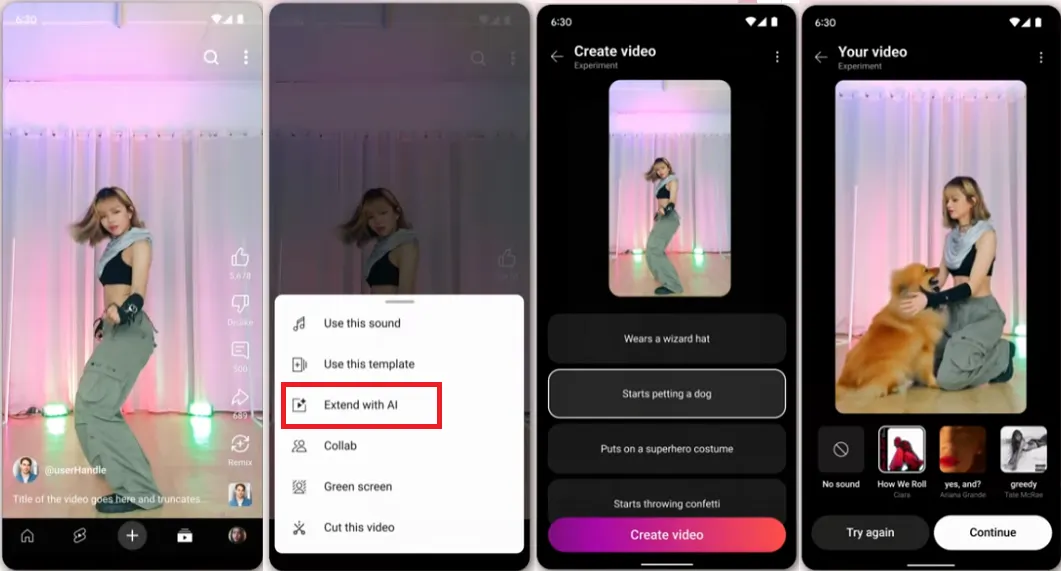
YouTube is fundamentally altering the landscape of digital participation. In a bold, albeit contentious, expansion of its creative suite, the platform has announced the integration of Google’s advanced Omni AI image generation tools into its Shorts ecosystem. This new functionality empowers users to transcend the role of passive viewer, granting them the ability to surgically insert themselves, their pets, or entirely new narrative elements into existing short-form videos. While YouTube frames this as a democratization of creativity, critics argue it represents a slippery slope toward an environment saturated with low-effort, algorithmically generated "slop."
The Mechanics of the Update: From Passive Viewing to Active Remixing
At the heart of this update lies Google’s Omni AI—a multimodal model capable of fluidly processing and generating visual content. By leveraging these sophisticated underlying technologies, YouTube is lowering the technical barrier to entry for video editing. Previously, altering the content of a video required significant post-production expertise, expensive software, and hours of labor. With this update, those processes are distilled into a prompt-based interface within the Shorts player.
The tool operates by allowing users to select a Short and issue a command to generate alternative visual components. Whether a user wishes to "swap in a pet" into a comedic skit, change the stylistic aesthetic of a travel vlog, or insert their own likeness into a scene alongside a creator, the process is designed to be seamless. The objective, according to YouTube, is to foster a more participatory culture where trends can be iterated upon at the speed of thought.
A Chronology of YouTube’s AI Integration
The path to this current iteration of AI-powered remixing has been a deliberate, step-by-step rollout by Google’s video division. To understand the current climate, one must look at the recent timeline of feature releases:
- September 2024: YouTube introduces "Extend with AI," a feature that allowed users to generate alternative endings to Shorts via simple prompts. This served as a beta test for user appetite regarding AI-driven content alteration.
- Late 2024: As AI tools became more ubiquitous, YouTube began integrating advanced likeness protection protocols to prevent the unauthorized use of celebrity and creator imagery.
- Early 2025 (Ongoing): YouTube expands its "likeness detection" tools to all users over the age of 18, a defensive measure designed to mitigate the risks of deepfakes and non-consensual AI generation.
- Current Date: The official launch of Omni-powered remixing, which moves beyond simple "ending extensions" to deep, frame-by-frame structural content manipulation.
This trajectory demonstrates a company attempting to balance the aggressive pursuit of technological novelty with the legal and ethical minefield of digital identity protection.
Supporting Data and the "Shorts" Strategic Imperative
YouTube’s pivot toward AI is not merely a creative choice; it is a strategic necessity. Facing stiff competition from TikTok and Instagram Reels, YouTube has found that "Shorts" are the primary engine for audience growth among younger demographics. Data consistently shows that high-engagement platforms are those that provide users with tools to "co-create" rather than just "consume."
Internal metrics at Google have likely indicated that users who engage in remixing are more likely to stay on the platform for longer durations. By turning the audience into a decentralized production studio, YouTube effectively crowdsources the content creation process. The platform is essentially betting that the volume of content generated by these AI tools will offset the potential dilution of quality, hoping to keep users trapped in an infinite loop of AI-enhanced engagement.
Official Responses and Safety Protocols
YouTube has been vocal about the safeguards accompanying this rollout. Recognizing that the ability to insert oneself into any video creates significant potential for harassment and misrepresentation, the platform has simultaneously rolled out an opt-out mechanism for creators.
"We are committed to providing creators with control over their work," a YouTube spokesperson noted in a recent briefing. "Creators can choose to opt out of visual remixing entirely, and if they do, any AI-generated iterations that have already been produced will be automatically stripped from the platform."

Furthermore, the expansion of the likeness detection tool is the cornerstone of their safety strategy. This system is designed to identify when a user’s facial features or unique likeness are being manipulated in a way that violates community standards. If the system detects a potential breach, it flags the content for human review or automated removal. The challenge, of course, remains whether these tools can scale effectively to handle the millions of uploads YouTube receives daily.
Implications: The Creative Paradox
The introduction of these tools brings about a profound philosophical question regarding the future of digital media: What is the value of original content in an era of infinite, AI-generated variations?
The Death of Originality?
The primary criticism leveled against this update is that it encourages "lazy" creation. In the traditional creative process, the friction of production acts as a filter; only those with a compelling idea are willing to invest the time to create. By removing that friction, YouTube is opening the floodgates to an ocean of mediocre, derivative content. When anyone can "remix" a masterpiece into a surrealist meme or a low-effort mashup, the cultural significance of the original work is often diminished.
The Rise of "Content Slop"
"AI slop" is a term increasingly used to describe content that is generated by machines to satisfy engagement algorithms rather than human curiosity. As these tools become more accessible, the fear is that the YouTube feed will become a feedback loop of machines generating variations of machines’ work. The "human touch"—the nuance, the intentionality, and the genuine creative spark—risks being buried under a pile of algorithmically generated noise.
The Legal and Ethical Gray Zones
While YouTube provides an "opt-out" button, the burden of policing remains on the creators. A creator may wake up to find hundreds of AI-manipulated versions of their videos circulating, some of which may be harmful or defamatory, even if they aren’t explicit deepfakes. The speed at which these remixes can be generated far outpaces the speed at which a creator can report and remove them, creating a perpetual game of "whack-a-mole" for digital rights management.
A Future of Hybrid Content
Despite the risks, it is impossible to ignore the genuine potential for innovation. There is an undeniable novelty in the ability to create absurdist art, experimental remixes, and collaborative storytelling that would have been impossible just a few years ago. Some creators will undoubtedly use these tools to enhance their narrative reach, creating "choose-your-own-adventure" style content that relies on viewer participation.
However, the success of this endeavor will depend on how YouTube manages the balance between "creative freedom" and "platform integrity." If the platform becomes a place where original, high-effort creation is discouraged by the sheer volume of low-effort AI remakes, it may lose the very creators who built its reputation.
Ultimately, YouTube is betting that the masses want to participate in the act of creation, even if that participation is assisted by a machine. Whether this leads to a new golden age of digital participation or a chaotic decline into automated mediocrity remains to be seen. As the rollout continues, the industry will be watching closely to see if YouTube’s safety protocols can withstand the inevitable surge of AI-facilitated misuse. For now, the platform is betting on the future—a future where, for better or worse, the line between viewer and creator has been permanently blurred.

 Azzam Bilal Chamdy
 Sagoh
Sagoh





