

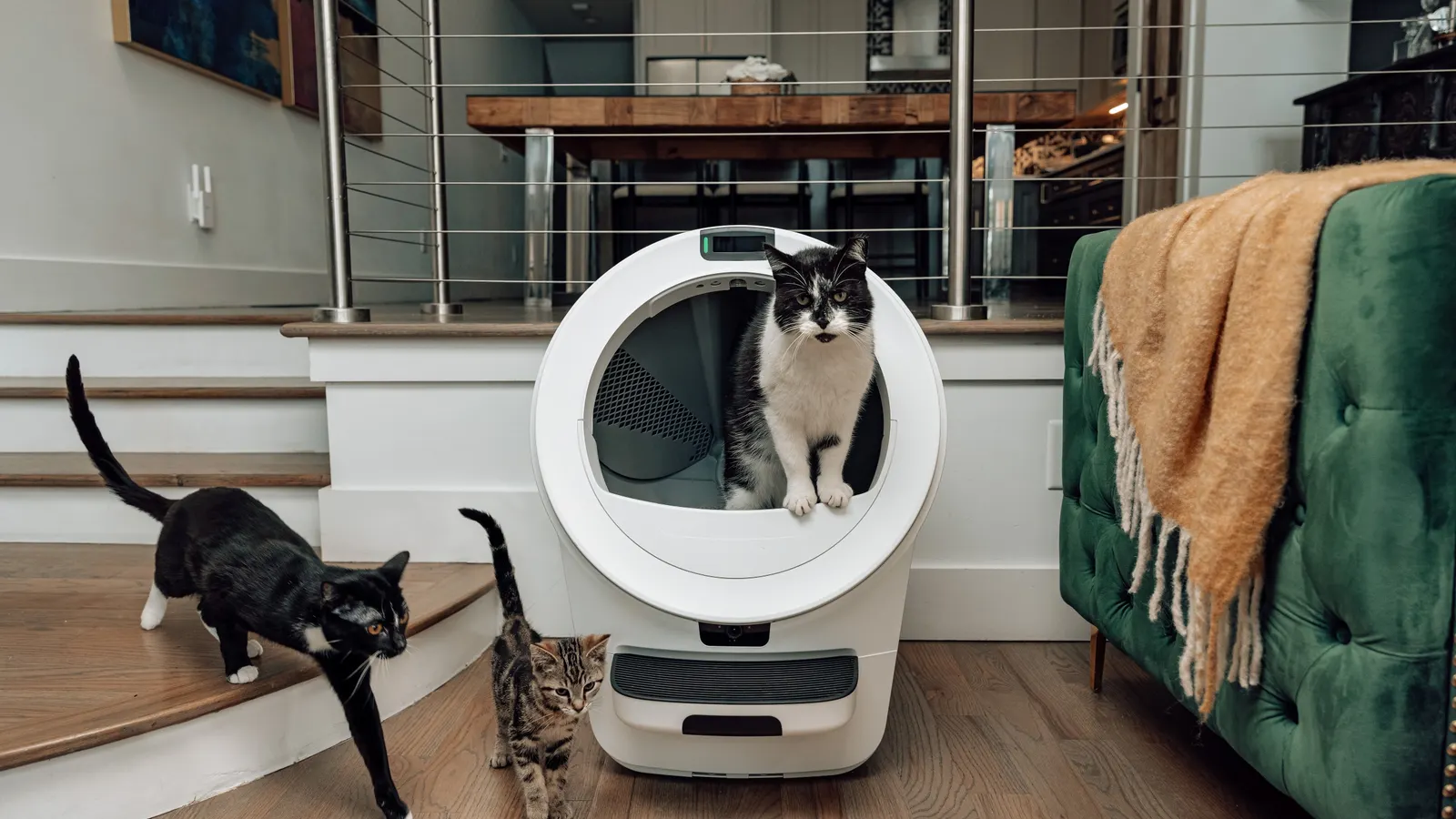
For a quarter of a century, Whisker has operated under a singular, mission-critical premise: solve the most unpleasant chore associated with cat ownership. By automating the litter box, the company—best known for its flagship Litter-Robot brand—has spent decades positioning itself as a savior for pet parents tired of the scoop. However, as the company enters its 26th year, it is undergoing a radical identity shift. Whisker is moving beyond the utilitarian promise of odor control and convenience, attempting to reposition itself as a sophisticated, tech-forward lifestyle brand that aims to fundamentally alter how society views cat ownership.
This transformation is anchored by the launch of a new brand initiative, “The Future is Feline,” and the appointment of Hew Loyd as the company’s first-ever Chief Marketing Officer. With a mandate to bridge the gap between pet care and consumer technology, Whisker is betting that if it can remove the friction of the litter box, it can convince millions more households to welcome a cat into their lives.
The Evolution of a Pet-Tech Pioneer
Whisker’s journey from a niche manufacturer to a dominant player in the “connected pet” category has been marked by rapid acceleration over the last decade. While the company is not a startup, its recent trajectory reflects the high-growth mindset of a Silicon Valley tech firm.
The strategy hinges on blurring the lines between traditional pet products—historically categorized as CPG (consumer packaged goods)—and the “connected home” ecosystem. By leveraging app connectivity, artificial intelligence, and sophisticated hardware, Whisker is aiming for a market position closer to Apple or Peloton than to a traditional brand selling pet food or toys.
“We have incredible opportunities given what is going on in the broader space right now,” said Hew Loyd, Whisker’s CMO. “The big opportunity is driving a brand that leads with an incredible story to leverage the power of its product and audience. It’s time to take that to the next level.”
Chronology of a Transformation
Whisker’s pivot did not happen overnight; it is the culmination of a multi-year effort to refine its product stack and marketing engine.
- 1999–2010: The foundational years, focusing on the invention and iterative improvement of the original automated litter box. The marketing message was simple: “Save time, remove the mess.”
- 2010–2020: The digital integration phase. Whisker began incorporating IoT (Internet of Things) capabilities, introducing the app-connected Litter-Robot, which allowed owners to track usage and receive notifications.
- 2023: The company reaches a pivotal moment, recognizing that its growth requires more than just functional improvements. It begins a search for executive leadership capable of scaling brand storytelling.
- Fall 2023: Hew Loyd, formerly the CMO of CookUnity and Sir Kensington’s, is brought on board as Whisker’s first CMO.
- 2024: The official launch of the “The Future is Feline” campaign, marking the shift from “problem-solving” to “lifestyle-enabling.” Simultaneously, the company expands its hardware lineup with the Litter-Robot 5 and 5 Pro, featuring advanced AI camera diagnostics, and the compact Litter-Robot EVO for urban dwellers.
Data-Driven Growth: The Market Opportunity
The timing of this pivot is no coincidence. The pet industry has seen a massive surge in interest, with cat ownership in the United States growing by 23% in 2024 alone. According to data from the American Pet Products Association, there are now 49 million cat-owning households in the U.S.
For Whisker, this represents a massive, untapped TAM (Total Addressable Market). With only approximately 3 million households currently utilizing automatic litter box technology, the company sees a delta of 46 million homes that represent potential customers.
Loyd explains the business math behind this: “There are 49 million cat households, and maybe 3 million are using an automatic solution. That gap—that 46 million—is what we are working to address. We aren’t just selling a box; we are selling the removal of the primary barrier to entry for prospective cat owners.”
Strategic Pillars: Technology, AI, and Subscription
Whisker’s product roadmap has shifted to support this vision. The introduction of the Litter-Robot 5 and 5 Pro is perhaps the most significant indicator of the company’s tech-first direction. These devices feature AI-powered cameras capable of “cat face identification,” a feature that allows the system to distinguish between multiple pets in the same household.
This is not merely a novelty; it is a diagnostic utility. By tracking the frequency and duration of a cat’s litter box usage, the device can alert owners to potential health issues, such as urinary tract infections (UTIs) or other systemic changes, long before a human would notice a behavioral shift.
Furthermore, the integration of the “Whisker+” subscription service creates a recurring revenue stream that mirrors the subscription-economy models of modern tech companies. By layering software insights over hardware, Whisker ensures that the relationship between the consumer and the brand extends far beyond the initial point-of-sale.
Addressing the "Taboo" and Shifting Public Perception
One of the most profound challenges in the pet industry is the cultural stigma surrounding cat waste. Historically, cat litter has been treated as a "dirty" necessity—a chore that is rarely discussed. Whisker is opting to strip away this shame.
“I’ve been attracted to categories where we can take something mundane or even taboo and reapproach it,” Loyd noted. “We want to remove the layer of shame and give people community and openness. There is liberation in talking about it. And of course, there is a lot of humor.”
The “Future is Feline” campaign aims to challenge the “dog-biased” narrative of modern society. By arguing that cats are the superior companion—if only their owners are liberated from the daily chore of scooping—Whisker is attempting to rebrand the cat as a low-maintenance, high-reward lifestyle choice.
The Economics of the Premium Pet Experience
Convincing a consumer to transition from a $20 plastic tray to a $599 (or higher) automated device requires a fundamental shift in worldview. When asked how the company justifies the high price point, Loyd is clear: it is about the value of time and the health of the pet.
“We believe we have improved the experience of scooping poop by 10 times, if not 100 times,” Loyd said. “There are places in our lives where there is a free version, and we opt for something more advanced because it offers so many more benefits. We are recalibrating the relationship between the owner and their family member.”
Future Implications: What Lies Ahead?
As Whisker continues to scale, its challenge will be to maintain the balance between its identity as a “tech platform” and its role as an animal welfare-adjacent business. The company’s internal “Sprint” system—a dedicated group of creatives focused on the volume and velocity of paid social content—suggests that it intends to remain aggressive in its customer acquisition strategy.
The implications for the wider pet industry are significant. If Whisker succeeds in its “Future is Feline” campaign, it will have effectively turned a chore-driven market into a high-tech ecosystem. Should other pet brands follow suit, we may see a broader consolidation of pet technology, where the “connected pet” becomes the standard for the modern household.
For now, the message from the corner office is one of sustained growth. With 46 million potential households still using traditional, manual litter boxes, Whisker’s leadership believes they are only just beginning to scratch the surface of what the “Future is Feline” can truly look like. The company isn’t just looking to sell a box; they are looking to change the culture of pet ownership itself, one connected device at a time.











No comments yet. Be the first to join the conversation!