

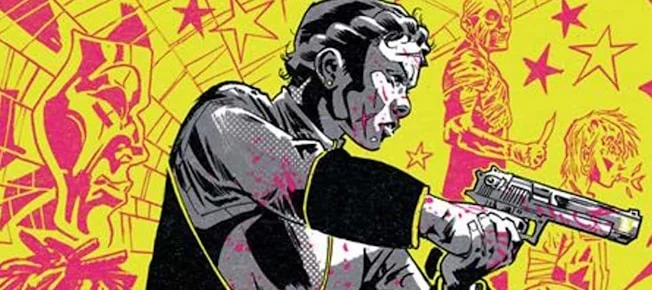
The sun is rising over Oak Valley, but for the twelve killers dropped into this blood-soaked arena, the light brings little comfort. As the first season of the breakout horror phenomenon The Sacrificers (referenced in production materials as Exquisite Corpses) reaches its gut-wrenching conclusion, readers are left to grapple with the aftermath of a narrative experiment that has redefined the boundaries of the genre. What began as a high-concept premise—a battle royale to determine the political and existential fate of a nation—has culminated in a final confrontation that questions the very nature of survival and the cost of power.
With the creative powerhouse of writer James Tynion IV, artist Michael Walsh, colorist Jordie Bellaire, and letterer Becca Carey, the series has become a cornerstone of modern independent comics. As the season finale hits shelves, we examine the mechanics, the creative weight, and the lasting implications of this brutal saga.
The Core Narrative: A Nation’s Fate at Stake
At the heart of the series lies a premise that blends slasher-horror tropes with high-stakes political allegory. Twelve individuals, each representing a distinct archetype of violence, were deployed into the isolated confines of Oak Valley on Halloween night. The stakes were not merely personal; the narrative posits that the outcome of this carnage would fundamentally alter the trajectory of the country.
James Tynion IV, known for his masterful pacing in titles like Something is Killing the Children and Department of Truth, uses the "battle royale" structure not for mindless action, but as a crucible. The valley acts as a microcosm for a society in decline, where the "killers" serve as proxies for conflicting ideologies. As the narrative progressed, it became clear that the true horror was not the death toll, but the transformation of the combatants themselves. By the time dawn breaks in the final issue, the question remains: does the survivor truly "win," or have they simply lost the most of themselves?
Chronology of the Slaughter: From Initiation to Epilogue
The trajectory of the first season was marked by a steady, claustrophobic escalation.
- The Infiltration (Halloween Night): The series opened with the arrival of the twelve. The atmosphere was immediately established as oppressive and isolated, with the environment of Oak Valley serving as an active participant in the horror.
- The Thinning of the Herd: Throughout the mid-season, the narrative focused on the attrition of the combatants. Tynion and Walsh meticulously stripped away the armor—both literal and metaphorical—of each character. This phase was characterized by "character studies through violence," where each death provided insight into the fractured history of the American landscape.
- The Psychological Turning Point: As the group dwindled, the focus shifted from external survival to internal corruption. The combatants were forced to confront the moral weight of their actions. This was where Walsh’s art truly shone, utilizing shadows and stark color palettes to emphasize the deteriorating mental states of the survivors.
- The Final Confrontation: The concluding chapter, released this week, centers on the last standing participants. The tension is no longer about "who kills whom," but about the legacy left behind. The final panels represent a shift in the tone of the series, moving from visceral horror to a haunting, meditative silence.
Supporting Data: The Creative Engine
The success of The Sacrificers is inseparable from its artistic team. In the landscape of contemporary comics, this book stands out for its visual cohesion and narrative density.
- James Tynion IV (Writer): Tynion’s strength lies in his ability to weave complex thematic inquiries into tight, genre-driven plots. By grounding the supernatural or horrific elements in human fragility, he ensures that the audience remains emotionally invested, even when the violence reaches extreme levels.
- Michael Walsh (Artist): Walsh’s work on the series is nothing short of transformative. His ability to handle kinetic action sequences while maintaining a sense of creeping dread is rare. The "Oak Valley" setting feels like a character in its own right, decaying alongside the people within it.
- Jordie Bellaire (Colorist): Bellaire’s color palette is essential to the book’s tone. Moving away from the saturated, neon-soaked aesthetics of typical horror comics, she employs muted, earthy tones that ground the story in a reality that feels tangible and rotting.
- Becca Carey (Letterer): In a book with so much internal monologue and character interaction, Carey’s lettering serves as the bridge between the art and the reader, creating a rhythm that dictates the pace of the horror.
Industry and Creator Response
The conclusion of the first season has been met with significant anticipation within the industry. Following the release, the creative team has emphasized the collaborative nature of the project. In various interviews, Tynion has noted that the story was designed to be a "closed loop," a complete experience that challenges the reader to look at the intersection of entertainment and societal decay.
"We wanted to see how much of a person could be peeled away before the essence of who they are disappears," Tynion remarked in recent press correspondence. "Oak Valley isn’t just a place; it’s a mirror. And the mirror is cracked."
The response from the comic book community has been equally enthusiastic. Independent retailers have highlighted The Sacrificers as one of the most consistent "pull-list" performers of the year, noting that its blend of horror and social commentary appeals to a demographic that is increasingly looking for mature, standalone stories that aren’t tied to decades of continuity.
The Implications: What Remains?
As the sun rises on the final page, the implications for the characters—and the readers—are profound. The series does not offer a "happy ending." Instead, it offers a "necessary" one.
The Cost of Survival
The primary implication of the series is the toll taken on the victor. By winning, the survivor has implicitly accepted the terms of the "game." The story asks whether power acquired through such extreme means can ever be wielded for good. The final revelation suggests that the country remains in a state of suspended animation, waiting to see what kind of creature will emerge from the valley.
The Evolution of Horror Comics
The Sacrificers serves as a benchmark for the current state of horror comics. It demonstrates that readers are moving away from jump-scare-heavy narratives and toward slow-burn, thematic horror. The success of this series will likely pave the way for more creator-owned, experimental horror titles that prioritize atmosphere and character development over traditional tropes.
Future Potential
While the first season reaches a definitive conclusion, the world-building established by Tynion and Walsh leaves the door open for future exploration. Whether this takes the form of sequels, spin-offs, or a wider expansion of the "Oak Valley" mythos, the narrative foundation is now set. The industry will undoubtedly be watching to see how the creators capitalize on the success of this breakout hit.
Final Thoughts: Securing Your Copy
For those who have followed the series from the beginning, the conclusion is a mandatory read. For those new to the phenomenon, the completion of the first season offers the perfect opportunity to experience the entire arc in one sitting.
The creative team has crafted something that will be discussed for years to come—a brutal, beautiful, and ultimately haunting reflection of the world we live in. To secure your copy of the conclusion, you can utilize local resources to support the medium:
- Support Local: Visit Comic Shop Locator or call 1-888-comicbook to find an independent retailer in your area.
- Digital Access: The series is available via Zeus Comics or on Kindle.
As the credits roll on the first season of The Sacrificers, one thing is clear: the horror wasn’t the valley itself. The horror was the realization of what we are willing to do to ensure that we are the ones standing when the sun comes up.










No comments yet. Be the first to join the conversation!