The literary landscape of self-published fantasy has reached a critical juncture. The eleventh annual Self-Published Fantasy Blog-Off (SPFBO 11), a premier competition dedicated to highlighting the best in independent genre fiction, has officially concluded its final round of cuts. With the elimination of the last two contenders from the "Seventh and Final Fall" category, the judging panel has successfully whittled the field down to four remaining semi-finalists. These four works will now proceed to individual, deep-dive critical reviews, marking a shift from the rapid-fire evaluation phase to a period of intensive analysis.
This year’s competition, as always, serves as a litmus test for the current trends in self-published fantasy. By opening the floor to diverse voices and unconventional narratives, the SPFBO provides a unique platform for authors who operate outside the traditional gatekeeping mechanisms of the Big Five publishing houses.
The Chronology of Competition
The SPFBO process is designed to be exhaustive yet accessible. Unlike traditional review cycles that might prioritize a linear "worst-to-best" ranking, the SPFBO judging team operates on a fluid schedule. The books are read in small, manageable batches, allowing for a nuanced discourse that spans several months.
As the competition nears its conclusion, the focus shifts toward the semi-finalists. The recent announcement marks the end of a long vetting process. For those unfamiliar with the mechanics of the event, the official SPFBO website and the introductory blog posts serve as the primary repositories for the contest’s history and structural guidelines. As the judges move into the semi-final stage, the remaining titles will undergo rigorous scrutiny, with each receiving a dedicated feature article, ensuring that the finalists receive the comprehensive critical attention their work demands.
Spotlight on the Final Cuts: A Study in Divergent Reception
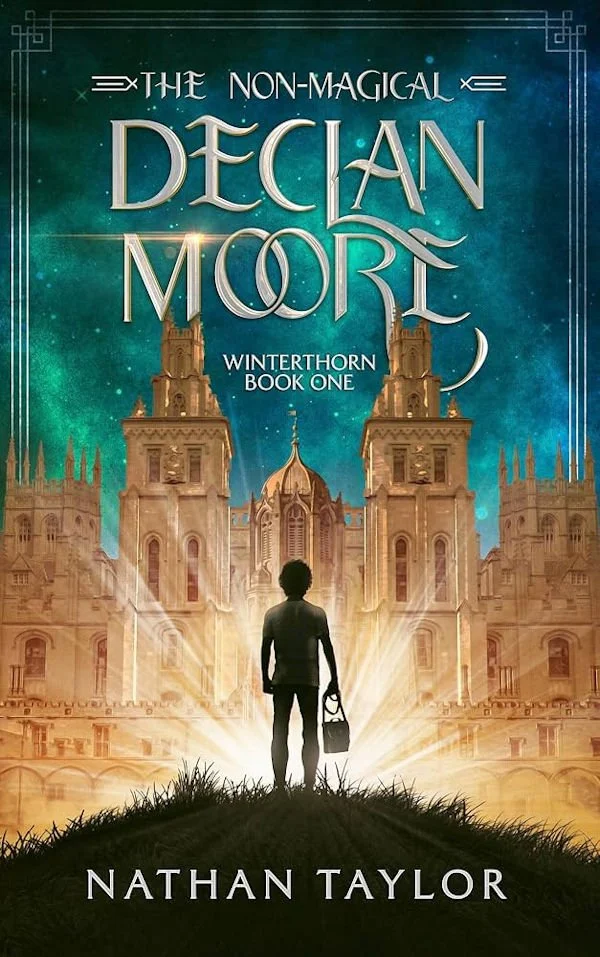
The final two books to exit the competition—The Non-Magical Declan Moore by Nathan Taylor and Hunter’s Apprentice by Simon Shugar—offer a fascinating study in how subjective reading experiences can lead to polarized critical consensus.
The Non-Magical Declan Moore: A Marmite Narrative
Nathan Taylor’s The Non-Magical Declan Moore presents a compelling modern premise: a world where magic is as ubiquitous as tap water, yet seventeen-year-old Declan Moore finds himself a "LAMP"—Lacking All Magical Potential. The story pivots on a sudden, world-altering event that sees the magical population vanish, forcing the non-magical populace to navigate a landscape devoid of their usual crutches.
The reception of this novel was, by all accounts, starkly divided. For some judges, the book was an addictive, fast-paced page-turner. Stacey, one of the judges, highlighted the relatability of the protagonist and the fun inherent in the world-building. "He needs to level up his game in order to save his parents, friends, and possibly, the world as he knows it," she noted, praising the high-stakes narrative.

However, other members of the panel found the character work lacking. Critics pointed to an emotional disconnect in Declan’s reactions to traumatic events, describing his behavior as inconsistent. There was also criticism regarding the "plot-function" nature of the supporting cast, with the exception of the character Ace, who was widely lauded as the most grounded element of the book. Ultimately, The Non-Magical Declan Moore exemplifies the "marmite" effect—a book that either resonates deeply with the reader’s sensibilities or fails to sustain engagement due to tonal shifts.
Hunter’s Apprentice: Classic Tropes and Narrative Voice
Simon Shugar’s Hunter’s Apprentice took a different approach, leaning into the darker, more traditional aesthetics of classic fantasy. The story follows Tomi, who grows up in a village caught in the crossfire of warring kingdoms, eventually finding his path as a hunter’s apprentice.
The divide in the panel here focused almost entirely on the narrative voice. Julia, a member of the judging team, found the story’s "classic" feel and strong narrative pull to be its saving grace. She particularly praised the survival elements—foraging, shelter-building, and the harsh realities of winter—as a masterclass in grounding a fantasy world.
Conversely, others struggled with the disconnect between the protagonist’s age and the maturity of the narration. "The narration was meant to be coming from Tomi, but it did not ever feel like a child was narrating the book," noted judge E.G. Stone. This lack of age-appropriate voice, combined with some editorial inconsistencies and "cartoonishly villainous" antagonists, ultimately hindered the book’s progression to the next round. Despite these hurdles, the book remains a testament to the power of atmospheric writing and emotional stakes.
Supporting Data and Judging Methodology
The SPFBO 11 judging panel is a diverse group of readers, critics, and bloggers, including Adawia Asad, Eva Geraghty, E.G. Stone, Julia Kitvaria Sarene, and several others. Their methodology is rooted in the recognition that reading is inherently subjective. By pooling individual perspectives, the SPFBO aims to offer a balanced look at each entry, acknowledging that a "flaw" to one reader may be a "feature" to another.
The criteria for evaluation are broad, covering:
- Narrative Voice: Consistency and suitability to the protagonist’s age and background.
- World-building: The internal logic and sensory details of the setting.
- Characterization: The depth of motivation and emotional realism.
- Pacing and Editorial Polish: The technical execution of the story.
The panel’s decision to cut these titles is not a final judgment on the quality of the work, but rather a reflection of the specific requirements of the competition. As noted in the official responses, the courage required for an author to submit their work to such a public, rigorous evaluation cannot be overstated.
Official Responses and Author Acknowledgement
The organizers of SPFBO 11 have issued a formal statement of gratitude to all participants. "Putting your work forward for a competition takes real courage, and we appreciate each and every one of you for it," the editors stated.
The transparency of the process remains a cornerstone of the SPFBO’s brand. By providing links to the official contest page and ensuring that the editorial team—led by Jennie Ivins—is accessible via platforms like Bluesky and Threads, the competition fosters a community of mutual respect between authors and reviewers.
Implications for the Future of Indie Fantasy
The conclusion of this phase has significant implications for the four remaining semi-finalists. As they move into the spotlight, the intensity of the scrutiny will increase. For the independent publishing industry, the SPFBO continues to be a vital filter. It bridges the gap between the overwhelming volume of self-published titles and the readers who are looking for high-quality, genre-defining work.
The success of the competition lies in its ability to highlight the "hidden gems" of the industry. Whether it is a story about a non-magical boy in a wizarding world or a dark, gritty tale of a hunter’s apprenticeship, the SPFBO ensures that these stories are not lost in the algorithm.
As we look toward the final stages of the competition, the industry will be watching closely to see which of the four remaining titles will be crowned the winner of SPFBO 11. Until then, readers are encouraged to revisit the list of participants and explore the diverse range of voices that have defined this year’s cycle. The journey from the slush pile to the final four is a testament to the enduring vitality of self-published fantasy, a sector that shows no signs of slowing down in its pursuit of excellence and innovation.
For those who wish to follow the final developments, the official SPFBO website and the associated social media channels remain the primary sources for updates. The next phase promises to be a deep dive into the craft, the heart, and the soul of the final contenders.