

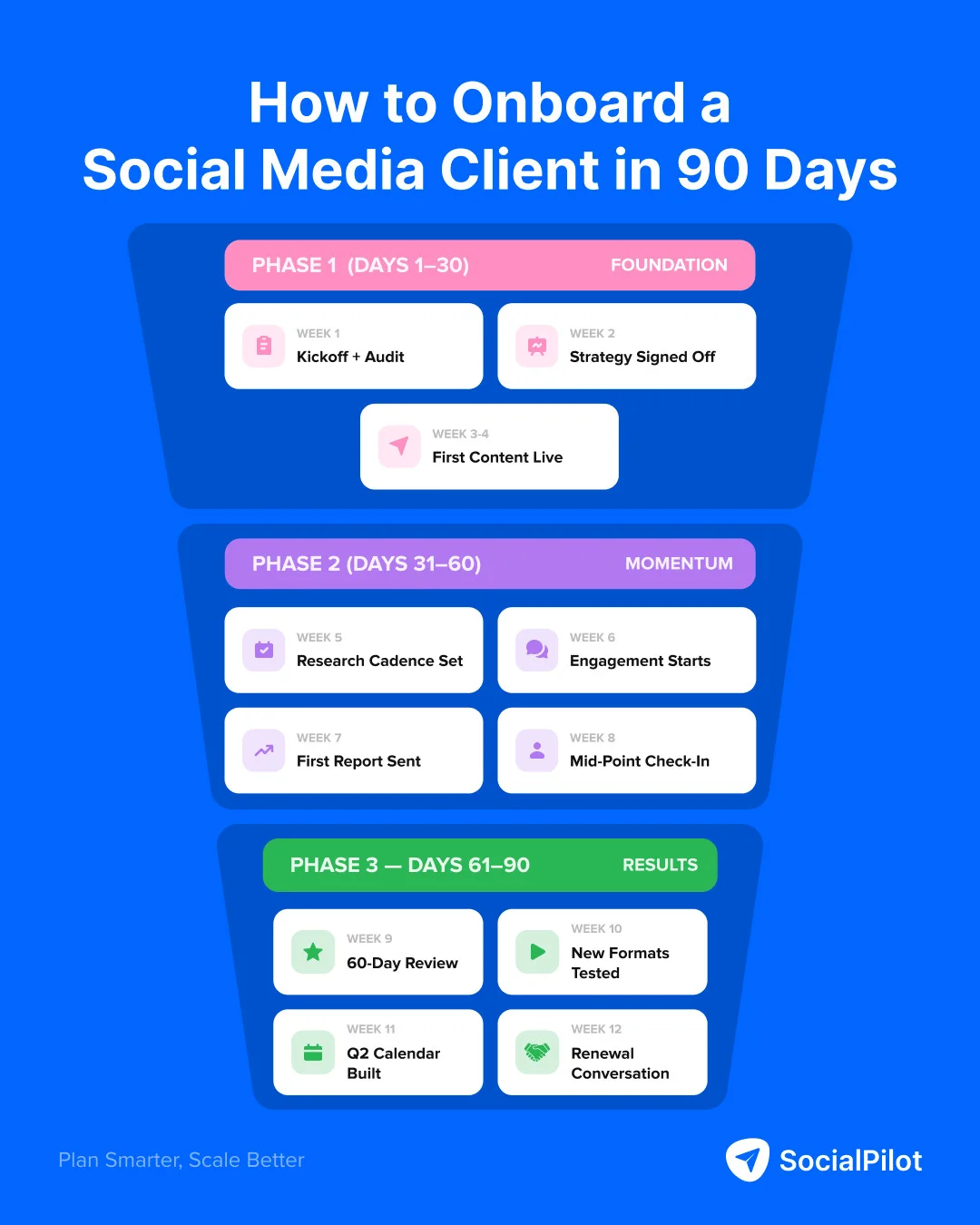
The ink is dry on the contract, the initial invoice has been processed, and the project management dashboard is blinking with an empty queue. For agency owners, this is the most dangerous moment of the engagement. You have secured the client, but you have not yet secured the relationship. While the sales process focused on promises, the next 90 days will be defined by operational reality.
Research from Wyzowl indicates that 63% of customers determine whether they will remain with a service based on their onboarding experience. This decision is rarely made at the renewal mark; it is solidified in the first few weeks of engagement. To thrive, agencies must move beyond "content creation" and master the art of "client engagement"—two distinct skill sets that determine whether a client becomes a long-term partner or a churn statistic.
The Foundation: Sales Audit vs. Intelligence Audit
The primary mistake agencies make is conflating the sales audit with the onboarding audit. The sales audit is a persuasive tool designed to highlight pain points and close the deal. Conversely, the intelligence audit is a clinical, data-driven baseline.
If you skip the formal intelligence audit because you "already looked at their accounts," you lose the ability to prove progress. When the 60-day review arrives and a client questions the impact of your work, a lack of documented baseline data turns a strategic conversation into a defensive one. The intelligence audit acts as the "source of truth" that governs all future performance discussions.
Chronology of the First 90 Days
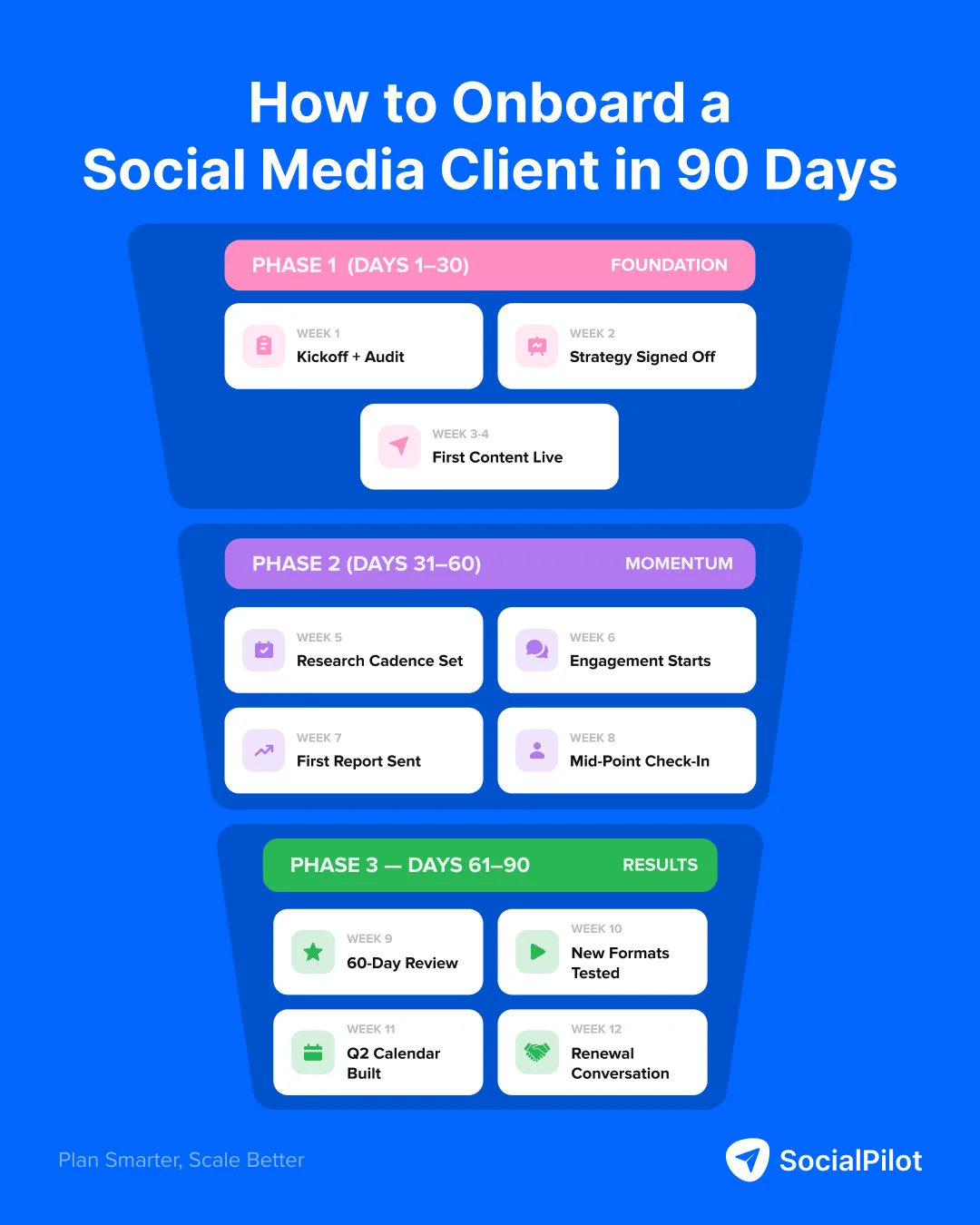
The first 90 days are not merely a timeline for tasks; they are a phased transition from gathering to executing, and finally, to proving value.

Days 1–30: Establishing Infrastructure
Month one is strictly about building the system that will support the next six months. Agencies that succeed in the long term treat this month as an investment in intentionality.
- Week 1: The Onboarding Deck and Research. Before the kickoff call, issue an onboarding deck. This document must resolve the client’s anxiety by outlining workflows, communication expectations, and definitions of success. Friction in these early stages is almost always a result of misaligned expectations, not poor content.
- Week 2: Formal Intelligence Audit and Strategy. This week, the audit is presented as a formal, static deliverable. It includes platform performance, visual consistency, and competitor analysis. Content pillars are established here, and—crucially—they are signed off in writing. If a client attempts to dispute content in week three, you can point to the agreed-upon pillars as the strategic anchor.
Days 31–60: Execution and the Research Cadence
Once the content engine is running, the temptation is to switch to autopilot. This is where high-performing agencies diverge from the rest by implementing a "Research Cadence."
- Week 5: Applying Signals. Start every Monday by analyzing the previous week’s engagement. Use these insights to create a research brief before writing a single caption.
- Week 6: Community Management. At scale, comment and DM management is not just customer service; it is an algorithmic necessity. Every unanswered comment is a lost signal. Use this time to refine brand voice and monitor community sentiment.
- Week 7: The First Monthly Report. This report should be sent 24 hours prior to the monthly check-in. It is a document to be read, not a slide deck to be presented. It focuses on growth, engagement, and the "why" behind the performance.
Days 61–90: Proving Value and Preparing for Retention
By day 60, you have a wealth of audience data. The goal of this phase is to transition from a service provider to a strategic consultant.
- Week 8: The Mid-Point Call. This is the most critical conversation of the engagement. It stabilizes the relationship by aligning the findings of the first 60 days with the objectives for the next 30.
- Week 12: The 90-Day Presentation. This meeting is the threshold for long-term retention. Do not present a list of metrics. Present a case study of the client’s own brand. Show them how the audience has responded, where the opportunities for expansion lie, and propose a roadmap for the next quarter.
Supporting Data and Industry Implications
The shift toward "intelligence-led" agency work is backed by evolving industry standards. Data from a 2023 survey by Databox and ZenPilot confirms that client communication and expectation management are the primary drivers of satisfaction, ranking higher than actual results or pricing.
The implication is clear: clients are willing to pay for a professional process that offers transparency and predictability. When an agency can demonstrate that they are monitoring trends, analyzing competitor shifts, and adjusting content pillars based on specific audience feedback, they move from being a "vendor" to a "partner."
Agencies that fail to document their processes often encounter "scope creep" and "version confusion," where clients become frustrated by slow approvals and inconsistent messaging. Implementing a centralized workspace—such as SocialPilot’s agency-focused platform—allows for bulk scheduling, white-label reporting, and streamlined approval workflows, which are essential as an agency’s roster grows.
Official Recommendations for Sustained Success
To ensure long-term retention, agency leaders must adhere to these operational mandates:
- Formalize Approvals: Never run approvals through informal email chains. Use tools that provide a clear trail of version control and client feedback.
- Report on Business Outcomes: Move away from vanity metrics like "follower counts." Focus on reach, conversion rates, and leads.
- The "Argument" Approach: When entering quarterly reviews, do not merely report what happened. Build an argument for what should happen based on the data collected.
- Proactive Communication: Silence is the enemy of retention. Establish a rhythm of brief, async weekly updates so the client never has to ask, "What is the status of our account?"
- Avoid Over-Promising: Social media growth is non-linear. Set the expectation early that performance compounds over time, and that the first 30 days are about calibration, not viral explosions.
Implications of the 90-Day System
The system outlined here is more than a checklist; it is the architecture of a professional relationship. Agencies that treat the first 90 days as a standard operating procedure (SOP) are better equipped to scale. By institutionalizing the onboarding process, agency owners reduce the "founder dependency" that often plagues boutique firms.
When the 90-day review concludes, the goal is for the client to feel they have gained a deeper understanding of their own business through your lens. This creates a "switching cost" that goes beyond price; the client isn’t just paying for posts, they are paying for the proprietary intelligence your agency has built about their brand.
Ultimately, agencies that lose clients in the first six months rarely do so because of a single "bad post." They lose them because they failed to build the trust, communication habits, and strategic infrastructure that allow a partnership to withstand the inevitable challenges of the digital landscape. By building it once and running it as a rigid system, you ensure that your agency remains indispensable, regardless of the platform or the niche.












No comments yet. Be the first to join the conversation!