

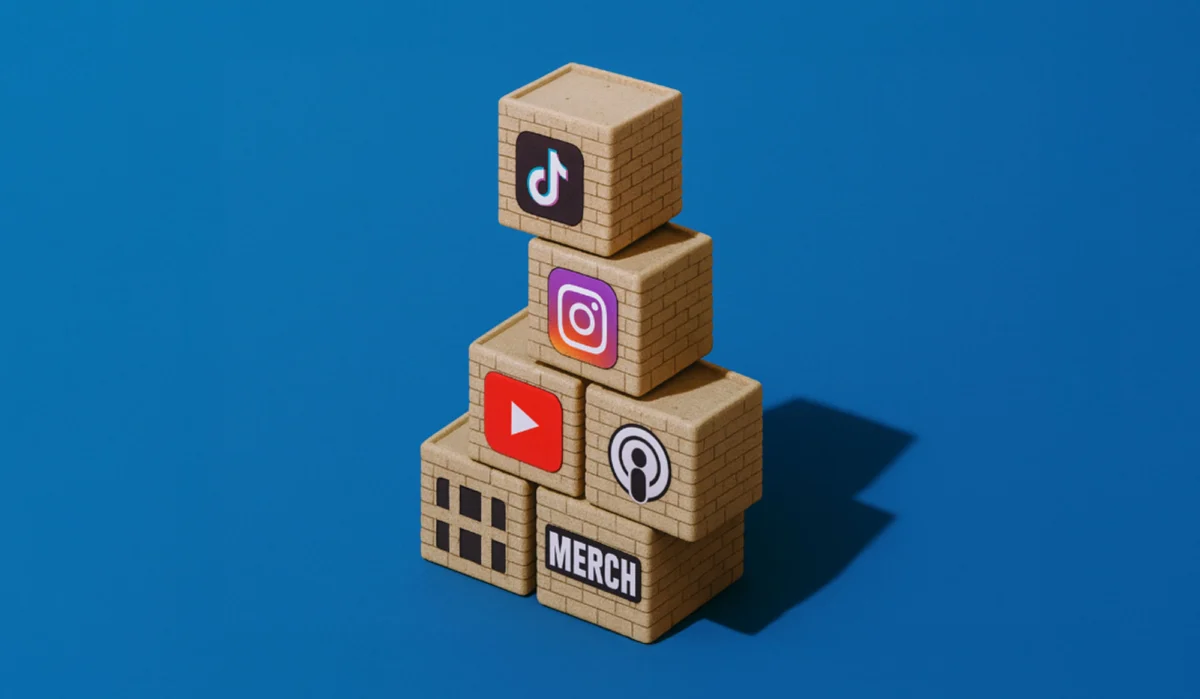
For the digital media industry, the last decade has been a study in the risks of dependency. In the 2010s, publishers flocked to social media giants like Facebook, building massive audiences on rented land, only to watch their traffic evaporate when algorithms shifted and partnership programs were shuttered. Many iconic digital-first brands, including BuzzFeed, paid a heavy price for that misalignment.
However, as of mid-2026, the industry is witnessing a paradoxical shift: publishers are once again turning to social platforms as a primary pillar of growth. Faced with declining Google referral traffic—a casualty of the rapid rise of AI-driven search—and a cooling digital advertising market, media companies are aggressively expanding their off-platform presence. But this time, industry veterans argue, the playbook is markedly different.
The Chronology of a Reluctant Return
The current pivot to platforms is not a nostalgic return to the "pivot to video" era; it is a calculated response to the erosion of the open web.
2010–2018: The Era of Naivety
During this period, publishers focused on driving "clicks" back to their owned-and-operated (O&O) websites. The metric of success was simple: referral traffic. When platforms like Facebook changed their algorithms to prioritize personal connections over publisher content, the traffic cliff became a crisis.
2019–2024: The Quest for Independence
Burned by the platform era, publishers pivoted toward direct-to-consumer strategies. Subscriptions, newsletters, and first-party data became the gold standard. The goal was to own the audience relationship, bypassing the "middleman" of social algorithms.
2025–2026: The AI-Driven Reality Check
The rise of AI-powered search engines has disrupted traditional SEO. As Google began integrating generative answers directly into search results, the "organic web" traffic that many publishers relied upon began to decline. Simultaneously, advertising budgets shifted toward social video platforms like TikTok, Instagram, and YouTube. Publishers, realizing that they could no longer force users to migrate from their favorite apps to a browser-based website, decided to go where the eyeballs actually reside.
Supporting Data: By the Numbers
The shift is clearly visible in the Q1 2026 earnings reports of major media conglomerates. While display advertising revenue has struggled, alternative revenue streams—bolstered by social presence—have provided a vital safety net.
- People Inc.’s Strategic Shift: At People Inc., while core web sessions faced predictable pressure, non-session-based revenue (derived from social campaigns, licensing, and events) grew by 24% year-over-year in Q1 2026. This now accounts for 41% of their total digital revenue, up from 35% just a year prior.
- Off-Platform Dominance: Ziff Davis CEO Vivek Shah recently disclosed that his company is generating more engagement off-platform than on its own sites. This off-platform growth has been critical in offsetting the contraction in traditional affiliate commerce and programmatic display advertising.
- Video Monetization: InStyle’s "The Intern" video series, a social-first production, has generated between $500,000 and $700,000 in sponsorships—an impressive feat for content that requires minimal overhead.
- The Guardian’s Direct Model: In a contrasting trend, The Guardian reported record-breaking U.S. revenue of $81 million, with 70% of that total stemming from digital reader donations—proving that while social distribution is on the rise, deep reader loyalty remains a formidable competitive advantage.
The New Playbook: Treating Platforms as Destinations
The fundamental difference between the 2010s and today lies in the approach to monetization. Previously, social media was a funnel intended to drag users to a website. Today, social media is the destination.
"Advertising is turning more and more into a trading business," explains Craig Kostelic, former chief business officer at Condé Nast. "You need very sophisticated media buyers in-house to understand how to buy low and sell high while delivering on specific KPIs. It’s no longer about building a follower count for the sake of organic reach; it’s about monetizing the content exactly where the audience is consuming it."
This shift requires publishers to treat social channels not as traffic drivers, but as "surface areas" for their own intellectual property. Gabriel Dorosz, advertising lead at INMA, notes that the most durable model is selling outcomes—such as branded video or affiliate-tagged content—that don’t rely on a user ever clicking a link to leave the platform. By utilizing first-party data to sell sponsorships, publishers maintain control of their brand value, even when the distribution occurs on rented infrastructure.
Official Responses and Industry Sentiment
The consensus among analysts is that while this platform push is a necessary evolution, it remains fraught with risk.
Neil Vogel, CEO of People Inc., noted in an earnings call that the company is effectively controlling its own destiny by building a sales team capable of accessing advertisers across these platforms. "We have the combination of brands, audience size, and reach… and that’s the future for us," Vogel stated.
However, caution persists. Adam Steingart, an independent commercial and growth executive, warns that the fundamental power dynamic hasn’t changed. "You’re still playing by someone else’s rules," Steingart says. "Different pipes, same landlord. The publishers who do best treat platforms as one lane in a wider plan, not the plan."
Dmitry Shishkin, a media consultant, echoed this sentiment: "Distribution is important, but only if it helps the core. We’ve already been in a similar situation in the 2010s, and the platforms haven’t changed—they still control the algorithm, the monetization, and the access."
Strategic Implications: The "Platform Tax"
The industry is now fully cognizant of the "platform tax"—the inevitable cut that tech giants take from revenue generated on their platforms. Ziff Davis CEO Vivek Shah acknowledged this reality, stating that while the tax is significant, it is a trade-off for access to growth.
This environment has also accelerated the trend of content licensing. Rather than relying solely on ad-share programs, publishers are increasingly entering into direct agreements with AI and tech companies to license their archives for training data. This provides a more forecastable revenue stream compared to the volatility of programmatic advertising.
The Broader Media Landscape
As the industry recalibrates, other major shifts are unfolding:
- Corporate Consolidation: Penske Media is currently in talks to acquire Vox Media brands, signaling a continued trend of consolidation in the digital media space.
- The Internet Archive Confrontation: Over 340 local news sites, alongside major players like The New York Times, have begun blocking the Internet Archive, citing concerns over unauthorized scraping for AI training. This reflects a broader, industry-wide push to protect intellectual property in the age of generative AI.
- Leadership Transitions: The departure of Business Insider CEO Barbara Peng and the ongoing restructuring at The Washington Post under owner Jeff Bezos indicate that the "reckoning" for digital media—characterized by a move away from scale-at-all-costs toward sustainable profitability—is far from over.
Conclusion: A Balanced Future
The return to social platforms in 2026 is not a sign of desperation, but of maturation. The publishers that survive this cycle will be those that have successfully diversified their businesses—mixing licensing, reader revenue, and high-end sponsorships—while utilizing social platforms as tactical assets rather than strategic crutches.
The lesson from the 2010s was that relying on a single platform for existence is a recipe for disaster. The lesson of 2026 is that in a fragmented media landscape, ignoring those platforms is equally dangerous. For media companies, the path forward is a hybrid one: using platforms to reach the audience, but relying on their own proprietary data and brand identity to own the revenue.












No comments yet. Be the first to join the conversation!