

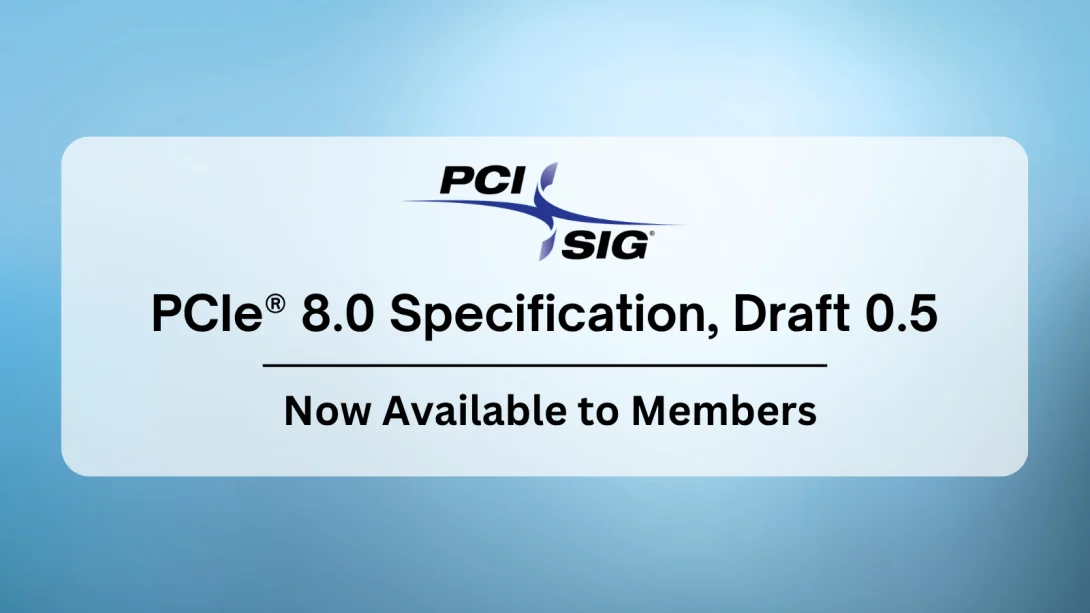
The landscape of high-performance computing is on the cusp of a transformative leap. The Peripheral Component Interconnect Special Interest Group (PCI-SIG) has officially announced the release of the PCIe 8.0 draft specification, version 0.5. This milestone marks a critical juncture in the evolution of data transfer standards, setting the stage for a new era of bandwidth capabilities that will eventually dwarf the current standards found in the most powerful consumer and enterprise hardware today.
Main Facts: Doubling Down on Bandwidth
At the heart of the PCIe 8.0 specification is a massive push toward higher throughput. The draft confirms a technical target of 256.0 GT/s (gigatransfers per second) raw bit rate. To put this into perspective, an x16 lane configuration—typically used for high-end GPUs and massive data center interconnects—will provide up to 1 terabyte per second (1TB/s) of bidirectional bandwidth.
This represents a significant leap forward. While modern gaming rigs and professional workstations currently leverage PCIe 5.0, the jump to 8.0 represents an eightfold increase in total bandwidth capacity compared to the current standard. For industries reliant on massive datasets, such as artificial intelligence (AI) model training, high-frequency trading, and cloud-scale infrastructure, this evolution is not merely an improvement; it is a necessity for future-proofing.
Chronology of the PCIe Standard
To understand the significance of the 8.0 draft, one must look at the rapid acceleration of the PCIe roadmap over the last decade. The standard has consistently doubled its bandwidth every three years, maintaining a rhythm that keeps pace with the exponential growth of CPU and GPU performance.
- PCIe 3.0 (2010): Introduced 8 GT/s, providing a foundational speed for the modern era of high-speed storage and graphics.
- PCIe 4.0 (2017): Doubled the speed to 16 GT/s, catering to the rising demands of NVMe storage and multi-core processors.
- PCIe 5.0 (2019): Pushed the envelope to 32 GT/s, becoming the current gold standard for high-performance enterprise servers and enthusiast-grade gaming PCs.
- PCIe 6.0 (2022): Introduced PAM4 signaling, reaching 64 GT/s and proving that traditional copper could still be pushed further.
- PCIe 7.0 (Upcoming): Aiming for 128 GT/s, with the specification already in advanced stages of development.
- PCIe 8.0 (2026/2028): The current draft (v0.5) marks the beginning of the end for existing copper-based physical layer designs, aiming for 256 GT/s by 2028.
The Physical Layer Challenge: Reimagining the Connector
Perhaps the most notable revelation in the version 0.5 draft is the admission by PCI-SIG that the current physical layer and traditional copper-based electrical connections are approaching their saturation limits.
For decades, the PCIe slot has remained remarkably consistent in its mechanical design. However, as signal frequencies reach the levels required for 256 GT/s, the integrity of the electrical signal over traditional copper traces becomes a massive engineering hurdle. At these speeds, even the slightest impedance mismatch or electromagnetic interference can result in data corruption.
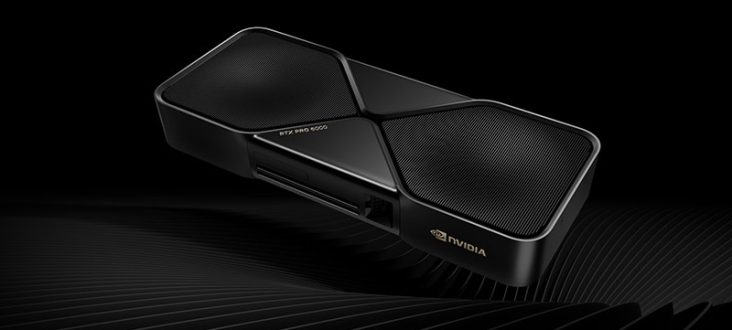
PCI-SIG is currently evaluating new connector technologies. This suggests that the PCIe 8.0 era might require a fundamental departure from the physical interface we have known for years. While the organization has stated its firm intention to maintain backward compatibility—ensuring that your future PCIe 8.0 motherboards will still accept older PCIe cards—the way those cards interface with the board might look very different. Innovations in signal integrity, potentially involving new materials for the motherboard PCB and perhaps even integrated retimers on the connectors themselves, are likely on the horizon.
Supporting Data and Performance Metrics
The architectural goals for the final v1.0 specification are stringent. Beyond raw throughput, PCI-SIG is focusing on several key performance indicators:
- Latency: In high-performance computing, bandwidth is only half the battle. As data rates climb, the time taken to process, encode, and decode signals (latency) must remain minimal. The PCIe 8.0 standard aims to keep latency at parity with, or lower than, previous generations.
- Forward Error Correction (FEC): As with PCIe 6.0, the 8.0 standard will rely heavily on advanced FEC to manage the increased bit error rates that come with higher frequencies. This ensures that even if the signal quality degrades slightly due to physical distance or noise, the integrity of the data remains intact.
- Power Efficiency: One of the most critical goals is to improve bandwidth per watt. Moving more data is useless if it requires a massive increase in power consumption, which would exacerbate thermal issues in dense server racks. PCI-SIG is exploring techniques to reduce power overhead through protocol-level optimizations.
Implications for Industry and Consumers
The rollout of PCIe 8.0 will follow a predictable "top-down" adoption curve.
The Enterprise Vanguard
Deployment will begin with server-class hardware. Companies like AMD, Intel, and Nvidia will be the first to integrate the standard into their high-end data center silicon. For AI training, where thousands of GPUs are interconnected via high-speed fabrics, the 1TB/s bandwidth threshold provided by PCIe 8.0 will drastically reduce the "bottleneck" effect, allowing for faster model training and more complex neural network architectures.
The Consumer Transition
For the average consumer, the transition will be gradual. Historically, it takes several years for the latest PCIe standard to trickle down from server rooms to the desktop. While we are currently seeing the adoption of PCIe 5.0 and 6.0 in high-end enthusiast PCs, PCIe 8.0 is likely not destined for the average consumer machine until the early 2030s.
However, the implications for consumer hardware are profound. When PCIe 8.0 finally arrives in the mainstream, it will allow for external GPUs that perform as if they were slotted directly into the motherboard, storage devices that exceed the speed of current system RAM, and potentially a complete redesign of how motherboards are structured to accommodate these ultra-high-speed lanes.
Official Stance and Future Outlook
PCI-SIG has remained remarkably transparent about the challenges ahead. By releasing the draft at version 0.5, they are inviting the industry—the stakeholders who actually manufacture the chips and motherboards—to provide feedback. This collaborative approach is what has allowed PCIe to remain the industry standard for over 20 years.
"Our goal is to continue to provide the industry with the bandwidth it needs to innovate," a PCI-SIG representative noted in the recent release. "But we must do so in a way that is reliable, scalable, and—most importantly—compatible with the legacy hardware our customers depend on."
As we look toward the 2028 finalization date, the industry is entering a "Goldilocks" zone of engineering. We are pushing the physics of copper to its absolute limit, balancing the desire for extreme performance with the practicalities of heat management, signal integrity, and manufacturing costs. Whether PCIe 8.0 represents the final major iteration for copper before a transition to optical interconnects becomes the standard remains a subject of intense debate among hardware architects.
For now, the roadmap is clear: 256 GT/s is the target, and the engineering community is already hard at work ensuring that the next leap in computing performance is as seamless as the last. The future of data is fast, and if the current progress is any indication, it is moving faster than we ever imagined.










No comments yet. Be the first to join the conversation!