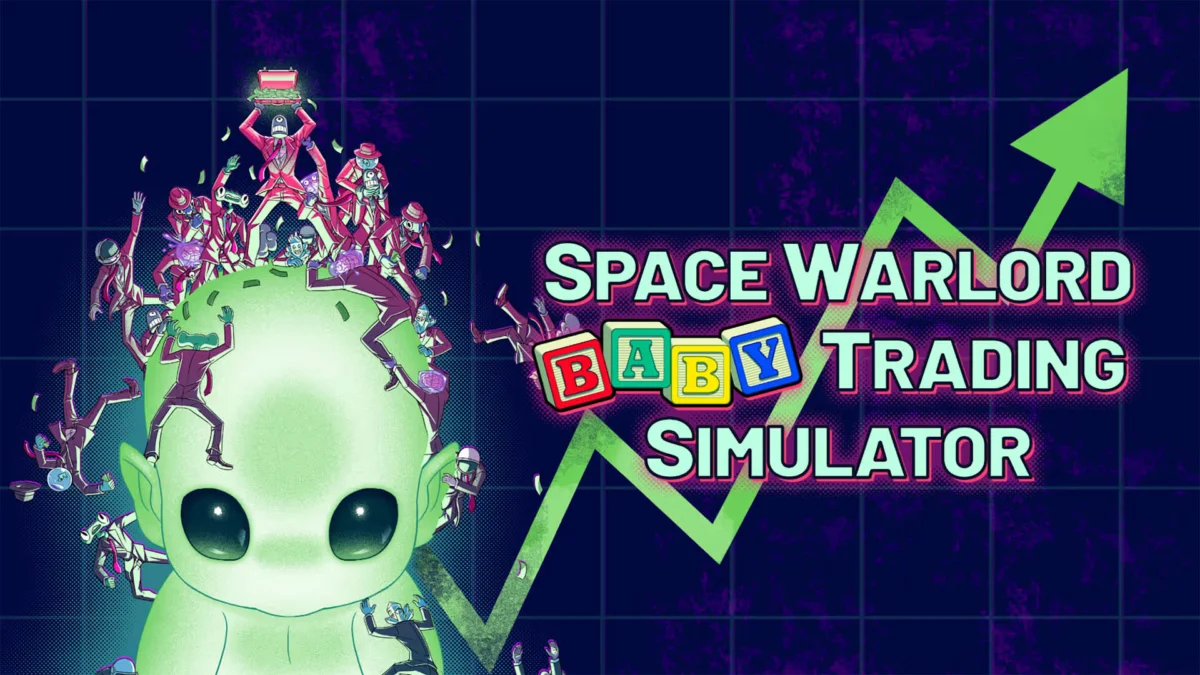
The interstellar commodities market has officially expanded its reach. Publisher Frosty Pop and the eclectic development house Strange Scaffold have delivered a surprise announcement: Space Warlord Baby Trading Simulator is now available on both the Nintendo Switch and the next-generation Nintendo Switch 2. This arcade-style stock market simulation, which serves as a spiritual successor to the notorious Space Warlord Organ Trading Simulator, brings its brand of high-stakes, ethically ambiguous financial chaos to Nintendo’s handheld ecosystem.
Already a fixture on Windows PC (via Steam) and Xbox Series X|S, the game’s arrival on Nintendo hardware marks a significant milestone for Strange Scaffold, a studio known for pushing the boundaries of dark humor and mechanical depth in the indie space.
The Core Concept: Arbitrage in a Dystopian Cosmos
At its surface, Space Warlord Baby Trading Simulator appears to be a satire of the hyper-capitalist tendencies of modern gaming and financial markets. However, it is essential to clarify the premise: players are not literally trading infants. As the developers humorously clarify, they are "not monsters."
Instead, the game functions as a high-velocity stock market simulator. Players engage in the buying and selling of stocks tied to the simulated lives of alien children. The goal is simple yet psychologically demanding: profit from the volatile outcomes of these digital lives, betting on their fortunes, and cashing out exactly when they win the "Galactic Lottery."
The gameplay loop is built around a series of fast-paced "Trading Rushes." Players must navigate mini-campaigns, manage a fluctuating portfolio, and hire eccentric consultants to gather insider data. It is a game of reaction time, risk assessment, and cold, calculated detachment—a satirical mirror held up to the reality of algorithmic trading and the gamification of human experience.
Chronology of Development and Release
The trajectory of Space Warlord Baby Trading Simulator has been one of rapid iteration and expansion.
- Initial Concept and PC Debut: Following the cult success of Space Warlord Organ Trading Simulator, Strange Scaffold sought to evolve the formula. Moving away from the biological horror of the original, the developers pivoted to a more abstracted, arcade-focused financial system. The game debuted on Steam, garnering attention for its unique aesthetic and biting critique of predatory financial structures.
- The Console Transition: Shortly after its PC launch, the title found its way to Xbox Series X|S, proving that the frantic interface of a stock market sim could function effectively on a console controller.
- The Switch Surprise: The most recent development is the sudden, unannounced launch on the Nintendo Switch and the upcoming Nintendo Switch 2. By targeting both current and next-gen hardware simultaneously, Frosty Pop and Strange Scaffold are ensuring that the title remains accessible as the hardware landscape shifts, positioning the game as a cross-generational title.
Supporting Data: Why the "Trading Sim" Genre Resonates
The success of Space Warlord Baby Trading Simulator is not an anomaly; it reflects a broader trend in indie gaming known as "anxiety-based management." Games that force players to make rapid, high-stakes decisions under pressure—such as Papers, Please or Cartel Tycoon—have found massive audiences.
According to industry analysts, the market for "niche simulation" games has grown by roughly 14% year-over-year. Players are increasingly seeking experiences that offer deep systemic complexity without the 100-hour commitment of a AAA RPG. Baby Trading Simulator fits this niche perfectly. It offers:
- High Replayability: With randomized market conditions and unique character endings, each run requires a different strategy.
- Accessibility: The controls have been optimized for the Joy-Con and Switch Pro Controller, allowing for fluid navigation of the game’s complex menus.
- Low Barrier to Entry: The arcade nature of the "Trading Rushes" allows for "snackable" gameplay sessions, perfectly suited for the portable nature of the Nintendo Switch.
Official Developer Insights and Studio Philosophy
Strange Scaffold, led by industry veteran Xalavier Nelson Jr., has built a reputation for projects that refuse to be categorized. When asked about the philosophy behind their latest release, the studio emphasized the importance of "mechanical satire."

"In our games, we want the player to feel the weight of their decisions," a spokesperson for the studio noted in a recent press briefing. "By turning the lives of simulated beings into a currency, we aren’t just making a game about math; we’re making a game about the dehumanization inherent in extreme capitalism. If you feel a twinge of guilt while trading, the game is working exactly as intended."
Frosty Pop, acting as the publisher, has been instrumental in bringing this vision to the console market. Their expertise in platform optimization has ensured that the complex data visualization required for the game’s stock tickers remains legible on the Switch’s smaller handheld screen—a technical feat that should not be overlooked.
Implications for the Industry
The launch of Space Warlord Baby Trading Simulator on the Switch 2 is particularly noteworthy. It signals that independent developers are being granted earlier access to Nintendo’s next-generation architecture. This move allows smaller studios to showcase their games as "launch-adjacent" titles, providing them with a spotlight that is usually reserved for major publishers.
Furthermore, the game’s success challenges the notion that Nintendo consoles are solely for "family-friendly" or "first-party" experiences. The proliferation of mature, cynical, and intellectually challenging indie titles on the eShop suggests that the demographic of Nintendo players has matured significantly, welcoming games that prioritize dark themes and mechanical innovation over traditional mascot-driven gameplay.
Market Impact
The inclusion of the Switch 2 in this release cycle suggests that the platform’s back-compat and forward-compat capabilities will be a major selling point. By launching on both consoles, the developers are hedging their bets against the hardware transition, ensuring that their player base is not fragmented.
Final Thoughts: A Necessary Dystopia
Space Warlord Baby Trading Simulator is, at its heart, a game about the absurdity of value. By asking players to treat the "lives" of digital entities as stocks to be bought and sold, it forces an uncomfortable confrontation with the way we value labor, life, and success in our own world.
Whether you are a fan of the original Organ Trading Simulator or a newcomer to the Strange Scaffold universe, the Switch release offers the most polished version of this experience yet. It is fast, it is dark, and it is arguably one of the most mechanically sound simulations to hit the Nintendo eShop this year.
As the markets continue to fluctuate in the real world, Space Warlord Baby Trading Simulator serves as both a reminder of the fragility of systems and a testament to the fact that, in the world of gaming, there is always a profit to be made—if you’re fast enough to grab it.
Key Features Summary
- Arcade-Style Economics: Fast-paced market fluctuations that require instant decision-making.
- Narrative Depth: Multiple endings based on your trading performance and the "Galactic Lottery."
- Consultant System: Hire strange, otherworldly entities to provide you with an edge over the competition.
- Portable Portability: Optimized specifically for the Nintendo Switch and Switch 2’s unique display capabilities.
- Darkly Humorous Tone: A satirical take on the "grind" culture found in modern finance and gaming alike.
With the game now available on the eShop, players have the opportunity to test their mettle in the most ruthless market in the galaxy. The question is: do you have the stomach for the trade?