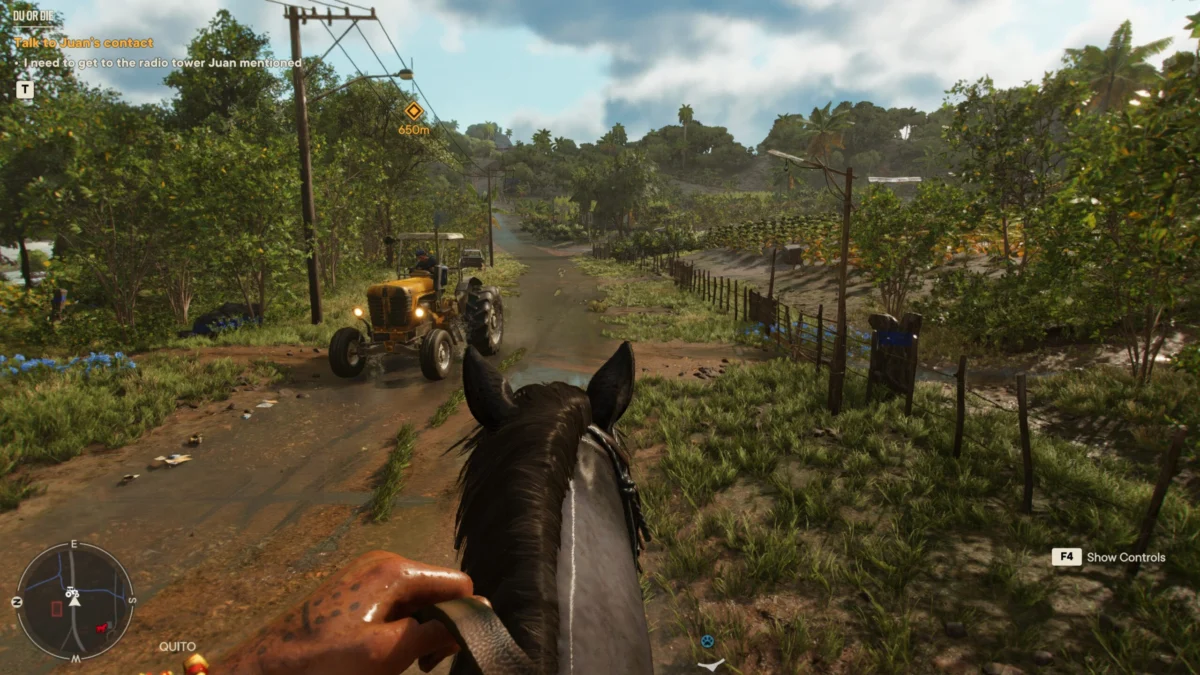
For over a decade, Ubisoft’s Far Cry series has occupied a peculiar space in the gaming industry. It is a franchise defined by a rigid formula: an expansive, beautiful, and often volatile open world; a charismatic, sociopathic antagonist; and a gameplay loop that oscillates between tactical stealth and chaotic, explosive freedom. With the release of Far Cry 6, the developer has once again attempted to refine this blueprint. The result is a game that is simultaneously a refinement of its predecessor and a hostage to the series’ own repetitive design philosophy.
The Narrative Landscape: A Tale of Two Islands
The core of Far Cry 6 is set in Yara, a fictional Caribbean island nation trapped in a cycle of isolation and authoritarianism. The game’s primary marketing hook is the inclusion of Giancarlo Esposito, best known for his chillingly calculated portrayal of Gus Fring in Breaking Bad. Here, he steps into the shoes of Antón Castillo, the dictatorial president of Yara. Castillo is a man who views his citizens as the fuel for a grand, nationalistic engine—specifically, the production of "Viviro," a miracle tobacco crop purported to cure cancer but requiring toxic, landscape-ravaging fertilizers.
Players assume the role of Dani Rojas, a former military conscript turned reluctant guerrilla revolutionary. The narrative, spanning 30 to 50 hours of gameplay, is an ambitious attempt to weave a serious tale of political uprising with the franchise’s trademark "goofy" action. However, the result is often a tonal whiplash. The game struggles to balance the weight of human rights abuses and revolutionary struggle against the absurdity of pet crocodiles and backpack-mounted rocket launchers. While the performances are undeniably strong, the plot often feels like a collection of tropes rather than a cohesive examination of fascism or liberation.
Chronology of Conflict: From Outcast to Liberator
The progression of Far Cry 6 follows a familiar path of territorial reclamation. Dani Rojas begins as a refugee attempting to flee the island, only to be drawn into the ranks of Libertad, a fragmented collection of rebel factions. The player’s journey is structured around dismantling the influence of Castillo’s three primary lieutenants, who each preside over a distinct province of Yara.
- The Insurgency Phase: The early game focuses on building the rebellion. Players must secure guerrilla camps, which serve as hubs for social interaction and resource management.
- The Destabilization Phase: Players systematically target the infrastructure of the Castillo regime. This involves capturing military checkpoints, sabotaging oil refineries, and neutralizing anti-aircraft batteries that restrict aerial movement.
- The Liberation Phase: Once the military grip is loosened, players engage in major story missions that culminate in the removal of the regional lieutenants, effectively paving the way for a direct confrontation with Antón Castillo himself.
This structure, while functional, adheres strictly to the Ubisoft "checklist" design. The map is saturated with icons, collectibles, and side objectives that often feel like digital busywork rather than organic exploration.
Supporting Data: Innovations and Misses
Far Cry 6 introduces several mechanics intended to deepen the "guerrilla" experience, with varying degrees of success.
Guerrilla Footpaths
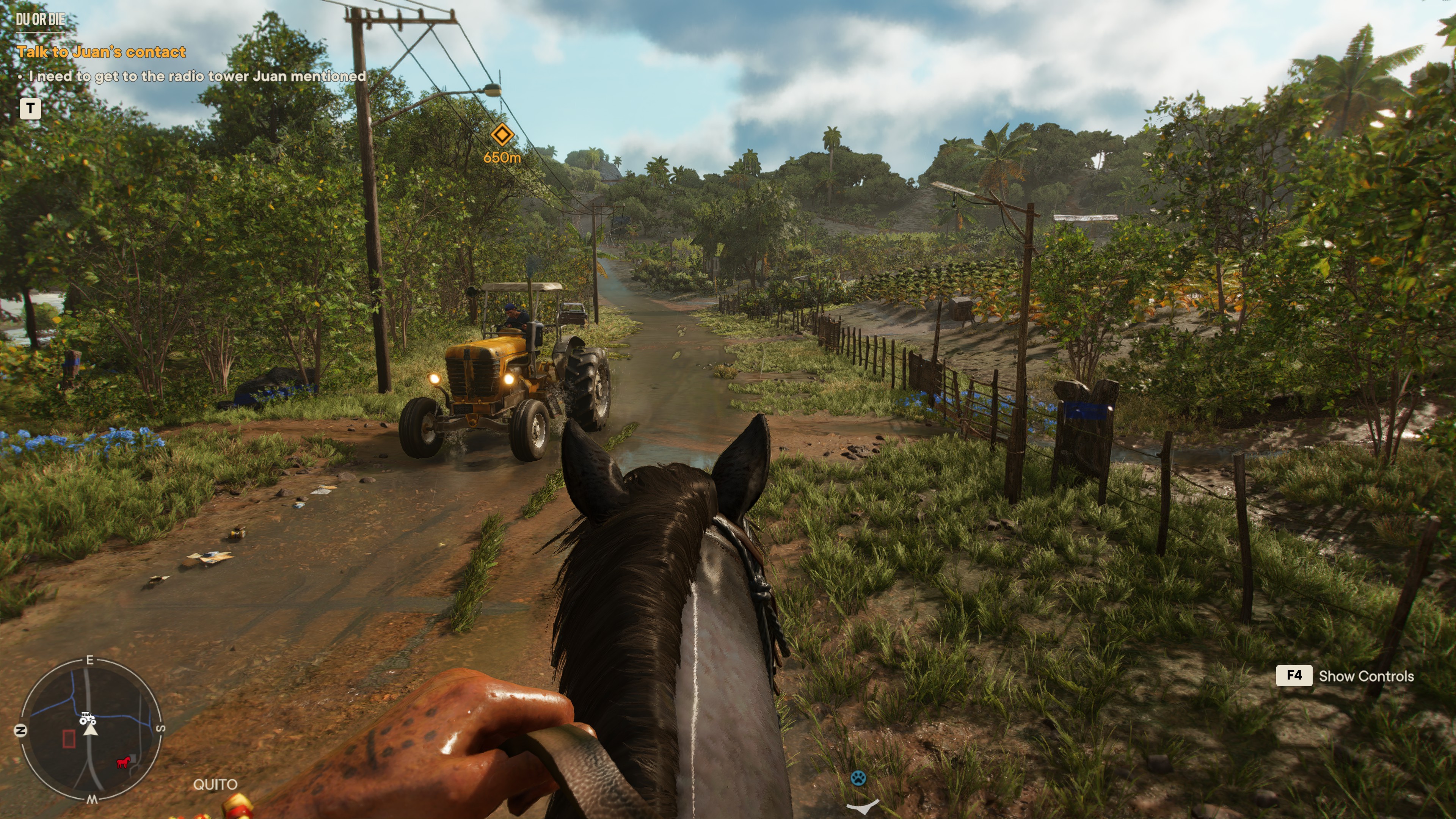
Perhaps the most successful addition, the "guerrilla paths," provide a subterranean network of travel through the jungle. Marked by blue flora, these dirt tracks allow players to navigate the island’s interior away from main roads, fostering a sense of being a hunter in the wild rather than just a target for army patrols.
The Holster Mechanic
In an effort to facilitate reconnaissance, Ubisoft introduced a "holster" feature. When Dani’s weapon is stowed, they are treated as a civilian, allowing for easy access to enemy checkpoints. While it provides a tactical advantage—allowing players to walk into a fortified area and execute guards at point-blank range—it arguably cheapens the tension that defined earlier entries in the series, where every encounter felt like a high-stakes gamble.
The Resolver and Supremo Systems
The most controversial additions are the "Resolver" weapons and "Supremo" backpacks.
- Resolver Gear: These are improvised, "MacGyver-esque" weapons created by arms dealer Juan Cortez. While a nailgun or a modified flamethrower fits the guerrilla aesthetic, the inclusion of a CD-launcher that plays "Macarena" as it fires feels jarringly out of place in a game that simultaneously asks players to take its political stakes seriously.
- Supremo Backpacks: These are essentially "ultimate abilities" worn on the back. Whether firing a volley of tracking rockets or emitting a radial fire-blast, they function as "press-to-win" buttons. They provide a power fantasy that feels more aligned with hero-shooters like Destiny or Overwatch than the grounded survivalism that historically defined Far Cry.
Official Responses and Developer Intent
Ubisoft has consistently positioned Far Cry 6 as an evolution of the franchise’s "dynamic systems." The developers have emphasized the importance of "emergent gameplay"—situations where the game’s AI, physics, and weather systems collide to create unscripted moments.
In official statements, the team has defended the inclusion of "absurd" weaponry, framing it as an expression of the creativity inherent in a guerrilla movement forced to make do with whatever materials are at hand. The decision to expand the map to such a massive scale was intended to provide a "living, breathing world" that rewards exploration. While critics argue that the map is overly cluttered, Ubisoft maintains that this design provides the player with an endless supply of "toys" and objectives to keep them engaged for dozens of hours.
The Implications of the "Ubisoft Formula"
The primary implication of Far Cry 6 is that Ubisoft has reached a crossroad. On one hand, the game is technically polished, featuring some of the best gunplay in the open-world genre. When the systems click—such as a botched stealth mission evolving into an aerial dogfight involving a stolen plane—the game is genuinely exhilarating.
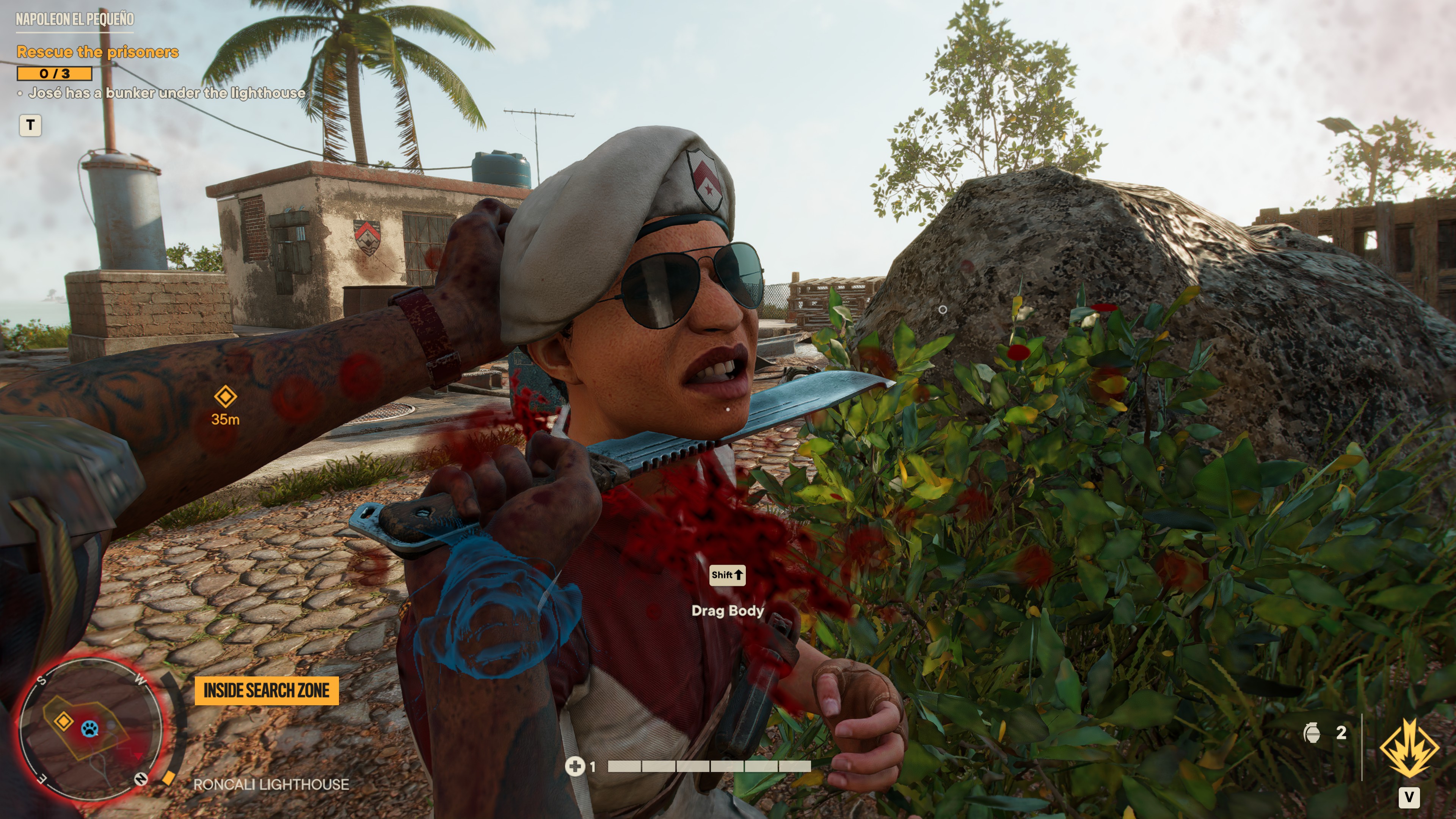
However, the reliance on the established formula highlights a stagnation in creative risk-taking. By filling the map with icons and "grind-heavy" resource systems, the game often buries its own best moments under a layer of tedious maintenance. The disconnect between the serious narrative, which attempts to explore the moral decay of dictatorship, and the gameplay, which encourages turning soldiers into confetti with a fireworks backpack, creates an identity crisis.
Why It Still Works
Despite its flaws, Far Cry 6 manages to be the most "playable" version of this specific style of game. The gun customization is deep, allowing for distinct playstyles—from stealth-focused armor-piercing snipers to explosive, incendiary shotguns. The world remains reactive; a simple encounter can cascade into a hilarious, unpredictable chain reaction of events involving wildlife, hostile AI, and environmental hazards.
If one were to compare Far Cry 6 to its predecessor, Far Cry 5, the differences are microscopic. Yet, there is an undeniable "magic" in the mechanics that keeps the player returning. It is a game that is easy to criticize for its lack of innovation, but difficult to put down once the loop takes hold.
Conclusion
Far Cry 6 is a masterclass in polish, even if it is a failure in evolution. It is a high-budget, high-octane shooter that offers exactly what is advertised: a massive sandbox of destruction. While it struggles to find its own voice amidst the noise of its own mechanics and a conflicting narrative tone, it remains a testament to the fact that, for better or worse, Ubisoft has perfected the art of the open-world shooter. Whether or not that formula remains relevant for the next generation of gaming is a question the series will eventually have to answer, but for now, it remains a competent, if slightly cynical, iteration of a proven success.