

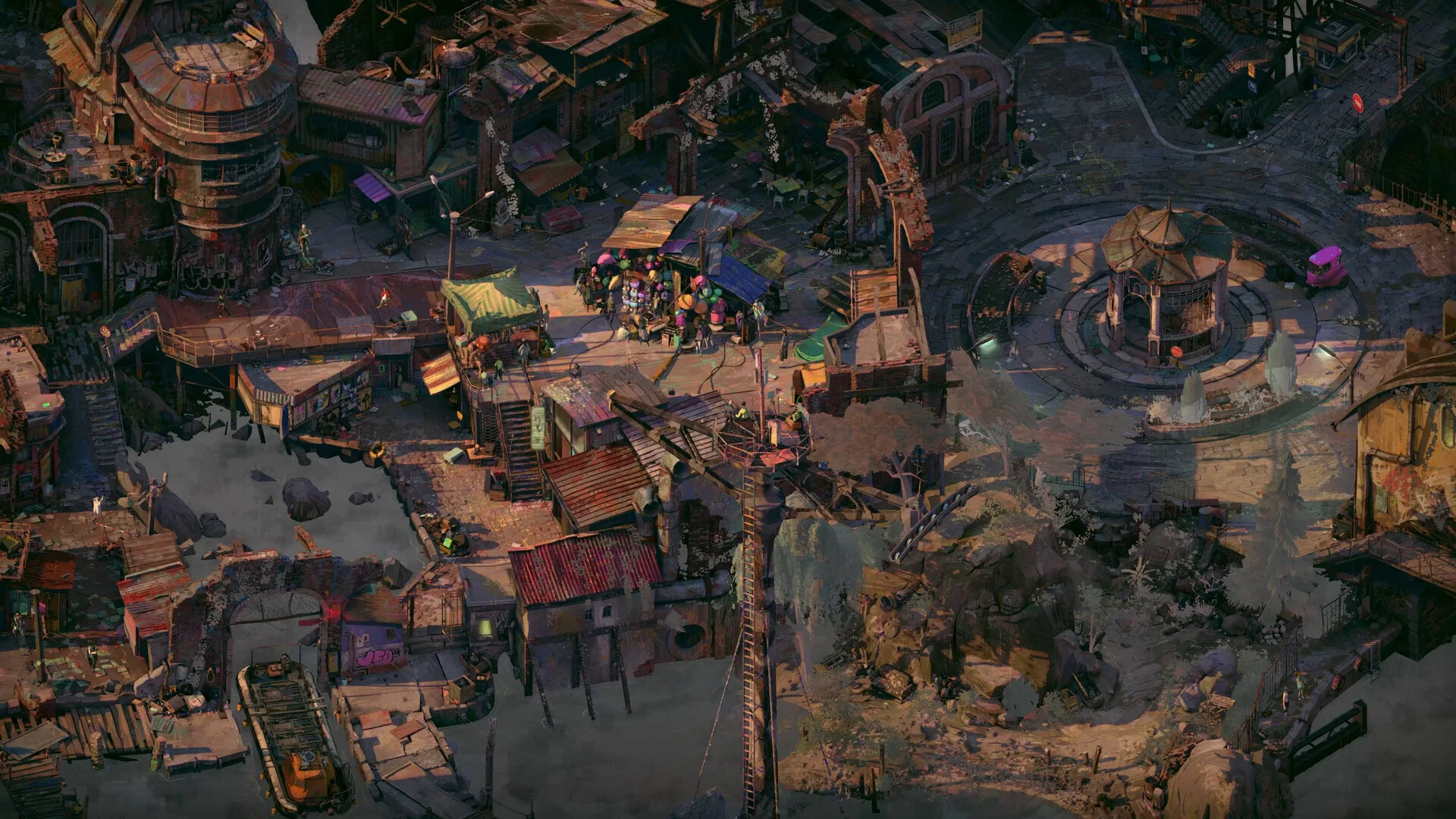
When Disco Elysium debuted in 2019, it arrived not merely as a video game, but as a seismic shift in narrative design. It challenged the industry’s perception of player agency, transforming the internal mental faculties of protagonist Harry Dubois into an anthropomorphized chorus of impulses. It balanced the heavy weight of political theory, existential dread, and theological inquiry with a crude, uproarious wit that felt entirely singular. Years later, that lightning remains uncaptured, even as the studio that birthed it attempts to replicate the storm.
The release of Zero Parades: For Dead Spies—the latest title from ZA/UM—serves as a painful case study in the disconnect between corporate intellectual property management and the fragile, human-centric nature of creative genius. While the game possesses moments of mechanical competence, it ultimately crumbles under the crushing weight of its own lineage, unable to step out of the shadow of its predecessor.
A Chronology of Disenchantment
The narrative surrounding Zero Parades cannot be untangled from the tumultuous history of ZA/UM. Following the international acclaim of Disco Elysium, the studio underwent a series of harrowing internal shifts. In late 2022, news broke that the creative leadership—Director and Lead Writer Robert Kurvitz, Lead Writer Helen Hindpere, and Art Director Aleksander Rostov—had been unceremoniously fired.
This was followed by the systematic departure of much of the original writing and design team, including key contributors like Argo Tuulik. These exits coincided with the cancellation of multiple internal projects, turning the studio from an indie darling into a cautionary tale of corporate acquisition and executive overreach. Today, ZA/UM exists under the stewardship of Tonis Haavel, a figure previously convicted of financial crimes, and Ilmar Kompus. Critics and former employees have alleged that this duo effectively seized control of the studio and its IP, a transition marked by a pivot toward questionable merchandising—most infamously, a $165 “poverty-chic” plastic bag. It is against this backdrop of institutional cynicism that Zero Parades: For Dead Spies was birthed.
The Narrative Architecture: Portofiro and the Spy Game
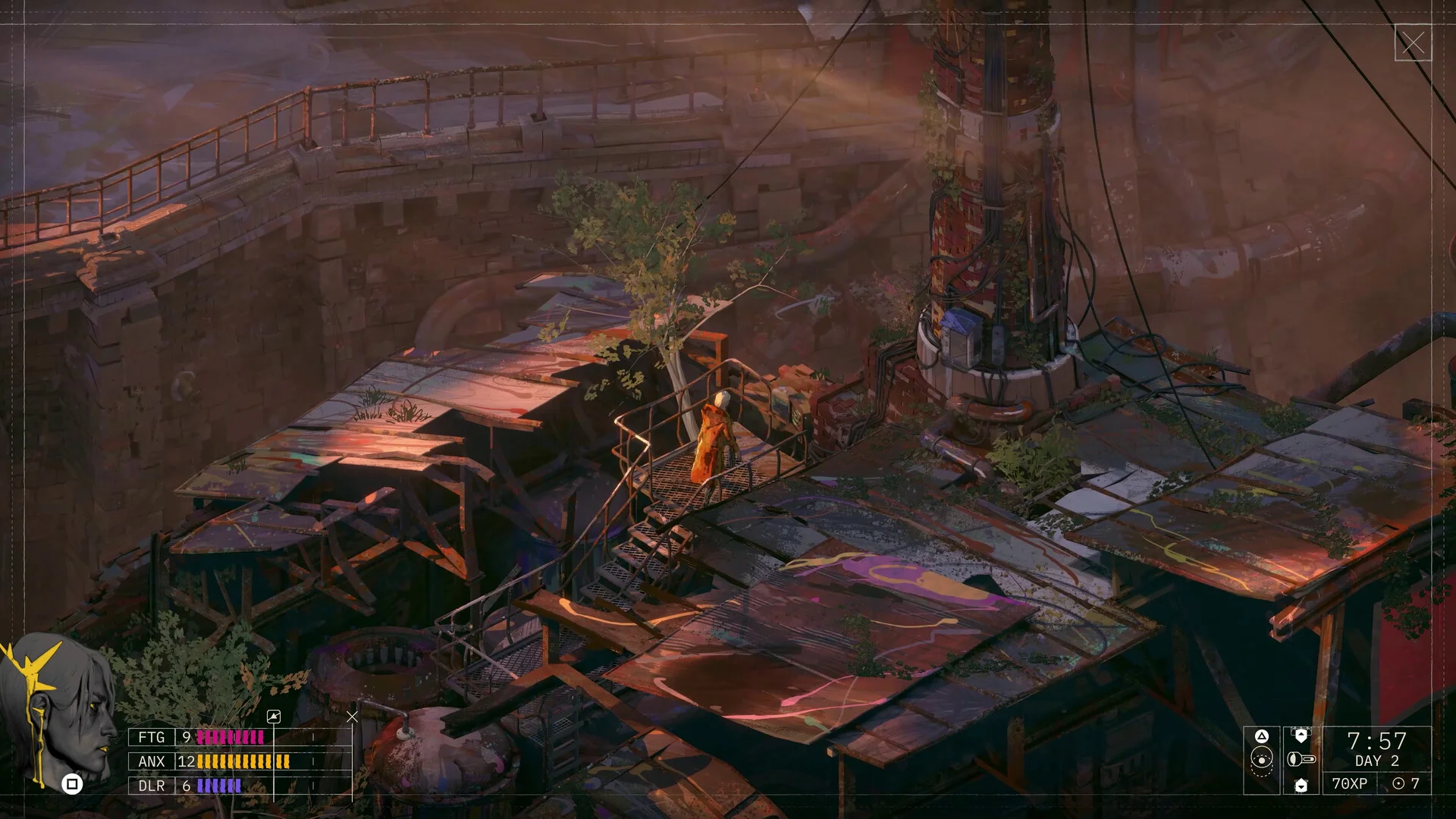
Zero Parades pivots away from the crumbling ruins of Revachol to the sun-drenched, yet morally murky, city-state of Portofiro. The game follows Hershel Wilk, a “Cryptonym: CASCADE” operative for the Communist Superbloc, returning to the field after a five-year stint in bureaucratic purgatory. Her mission is to assist her partner, PSEUDOPOD, in navigating the volatile political landscape of the 1970s and 80s.
The world-building is undeniably competent. ZA/UM crafts a multipolar setting where the Communist Superbloc, the techno-fascist empire “La Luz,” and the neoliberal bank “EMTERR” engage in a high-stakes Cold War. Portofiro functions as a stand-in for the real-world Non-Aligned Movement, a city caught between the competing gears of global hegemony. The environment—a mix of Mediterranean color and the grime of the bazaar—is rich in detail. However, where Disco Elysium used its setting to explore the psychic breakdown of a man, Zero Parades uses its setting as a chessboard for a spy thriller that never quite finds its heartbeat.
Mechanics: The Friction of Imitation
The primary failing of Zero Parades is its slavish adherence to the Disco Elysium mechanical template, which often creates an uncomfortable dissonance between gameplay and narrative.
In Disco Elysium, the player controls a broken detective whose disheveled behavior and scavenging of the environment are logical consequences of his state of mind and his role as a public servant in a lawless zone. In Zero Parades, the player controls a trained, high-stakes spy. The requirement to engage in open, sprawling conversations with every stranger in the marketplace or to scavenge for alcohol in trash cans feels fundamentally at odds with the “low profile” identity of an intelligence operative.
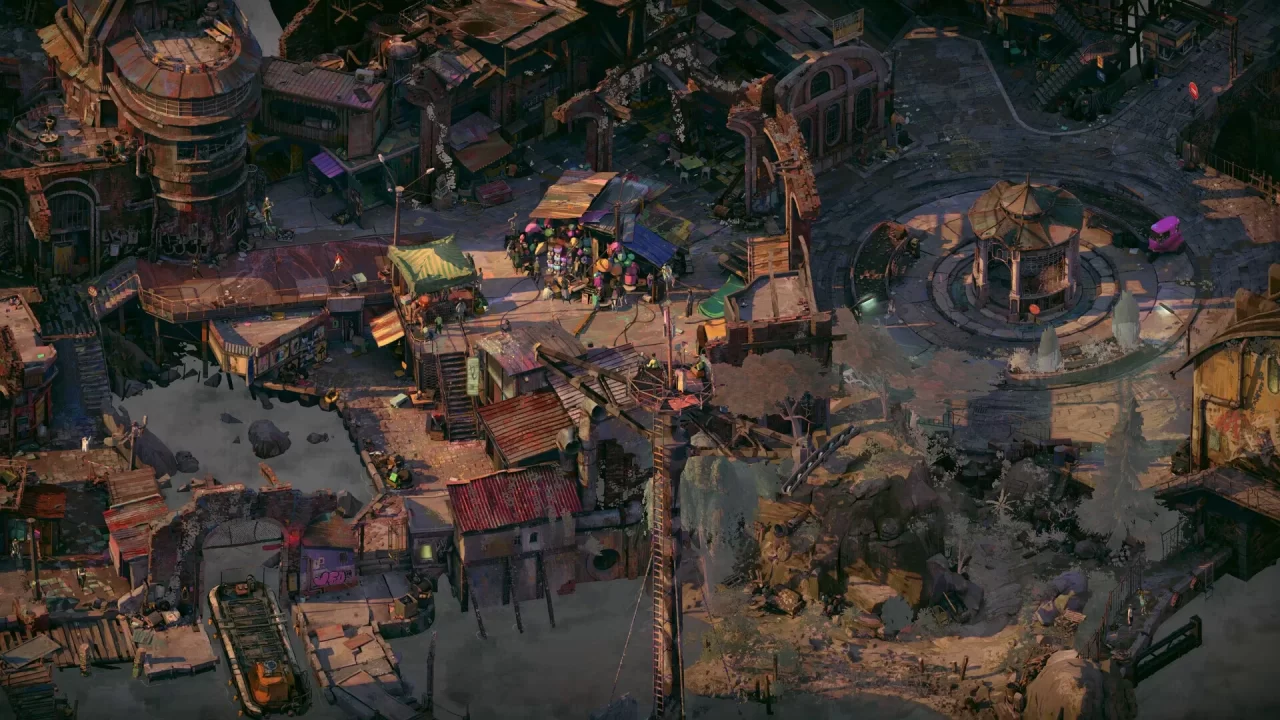
The skill system, featuring the "Conditioning" mechanic, is a direct derivative of the Thought Cabinet. While it attempts to integrate internal monologue into gameplay, it often falls into the trap of being an “easily ignored annoyance.” The game’s failure to innovate on the "fail-state" design—where failure leads to novel, narrative-shifting outcomes—is perhaps the most glaring omission. Instead, Zero Parades leans on traditional, repeatable dice rolls. When a player fails a check, they are often simply stonewalled, prompting a return to the save file rather than forcing them to navigate the narrative consequences of their incompetence.
Official Responses and Industry Implications
In the lead-up to the game’s launch, current ZA/UM developers faced intense scrutiny regarding the continuity of the studio’s talent. Jim Ashivel, the game’s voice-over director, defended the title’s similarities to Disco Elysium in an interview with IGN, stating, “Since such a large number of the key players that built Disco Elysium are here… it just didn’t make sense for us to disregard that part of our experience.”
However, this narrative is disingenuous. While Allen Murray, the current studio head, noted that 35% of the team worked on the original project or its Final Cut, the core creative architects—the visionaries who defined the soul of the work—are absent. The team currently at the helm consists of talented professionals, but they are working within a template they did not build, repurposing the machinery of a previous generation to satisfy the demands of an investor-led corporate structure.
The Politics of Pastiche
Perhaps the most disheartening aspect of the narrative is its approach to political ideology. Disco Elysium was profound because its characters were true believers—fascists were insecure, liberals were morally arrogant, and communists were theoretically driven. Every character was defined by their material conditions.
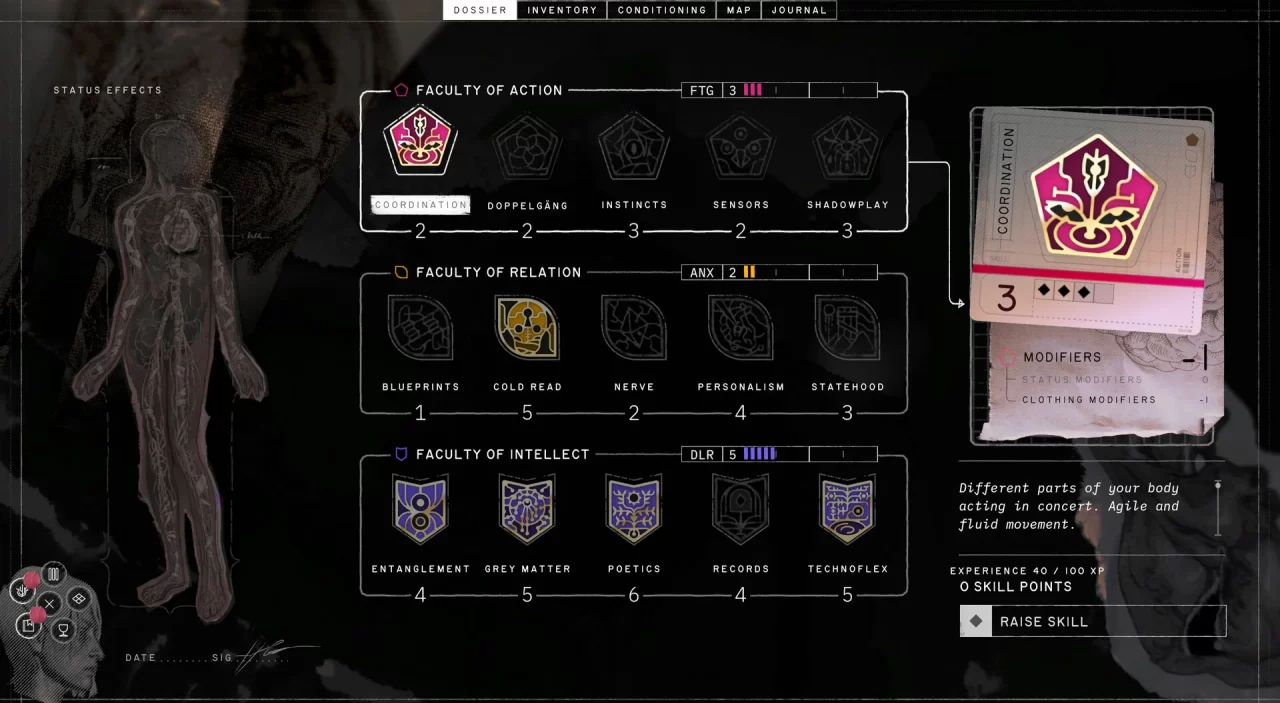
Zero Parades, by contrast, presents a world of cynics. Political ideology here feels like a skin—a thin layer of jargon used to mask the self-serving actions of spies chasing a thrill. Furthermore, the inclusion of modern, digital-age anxieties like “TikTok shifting” and “Buy Now, Pay Later” schemes within a 1980s analog setting creates a jarring, anachronistic tone. These references function as cheap, referential humor that undermines the immersion of the setting, trading deep, philosophical exploration for internet-era “gotcha” moments.
Conclusion: The Cost of Intellectual Property
The story of Zero Parades: For Dead Spies is the story of the modern gaming industry. It illustrates a system that views games as intellectual property to be managed and scaled, rather than as the culmination of artistic collective effort.
The developers who remain at ZA/UM are clearly capable of producing high-quality work, but they have been tasked with building a house on a foundation that doesn’t belong to them. While the game provides 15 hours of entertainment, it lacks the soul, the risk, and the profound, transformative humanity of its predecessor.
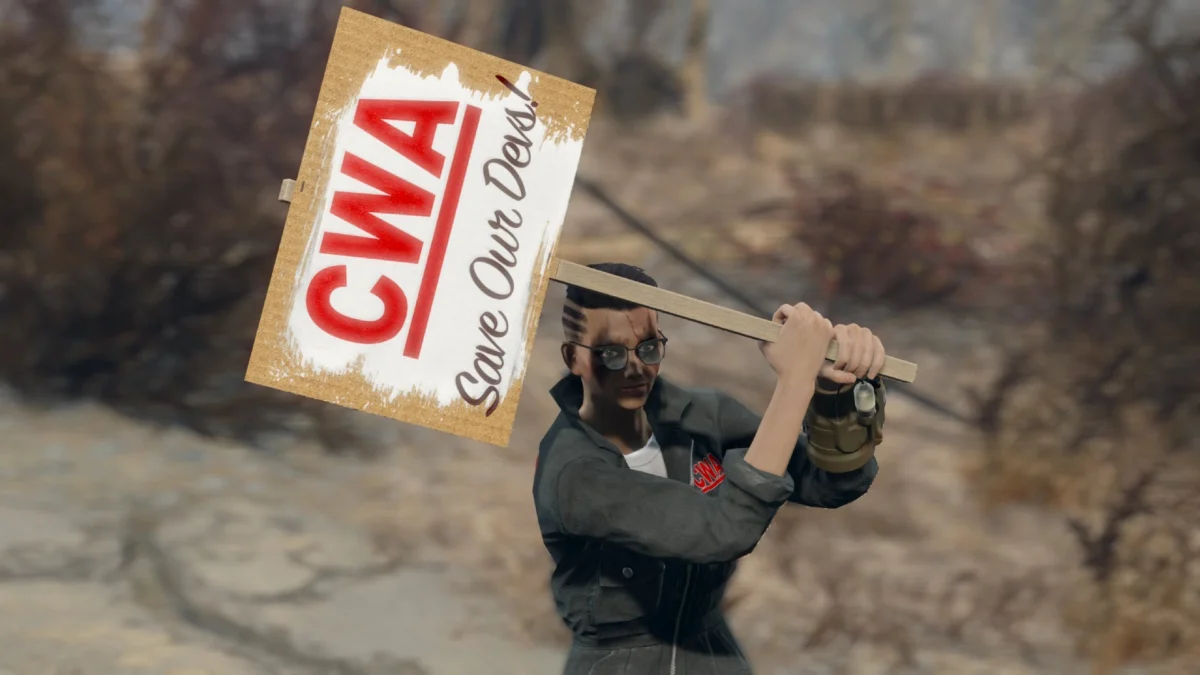
The silver lining in this corporate saga is the recent news of unionization within ZA/UM—a historic first for the British game industry. It is a reminder that while investors may own the trademarks and the source code, the true value of any creative work lies in the labor of the individuals behind it. One can only hope that, in the future, these creators are given the agency to build something that is not a shadow of what came before, but a truly original vision of their own. Until then, Zero Parades stands as a technically proficient, yet hollow, echo of a revolution that has already passed.











No comments yet. Be the first to join the conversation!