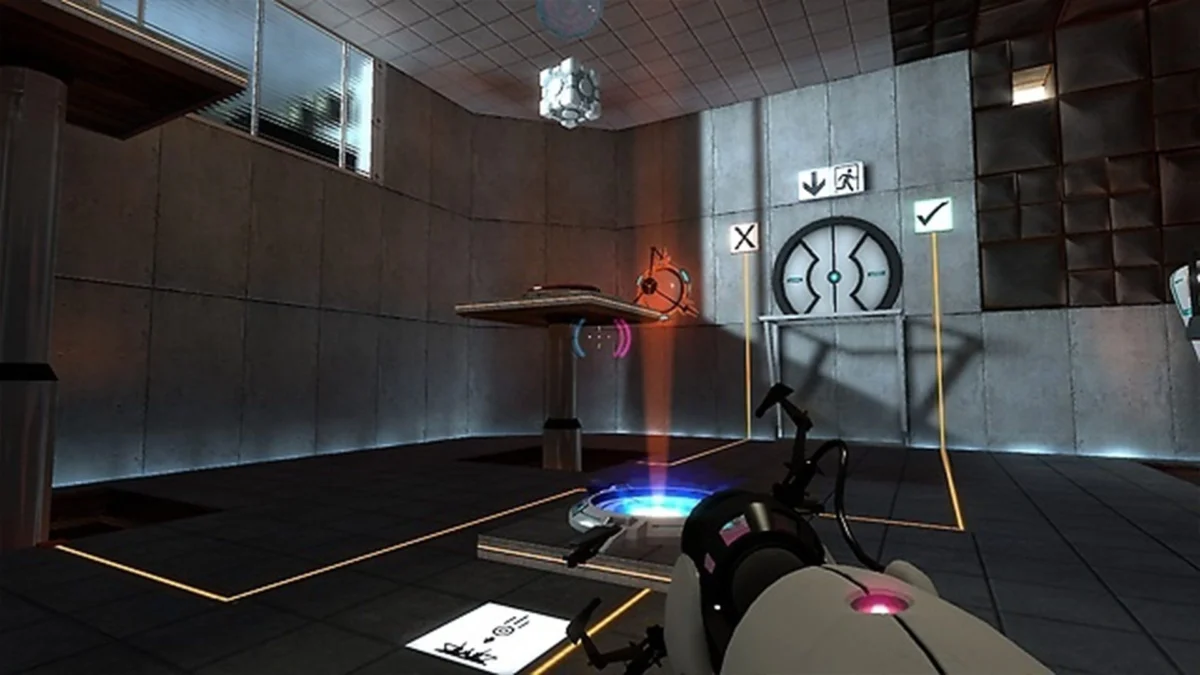
In a startling demonstration of the rapid evolution of artificial intelligence, OpenAI’s latest flagship model, GPT-6 Astra, has successfully navigated and completed Valve’s iconic 3D puzzle game, Portal. This feat, accomplished by AI enthusiast CozyBlaze, represents a significant milestone in the quest for "general-purpose" AI agents capable of operating within complex, dynamic environments.
Moving beyond the rigid, text-based confines of traditional Large Language Models (LLMs), Astra’s performance offers a glimpse into a future where AI does not merely process data but interacts with, interprets, and masters human-designed digital spaces. While the experiment serves as a technical marvel, it also highlights the substantial costs and complex scaffolding required to translate high-level reasoning into real-time digital agency.
A Chronology of the Experiment: From Conception to Completion
The journey to an autonomous AI "gamer" began with a vision long held by researchers at OpenAI—to develop a single agent capable of solving a diverse array of tasks. In 2016, this goal was a distant North Star; today, it is becoming a reality.
CozyBlaze’s implementation utilized a sophisticated architecture to bridge the gap between GPT-6 Astra’s cognitive processing and the game’s engine. The setup relied on the Model Context Protocol (MCP) paired with a custom-built "SourcePauseTool" (SPT). This was essential for synchronization: because the AI requires time to process visual input and formulate a strategy, the game is kept in a state of constant pause. Once Astra determines its next series of actions, it transmits the input sequence, the SPT unpauses the game, the actions are executed, and the cycle repeats.
The process was exhaustive. While the edited highlight reel released to the public compresses the experience into two hours of fluid gameplay, the raw VOD streams reveal the reality of the task: the AI spent approximately 24 hours of total time navigating the Aperture Science facility. This temporal discrepancy illustrates the "thinking" overhead—a stark reminder that while the AI is capable, it is currently tethered by the latency of its own inference processes.
The Cost of Intelligence: Analyzing the Data
One of the most eye-opening aspects of this experiment is the quantifiable cost of high-level AI agency. Executing the playthrough required 3,336 distinct tool calls. The total API expenditure for the operation reached $571.18.
For the average consumer or developer, this price tag underscores a critical reality: while we are approaching a "Golden Age" of AI capability, the computational and financial requirements to sustain autonomous agents in complex, multi-step environments remain high. CozyBlaze, who funded the endeavor through a $200 Codex Pro subscription, managed to absorb the costs, but the figures serve as a sobering benchmark for the scalability of such agents in real-world commercial applications.
It is worth noting that this result is a sharp departure from the recent history of AI in gaming. Not long ago, leading models were being "wrecked" by Atari 2600 games, struggling to grasp the simple, deterministic logic of 1970s software. The jump from failing at basic chess moves to navigating the three-dimensional, physics-based puzzles of Portal—which requires spatial reasoning, long-term planning, and an understanding of momentum—is a testament to the exponential growth in multimodal reasoning capabilities.
The Technical Framework: How Astra "Sees" the Game
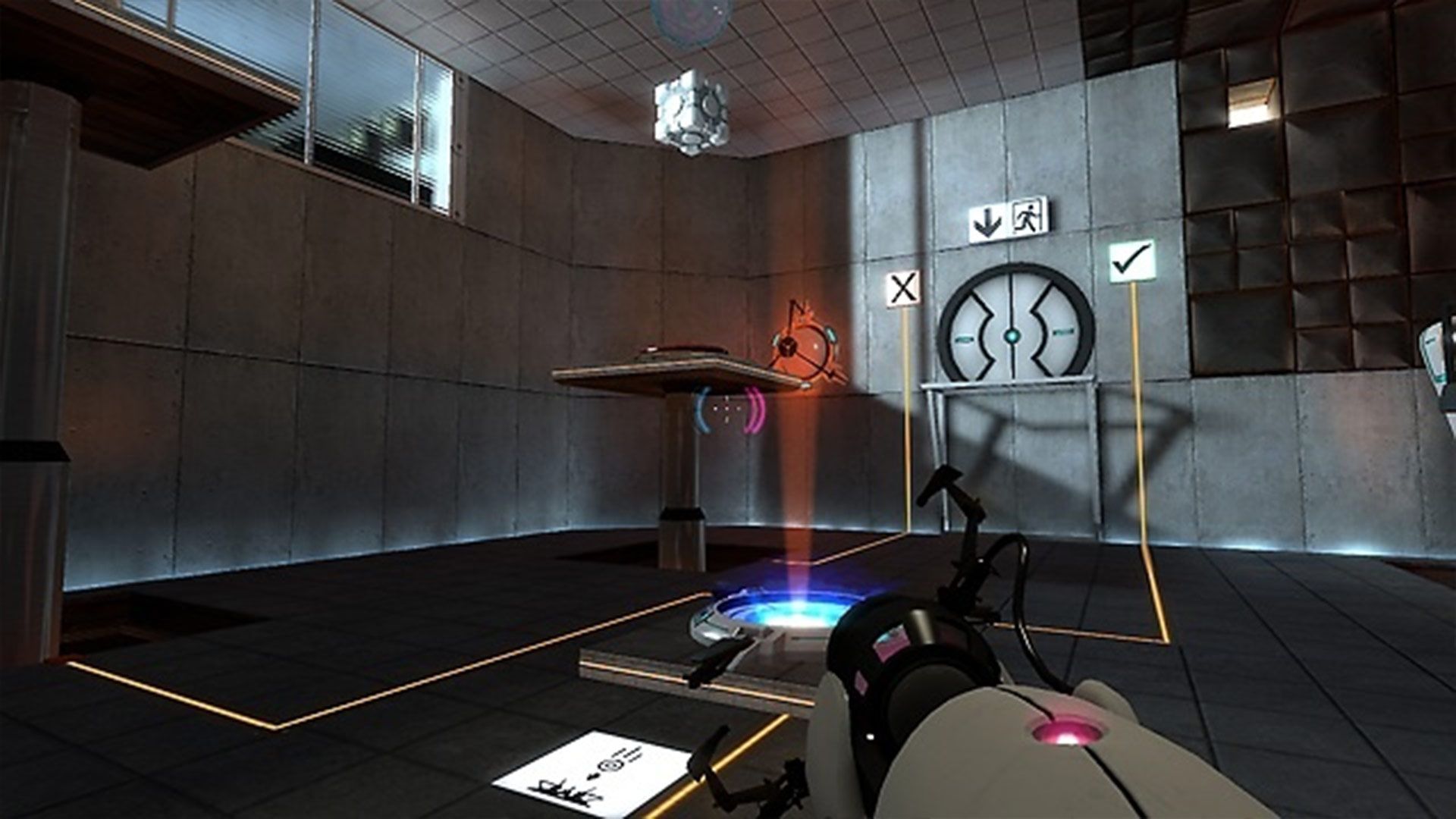
To achieve this, Astra did not rely on code-level access to the game’s engine. Instead, it functioned much like a human player, receiving a constant stream of screenshots from the game window. This multimodal input is the cornerstone of the "Astra" generation of models.
By analyzing the frames, the model identifies the player’s character position, the geometry of the test chamber, and the presence of obstacles. It then translates these visual cues into a plan of action. The integration of the Model Context Protocol (MCP) is perhaps the most significant innovation here, as it provides a standardized way for the model to interact with external tools—in this case, the Source engine’s input handling system.
For those interested in the architecture of this experiment, the "Portal Agent" is currently available on GitHub. The repository provides a rare look at the scaffolding required to turn a Large Language Model into an autonomous agent capable of persistence in a virtual world.
Implications for the Future of AI Agents
The success of GPT-6 Astra in Portal is not merely about gaming; it is a proof-of-concept for the future of "Computer Use" (CU). OpenAI’s recent marketing for GPT-6 Astra frames it as the current state-of-the-art in software engineering, cybersecurity, and professional research. If an agent can learn to solve spatial puzzles in Portal, the logic follows that it can learn to navigate complex enterprise software, audit lines of code, or troubleshoot cybersecurity breaches in a similar, step-by-step fashion.
However, researchers remain cautious. CozyBlaze themselves has been quick to manage expectations, emphasizing that this experiment should not be interpreted as a formal AI benchmark. There are still significant hurdles regarding consistency, error correction, and the "hallucination" of actions in dynamic environments.
Nevertheless, the implications for the workforce are profound. We are seeing the transition from "AI as a chatbot" to "AI as a worker." If the model can look at a screen, interpret a problem, and take action to resolve it without human intervention, the landscape of digital labor is set for a fundamental shift.
Official Stances and the Path Ahead
OpenAI has positioned GPT-6 Astra as a "new generation of intelligence." The company claims that the model is designed to handle the messy, unstructured nature of real-world work, rather than the curated, high-quality data found in benchmarks. By flexing its capabilities in a sandbox as complex as Portal, OpenAI is effectively signaling that its model is ready for the "wild."
As we look toward the future, the integration of such agents into everyday software suites seems inevitable. We are rapidly approaching a reality where the boundary between a user and a machine is blurred by an agent that understands the intent behind a click, the goal of a task, and the visual feedback of an interface.
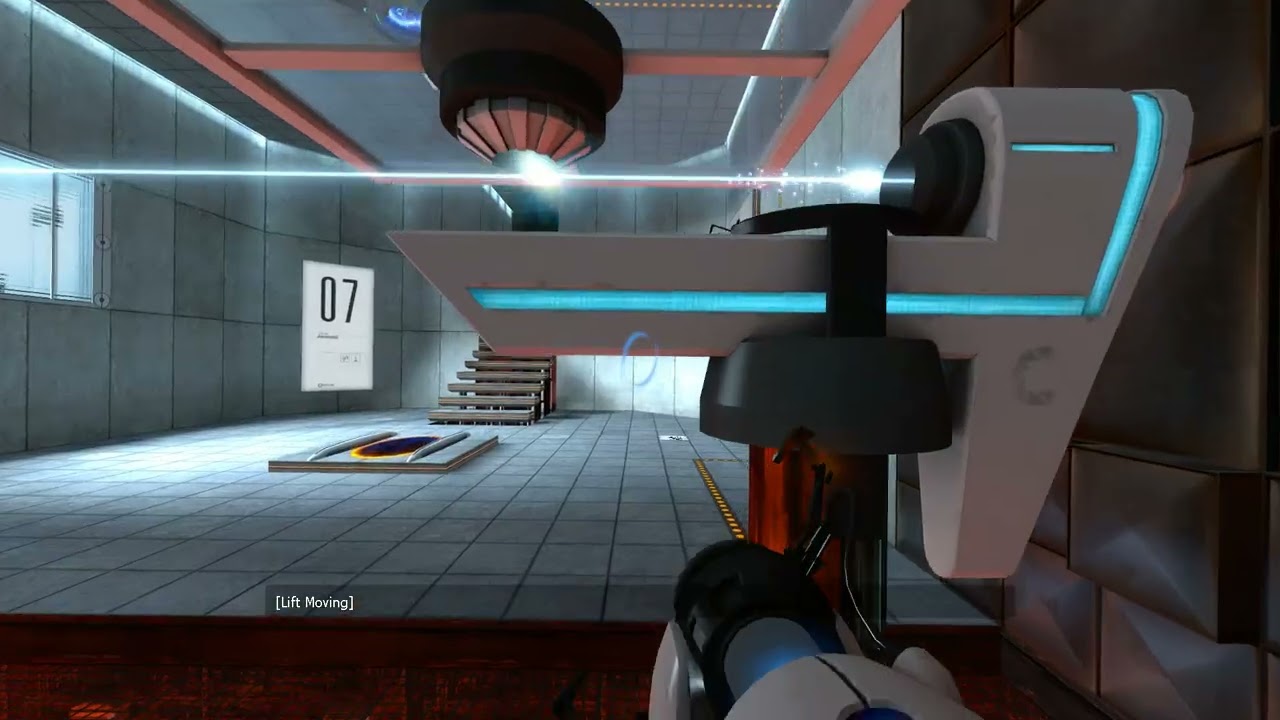
The successful navigation of Aperture Science’s puzzles is, in the grand scheme of history, a small step. Yet, it is the kind of step that defines an era. When an AI can look at a 3D world and decide, "I need to place a portal here to cross this gap," it is no longer just processing language—it is demonstrating a form of spatial, causal, and situational awareness that was, until very recently, the exclusive domain of biological intelligence.
Whether this technology will lead to a new era of productivity or a reliance on "black box" agents that we can no longer control remains a subject of intense debate. For now, we are left with the image of GPT-6 Astra, tirelessly pausing and unpausing a game, slowly but surely finding its way to the exit—a silent, digital ghost finding its way through a world we once thought only humans could play in.