

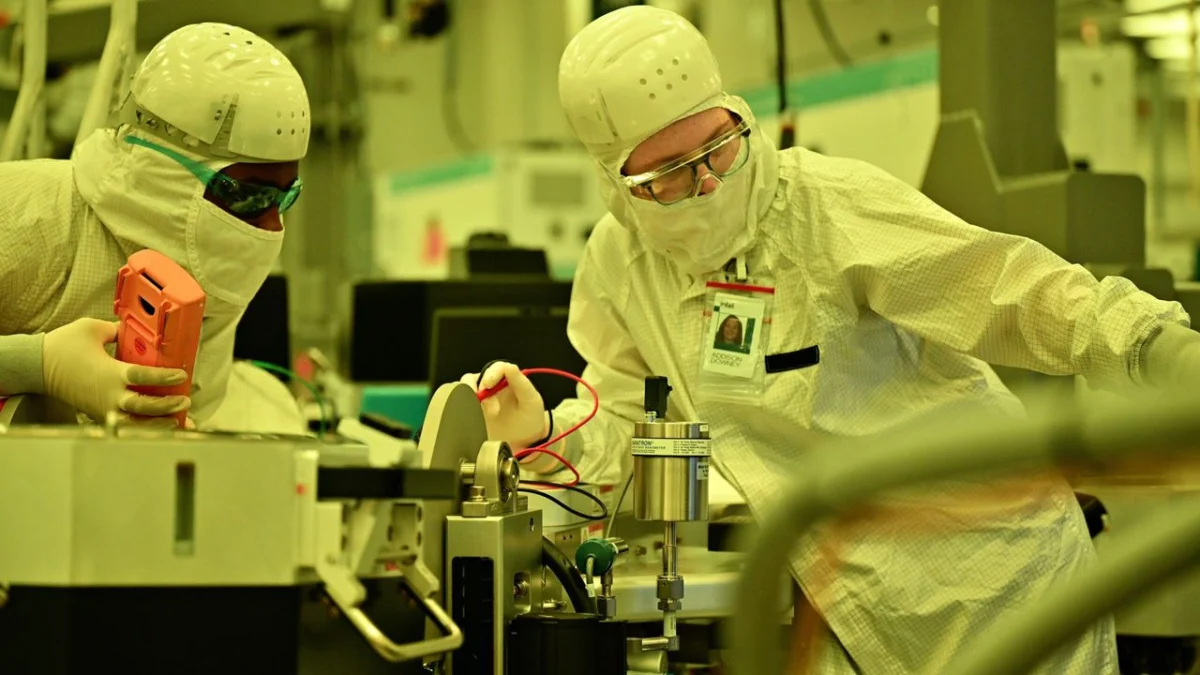
In the fiercely competitive landscape of semiconductor manufacturing, the race for nanometer supremacy is relentless. Intel, a company currently navigating one of the most transformative periods in its storied history, has officially signaled that its technological ambitions extend well beyond its immediate production roadmap. Lip-Bu Tan, a key figure in Intel’s leadership and a member of the Board of Directors, recently confirmed that the chip giant has commenced early-stage development on its future fabrication processes: the 10A and 7A nodes.
These future-facing technologies, slated for introduction later in the next decade, represent the next frontier in silicon engineering. By looking toward 10A (10 Angstroms) and 7A (7 Angstroms), Intel is not merely iterating on existing designs; it is actively crafting the infrastructure required to maintain global leadership in logic density, power efficiency, and transistor performance.
Main Facts: The Roadmap Beyond 18A and 14A
The disclosure, made at the J.P. Morgan Global Technology, Media and Communications Conference, clarifies that Intel is operating on a multi-generational horizon. While the industry is currently fixated on the viability and yield of the 18A process—a critical milestone in Intel’s "five nodes in four years" strategy—the long-term vision is already being codified.
The 10A and 7A processes are expected to push the boundaries of what is physically possible with silicon. Industry observers anticipate that these nodes will leverage High-Numerical Aperture (High-NA) Extreme Ultraviolet (EUV) lithography tools. High-NA EUV, which Intel is pioneering with its partners at ASML, is the key to printing increasingly smaller features on silicon wafers, effectively allowing for the continued scaling of Moore’s Law despite the daunting physical limitations of light and matter.
For Intel, these nodes are not just about raw performance; they are about securing long-term business viability. As Lip-Bu Tan emphasized, the company’s clients—ranging from hyperscale cloud providers to consumer electronics giants—are less interested in the "here and now" and more concerned with the stability and performance of the roadmap five to ten years down the line.
Chronology of Intel’s Node Evolution
To understand the magnitude of the 10A and 7A announcement, one must view it within the context of Intel’s recent manufacturing trajectory.
The Recent Past: The Foundation
- The 2021 Pivot: Following years of delays in its 7nm process, Intel underwent a structural shift under CEO Pat Gelsinger. The company introduced the "five nodes in four years" mandate, prioritizing the rapid development of Intel 7, Intel 4, and Intel 3.
- The 18A Turning Point: Often cited as the "make or break" node for Intel’s Foundry Services (IFS), the 18A process introduces PowerVia (backside power delivery) and RibbonFET (gate-all-around transistor architecture). It is the cornerstone of Intel’s plan to reclaim the process lead by 2025.
The Near Future: 14A and High-NA
- The 14A Horizon: Announced as the successor to 18A, the 14A node is expected to be the first to fully integrate high-NA EUV machinery in high-volume manufacturing. This technology will allow for significantly tighter pitches and higher logic density than current standards.
The Distant Future: 10A and 7A
- The 2027–2030+ Outlook: With the initiation of 10A and 7A, Intel is essentially planning for the end of the decade. These nodes are expected to refine the use of High-NA EUV, potentially incorporating new materials, such as 2D transition metal dichalcogenides or advanced chiplet-stacking technologies, to overcome the limitations of traditional monolithic silicon.
Supporting Data: The Physics of Angstrom Scaling
In the world of semiconductor manufacturing, the shift from nanometers (nm) to Angstroms (A) is more than just a marketing rebrand; it is a shift in how we measure the atomic-scale precision of chip fabrication. 10 Angstroms is equivalent to 1 nanometer. By naming processes 10A and 7A, Intel is signaling a transition into the "sub-nanometer" era.
Why High-NA EUV is Mandatory
Standard EUV lithography uses a numerical aperture (NA) of 0.33. This has served the industry well for years, but as features shrink, the resolution limit of these tools becomes a bottleneck. High-NA EUV increases the numerical aperture to 0.55. This improvement in optics allows for:
- Resolution Enhancement: Smaller features can be printed without the need for complex multi-patterning, which is prone to alignment errors and costly.
- Density Gains: Higher resolution means more transistors per square millimeter, which is the primary driver of performance gains in modern CPUs and GPUs.
- Power Reduction: By optimizing the transistor geometry, the switching voltage can be reduced, significantly lowering power consumption—a critical requirement for the AI-driven data centers of the future.
While the cost of High-NA EUV machines is astronomical—often exceeding $350 million per unit—Intel has positioned itself as the first company to receive these tools from ASML, giving them a theoretical "first-mover" advantage in the race to 10A.
Official Responses and Strategic Intent
Lip-Bu Tan’s commentary at the J.P. Morgan conference provided a rare, candid look into the mindset of Intel’s leadership. "Now I am starting to work 10A, 7A, the roadmap," Tan stated. His comments reflect a realization that the foundry business is a "trust-based" model. When a customer signs on to use Intel Foundry, they are entering a partnership that lasts for the lifecycle of a product, which can span many years.
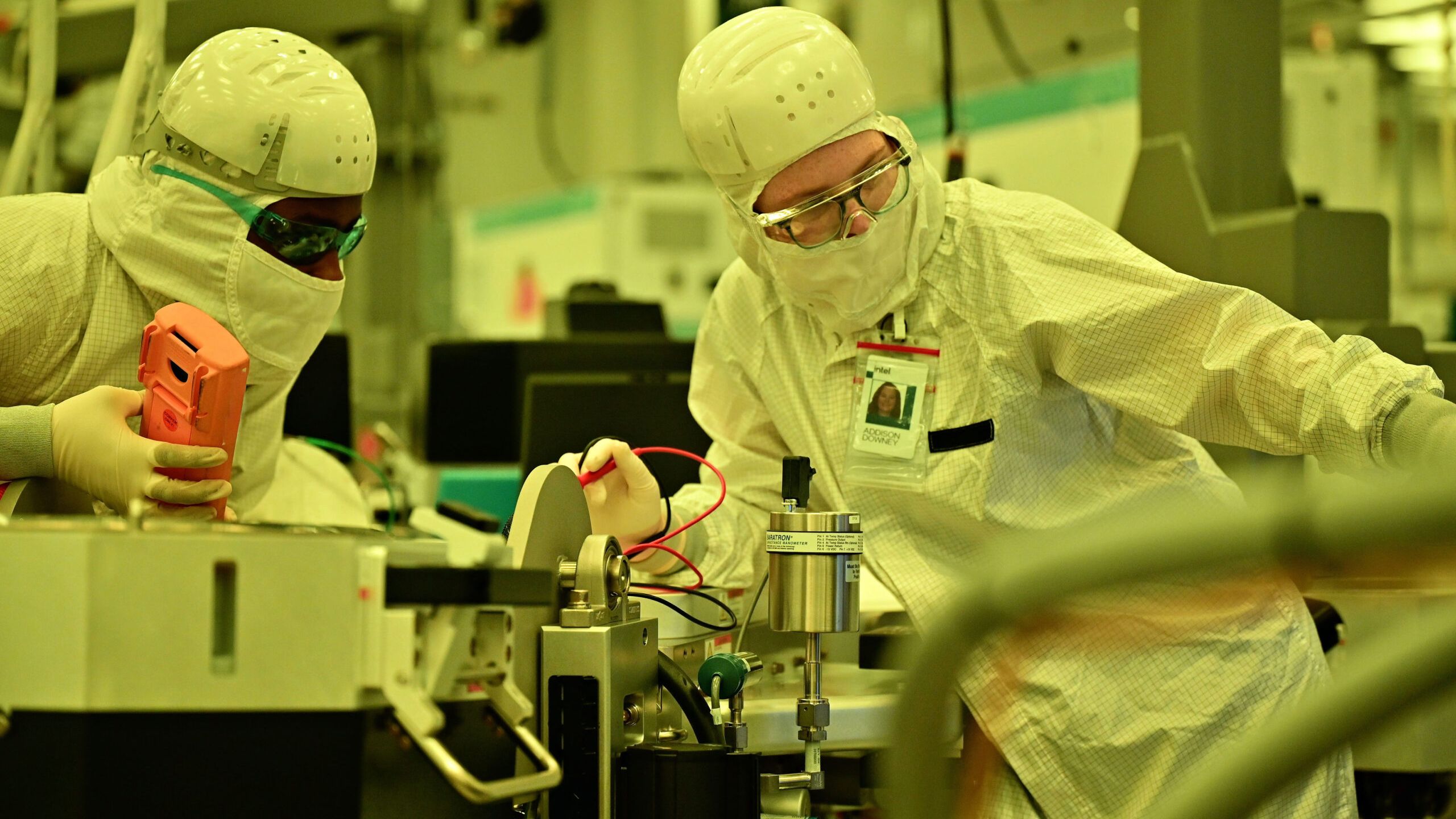
"People do not simply go to you; they are looking for the roadmap for the future," Tan added. "So we want to build a long-term business."
This statement is particularly significant given the competitive pressure from TSMC and Samsung. By sharing the existence of 10A and 7A, Intel is signaling to potential foundry customers—such as Nvidia, Apple, and Amazon—that they are committed to the long game. They are attempting to remove the "fear of abandonment" that has plagued some foundry customers in the past, assuring them that Intel will have a competitive node available throughout the 2030s.
Implications: The Future of the Global Chip Industry
The announcement of the 10A and 7A nodes has profound implications for the global technology ecosystem.
1. The Survival of Moore’s Law
For years, skeptics have argued that Moore’s Law—the observation that the number of transistors on a chip doubles about every two years—is dead. Intel’s commitment to 10A and 7A suggests that, in the eyes of one of the world’s most advanced chipmakers, Moore’s Law is not dead; it is simply evolving. The shift from scaling by pure lithography to scaling by materials science and 3D stacking (as seen in the Angstrom era) will be the defining theme of the next decade.
2. Geopolitical and Economic Impact
Semiconductor manufacturing is now a cornerstone of national security and economic sovereignty. By pushing the limits of 10A and 7A, Intel is effectively helping the United States maintain a technological edge in artificial intelligence, high-performance computing, and defense. This roadmap is a vital component of the CHIPS Act ecosystem, ensuring that domestic fabrication capabilities remain at the absolute cutting edge.
3. The Foundry War
Intel is currently fighting on two fronts: as an integrated device manufacturer (IDM) that produces its own designs, and as an independent foundry for others. The success of 10A and 7A will determine whether Intel can successfully transition into a "foundry-first" mentality. If they can execute these nodes on time, they will likely lure away major clients who are currently dependent on TSMC, potentially rebalancing the global supply chain.
4. Technological Complexity
The jump to 7A will be one of the most difficult engineering feats in human history. It will likely require not just new lithography, but potentially the invention of new transistor structures that move away from current FinFET or GAAFET designs. The implication here is that Intel’s R&D budget must remain massive, and the company’s ability to manage this complexity will be the ultimate test of its leadership.
Conclusion
Intel’s public declaration of the 10A and 7A nodes is a bold strategic maneuver. It serves as a statement of intent, a reassurance to the market, and a testament to the company’s technological confidence. While the industry remains focused on the immediate challenges of 18A and 14A, Intel has already set its sights on the far horizon.
The road to 7 Angstroms will undoubtedly be paved with technical hurdles, massive capital expenditure, and intense global competition. However, by initiating this roadmap now, Intel is ensuring that it remains a fundamental player in the digital architecture of the future. As we move deeper into the age of AI and ubiquitous computing, the ability to build the smallest, most efficient transistors in the world will remain the ultimate currency of power. Intel has made it clear: they intend to remain the wealthiest of that currency.










No comments yet. Be the first to join the conversation!