
 Pevita Pearce
As anticipation for Christopher Nolan’s next cinematic venture reaches a fever pitch, a recent revelation regarding its duration has sparked a fresh wave of discourse. According to listings appearing on the AMC Theaters website, The Odyssey—Nolan’s highly anticipated adaptation of Homer’s foundational epic—is slated for a runtime of 2 hours and 52 minutes.
While this duration confirms that the film will narrowly miss surpassing Oppenheimer (2023) as the director’s longest feature, it solidifies The Odyssey as a titanic entry in Nolan’s filmography. In an era increasingly dominated by fragmented media and short-form content, a near-three-hour runtime serves as a bold statement on the necessity of "the theatrical experience."
The Weight of Ambition: Main Facts and Production Scale
The numbers surrounding The Odyssey are, in a word, staggering. With a reported production budget of $250 million, the film is poised to be the most expensive project in Nolan’s career. This investment is not merely financial; it represents a commitment to a specific, high-fidelity brand of filmmaking that has become synonymous with the director’s name.
Nolan has long been a proponent of the "in-camera" philosophy, eschewing heavy reliance on digital effects in favor of practical spectacle. For The Odyssey, he has pushed this further, filming the entire production on IMAX cameras. This choice has necessitated structural changes within the exhibition industry, with Nolan working alongside chains like Cinemark to modify and optimize screens for his specific 70mm IMAX requirements. By demanding that his films be viewed on the largest possible canvas, Nolan is effectively defining the parameters of the modern blockbuster.
A Chronology of Nolan’s Epic Runtimes
To understand where The Odyssey fits into the director’s trajectory, one must look at the evolution of his pacing. Nolan’s career has been marked by a gradual expansion of narrative scope, often mirroring his growing creative autonomy within the studio system.
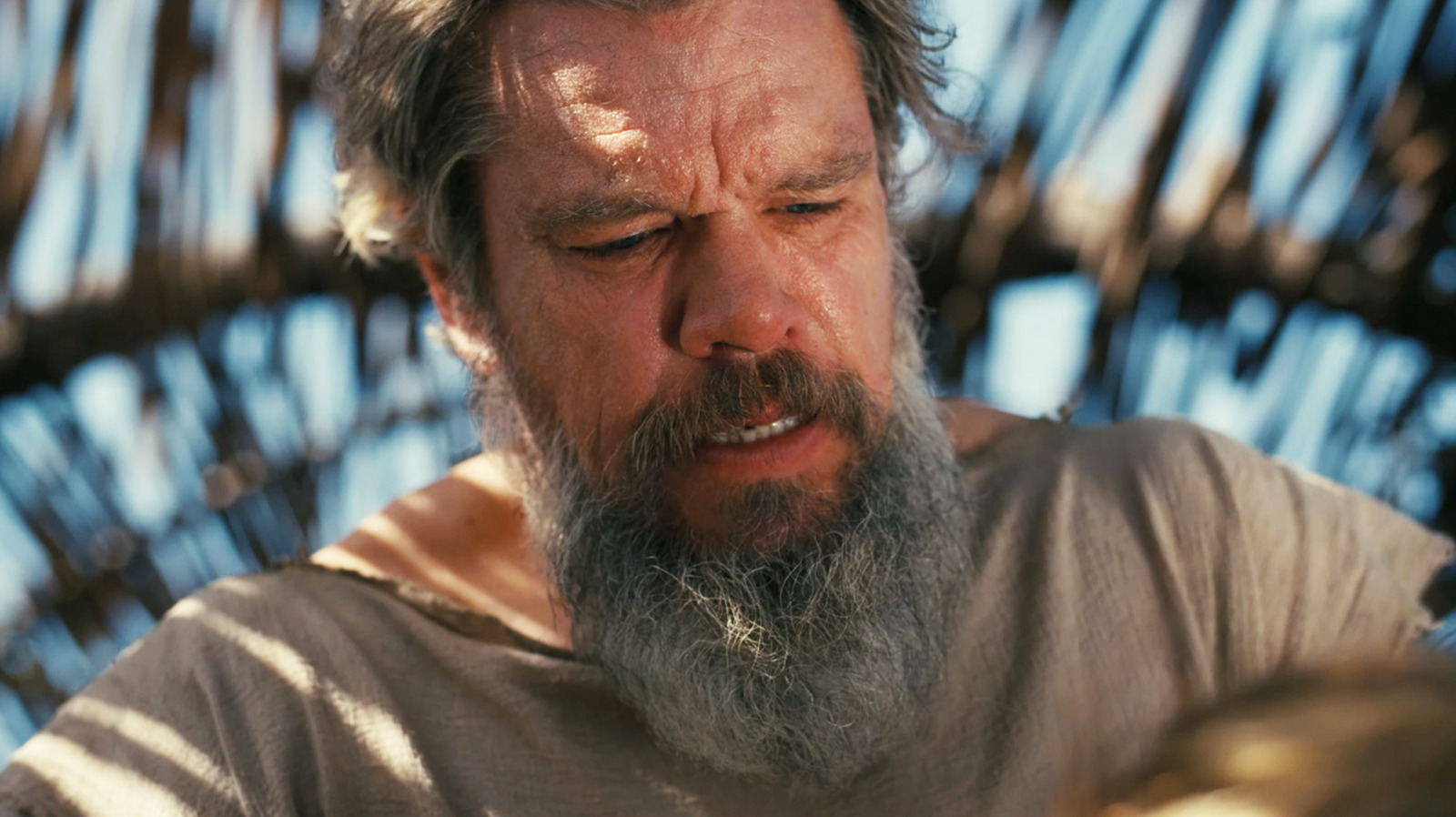
- The Early Years (2000–2005): With films like Memento (113 minutes) and Batman Begins (140 minutes), Nolan established his signature non-linear style within standard two-hour windows.
- The Peak Blockbuster Era (2008–2012): The Dark Knight (152 minutes) and The Dark Knight Rises (165 minutes) demonstrated that Nolan could command lengthy runtimes while maintaining massive mainstream appeal.
- The Philosophical Expansion (2014–2020): Interstellar (169 minutes) marked a turning point, where the runtime was utilized to build emotional resonance and cosmic scale, cementing the film as a modern sci-fi touchstone.
- The Biopic and Beyond (2023–2026): Oppenheimer (180 minutes) proved that a long, dialogue-heavy historical drama could dominate the global box office. The Odyssey (172 minutes) continues this trend, suggesting that Nolan’s "late period" is characterized by a refusal to trim the fat of his sprawling, ambitious visions.
Supporting Data: The Case for Length
Critics often argue that long runtimes are a symptom of "auteur indulgence," yet the data suggests that for a filmmaker of Nolan’s caliber, length is an asset. When looking at the highest-grossing films in his catalog, there is a clear correlation between runtime and critical/commercial success.
- Oppenheimer (3h 0m): $975 million worldwide; 7 Academy Awards.
- The Dark Knight Rises (2h 45m): $1.08 billion worldwide.
- Interstellar (2h 49m): $733 million worldwide; widely considered a modern classic.
These figures indicate that audiences are not averse to long films, provided the spectacle and the narrative density warrant the time investment. By providing a 2-hour and 52-minute experience, The Odyssey is signaling to the audience that it is a "prestige event"—a film meant to be consumed in one sitting, in a dedicated space, rather than viewed in chunks on a mobile device.
The Winds of Controversy: Navigating Public Reception
Despite the pedigree behind the project, The Odyssey has faced an unusual amount of pre-release friction. From the moment the first trailer dropped, the internet has been ablaze with debate. The most vocal complaints have centered on the use of modern-day American accents for Ancient Greek figures, with detractors labeling the stylistic choice as jarring or incongruous with the setting.
Furthermore, filming locations, casting choices, and the inherent difficulty of adapting Homer’s poem—a work that spans a decade of travel and immense psychological depth—have all been targets for online skepticism. The revelation of the runtime has simply added fuel to the fire. For the vocal minority, the length is framed as an example of an "out-of-touch" director failing to respect the audience’s time.
However, industry analysts suggest that this "controversy" is largely a byproduct of the modern social media ecosystem, which thrives on manufactured outrage. In truth, the scale of The Odyssey is a requirement of the source material. A truncated version of Odysseus’s journey would arguably fail to capture the epic scope that defines the original text.
Implications for the Industry
The release of The Odyssey on July 17, 2026, will serve as a bellwether for the film industry. In a post-pandemic landscape, movie theaters have struggled to lure audiences away from the convenience of streaming services. Nolan remains one of the few directors whose name alone is a "tentpole" draw.
If The Odyssey succeeds, it reinforces the "Nolan Model":
- Exclusivity: Prioritizing the theatrical window over streaming.
- Technological Superiority: Using IMAX and 70mm to create an experience that cannot be replicated at home.
- Narrative Commitment: Refusing to compromise on length or complexity to meet the perceived "short attention span" of modern viewers.
Conversely, if the film struggles, it may lead to a broader industry cooling on the trend of the "three-hour epic." For now, however, the momentum remains with the director. By choosing to tell a story that requires nearly three hours to unfold, Nolan is doubling down on his belief that cinema is an immersive art form.
Conclusion: The Endurance of the Epic
Whether one views the 2-hour and 52-minute runtime as a daunting hurdle or a welcome promise of depth, it is undeniable that The Odyssey represents a significant moment in contemporary film history. The adaptation of Homer’s work is a gargantuan task, requiring a director willing to embrace the magnitude of the source material.
Christopher Nolan has spent his career refining the balance between the visceral and the cerebral. With The Odyssey, he is attempting to marry the technical precision of his earlier work with the emotional gravitas he achieved in Oppenheimer. The runtime is not merely a number; it is a declaration of intent. It tells the audience that they are not simply watching a movie; they are embarking on a journey. And in the world of high-stakes filmmaking, that journey is exactly what the industry is betting on to keep the lights of the cinema house burning bright.


 Asep Darmawan




