

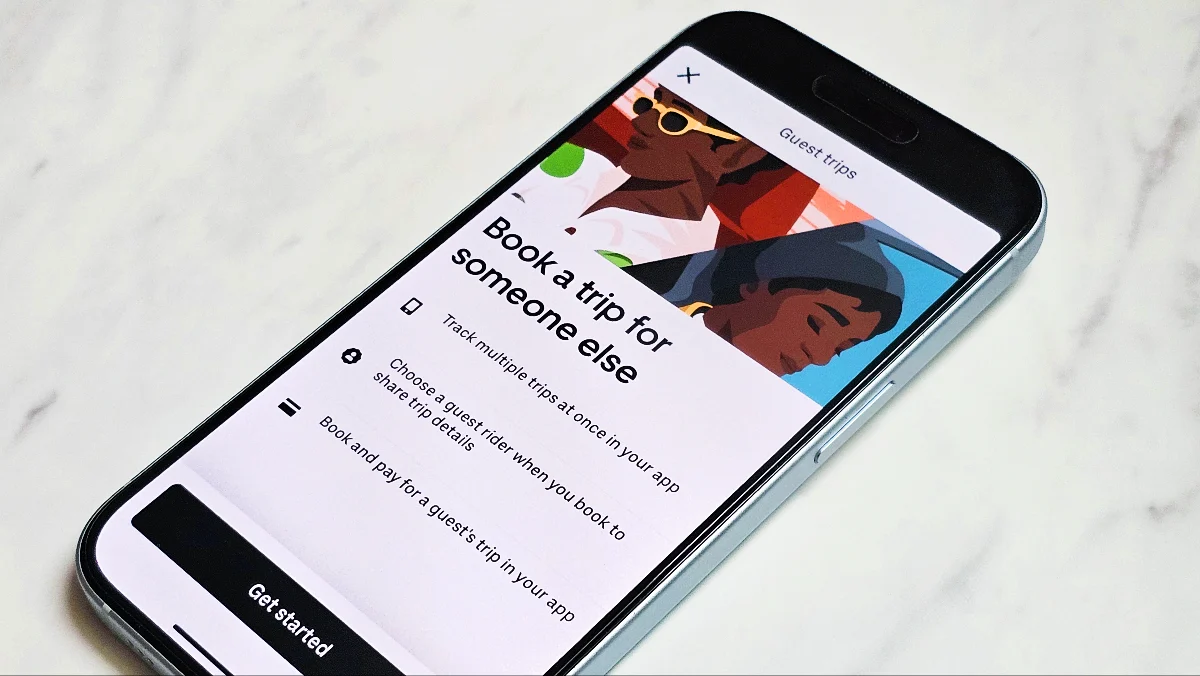
For years, the term "super app" has been Silicon Valley’s white whale—a conceptual monolith that promised to consolidate the fragmented digital lives of consumers into a single, seamless interface. While the model flourished in Asia under the banners of WeChat and Grab, Western attempts to replicate the magic have largely stalled. However, a new, more urgent strategy is emerging from an unlikely source. Faced with the encroaching reality of autonomous vehicle (AV) disruption—exemplified by Waymo’s growing footprint in San Francisco—Uber is pivoting from a simple ride-hailing company into a comprehensive, lifestyle-integrated ecosystem.
The Strategic Pivot: From Rides to Residencies
At its recent annual "GO-GET" product event in New York, Uber signaled that its long-standing ambition to become a "super app" has moved from theoretical brainstorming to aggressive execution. The centerpiece of this strategy is the integration of travel and lifestyle services directly into the Uber interface.
In a landmark partnership with Expedia Group, Uber has begun allowing U.S. users to book hotels directly within its app, providing access to a global inventory of over 700,000 properties. This is not merely an auxiliary feature; it is a fundamental shift in the company’s value proposition. By integrating travel, Uber is attempting to own the entire "consumer journey"—from the ride to the airport and the flight itself, to the hotel stay and the eventual dinner reservation.
The company is incentivizing this transition through its subscription service, Uber One. Currently priced at $9.99 a month, the program offers 20% discounts on a rotating selection of 10,000 hotels and provides 10% back in credits. Furthermore, the company has announced that vacation rentals via Vrbo and restaurant reservations through OpenTable are slated to arrive later this year. Even more daring is the new "Shop for Me" feature, which allows users to order items from retailers that are not officially partnered with the platform, effectively turning the Uber driver into a personal concierge.
A Chronology of Ambition: The Road to the Super App
Uber’s path to this moment has been iterative, characterized by strategic failures and hard-won lessons.
- 2019: The Initial Vision: As Uber went public, leadership began articulating a vision that extended beyond urban mobility. The goal was to become the "operating system for everyday life," a platform where users could move from food delivery to ride-hailing without friction.
- The European Flight Experiment: In previous years, Uber attempted to integrate flight bookings in European markets. The effort was largely considered a failure due to market saturation and consumer preference for established travel aggregators. Uber withdrew, but the data gathered during this period provided the blueprint for its current, more cautious partnership-based approach with Expedia.
- 2023–2025: The AV Catalyst: The rapid scaling of autonomous vehicle fleets, most notably Waymo, introduced a new existential threat to Uber’s core business. Recognizing that it could not rely solely on human-driven ride-hailing, Uber began positioning itself as a critical infrastructure layer for the AV industry—acting as a data provider, investor, and distribution platform.
- 2026: The "GO-GET" Inflection Point: The recent product event marks the first time the "super app" vision has been backed by a concrete, cohesive roadmap that leverages Uber One as the primary engine for customer retention.
The Membership Moat: Why "Everything" Needs a Subscription
Uber’s CTO, Praveen Neppalli Naga, provided a candid look at the company’s internal philosophy during a recent TechCrunch "StrictlyVC" event in San Francisco. He noted that Western super apps have historically failed because they simply bolted new features onto existing traffic streams rather than providing a logical reason for users to remain in the app.
"I take Uber, go to the airport, take a flight, take another Uber, go to a hotel, go to a restaurant," Naga explained. "There is a flow you can actually build into it."
The brilliance of this strategy lies in the "membership moat." Every new category added to the app—whether it is groceries, food delivery, or hotel bookings—is designed to increase the utility of the Uber One subscription. By bundling these disparate services under one monthly fee, Uber creates a "sunk cost" psychological effect. If a user is already paying $9.99 a month, they are statistically more likely to default to Uber for their travel and dining needs to maximize their membership benefits.
Supporting Data: The Case for Consolidation
Uber’s recent earnings report provides the strongest evidence yet that this strategy is gaining traction. The company reported that its monthly active user base has climbed to 199 million. Perhaps more importantly, 50 million people are now paying for Uber One subscriptions. These subscribers are not just passive users; they account for roughly half of the company’s total gross bookings.
Furthermore, the growth of Uber Eats has been a crucial proof-of-concept. In the first quarter of 2026, delivery revenue grew 34% year-over-year, reaching $5.07 billion. This segment is now growing faster than the company’s core mobility business, proving that consumers are willing to use the Uber app for services that extend far beyond transportation. This data suggests that the "installed base" is indeed Uber’s greatest asset. Users have already stored their credit cards and personal data within the platform, making it the path of least resistance for any new service Uber decides to roll out.
The Competitive Landscape: An "Everything" Arms Race
Uber is not operating in a vacuum. The race to capture the "everything" market is intense, and its rivals are pivoting with equal speed.
Airbnb, facing pressure from Uber’s move into the hotel space, has launched its own counter-offensive. In March, the company announced a partnership with Welcome Pickups to offer airport transfers in 125 cities across Asia, Europe, and Latin America. By keeping the user within the Airbnb app for both housing and transportation, the company is attempting to blunt the appeal of Uber’s ecosystem.
Simultaneously, Elon Musk’s X (formerly Twitter) continues to pursue its goal of becoming an "everything app" modeled after WeChat. With 500 million monthly active users, X is preparing to launch "X Money," a banking and payments platform that would allow for seamless financial transactions within the social network.
Implications: Will the U.S. Market Adapt?
The central question remains: Does the American consumer actually want a super app? In China, the success of WeChat was born from necessity, as it provided a singular, high-quality solution in a landscape of inferior alternatives. In the United States, however, consumers are accustomed to a patchwork of "best-in-class" apps: Expedia for travel, OpenTable for dining, and DoorDash for delivery.
To succeed, Uber must overcome two hurdles:
- Habitual Friction: Users have deeply ingrained habits. Convincing a user to abandon a preferred travel app for Uber requires either massive, unsustainable discounts or a user experience that is significantly more convenient.
- Market Saturation: Unlike emerging markets, the U.S. is a mature digital economy where incumbents are heavily invested in retaining their user bases.
However, Uber’s strategy is arguably the most pragmatic of the current contenders. By focusing on the "travel flow"—the logical sequence of events that constitutes a trip—Uber is positioning itself as a utility rather than a destination. If the company can continue to bridge the gap between mobility and hospitality, it may find that it doesn’t need to be the "only" app a user has, but rather the "default" app for life on the move.
As Naga noted when asked about the possibility of adding financial services or flight bookings, "Never say never." For now, Uber is focusing on the hotel rollout, a cautious yet deliberate step toward a future where the app on your home screen is the only one you need to navigate the world. Whether Wall Street will fully embrace this vision remains to be seen, as the company’s stock performance continues to lag behind its internal growth metrics. Nevertheless, the gauntlet has been thrown: in the battle for the consumer’s time and money, the winner will be the platform that makes the most of the journey.










No comments yet. Be the first to join the conversation!