

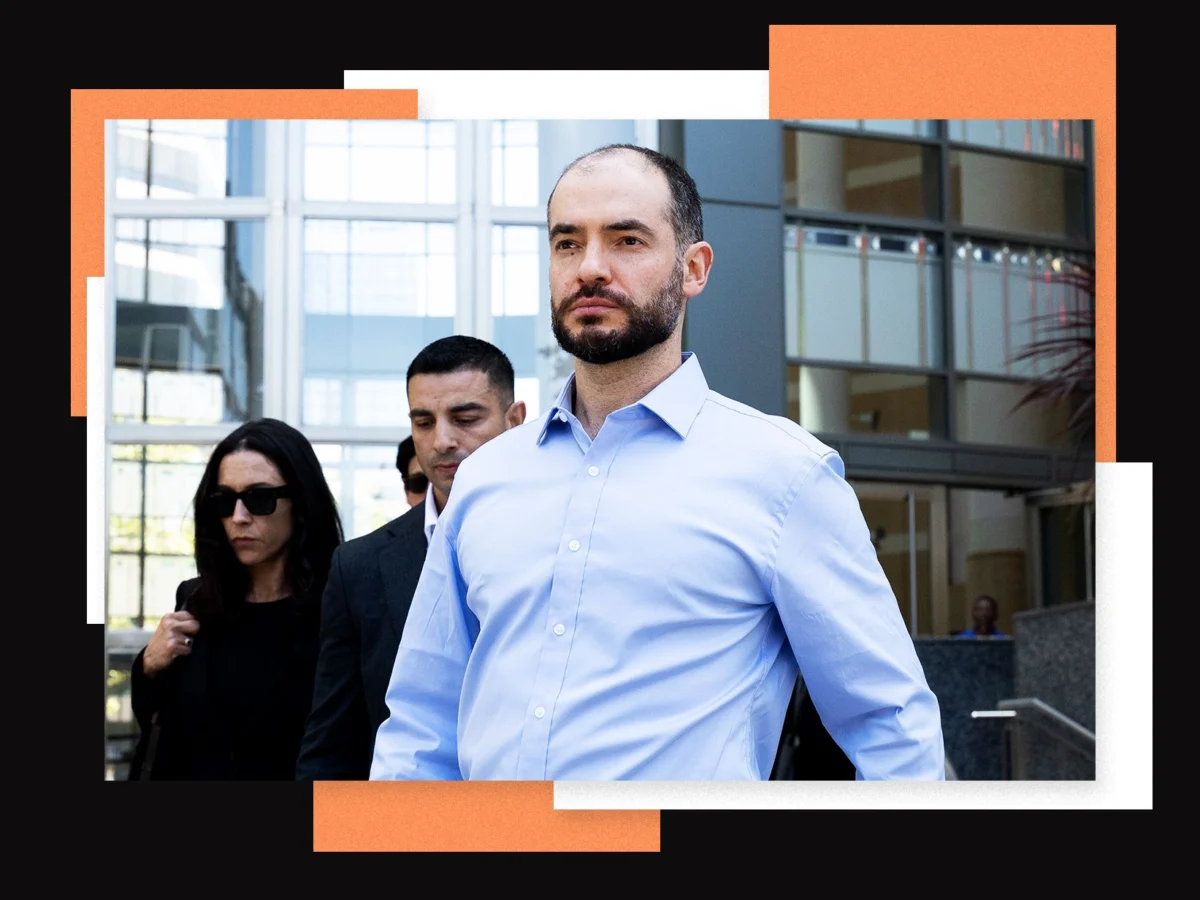
The legal battle between Elon Musk and the artificial intelligence powerhouse he helped co-found, OpenAI, has reached a critical juncture. As the trial enters its final phase, the courtroom has become a theater for the dramatic unraveling of one of the most ambitious technological experiments of the 21st century. With testimony from Microsoft CEO Satya Nadella, OpenAI Chairman Bret Taylor, and the enigmatic former chief scientist Ilya Sutskever, the proceedings are exposing the deep-seated ideological fractures and financial entanglements that define the modern AI era.
At the heart of the conflict lies a fundamental dispute over the soul of OpenAI: Was it intended to be a benevolent, non-profit steward of human-centric artificial intelligence, or has it become a commercial vehicle for Microsoft’s dominance in the global technology market?
The Key Players and the Financial Stakes
The trial has brought the immense valuation of OpenAI into sharp focus, revealing figures that underscore the sheer scale of the company’s evolution. In a stunning revelation on the stand, Ilya Sutskever disclosed that he holds an ownership stake in OpenAI’s for-profit arm currently valued at approximately $7 billion. This disclosure places him among the largest individual shareholders in the company.
This revelation followed an equally startling admission earlier in the trial from OpenAI President Greg Brockman, who confirmed that his own stake is worth roughly $30 billion. These figures serve as a tangible measure of how far the company has traveled from its humble, non-profit origins—a point of contention that forms the bedrock of Musk’s lawsuit.
Sutskever, once a central figure in the lab’s success, described his departure in 2024 with a palpable sense of grief. "I felt a great deal of ownership of OpenAI," he testified. "I felt like I put my life into it, and I simply cared for it, and I didn’t want it to be destroyed." His testimony painted a picture of a scientist caught between the idealistic pursuit of safety and the cold, hard realities of the capital required to build "a computer as big as the human brain."
A Chronology of Disillusionment
To understand the current litigation, one must trace the timeline of the "great pivot"—the transition of OpenAI from a mission-driven research laboratory to a commercially aggressive for-profit entity.
- 2015–2018: OpenAI is established as a non-profit, funded by early donors including Elon Musk, with the explicit goal of developing Artificial General Intelligence (AGI) for the benefit of humanity.
- 2019: Facing the astronomical costs of compute power, OpenAI creates a for-profit "capped-profit" entity, a move that critics, including Musk, argue violated the original mission.
- November 2023: The "Blip." Sam Altman is ousted as CEO by the board, including Sutskever, over allegations of a lack of candor. The move triggers a chaotic five-day period of internal revolt and external pressure, culminating in Altman’s reinstatement.
- May 2024: Sutskever formally departs OpenAI, and the "Superalignment" team—a group dedicated to long-term AI safety—is disbanded.
- 2025: The trial moves to its final phase, with testimonies scrutinizing the nature of the partnership between OpenAI and Microsoft.
Sutskever’s role in the 2023 ouster was pivotal. Having helped collect evidence regarding Altman’s alleged history of deception, he initially supported the board’s decision to remove him. However, he admitted on the stand that the execution of that removal was "amateur city," a phrase echoed by Microsoft’s Satya Nadella. Sutskever expressed regret over the process, noting that the board lacked experience and relied on poor legal counsel, ultimately leading to his estrangement from the company’s leadership.
The Microsoft Factor: Controlling Destiny
Microsoft’s influence on the proceedings is profound. As a primary investor, Microsoft has been the engine behind OpenAI’s rapid scaling. Yet, testimony revealed that this relationship was not without friction.
Satya Nadella, testifying under oath, revealed that Microsoft’s support for OpenAI evolved from altruistic cloud-compute subsidies to a hard-nosed commercial partnership. In a 2022 email to his deputies, Nadella expressed alarm over the costs: "Microsoft will lose 4 bil next year!!!" he wrote, emphasizing the need for the startup to provide "know-how" and control.
"If we are going to spend this kind of money and not have control of destiny, it makes no sense," Nadella explained to the court. Musk’s legal team presented text messages from early 2023 showing Nadella pushing for the monetization of ChatGPT, urging Altman to move "sooner is best" on subscription models.
By March 2025, the partnership had generated $9.5 billion in sales for Microsoft, including a revenue-sharing agreement where OpenAI pays 20 percent of its earnings back to the tech giant. Nadella defended these terms as a fair trade-off for the immense financial risk Microsoft shouldered when other investors were hesitant to bet on the high-cost, high-uncertainty world of AGI research.
Official Responses and Judicial Oversight
The court, led by US District Judge Yvonne Gonzalez Rogers, has been forced to navigate the "unique position" of witnesses like Sutskever. While Musk’s legal team attempted to label him a hostile witness due to his financial stake, the judge granted both sides leeway in their questioning, acknowledging the complexity of his dual role as a former leader and a major stakeholder.
OpenAI’s defense remains consistent: the transition to a for-profit model was a necessity, not a betrayal. Bret Taylor, the current chairman, provided a starkly different narrative than that of the critics. In his testimony, he offered a glowing review of Altman’s leadership, defending his transparency and his ability to scale the company. Regarding concerns over conflicts of interest—specifically Altman’s stake in Reddit during a recent content deal—Taylor insisted that Altman’s involvement was limited to "bringing down the temperature" and that he has been "forthright" with the board throughout his tenure.
The Implications for the Future of AI
The implications of this trial extend far beyond the courtroom walls. It raises a foundational question for the tech industry: Can the development of transformative, potentially dangerous technology like AGI be governed by the same market incentives that drive the sale of consumer electronics or software?
Sutskever’s testimony provided a chilling, if poetic, assessment of the situation. When asked by Judge Rogers how more computing power helped OpenAI progress, he offered an analogy: "I would describe it as the difference between an ant and a cat." He emphasized that without massive capital, the "big computer"—the hardware required to push AI to the next level—would simply not exist.
However, the dissolution of the superalignment team under his watch, and his subsequent testimony about the importance of that team’s work, underscores the tension between safety and speed. Musk’s argument rests on the idea that by prioritizing commercialization, OpenAI has abandoned the "long-term" safety protocols that were supposed to be the hallmark of the organization.
As the trial concludes, the industry watches with bated breath. A victory for Musk could force a structural reorganization of OpenAI, potentially setting a precedent for how non-profits can partner with corporate entities. A victory for OpenAI would solidify the current trajectory of AI development, validating the belief that in the race for AGI, commercial scale is the only path to survival.
With Sam Altman scheduled to take the stand on Tuesday, the final chapter of this legal saga promises to be its most contentious. Whether the jury sides with the visionary who feels betrayed or the executive who claims to have saved the project from insolvency, the legacy of this trial will be the defining document for how we regulate the artificial minds of tomorrow.












No comments yet. Be the first to join the conversation!