

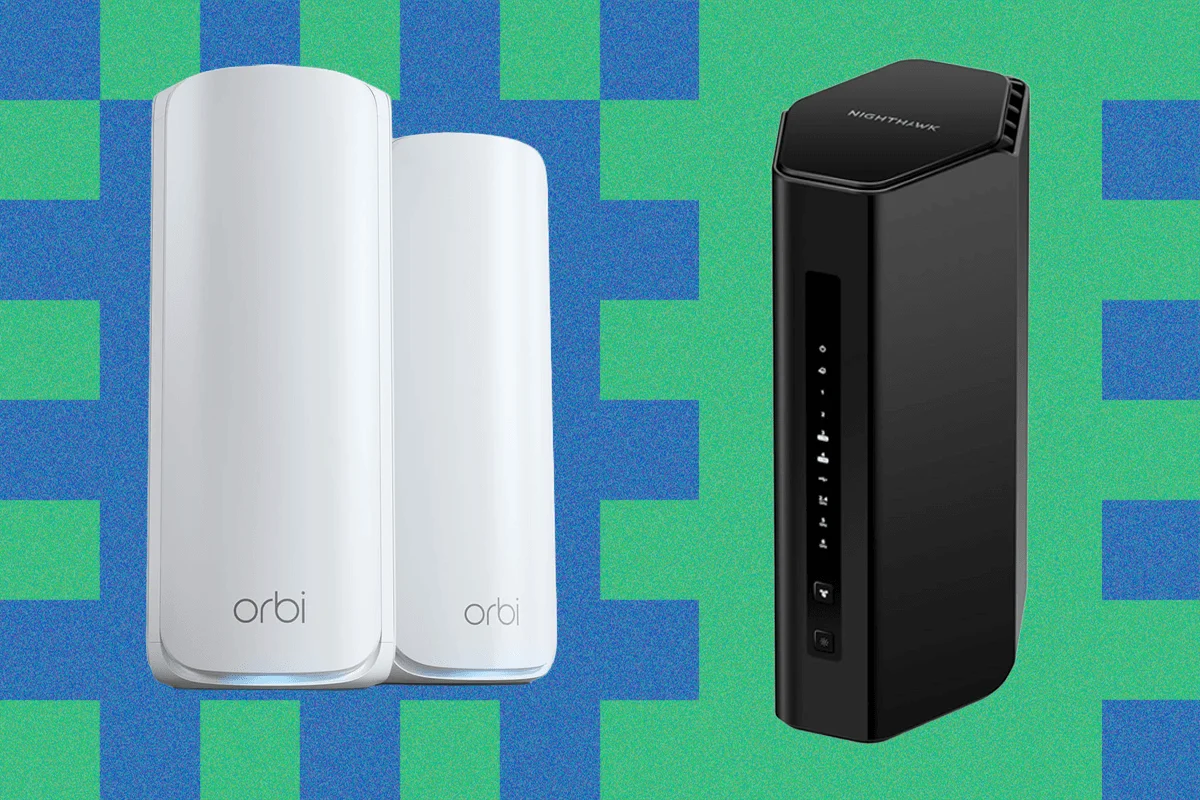
In an era where our homes have become offices, classrooms, and entertainment hubs, the stability of your Wi-Fi signal is no longer a luxury—it is a fundamental utility. As internet service providers (ISPs) continue to push higher gigabit speeds, many consumers find themselves trapped in a bottleneck created not by their provider, but by outdated or improperly deployed hardware.
The age-old question remains: When your home connection starts to falter, do you upgrade to a high-performance single router, or do you pivot to the increasingly popular mesh networking systems? Having tested over 60 networking configurations in various environments—from modern, open-plan homes to historic, stone-walled structures—the answer is rarely one-size-fits-all.
The Core Fundamentals: Understanding Your Network
To navigate the landscape of modern networking, one must first understand the infrastructure. A router serves as the central traffic controller for your home, acting as the gateway between the vastness of the internet and your local devices. Typically, a modem translates the incoming signal from your ISP, which is then passed via Ethernet to your router.
For the average household of 2,500 square feet or less, constructed with modern materials like drywall and timber, a high-quality single router is often more than sufficient. These devices have evolved significantly, offering robust processing power and multi-band capabilities that can blanket a standard home with reliable, high-speed internet.
Chronology of Home Connectivity
The evolution of home networking has moved in distinct phases:
- The Early Days (Pre-2010): Single-band routers were the standard, and dead spots were accepted as a normal consequence of physical distance.
- The Expansion Era (2010–2016): As streaming became dominant, the demand for dual-band and eventually tri-band routers grew. This era also saw the rise of unreliable, often ineffective Wi-Fi extenders that created "cloned" networks that frequently dropped devices.
- The Mesh Revolution (2016–2020): Companies like Eero and Netgear popularized the mesh concept, introducing a seamless, single-SSID experience where nodes communicate to ensure consistent coverage.
- The Intelligent Age (2020–Present): With the introduction of Wi-Fi 6E and Wi-Fi 7, modern systems are now managing congestion in real-time. We are currently seeing the rise of "EasyMesh" standards, allowing for interoperability between different hardware brands.
The Case for the Single Router
If your floor plan is relatively compact, a single router remains the superior choice for a few critical reasons.
First, performance consistency. A single, powerful router manages traffic from a central point, eliminating the "hand-off" latency that can occur when a device moves between mesh nodes. Second, complexity. Many smart home devices—such as Sonos audio systems or specific security cameras—struggle to communicate when they are bridged across different nodes in a mesh network. Finally, there is the issue of bandwidth tax. In a wireless mesh setup, nodes must use a portion of the available Wi-Fi bandwidth to talk to the main router (wireless backhaul), which can effectively halve the speed available to your end devices.
Optimizing Your Single Router
If you opt for a single router, placement is your most powerful tool.
- Centralization: The router should be located in the geographic center of your home, not tucked away in a basement or a metal cabinet.
- Elevation: Place the unit on a high shelf or mount it to a wall. Wi-Fi signals travel better downward and outward.
- Open Air: Avoid placing the router behind large televisions or inside media consoles, which can absorb signal and cause thermal throttling.
When to Transition to a Mesh System
Mesh systems are not a "fix-all" for bad internet, but they are a "fix-all" for bad coverage. If your home exceeds 3,000 square feet, or if you are dealing with structural barriers—such as thick brick, stone, or metal lath—a mesh system is likely your only viable path to a consistent experience.
A mesh system consists of a main gateway and one or more satellite nodes. Unlike traditional extenders, these nodes communicate with the router to create a unified, intelligent network. The system automatically routes your device to the node with the strongest signal as you walk through your home, providing a seamless transition that is virtually imperceptible to the user.
Best Practices for Mesh Deployment
- The Backbone: If your home is pre-wired with Ethernet, use it. Connecting nodes via a "wired backhaul" provides the gold standard of performance, ensuring that your satellite units are not competing for airtime.
- Strategic Placement: Do not place nodes in the "dead zones." Instead, place them halfway between the main router and the area you intend to cover. If they are too close, they will cause signal interference; too far, and the connection will be unstable.
- Avoid Over-saturation: Adding too many nodes to a small space can cause unnecessary network congestion. Less is often more.
Alternative Technologies: Beyond the Router
For those who cannot run Ethernet through their walls but need more than what standard Wi-Fi can offer, there are two primary wired alternatives:
- MoCA (Multimedia over Coax) Adapters: These are often the "secret weapon" for homeowners. By utilizing existing coaxial cable lines (the same ones used for cable TV), you can create a high-speed, wired connection between rooms. MoCA 2.5 adapters can provide speeds up to 2.5 Gbps, effectively turning your home’s existing TV wiring into a high-speed network backbone.
- Powerline Adapters: These utilize your home’s electrical wiring to transmit data. While theoretically convenient, their real-world performance is highly dependent on the quality of your home’s electrical grid. Expect significant variance in speed and potential latency spikes when high-draw appliances (like dryers or microwaves) are in use.
Implications for the Future
The industry is currently moving toward an open-standard future. The "Wi-Fi EasyMesh" certification is a significant development, as it allows consumers to mix and match hardware from different manufacturers. This reduces the risk of "vendor lock-in," where a user is forced to buy only one brand’s proprietary nodes.
Furthermore, as we move into the era of Wi-Fi 7, the focus is shifting from simple coverage to capacity. Modern routers are becoming more adept at handling dozens of simultaneous connections without stuttering. However, the physical laws of signal attenuation remain unchanged. No matter how advanced the radio technology becomes, the material composition of your walls will always dictate the limit of your signal.
Final Verdict
Before investing in expensive mesh hardware, perform a simple diagnostic. Use a Wi-Fi analyzer app to map the signal strength in your most critical areas. If you have a modern, open-concept home, invest in a top-tier single router first; it will provide lower latency and higher throughput.
If, however, your home is a sprawling or historic structure, or if you find yourself constantly resetting your router to reconnect smart devices, a mesh system is the logical progression. By understanding the interaction between your home’s architecture and your network hardware, you can stop fighting your Wi-Fi and finally let it work for you.












No comments yet. Be the first to join the conversation!