

Introduction: A Changing Landscape
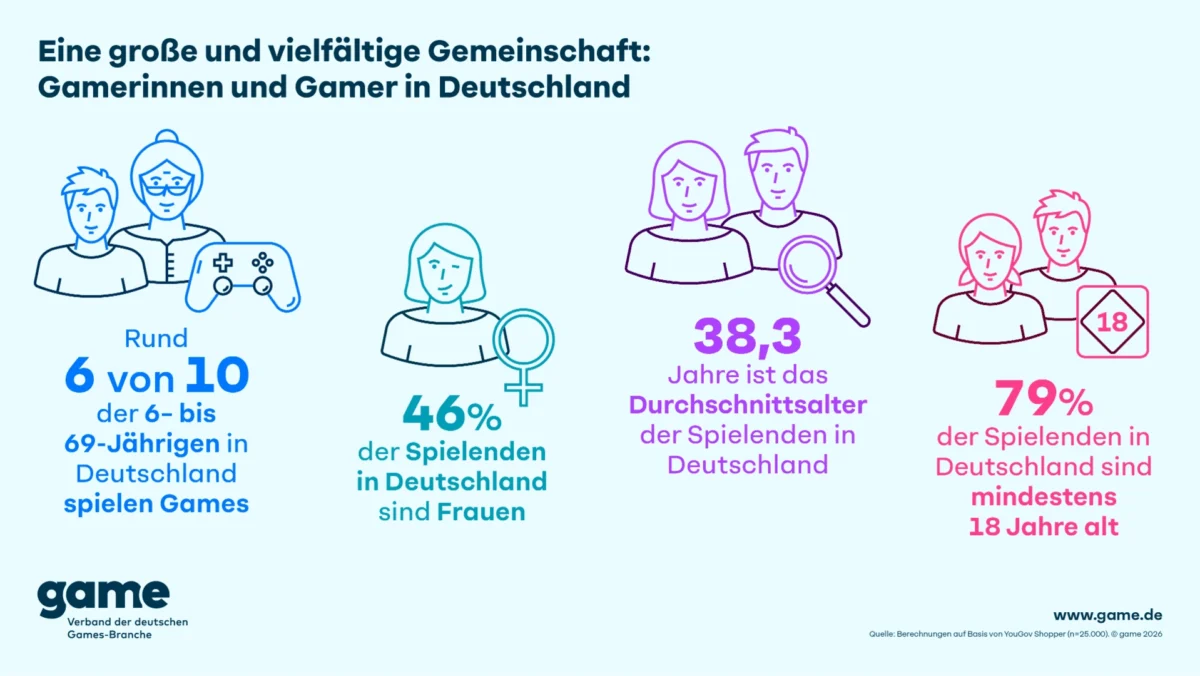
The digital entertainment landscape in Germany has undergone a seismic shift. According to the latest data released this week by the game industry association, the number of people engaging with video games has climbed to an impressive 41.2 million. This statistic, covering a demographic ranging from 6 to 69 years old, implies that roughly six out of every ten Germans are now active participants in the gaming ecosystem.
However, these figures have ignited a fierce debate within the enthusiast community. As the barrier to entry drops—largely fueled by the ubiquity of smartphones and casual apps—the term "gamer" has become increasingly nebulous. Does a commute spent playing Candy Crush on a subway train equate to the experience of a dedicated enthusiast logging hours into a high-fidelity RPG on a custom-built PC? This article explores the statistics, the cultural implications, and the burning question that has divided the community: What, in 2024, actually defines a gamer?
The Statistical Breakdown: Who Plays What?
The game association’s report provides a detailed demographic snapshot. Of the 41.2 million individuals identified as players:
- Gender Parity: 46 percent are female, reflecting the broad appeal of digital entertainment across all demographics.
- Age and Maturity: The average age of a player in Germany sits at 38.3 years, effectively dispelling the myth that gaming is solely a pursuit for youth. Furthermore, roughly 79 percent of the playing population are adults.
- Platform Dominance: The most contentious data point involves the hardware utilized. With 23.7 million users playing on smartphones and another 9.9 million on tablets, mobile gaming has firmly established itself as the dominant medium in terms of reach.
This leads to a significant divergence in how the term "gamer" is interpreted. While the industry defines anyone who engages with software for entertainment as a gamer, the traditional gaming community—particularly those represented on platforms like ComputerBase—often views this broad definition as an oversimplification that ignores the technical, financial, and time-intensive commitment required to be considered a "hardcore" enthusiast.
Chronology of the Debate
The discourse did not emerge in a vacuum. It is the result of years of friction between the "casual" mobile market and the "traditional" PC/console market.
- The Rise of Mobile (2010–2015): As smartphone penetration exploded, the line between "apps" and "games" began to blur. Developers began porting classic titles to mobile, and the freemium model took root.
- The Industry Pivot (2016–2020): Major publishers began shifting resources toward mobile platforms, recognizing that the sheer volume of users—and the high margins of in-app purchases—dwarfed the growth rates of traditional PC gaming.
- The Current Confrontation (2024): With the release of the game association’s latest report, the frustration of "core" gamers has reached a boiling point. The debate has moved from niche forum threads to mainstream industry analysis, questioning whether the term "gamer" has been diluted to the point of uselessness.
Supporting Data: Why the Distinction Matters
To understand the friction, one must look at the investment involved in different gaming tiers. A PC enthusiast might spend thousands of euros on a high-end graphics card, a mechanical keyboard, and a high-refresh-rate monitor. They often engage with complex mechanics, community building, and competitive esports.
Conversely, the mobile user might spend nothing, or perhaps a few euros on microtransactions, to fill a five-minute gap in their schedule. When both are lumped into the same 41-million-person statistic, the data fails to differentiate between:
- The Hobbyist: Someone who treats gaming as a primary leisure activity, often involving deep research into hardware and software.
- The Casual User: Someone who uses games as a secondary, low-friction tool for relaxation or time-killing.
The current debate centers on whether these two groups should share a label. If the definition is too broad, it loses its meaning; if it is too narrow, it risks alienating the massive, profitable market that keeps the industry alive.
Official Responses and Industry Perspectives
The game association represents the interests of developers, publishers, and e-sports organizers. From their perspective, inclusivity is a business imperative. By casting a wide net, they can advocate for better infrastructure, government funding, and recognition of gaming as a vital cultural asset.
However, community platforms like ComputerBase have pushed back. In their recent "Sunday Question" (Sonntagsfrage), they polled their users on whether they identify as "gamers." The results suggest that for the dedicated enthusiast, the label carries a weight of identity and shared history—a sense of belonging to a community that has spent decades perfecting its craft, both as creators and consumers.

The editorial team at CB-Funk, in their latest podcast episode, noted that the definition is likely a spectrum. They argue that while it may be technically accurate to call everyone who plays a game a "gamer," it is socially and culturally inaccurate to ignore the vast differences in intent, engagement, and expertise.
Implications for the Future
What happens when the "gamer" identity is stretched to its breaking point? Several implications emerge:
1. Market Segmentation
We are likely to see a further bifurcation of the market. "Gaming" will become an umbrella term, but niche labels like "PC Enthusiast," "Competitive Pro," and "Casual Mobile Player" will become more common as consumers seek to differentiate themselves from the mass market.
2. Marketing and Development
Developers face a difficult balancing act. If they lean too far into mobile-first, "accessible" design, they risk alienating their core base—as seen in the backlash against several major franchises in recent years. If they focus too heavily on hardware-intensive, high-fidelity experiences, they miss the vast, untapped potential of the mobile audience.
3. The Social Stigma
Historically, the "gamer" identity was once a point of ridicule. Today, it is a badge of honor. As more people enter the space, the stigma of being a "gamer" has largely vanished. Ironically, by expanding the definition to 41 million people, the industry may have unintentionally rendered the identity less distinct, prompting a new search for what it means to be truly "invested" in the hobby.
Conclusion: Defining the Future
Is a person who plays Solitaire on their phone a gamer? Under the broadest definition, yes. Under the narrowest, perhaps not. The truth likely lies in the intent.
As we look toward the future of the German gaming market, the debate serves as a reminder that gaming is no longer a subculture—it is the culture. Whether or not one chooses to adopt the label of "gamer," the impact of these 41 million people on the economy, technology, and social interaction is undeniable.
The ComputerBase community and others like it will continue to debate these boundaries, not because they are pedantic, but because they care about the integrity of their passion. As the industry continues to grow, it will be up to both the developers and the players to decide how to navigate this increasingly crowded digital landscape. One thing is certain: the conversation is far from over, and the definition of a "gamer" will continue to evolve alongside the technology that powers our digital lives.
For those interested in joining the conversation, the discussion remains active on the ComputerBase forum. Whether you agree that mobile users are the future of gaming or believe that the term should be reserved for those who prioritize the craft of high-end play, your voice contributes to the ongoing narrative of an industry in transition.












No comments yet. Be the first to join the conversation!