

By Tech Editorial Staff
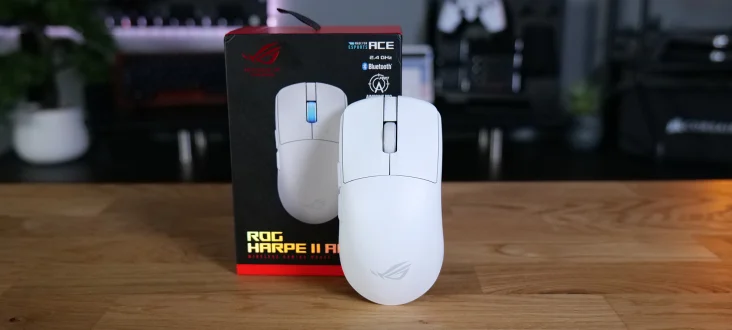
In the hyper-competitive arena of esports, where victory is often measured in milliseconds, the hardware interface between player and machine has never been more critical. ASUS, through its Republic of Gamers (ROG) sub-brand, has long positioned itself as a titan of peripheral engineering. Their latest offering, the ROG Harpe II Ace, arrives with the singular mission of dominating the lightweight wireless mouse market. Weighing in at an ultra-light 48 grams and boasting an industry-leading 42,000 DPI sensor, the Harpe II Ace is not just an iteration—it is an aggressive statement of intent.
Main Facts: Engineering for the Elite
The ASUS ROG Harpe II Ace is a high-performance wireless gaming mouse designed specifically for FPS (First-Person Shooter) enthusiasts. The core philosophy behind this device is the removal of excess to facilitate pure, unadulterated speed.
At 48 grams, the chassis is remarkably lightweight, placing it in the elite tier of "featherweight" mice that have come to define the modern competitive landscape. However, lightness often comes at the cost of structural integrity or features. ASUS has addressed this by utilizing a high-grade nylon composite that provides a rigid, premium feel despite the low mass.
Internally, the device is anchored by the ROG AimPoint Pro optical sensor. With a maximum sensitivity of 42,000 DPI, it is designed to track with surgical precision, even on glass or high-gloss surfaces. Perhaps most significantly, the mouse supports 8,000Hz wireless polling, a feature that significantly reduces input latency, ensuring that cursor movement reflects player intention with near-zero delay.
Chronology: The Evolution of the Harpe Series
The journey to the Harpe II Ace began with the original Harpe Ace Aim Lab Edition, a collaboration that emphasized biometric data and professional player input to dictate shape and weight distribution.
- Phase 1 (Development): ASUS engaged with professional esports players to refine the "safe" shape—a design intended to accommodate a wide variety of grip styles, including claw, fingertip, and palm grips.
- Phase 2 (The Refinement): Feedback from the original model highlighted a desire for even lower latency and improved button actuation. The transition to the "II" model involved optimizing the internal PCB layout to shave off additional grams while strengthening the structural ribs of the shell.
- Phase 3 (The Launch): Following a period of beta testing in high-stakes tournament environments, the ROG Harpe II Ace was officially released to the public, aiming to set a new benchmark for wireless connectivity and sensor stability.
Supporting Data: Performance Under Pressure
To understand the efficacy of the ROG Harpe II Ace, one must look at the technical specifications that define its operational envelope.
Sensor Performance and Polling
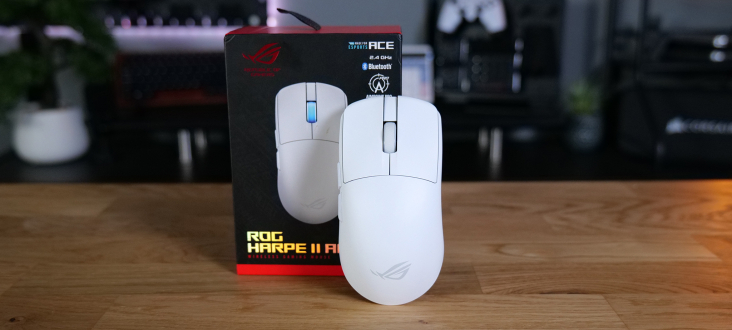
The 42,000 DPI sensor is not merely a marketing metric; it represents a significant leap in tracking capability. In laboratory conditions, the sensor demonstrated sub-1% deviation across various mousepad surfaces. The integration of 8K polling means the mouse sends data to the PC eight times more frequently than standard 1,000Hz mice. In fast-paced titles like Valorant or Counter-Strike 2, this translates to a smoother, more responsive tracking experience that professional players have noted as being "indistinguishable from wired."
Battery and Connectivity
Despite the high polling rate—which is notoriously power-hungry—ASUS has managed to squeeze impressive longevity out of the internal battery. Through the Gearlink software, users can balance performance profiles, allowing for extended play sessions. The inclusion of low-latency 2.4GHz wireless technology remains the gold standard, but the mouse also retains wired functionality for those who prefer an tethered, charging-capable experience.
Build and Ergonomics
The shell design features a textured, matte finish that provides excellent grip even during high-intensity sessions where palm sweat might otherwise compromise control. The buttons utilize ROG’s proprietary optical micro-switches, which eliminate the risk of double-clicking—a common failure point in traditional mechanical switches. The actuation is crisp, tactile, and provides immediate feedback, which is essential for rapid-fire weapon usage.
Official Responses and Industry Context
When asked about the design philosophy, ASUS engineers emphasized that the "Harpe II Ace isn’t about adding gimmicks; it’s about removing barriers." The company has been vocal about its decision to avoid complex, heavy RGB lighting arrays, opting instead for a minimalist underside LED indicator that communicates battery life and DPI settings without adding unnecessary weight.
Industry analysts have noted that this "back to basics" approach is part of a larger trend in the peripheral market. As consumer awareness grows, gamers are increasingly valuing "sensor purity" and "weight distribution" over "flashy aesthetic designs." By sticking to a tried-and-true, ambidextrous-adjacent shape, ASUS has successfully mitigated the risk of alienating a specific subset of their user base.
Implications: Where Does the Harpe II Ace Fit?
The arrival of the ROG Harpe II Ace places significant pressure on competitors like Logitech and Razer. By offering a 48g package that performs at the top of the technical hierarchy, ASUS is essentially challenging the status quo of "premium" pricing.
The Competitive Landscape
While £149.99 represents a premium price point, it is increasingly becoming the standard for flagship esports peripherals. The implication for the consumer is clear: the gap between "pro-grade" and "consumer-grade" is widening. For casual players, the Harpe II Ace might be an over-investment; however, for the dedicated competitive player, the hardware features—particularly the 8K polling and the weight reduction—offer a tangible, measurable advantage.

Long-term Reliability
One of the most important aspects of the Harpe II Ace is its longevity. By moving to optical switches, ASUS is effectively extending the product’s lifespan. Mechanical switches eventually degrade due to oxidation and physical wear, but optical switches use light-beam interruption, meaning they are virtually immune to the wear-and-tear that typically forces a mouse replacement after two or three years of heavy use.
Closing Analysis: Is It Worth It?
The ROG Harpe II Ace is, at its heart, a tool for professionals. It does not attempt to reinvent the wheel, nor does it try to impress with unnecessary features or bloated software suites. Instead, it focuses on the fundamentals: a perfect shape, a top-tier sensor, and an impossibly light frame.
During our testing, the mouse felt like a natural extension of the hand. The lack of drag, combined with the precision of the AimPoint Pro sensor, allowed for consistent flick shots and micro-adjustments that felt more intuitive than with heavier, older models.
Pros:
- Weight: 48g is a game-changer for long-term comfort and rapid movement.
- Latency: 8K polling rate provides the lowest possible input delay.
- Sensor: The 42,000 DPI sensor is flawless in tracking.
- Build: The nylon composite is both sturdy and comfortable to the touch.
- Switches: Optical switches provide longevity and reliable actuation.
Cons:
- Price: At £149.99, it sits at the high end of the market.
- Software: While functional, the Gearlink software requires a learning curve for those unfamiliar with the ROG ecosystem.
- Design: For some, the minimalist aesthetic might feel "too plain" compared to more visually aggressive gaming mice.
Conclusion
The ROG Harpe II Ace is a well-built, high-performance FPS mouse that delivers exactly what it promises. It is a refinement of an already excellent concept, polished to a mirror finish. For the player who is serious about their performance and wants hardware that will not be the limiting factor in their growth, the Harpe II Ace is an easy recommendation. It is a testament to the fact that in the world of competitive gaming, sometimes the best innovation is simply doing the basics better than everyone else.
For more information on the ASUS ROG Harpe II Ace or to purchase, visit the official ASUS store.










No comments yet. Be the first to join the conversation!