Ali Ikhwan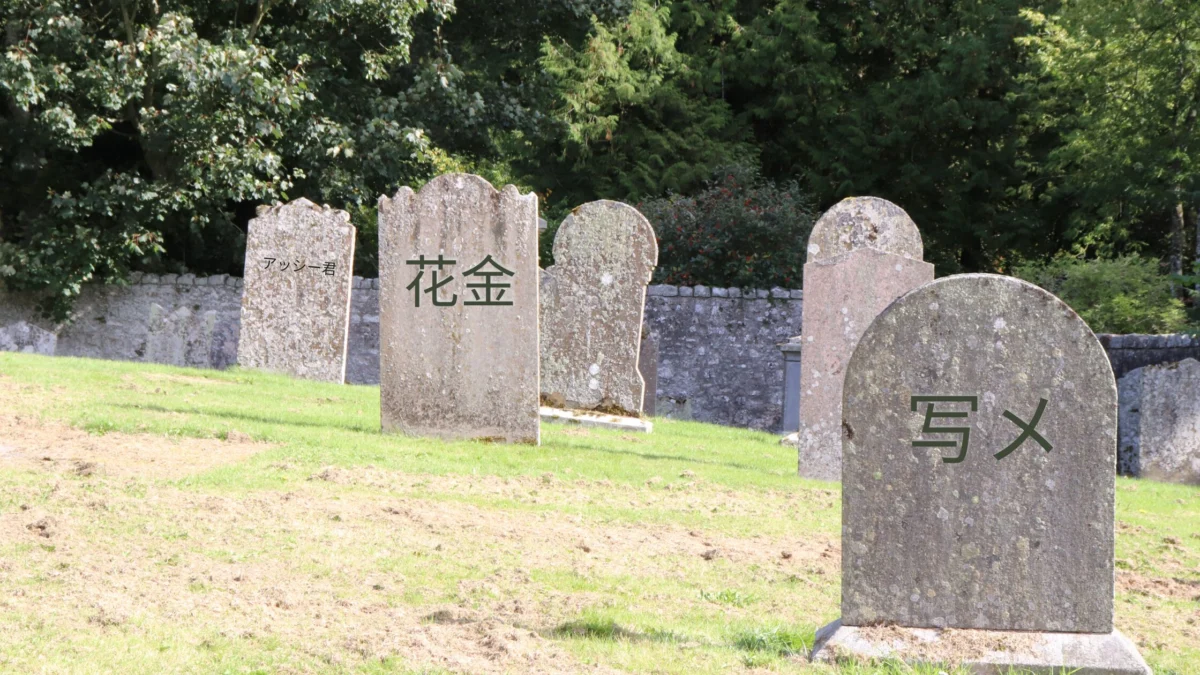
In the digital age, languages are often thought of as living, ever-expanding organisms. In the English-speaking world, we rarely "delete" words; we archive them as archaic, mark them with a dagger in the dictionary, or allow them to linger in the footnotes of literature. But in Japan, the approach to language evolution is far more clinical. When a word stops serving its purpose, it doesn’t just go out of style—it is ceremoniously executed.
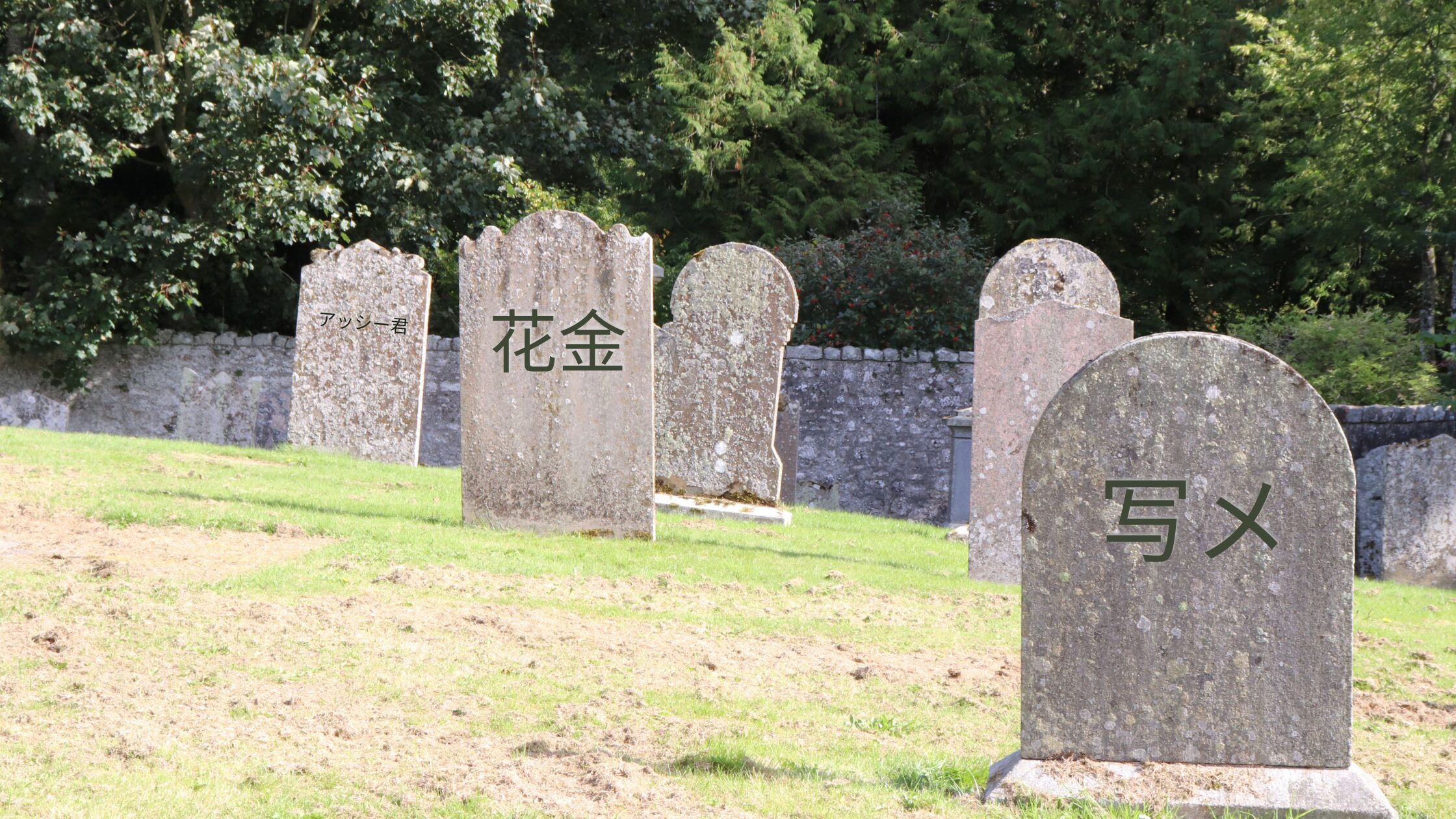
Recently, this phenomenon captured the public imagination when Chihara Minori, the celebrated voice actress famous for her role as Nagato Yuki in the seminal anime The Melancholy of Haruhi Suzumiya, posted a casual update on X (formerly Twitter). Showing off a new shirt, she used the term o-nyuu—a piece of slang derived from the English "new," coupled with the polite Japanese honorific "o."
"Wait," she mused in a follow-up post, "is o-nyuu a dead word?" The response was swift, nostalgic, and slightly mocking, highlighting a linguistic divide that spans generations. For Chihara, the term felt natural; for younger Gen Z users, it sounded like a relic from a bygone era. This interaction serves as a perfect microcosm for the "de-languaging" currently happening in Japanese society, where the speed of cultural turnover is so rapid that the dictionary itself has become a battleground.
The Life and Death of a Slang Term: A Chronology
The term o-nyuu is a fascinating study in linguistic longevity. Emerging in the 1970s, it became a staple of the Japanese lexicon for half a century, used to describe the excitement of acquiring a fresh item—usually clothing. However, as the digital age accelerated the pace of slang turnover, the term began to lose its luster.
By 2017, industry professionals were already flagging o-nyuu as a "dead word." Katayama Miki of ReRise Consulting famously recounted an incident where she used the word to describe a colleague’s new laptop, only to suffer the embarrassment of realizing the term had "officially" been considered obsolete since roughly 2007. Despite this, as evidenced by Chihara’s post, the word persists in the wild, kept alive by those who grew up with it, even as it vanishes from the vernacular of the youth.
This tension between official lexicographical record and organic usage is the central theme of Japan’s evolving language policy. Unlike the slow, natural decay seen in many Western languages, the Japanese approach to "dead words" is often top-down, driven by major institutions like Sanseido, the publisher of the Sanseido Kokugo Jiten (Sankoku).
The Great Slang Defenestration of 2021
In 2021, the lexicographical world in Japan experienced a seismic shift. The Sanseido Kokugo Jiten, under the guidance of esteemed editor Iima Hiroaki, undertook the most ambitious—and perhaps controversial—culling of vocabulary in its history. In a single update, the dictionary added 3,500 new entries to reflect the modern world, while simultaneously "executing" 1,100 dated words.
This was not a passive update; it was a public declaration of relevance. Iima Hiroaki defended the decision, noting that the dictionary must serve as a mirror of contemporary usage rather than a static museum of history. The deletions were based on rigorous analysis of search patterns, usage frequency in media, and sociological relevance.
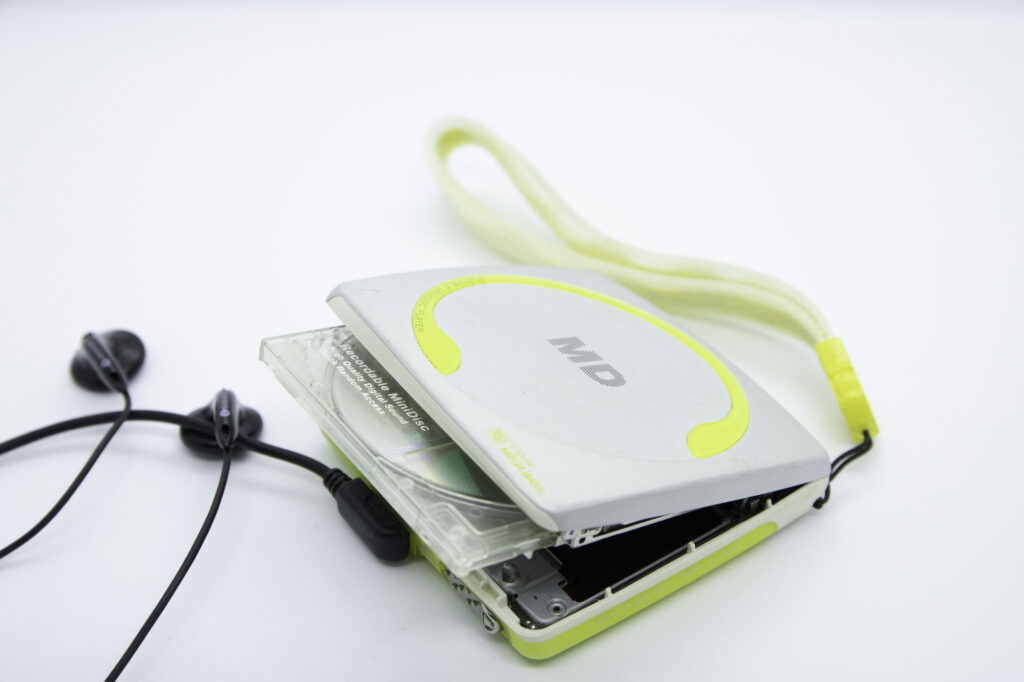
The logic of the cut was often brutal. For example, "MD" (MiniDisc) was unceremoniously removed because the technology itself had been effectively dead since Sony discontinued production in 2013. Conversely, "cassette tape" (kasetto teepu) was spared, not because it is modern, but because it has transcended its utility to become a cultural artifact of the "retro" movement. This illustrates a crucial rule in the Japanese linguistic lifecycle: a word can survive if it is forgotten, but it cannot survive if it is merely obsolete.
Supporting Data: Why Words "Age Out"
Linguists and researchers have long tracked the "death" of Japanese vocabulary by categorizing the specific eras of decline. These clusters of dying words provide a roadmap of Japan’s social and economic history:
1. The Bubble-Era Relics (Late Showa)
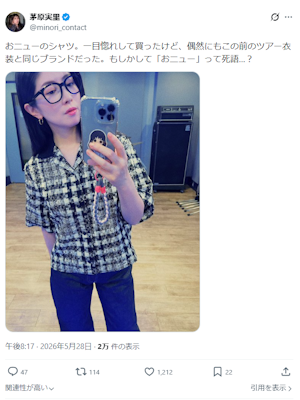
The 1980s and early 90s were characterized by unprecedented economic optimism, and the language of the time reflected this. Terms like hana-kin ("Flower Friday") became the Japanese equivalent of TGIF, highlighting an era of intense work-hard-play-hard culture. Similarly, itameshi (Italian food) was a status symbol, reflecting a time when imported cuisine was synonymous with high society. Perhaps most indicative of the era’s decline were gendered terms like sutchii (a shorthand for stewardess), which were discarded as Japan shifted toward more egalitarian professional standards in the Heisei era.
2. The Kogal Explosion (Mid-90s)
The culture of the gyaru—the high-fashion, high-energy youth subculture of the 90s—produced a massive lexicon that has since been purged. Words like cho-beriba (very bad) and sha-me (referring to photos taken on early flip phones) are now essentially extinct. The very word ko-gyaru itself, once the defining term for a generation, now feels like a chapter from a history book.
3. The "Boyfriend" Taxonomy
Perhaps the most peculiar set of deleted words involves the specific, transactional language used by women to categorize men in the bubble era. There was the asshii-kun (a man who drives you home), the messhii-kun (a man who pays for dinner), and the mitsugu-kun (a man who buys you expensive presents). These terms were once cultural staples, but as modern dating norms shifted away from the "Three Cs" of the bubble era, these terms were deemed archaic and removed from the modern lexicon.
Official Responses and the "Memorialization" of Language
The decision to delete these words has sparked a secondary industry: the memorialization of the deceased. In 2023, Sanseido published the Dictionary of Words That Disappeared from the National Language Dictionary, a book that functions as a tombstone for the thousands of terms they discarded. They even went as far as releasing a "dead words" sticker pack for the messaging app LINE, allowing users to ironically keep these words alive in digital conversation.
Other scholars, such as Yonekawa Akihiko, a professor emeritus at Baika Women’s University, have also contributed to this field. His book, The Dead Words Dictionary: A Forensic Journal of Slang, provides a scholarly look at the linguistic turnover that defines modern Japan. These projects serve an important purpose: they ensure that while the language may be purged from the "general-use" dictionary, it is not lost to the ether of time.
Implications: The Fluidity of the Modern Lexicon
The death of these words forces us to ask: what does it mean to be a "living language"? Some linguists argue that the "dead word" phase is significantly tighter than previously thought, often spanning only five to ten years. This defies the traditional view that linguistic evolution follows the rise and fall of imperial eras.
While words like abekku (a term for a couple, derived from the French "avec") died out in the 1970s after a long life, many modern terms are dying in under a decade. This rapid-fire obsolescence is a direct result of the internet, where trends—and the language used to describe them—are commodified and consumed at a blistering pace.
However, the door is never fully closed. We are currently seeing a resurgence of "Heisei retro" culture, where items like loose socks and early flip-phone aesthetics are finding new life among teenagers who weren’t even born when these trends first peaked. Whether these old words will make a full-scale comeback remains to be seen, but they face stiff competition from a new generation of viral slang, such as kaiwai, which is currently dominating the discourse.
Ultimately, the phenomenon of "de-languaging" in Japan is a reminder that language is a fragile consensus. It requires constant maintenance and, occasionally, a ruthless pruning to keep it functional. As Yonekawa Akihiko famously noted, "Words are fated to be born and die." In Japan, the dictionary editors are simply the ones holding the scythe, ensuring that the garden of the Japanese language remains as sharp, efficient, and modern as the society that speaks it.
For now, those clinging to o-nyuu may find themselves in the minority, but in the fast-moving world of Japanese slang, being a little bit "dead" might just be the most authentic way to stay remembered.


 Neng Nana
 Asro
Asro