

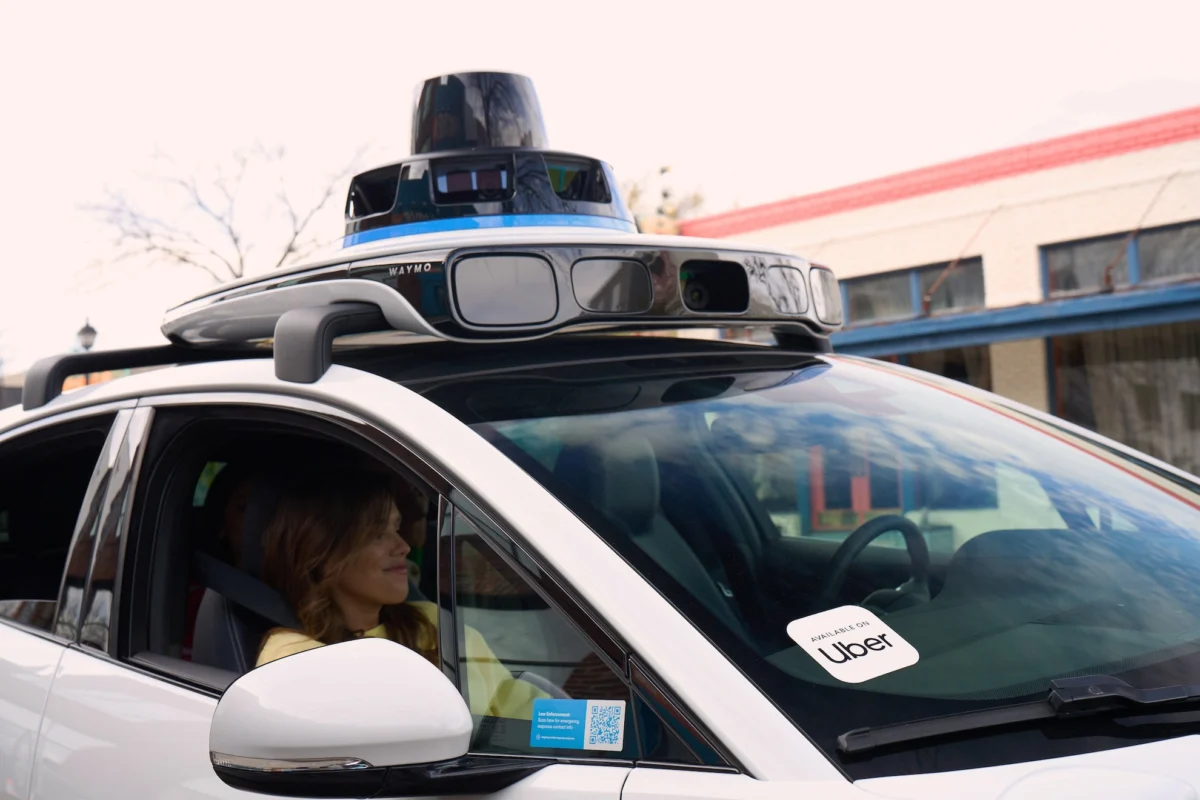
The battle for the future of urban mobility is no longer being fought solely in the laboratories of Silicon Valley or on the asphalt of test tracks. Instead, the fight has migrated to the halls of the District of Columbia’s government, where a proposed legislative overhaul has turned former partners into fierce political rivals. At the heart of the conflict is a high-stakes disagreement over how autonomous vehicles (AVs) should be integrated into city life—and whether ride-hailing giants like Uber or robotaxi developers like Waymo should hold the keys to the kingdom.
The proposed legislation, intended to update the District’s decade-old Autonomous Vehicle Act, has become a lightning rod for an existential debate. While the bill aims to pave the way for driverless commercial operations, it has inadvertently exposed a deep strategic divide: Should robotaxis operate as standalone, proprietary services, or should they be tethered to existing, human-driven ride-hailing networks? For Uber, the answer is a firm "hybrid," while Waymo, the Alphabet-owned leader in the space, is pushing for an open, unencumbered path to deployment.
A Chronology of Conflict: From Courtroom to Capitol
The history between Uber and Waymo is as complex as the software that powers their vehicles. Their relationship began in acrimony; in 2017, Waymo sued Uber over allegations of trade secret theft regarding lidar technology. The explosive trial, which famously featured the line "laser is the sauce," ended in a settlement that left a lingering frost between the two firms.
By 2020, Uber had pivoted away from in-house AV development, selling its "Advanced Technologies Group" (ATG) to Aurora. This strategic retreat necessitated a change in philosophy: if Uber couldn’t build the cars, it would build the marketplace. In 2023, the two companies appeared to bury the hatchet, announcing a partnership that allowed Waymo vehicles to be hailed through the Uber app in Phoenix. This "frenemy" dynamic seemingly solidified in March 2025 at SXSW, where the companies celebrated an expansion into Austin and Atlanta.
However, the honeymoon was short-lived. By May 2026, the partnership in Phoenix quietly dissolved. The tension has since moved from operational friction to ideological warfare. Uber’s recent lobbying efforts in D.C. and New Jersey represent a departure from its past "move fast and break things" era, signaling a sophisticated, policy-driven attempt to codify a "hybrid" model into law—a move that Waymo and other developers view as a cynical attempt at regulatory capture.
The Legislative Battlefield
The bill, introduced by Councilmember Charles Allen in May, proposes a significant modernization of D.C.’s AV framework. Currently, companies like Waymo and Zoox can test their vehicles in the District, but only with a human safety operator behind the wheel. The proposed legislation would authorize full driverless commercial operations, contingent upon meeting stringent requirements, including:
- Financial Security: A minimum of $5 million in liability insurance coverage.
- Safety Transparency: Mandatory reporting of all crash data, with an eight-hour window for commercial fleets.
- The VMT Tax: A controversial $0.15 per-mile tax on robotaxis, with revenue split between public transit and workforce development programs for displaced human drivers.
For many in the industry, the VMT tax is a non-starter. However, the broader, more contentious issue is the regulatory framework itself. Uber is actively lobbying for a mandate that would require AVs to operate within a hybrid network—meaning every robotaxi must, by law, be accessible via a platform that also provides human-driven rides.

"We have already seen in other jurisdictions how a flawed, first-party only regulatory approach can disrupt a city," argued Javi Correoso, Uber’s lead for U.S. policy, during a recent D.C. Council roundtable. Uber’s data suggests that one AV displaces roughly four human drivers, and the company is positioning itself as the protector of the gig-economy workforce and the guarantor of transportation equity.
Supporting Data and Industry Voices
The debate has drawn a wide array of stakeholders, from labor unions like the Teamsters to disability rights advocates and highway safety proponents. The sheer diversity of voices at the upcoming D.C. hearing underscores the magnitude of the shift.
On one side, the "Coalition for Accountability and Road Safety" has launched a grassroots campaign against the bill, though questions remain regarding the organization’s funding sources, which appear tied to New York-based lobbying firms representing labor interests. On the other side, proponents of the bill argue that it provides a clear, safe, and equitable path forward for innovation.
Greg Rogers, executive director of the nonprofit think tank The Innovation Majority, characterizes Uber’s hybrid proposal as a transparent attempt to stifle competition. "Mobility is already a marketplace," Rogers stated. "Any argument that you can improve consumer welfare by forcing certain business models and canceling out others does not improve people’s mobility choices. It risks only further entrenching interests and charging rent on anyone who seeks to operate AVs."
The "Hybrid" Vision vs. The "AV-Only" Future
Uber’s pivot to a pro-regulation stance is a calculated move to avoid the corporate crises of its past. As Chief Operating Officer Andrew MacDonald noted in a recent LinkedIn post, the company’s former "grow-at-all-costs" mentality damaged public trust. Today, Uber claims it wants to "partner with cities."
Their "hybrid" vision is effectively a hedge. By integrating AVs into its existing app, Uber remains the primary interface for the consumer, collecting data and maintaining market dominance regardless of whose vehicle is under the hood. Uber has even launched "AV Labs," a division dedicated to collecting real-world driving data to share with partners—or to use as leverage in negotiations.
Waymo, conversely, maintains that such requirements are an unnecessary barrier to entry. In a statement to the press, Waymo spokesperson Ethan Teicher emphasized that the company welcomes changes that clarify the rules but opposes efforts to "limit AVs to specific types of networks."

The disagreement is stark:
- Uber’s Perspective: Without a hybrid model, robotaxis will create congestion, remove vital human-provided accessibility services for the disabled, and create a "de facto monopoly" for companies like Waymo.
- Waymo’s Perspective: Regulation should support public transit and equitable access without dictating the business model of the technology providers.
Global Implications: A Looming Showdown
The D.C. bill is not an isolated incident. It is a microcosm of a global regulatory tug-of-war. Both companies are already preparing for similar confrontations in London and other major metropolitan hubs.
For the D.C. Council, the pressure is immense. With Mayor Muriel Bowser’s term ending in January, there is a frantic, if optimistic, desire to see legislation passed before the transition. However, the complexity of the arguments—ranging from labor displacement and the ethics of VMT taxes to the fundamental nature of marketplace competition—suggests that the resolution may be months, if not years, away.
The outcome in Washington will likely serve as a blueprint for the rest of the nation. If Uber succeeds in forcing a hybrid model, the autonomous vehicle industry will effectively become a "feature" within the existing ride-hailing ecosystem. If Waymo and the proponents of the current bill succeed, the future of urban transport will likely be defined by a more fragmented, platform-agnostic market.
Ultimately, the battle between Uber and Waymo is a fight over who controls the "last mile" of the 21st century. As the two giants prepare to face off at Monday’s hearing, one thing is certain: the era of the robotaxi has arrived, but the rules of engagement are still being written in the volatile ink of political compromise. Whether those rules favor the incumbent platforms or the tech-heavy developers will determine not just the stock prices of these companies, but the daily commute of millions of city dwellers.











