

By the Graphic Policy Editorial Team
May 30, 2026
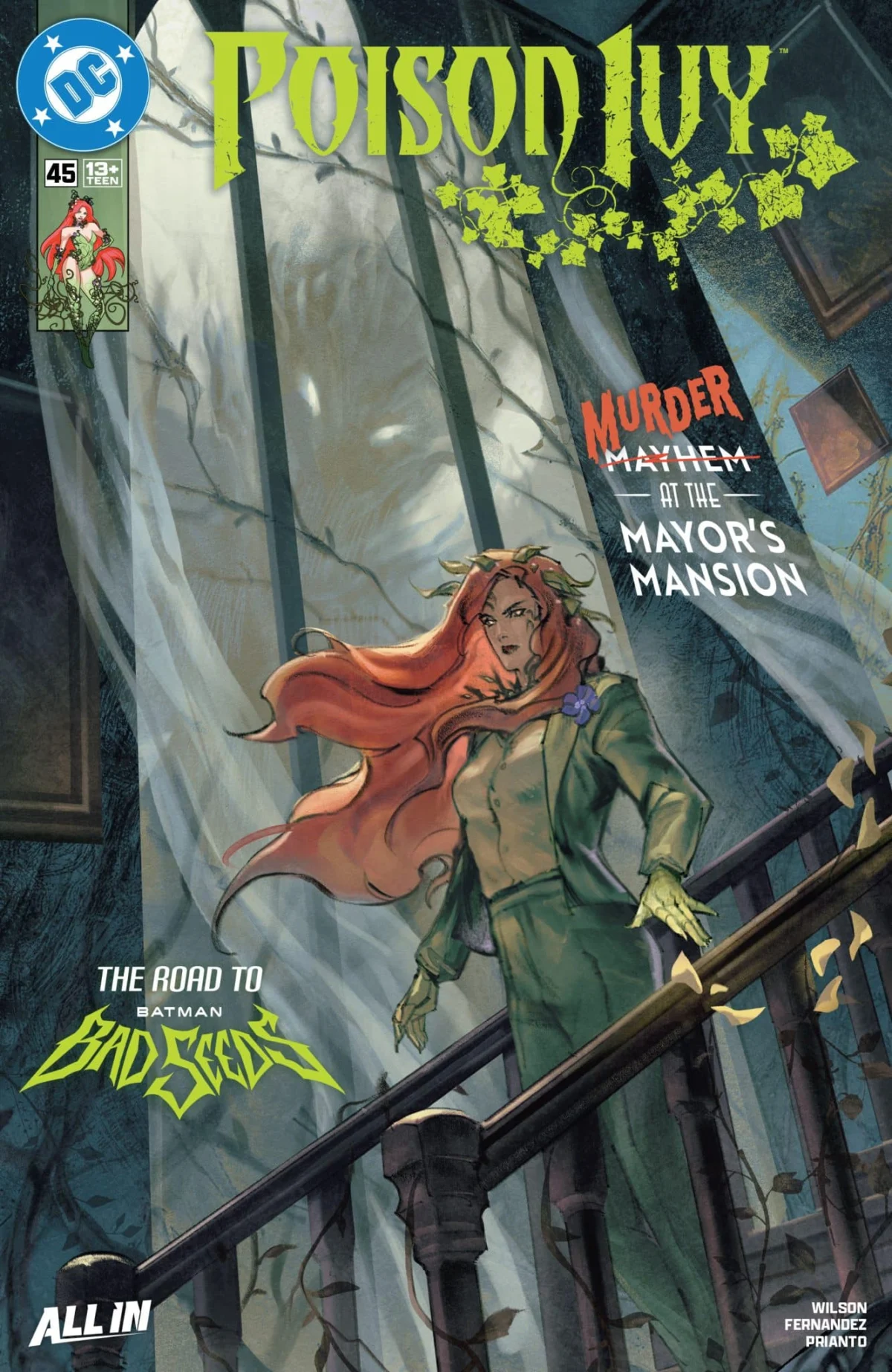
In the ever-shifting landscape of Gotham City’s political ecosystem, few figures have been as polarizing or as enigmatic as Pamela Isley, known to the world as Poison Ivy. As her tenure as Mayor continues to unfold, the latest installment in the DC Comics series, Poison Ivy #45, promises to bring the fragility of her administration to the forefront. With writer G. Willow Wilson at the helm and evocative art by Leandro Fernández, this issue delves into the growing instability surrounding the botanical powerhouse’s governance.
Main Facts: A City Under Pressure
The premise of Poison Ivy #45 is deceptively simple but laden with thematic tension. As the issue opens, readers are presented with a Mayor who is physically and mentally exhausted. The narrative hook—"Monsters at the Mayor’s Manor!"—serves as both a literal threat to the protagonist and a metaphorical representation of the mounting political opposition she faces.
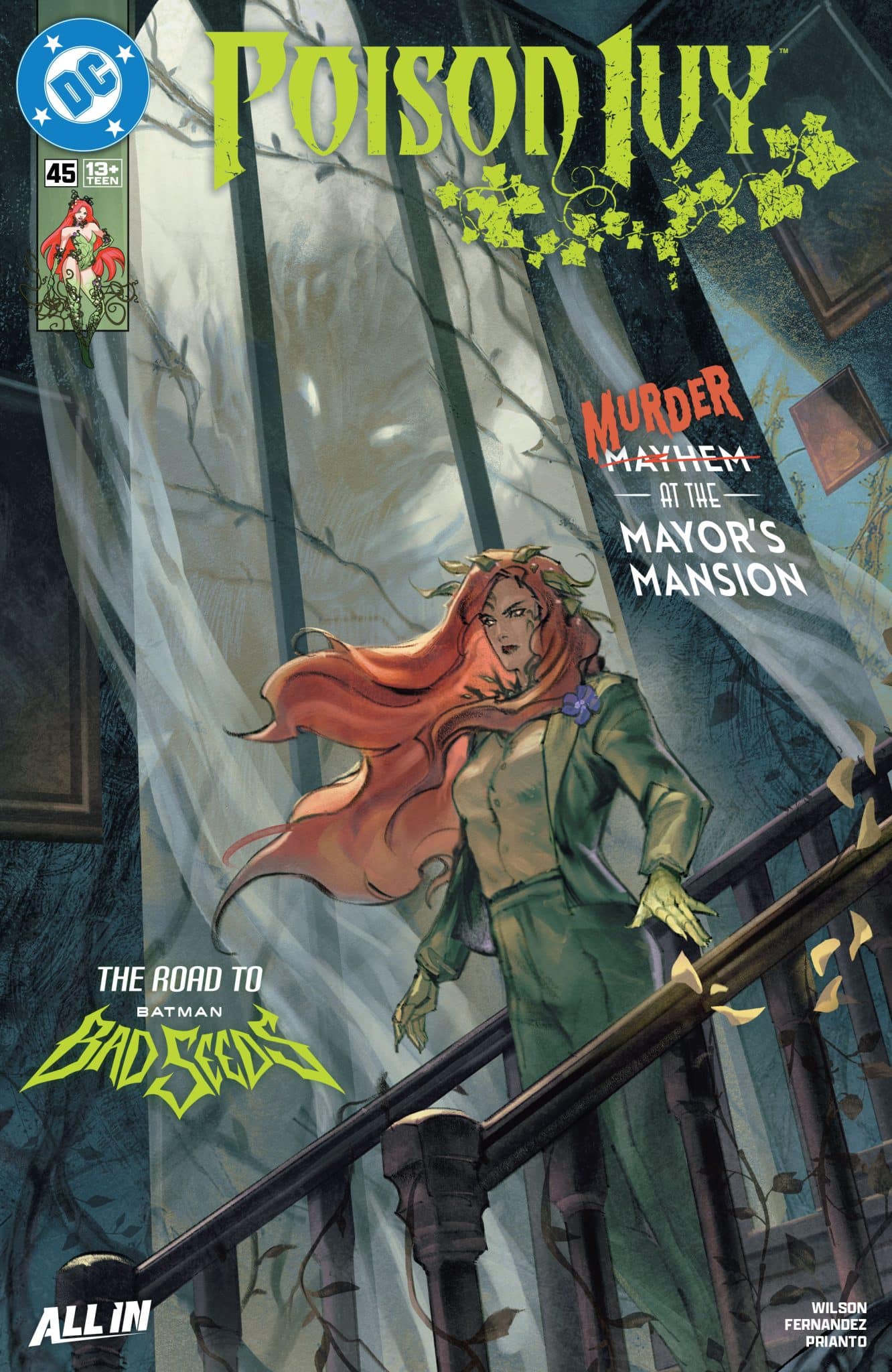
The central conflict revolves around the rapid erosion of her support base. Isley, who ascended to power with a platform focused on ecological restoration and a radical overhaul of Gotham’s urban infrastructure, now finds herself battling a tide of public disillusionment. The promotional materials for the issue confirm that Ivy is "losing supporters quicker than she can kill them," a chilling line that underscores the violent nature of her regime. When she attempts to retreat to her private residence for a brief respite, she discovers that her sanctuary has been compromised by an unknown, lurking menace.
Chronology of a Controversial Tenure
To understand the gravity of the events in issue #45, one must look back at the trajectory of Pamela Isley’s rise to power. Her transition from a notorious eco-terrorist to a legitimate political figure was marked by a series of unconventional strategies.
- Phase One: The Grassroots Campaign. Ivy initially gained traction by addressing the systemic neglect of Gotham’s lower-income neighborhoods, providing sustainable food sources and green spaces where the city had previously failed.
- Phase Two: The Election. Capitalizing on a populace exhausted by the perpetual cycles of crime and corruption, Isley utilized her unique abilities to influence public opinion and ensure her landslide victory.
- Phase Three: The Institutionalization of Power. Once in office, the implementation of "The Green Initiative" led to massive urban restructuring, which, while environmentally sound, triggered significant economic and social displacement.
- Phase Four: The Current Crisis. As of May 2026, we find the "Mayor’s Manor" arc. This represents a pivot from external political maneuvering to a deeply personal, claustrophobic struggle. The threats are no longer just coming from the City Council or the Bat-Family; they are penetrating the inner sanctum of her private life.
Supporting Data: The Erosion of the "Ivy Coalition"
Political analysts within the DC Universe have noted a distinct downward trend in Mayor Isley’s approval ratings. According to internal reports from the Gotham City Civic Engagement Bureau, several factors are contributing to this decline:

- Public Safety Concerns: While environmental metrics have improved by 40% under her administration, the crime rate—specifically incidents involving metahuman activity—has surged.
- Authoritarian Tendencies: The "kill them" rhetoric referenced in the issue’s summary is not merely hyperbole. The disappearance of several prominent political dissenters has created a climate of fear, even among her most loyal environmentalist allies.
- The "Green" vs. "Grey" Divide: The divide between the city’s infrastructure and the rapidly encroaching flora has led to a significant loss of support from the industrial and corporate sectors, which are the traditional lifeblood of Gotham’s tax base.
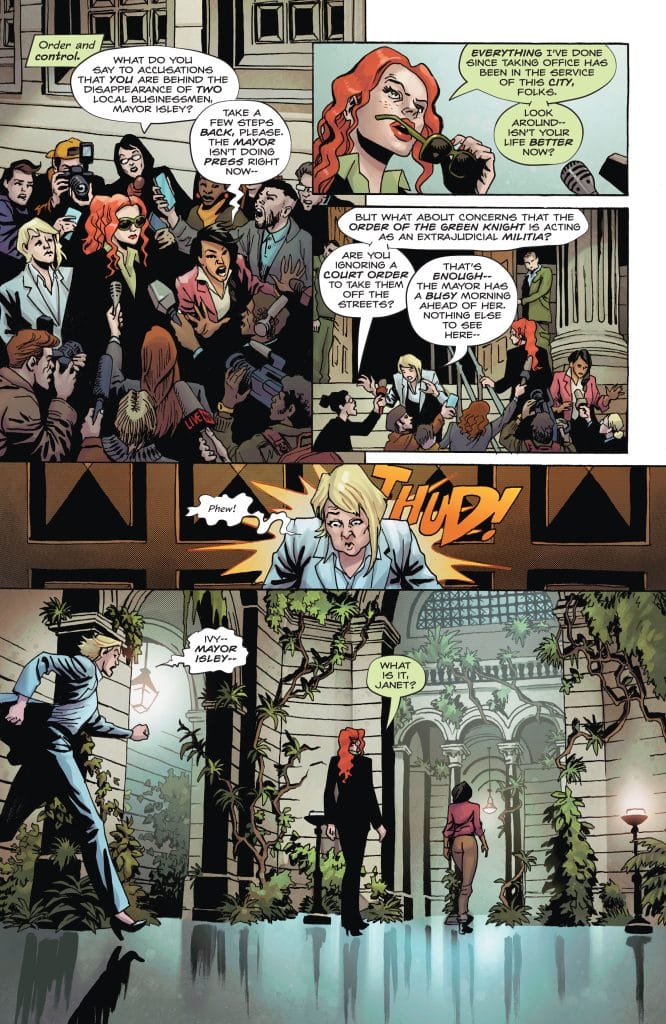
Leandro Fernández’s art captures this decay through a heavy, shadow-drenched aesthetic. The visual contrast between the lush, organic overgrowth within the Manor and the sterile, cold architecture of the city outside serves as a constant reminder of the disconnect between Isley’s vision and the reality of the citizenry she governs.
Official Responses and Public Discourse
The office of the Mayor has remained notoriously tight-lipped regarding the events of the upcoming issue. A brief, cryptic statement released by an administrative spokesperson early this morning noted: "Mayor Isley is aware of the rumors regarding security breaches at the private residence. She remains fully committed to the growth of Gotham and will not be intimidated by those who seek to stifle the natural order of progress."
Conversely, opposition leaders in the Gotham City Council have seized upon the news. Councilman Julian Day, a long-time critic of the administration, issued a blistering rebuttal: "We have long warned that a city cannot be run by a force of nature. This ‘menace’ at the Mayor’s doorstep is simply the karma of an administration built on coercion rather than consensus. The people of Gotham are tired of being treated like fertilizer."
Implications for the Future of Gotham
The implications of Poison Ivy #45 are significant, not just for the character, but for the status quo of the DC Universe at large. If the Mayor cannot secure her own home, the message to the public is clear: her control over the city is slipping.
A Turning Point in Character Development
G. Willow Wilson’s run has been lauded for its nuanced exploration of agency and morality. By forcing Ivy into a domestic setting—a space that should be private—Wilson is stripping away the "Mayor" persona to expose the vulnerabilities of the woman underneath. This suggests that the remainder of the 2026 narrative will focus on the cost of power. Does one have to sacrifice their humanity to save the planet? Isley has been struggling with this question for years, and the events of issue #45 may force a final, definitive answer.
The Potential for Political Upheaval
Should the "menace" at the Mayor’s Manor prove to be a catalyst for her removal from office, the political vacuum would be catastrophic. Gotham is a city that thrives on chaos; a leaderless city, or one in the midst of a violent power transition, would likely invite further interventions from the criminal underworld and the costumed vigilante community alike.
Conclusion: The Must-Read Issue of the Spring
As the release date of Poison Ivy #45 approaches, the anticipation is palpable. Whether one views Pamela Isley as a revolutionary hero or a dangerous tyrant, her story remains the most compelling political drama in modern comics.
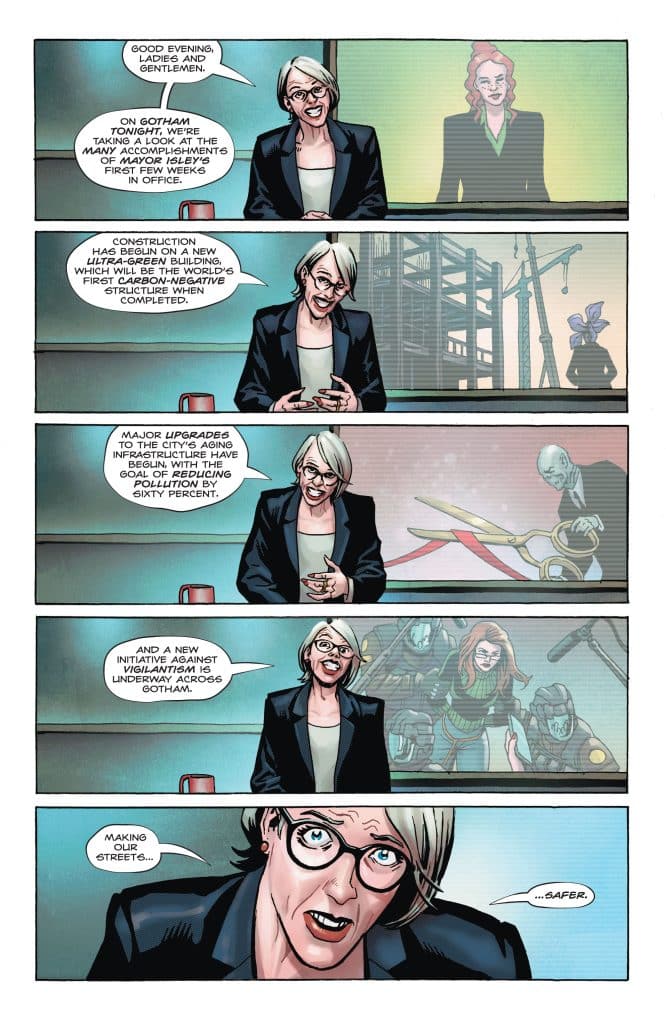
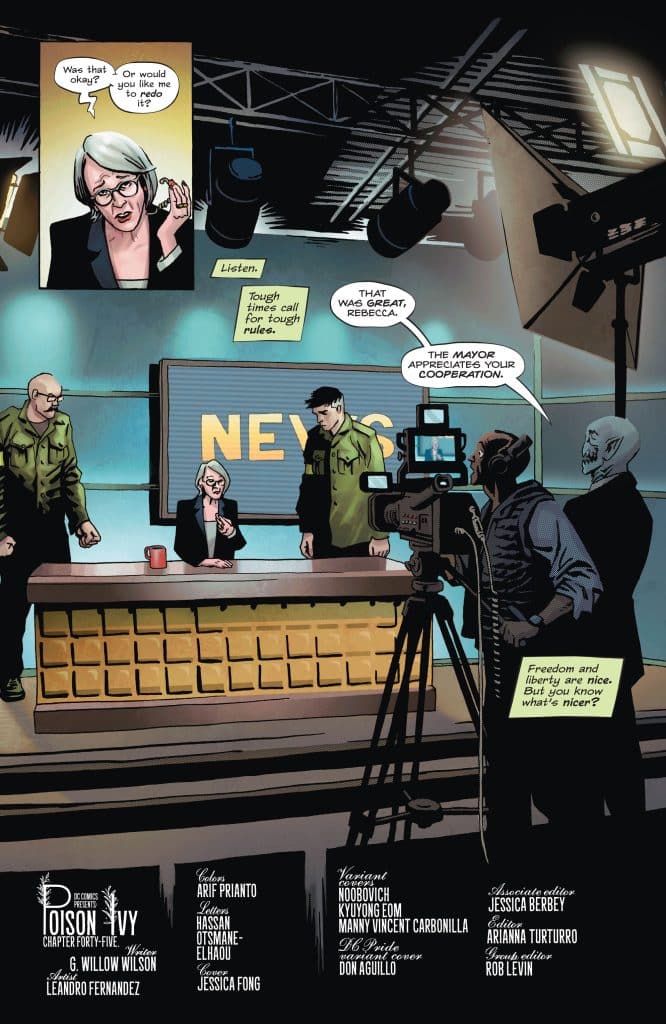
Readers are encouraged to examine the provided preview pages carefully. The subtle cues in the background imagery—the wilting plants, the strained expressions on the faces of her staff—all point to a story that is as much about the failure of leadership as it is about the battle for survival.
The question remains: who or what is behind the threat at the Mayor’s Manor? Is it a remnant of her past, a rival from the criminal sphere, or perhaps a manifestation of her own internal demons? We will find out when Poison Ivy #45 hits shelves on May 30, 2026.
Graphic Policy remains your premier source for where comic books and politics meet. For more in-depth analysis of the Gotham political scene and the latest in industry news, be sure to subscribe to our newsletter and join the conversation in our comments section below.










No comments yet. Be the first to join the conversation!