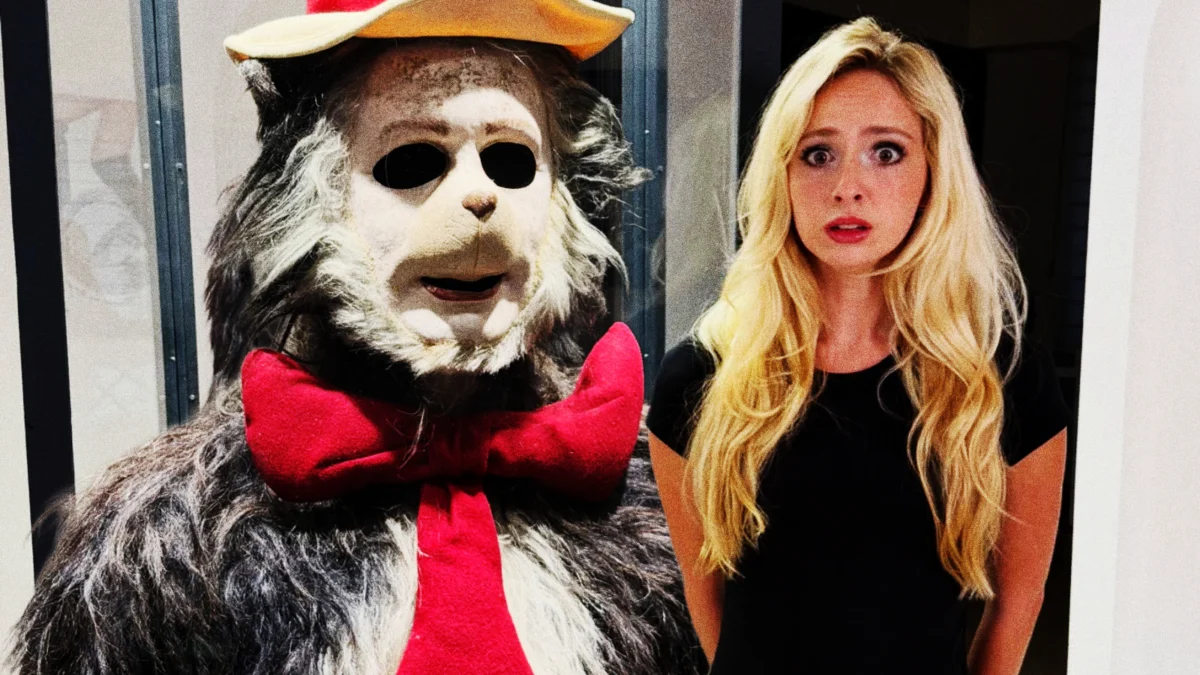
In the digital age, the intersection of pop culture memorabilia and internet folklore often creates a breeding ground for bizarre, unverified narratives. The latest case involves controversial Kick streamer Natalie Reynolds, who has captured headlines—and raised eyebrows—by claiming that the screen-used costume from the 2003 film The Cat in the Hat is "haunted" by the spirit of its lead actor, Mike Myers.
The claim, which has been met with widespread skepticism, is the latest in a series of headline-grabbing maneuvers from Reynolds, a personality who has previously courted controversy for her high-stakes, sometimes reckless, content. While the narrative of a haunted suit has garnered significant social media engagement, it stands in stark contrast to the reality of the prop’s provenance, the physical condition of the item, and the verifiable fact that Mike Myers remains very much alive and active in the entertainment industry.
The Auction: A High-Stakes Purchase
The saga began in late August 2026, when the official Propstore auction for film memorabilia concluded. Among the items listed was the original, heavily weathered costume worn by Mike Myers in the critically panned 2003 live-action adaptation of Dr. Seuss’s The Cat in the Hat.
According to official records from the Propstore auction house, the lot attracted significant interest, garnering eight individual bids before finally selling on August 26. While Reynolds initially claimed to her audience that her winning bid was $20,000, she later clarified that the final total, inclusive of premiums and associated fees, reached approximately $25,000.
The valuation, while substantial, sat within the pre-auction estimate provided by experts, who had valued the lot between $12,000 and $24,000. The item itself is a relic of a film that has become a cult object of mockery, known for its bizarre visual style and the unsettling aesthetic of the Cat’s prosthetic suit.
Chronology of a Viral "Haunting"
The narrative of the "haunted suit" did not begin with the arrival of the package; rather, it was carefully curated by Reynolds in the weeks leading up to the delivery.
- Pre-Arrival Teasing: Before the costume even reached her residence, Reynolds released a series of videos claiming that the "soul" of Mike Myers was trapped within the fabric of the suit. She asserted that a previous, unnamed owner had reached out to her with a grave warning: never stare directly into the costume’s eyes.
- The Unboxing: Upon receiving the costume, Reynolds opted for a theatrical presentation, placing the suit inside a large, illuminated glass display case in her home. She began characterizing the suit as "one of the most haunted props in movie history," leveraging the uncanny nature of the mask to fuel her narrative.
- The "Eyes" Incident: In a subsequent Reel, Reynolds filmed herself inspecting the mask in low light. She claimed to witness eyes moving behind the hollow sockets of the costume. The video, designed to elicit fear, was met with immediate pushback from her audience, many of whom pointed out that the "eyes" she was observing were merely part of the structural apparatus used to keep the costume’s head upright.
- Sustained Engagement: Following the backlash, Reynolds continued to post content centered on the costume, effectively turning a piece of film history into a recurring character in her livestreaming persona.
The Reality of the Prop: Professional Assessment
Beyond the supernatural claims, there is a physical reality to the Cat in the Hat costume. Propstore’s official auction listing—a document grounded in objective cataloging—makes absolutely no mention of paranormal activity.
Instead, the documentation highlights the degradation of the materials. The listing details "grime across the mask," "matted synthetic fur," and a Spandex bodysuit clearly labeled "Mike Myers #1." These elements, while perhaps macabre to some, are standard for screen-used props that have spent two decades in storage. The "unsettling" appearance is not a sign of a restless spirit, but rather the result of chemical breakdown in synthetic fabrics and the inherent uncanniness of the film’s original character design.
The Mike Myers Paradox
The most glaring logical hurdle in Reynolds’ narrative is the current status of Mike Myers. The actor, now 63, is not only alive but continues to be a public figure. His most recent high-profile confirmation came as recently as June 2026, when he officially announced plans for Austin Powers 4.
The juxtaposition of a streamer claiming a man’s soul is "trapped" in a closet while that same man is actively negotiating multi-million dollar film deals has become a focal point of the criticism leveled at Reynolds. Psychologists and media analysts suggest that such narratives are often a form of "engagement bait," where the creator prioritizes the viral nature of a bizarre claim over the veracity of the information being presented.
Contextualizing the "Killer Cat" Internet Phenomenon
Reynolds’ claim does not exist in a vacuum. It is the latest evolution of an internet conspiracy surrounding the 2003 film’s costume. For years, the internet has been fascinated by the nightmarish quality of the Cat’s design.
This fascination recently hit a breaking point when AI-generated images—depicting the Cat stalking suburban neighborhoods at night—went viral across platforms like X (formerly Twitter) and TikTok. The images were so convincing that they triggered mass panic in parts of the United Kingdom and Ireland, forcing local law enforcement agencies to issue official statements debunking the existence of a "killer Cat in the Hat" roaming the streets.
Reynolds’ decision to frame her expensive purchase within a supernatural context appears to be an attempt to capitalize on this existing "creepy-pasta" aesthetic. By positioning herself as the guardian of an "entity," she effectively aligns her brand with the dark, surrealist corners of the internet that prioritize aesthetic horror over logical consistency.
The Broader Implications for Influencer Culture
The incident raises significant questions about the responsibility of digital influencers when presenting information to large, impressionable audiences. Reynolds is no stranger to controversy; earlier in 2026, she faced intense backlash after a livestream captured her encouraging a woman to jump into a lake, a stunt that was widely condemned as dangerous and irresponsible.
When influencers pivot from standard lifestyle content to the peddling of paranormal hoaxes, they create a blurred line between entertainment and misinformation. While the "haunted costume" narrative may seem harmless on its face, it reinforces a culture where truth is subordinate to the "algorithm."
For the auction industry, these incidents present a unique challenge. While Propstore benefits from the high-value sales driven by influencers and collectors, the subsequent "haunting" narratives can distract from the actual historical or cinematic value of the items.
Conclusion: A Manufactured Mystery
Ultimately, the $25,000 Cat in the Hat costume is a fascinating piece of cinematic history—a testament to the high-budget, bizarre creative choices of early 2000s Hollywood. Its value lies in its provenance, its design, and the nostalgia (or infamy) associated with the film.
Natalie Reynolds’ attempt to frame the purchase as a supernatural event speaks volumes about the current state of digital content creation. By ignoring the physical reality of the costume’s condition and the very public, active life of Mike Myers, Reynolds has prioritized a viral hook over a coherent story. As the digital landscape continues to evolve, the distinction between a harmless bit of performance art and the intentional spread of nonsense will remain a critical point of contention for audiences and creators alike.
For now, the costume remains in its glass case—a matted, grimy, and entirely inanimate object, serving as a reminder that not every mystery is a ghost story, and not every viral claim requires a debunking. Sometimes, a prop is just a prop.