

The race for artificial intelligence dominance has transcended the terrestrial bounds of silicon valleys and subterranean server farms. As the global demand for compute power reaches a fever pitch, industry titans are looking toward the final frontier. Elon Musk, the CEO of SpaceX, has long championed the concept of orbital data centers—a constellation of satellites designed to host AI processing power far above the reach of terrestrial regulations and energy grid limitations.
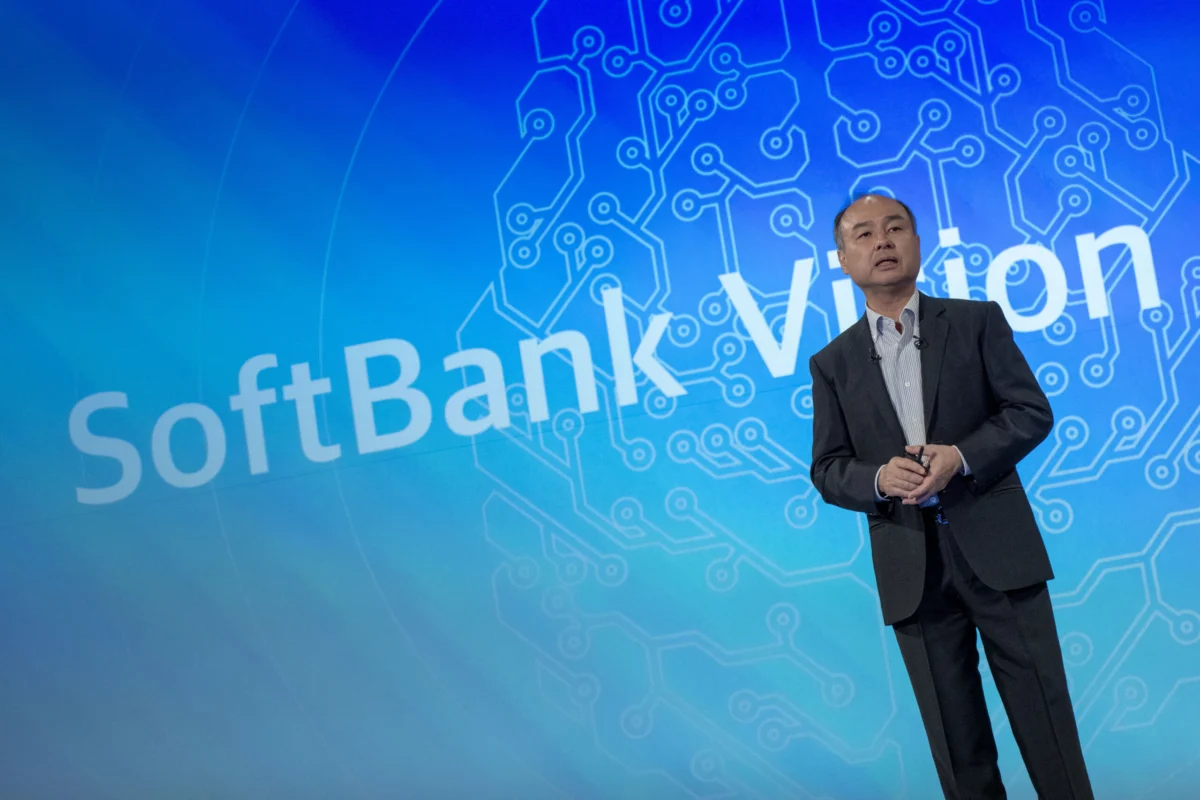
However, the vision has met with significant pushback from some of the most influential figures in global finance and technology. Masayoshi Son, the founder and CEO of SoftBank, recently cast doubt on the viability of space-based compute, framing it as an impractical distraction in a race where the next few years, not the next decade, will determine the ultimate winners of the AI revolution.
The Core Contention: Economics vs. Ambition
At the heart of the disagreement is a fundamental divergence in timelines and priorities. Musk’s proposal for orbital data centers rests on the assumption that Earth-bound infrastructure will eventually hit a wall—be it from energy constraints, environmental regulations, or the "NIMBY" (Not In My Backyard) phenomenon that slows the construction of massive power-hungry data centers.
Musk envisions a future where space-based assets operate with the efficiency of near-unlimited solar energy and the agility of a global satellite network. However, skeptics like Masayoshi Son argue that the physics and economics of such an endeavor are currently prohibitive. During a recent shareholder meeting, Son emphasized that while the concept is imaginative, it does little to address the "compute crunch" that companies are facing right now.
"In the battle for AI, the next few years will be far more important than what might happen a decade or so from now," Son remarked. His critique centers on the urgency of the market; investors are looking for immediate scaling solutions, and building a sustainable, high-performance data center infrastructure in low-Earth orbit (LEO) is a project that would likely take years to achieve operational maturity.
A Chronology of the "Neo-Cloud" Pivot
To understand why orbital data centers have become a topic of intense scrutiny, one must look at the broader shift toward what some industry observers call the "neo-cloud" era.
- 2024–2025: The explosion of generative AI creates a desperate global shortage of GPU compute. Major players begin pivoting business models to prioritize compute leasing.
- Early 2026: SpaceX begins integrating AI-ready compute capabilities into its Starlink satellite constellation, testing the feasibility of decentralized, space-borne processing.
- May 2026: SoftBank announces a massive $75 billion investment in terrestrial data centers, primarily focused on European markets, signaling their commitment to conventional infrastructure.
- June 2026: OpenAI unveils its first custom silicon, signaling a move toward vertical integration of hardware and software.
- Late June 2026: Following a $650 million funding round, chipmaker Groq and other specialized firms highlight the growing pressure on companies to secure stable, near-term compute capacity.
- Current State: SpaceX continues to ink compute-sharing deals, including recent agreements with smaller AI labs like Reflection AI, effectively utilizing its launch monopoly to subsidize its entry into the cloud services market.
Supporting Data: The SpaceX Ecosystem Loop
A central theme in the analysis of SpaceX’s move into data centers is the concept of "talking your own book." Sean O’Kane, in a recent discussion on TechCrunch’s Equity podcast, pointed out the circular economic logic behind Musk’s strategy.
SpaceX currently dominates the global launch market, capturing roughly 80% to 90% of total capacity. However, a significant portion of this dominance is driven by the internal necessity of launching the Starlink constellation. If Starlink were removed from the equation, SpaceX’s market share would drop significantly, likely into the 20% to 40% range.
By proposing "orbital data centers," Musk is effectively creating a perpetual demand for his own launch services. Satellites in LEO have a limited lifespan; they must be periodically replaced as hardware ages or technology evolves. By shifting data center capacity to space, SpaceX guarantees a continuous cycle of launching, maintaining, and replacing hardware—a move that ensures the long-term health of their primary launch business while simultaneously positioning the company as a major cloud service provider.
The "Ironic" Skepticism of Masayoshi Son
Kirsten Korosec, during the recent Equity roundtable, highlighted the irony of Masayoshi Son acting as the voice of reason. SoftBank, through its Vision Funds, has built its reputation on "wild bets"—many of which, such as the WeWork debacle, were predicated on the idea that traditional market rules could be upended by aggressive capital deployment.
"It says something when Son comes up and asks the question that a lot of people have asked," Korosec noted. "When just a couple of years ago, if someone had mentioned [orbital data centers], it would get slapped down. I do think it’s an important part of the process that someone who has a high profile is questioning it."
However, the skepticism may also be tactical. SoftBank is currently heavily invested in terrestrial data center projects. If the narrative shifts toward space-based computing, it threatens the valuation of the traditional, land-based infrastructure assets that SoftBank is currently backing.
Implications: The Search for Objectivity
As the AI arms race intensifies, the lack of impartial observers becomes increasingly apparent. Every major player—whether it be Elon Musk, Masayoshi Son, or Sam Altman—is tethered to a strategy that benefits their specific portfolio.
The Regulatory and Physical Reality
For orbital data centers to become a reality, they must overcome immense engineering hurdles. Heat dissipation in a vacuum, the latency challenges of data transmission between space and ground, and the sheer cost of putting high-performance AI chips into orbit remain unresolved. Proponents argue that the lack of "red tape" and NIMBY opposition in space is a massive advantage. Critics, however, argue that the "red tape" of international space law and orbital debris management is arguably more complex than local zoning laws on Earth.
The "Talking Your Own Book" Phenomenon
Investors and the public must be wary of the narratives propagated by tech executives.
- Elon Musk (SpaceX): Benefits from long-term, high-volume launch contracts for satellite-based compute.
- Masayoshi Son (SoftBank): Benefits from immediate, high-value investments in terrestrial data centers.
- Sam Altman (OpenAI): Generally favors the path of least resistance to scale current models, viewing space-based compute as a distraction from the immediate need for more, faster, and cheaper Earth-based GPU clusters.
Conclusion
The debate over orbital data centers is a microcosm of the current tech landscape: a blend of genuine, world-changing ambition and the cold, hard logic of strategic capital allocation. While Musk’s vision of a space-faring AI infrastructure is a testament to the engineering audacity that defines SpaceX, the concerns raised by SoftBank and other industry leaders are rooted in the practical realities of the present.
Whether orbital data centers become the "new oil" or remain a high-cost, experimental outlier depends on whether the compute constraints on Earth become so severe that they force capital into the sky. For now, the industry remains locked in a standoff between those who want to build the future in the clouds and those who are betting everything that the future is already here, buried deep in the earth’s own data centers.











