Neng Nana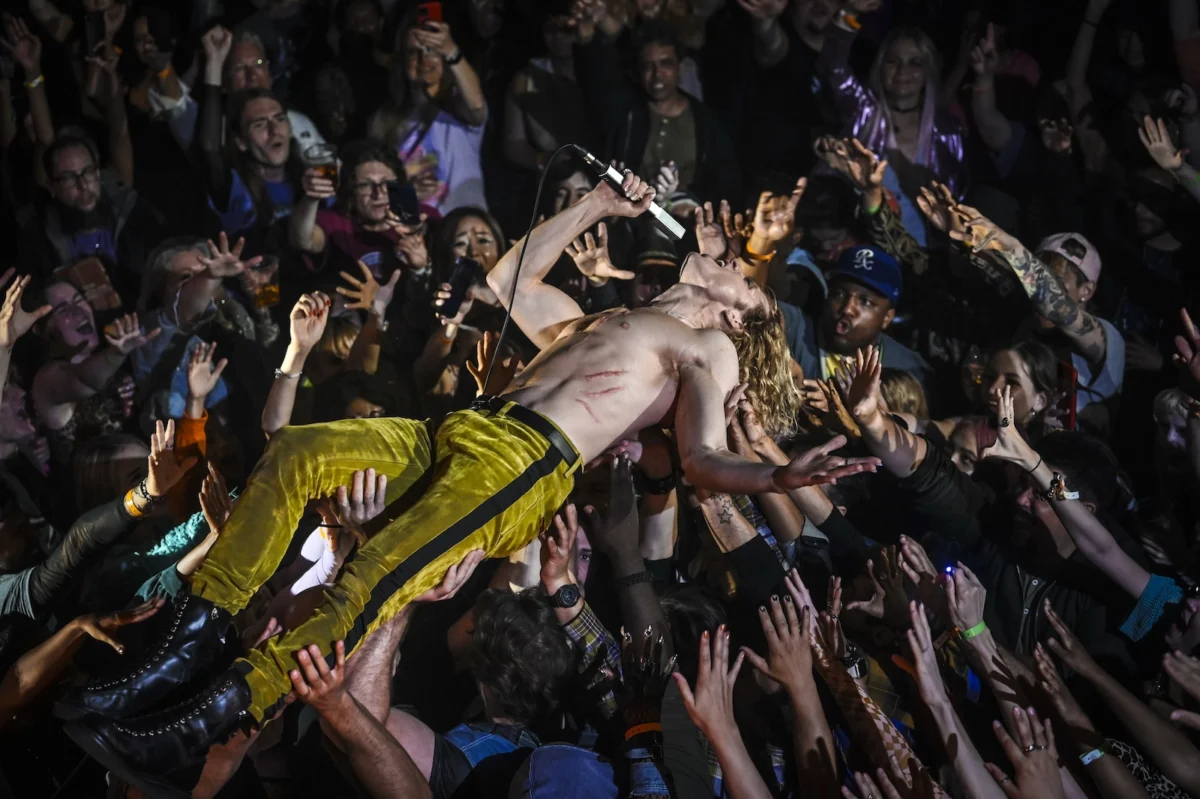
The anticipation surrounding the second season of AMC’s Interview with the Vampire has reached a fever pitch, driven largely by the magnetic, genre-defying performance of Sam Reid. As the series prepares to dive deeper into the hedonistic and tragic lore of Anne Rice’s universe, fans have been granted a glimpse into the evolution of Lestat de Lioncourt. Moving beyond the brooding, centuries-old aristocrat, the upcoming episodes see Lestat ascend to the stage as a rock god—a transformation that actor Sam Reid has approached with the rigor of a music historian and the soul of a method actor.
The Genesis of the Rock Star: A Historical Foundation
In the expansive mythology of The Vampire Lestat, the protagonist’s transition into a musician is not merely a hobby; it is a manifestation of his immortal ego and his desperate need for adoration. For Sam Reid, capturing this transition required looking backward to move forward.
During a recent press conference hosted by the Television Critics Association, Reid offered a rare window into his creative process. He argued that Lestat’s stage presence is not a modern invention born of the 1970s or 80s, but rather a direct evolution of his 18th-century roots.
"His onstage persona is built in the 18th century," Reid explained. "It is the French iteration of the Commedia dell’arte, and that’s where I place him as a performer. Anything that goes beyond that is an extension of that character, because I feel like that’s where he built his stage presence."
Commedia dell’arte, the Italian theatrical form characterized by masked "types," physical comedy, and improvisation, provides a profound subtext for Lestat. It suggests that Lestat has always viewed existence as a performance, a grand stage where he is both the director and the lead actor. By grounding his rock-and-roll persona in this ancient tradition, Reid bridges the gap between the powdered wigs of the Enlightenment and the leather-clad excess of the modern stage.
Chronology of an Immortal Performance
To understand the arc of the character, one must look at the specific milestones of his evolution.
- 18th Century Origins: The character’s formative years in the French aristocracy established his performative nature, his flair for the dramatic, and his inherent narcissism.
- The Modern Rebirth: As the series moves into the late 20th century, Lestat adopts the aesthetics of a rock star—a medium that allows him to broadcast his immortality to the masses.
- The "Long Face" and "All Fall Down" Era: Fans have already been treated to the sonic landscape of this new era. Tracks like "Long Face" and "All Fall Down" are not just songs; they are windows into the character’s psyche. These compositions—crafted with the help of composer Daniel Hart—serve as the soundtrack to a vampire’s existential angst.
- The June 2026 Premiere: The culmination of these efforts will be on full display when The Vampire Lestat officially hits AMC and AMC+ on June 7, 2026.
The Bowie Connection: Channeling the Non-Human
Perhaps the most intriguing aspect of Reid’s preparation was his deep study of David Bowie. Specifically, Reid pointed to footage of Bowie performing "Cracked Actor" during live concerts. However, Reid was quick to clarify that he wasn’t looking to copy Bowie’s style, but rather to understand his essence.
"I watched Bowie to remind myself that [Lestat] is not human," Reid noted. "I just have to make sure that I don’t forget that sometimes, because there is a lot more vulnerability in this season than we’ve had before. I wanted to make sure we maintain that he is a kind of ‘other’ thing, and I thought David Bowie just does that extraordinarily."
This "otherness" is the tightrope walk that defines Reid’s performance. If Lestat is too human, he loses his menace; if he is too alien, he loses his relatability. By channeling the uncanny, extraterrestrial energy that defined Bowie’s Ziggy Stardust era, Reid ensures that Lestat feels like a creature who has lived through centuries of human history without ever truly belonging to it.
Supporting Data: The Craft of the Soundtrack
The music itself is a character in this season. The collaboration between Reid and showrunner Rolin Jones has resulted in a soundscape that feels authentic to the period while remaining grounded in the lore of Anne Rice’s novels.

Daniel Hart, the show’s composer, has been instrumental in creating a sound that feels like the "rock star" version of the vampire. These tracks are designed to reflect the internal chaos of a creature who has seen everything, yet remains eternally unsatisfied. The lyrics of "Long Face," for instance, reflect the weariness of an immortal—a sharp contrast to the high-energy, performative nature of the music itself. This duality—the performance of joy versus the reality of decay—is central to the season’s narrative.
Official Responses and Creative Direction
Showrunner Rolin Jones has consistently praised Reid’s ability to "deconstruct the legend." In recent communications, the production team has emphasized that this season is not just about the spectacle of rock and roll, but about the disintegration of the performance.
Reid himself elaborated on this trajectory: "I wanted to make sure it felt still theatrical in a way, because he’s still performing the idea of a rock star, at least at the beginning. And as the show progresses, the performance starts to disappear."
This shift is crucial. In the beginning, Lestat uses the stage as a shield—a way to control the narrative and keep his victims and his fans at a distance. As the season progresses, that shield cracks. The "performer" falls away, leaving only the raw, often ugly, reality of the vampire. It is in these moments—where the mask slips—that Reid’s performance promises to be at its most harrowing.
Implications for the Series and the Franchise
The implications of this performance are significant. By leaning into the rock star persona, the show is effectively moving into the most surreal and ambitious part of Rice’s source material. The challenge for the production team has been to make this transition feel earned rather than jarring.
If successful, this season could set a new standard for how supernatural dramas handle the passage of time and the changing of human culture. It treats the vampire not as a static entity, but as a sponge, absorbing the fashions and musical movements of the centuries to survive and thrive.
Moreover, this approach provides a fresh perspective on the "angst" that defines the vampire genre. Instead of merely moping in shadows, Lestat is shouting his pain from the stage, forcing the world to listen. It is a bold, loud, and quintessentially Lestat-ian approach to suffering.
Conclusion: A Performance to Watch
As the clock ticks down toward the June 7, 2026 premiere, the expectations for Sam Reid’s performance are high. He has not only committed to the physical demands of the role—the movement, the voice, the aesthetic—but has intellectually engaged with the philosophical weight of what it means to be a "performer" across the ages.
From the stage of Commedia dell’arte to the glare of the stadium spotlights, the arc of Lestat de Lioncourt is a story of performance, vulnerability, and the eternal desire to be seen. Whether he succeeds in his quest for immortality through music, or finds himself undone by the very persona he created, remains to be seen. But one thing is clear: Sam Reid has turned the vampire into a rock star, and the world is ready to watch him play.

 Laily UPN